When choosing a portable power station, focus on its battery lifespan, weather resistance, and physical construction. Make sure it has a durable battery designed for many charge cycles, and check its IP rating for dust and water protection—ideally IP65 or higher. Look for sturdy, impact-resistant materials and well-protected ports. Considering warranties and customer reviews can also give insight into real-world durability. Keep these factors in mind, and you’ll be better prepared for outdoor challenges and emergencies.

Get backup power and energy gear delivered free with Prime
- Fast, free delivery on millions of items
- Prime Video, Amazon Music and more included
- Member-only deals all year
Key Takeaways
- Choose units with high-quality batteries like lithium-ion for longer lifespan and reliable performance over many charge cycles.
- Ensure the power station has an IP65 or higher rating for protection against water, dust, and harsh weather conditions.
- Prioritize models with durable, impact-resistant casings made from reinforced plastic or aluminum to withstand drops and shocks.
- Look for comprehensive warranties and positive customer reviews to gauge real-world durability and long-term reliability.
- Consider environmental factors and usage scenarios to select a device designed for outdoor resilience and emergency readiness.
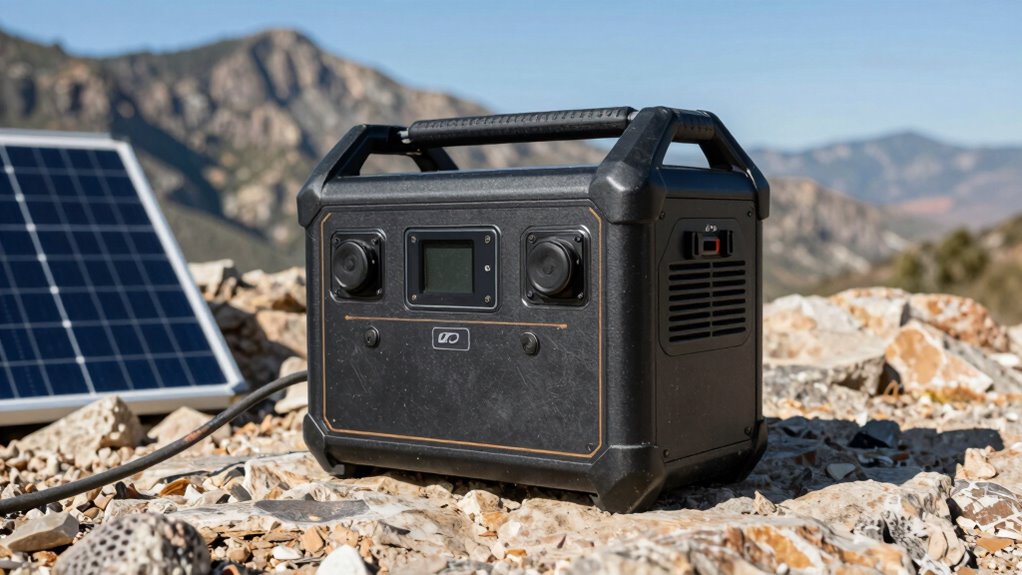
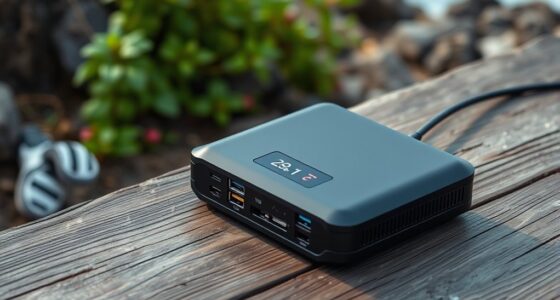
When choosing a portable power station, durability is one of the most important factors to take into account. You want a device that can withstand the rigors of outdoor use, whether you’re camping, hiking, or facing an emergency. A key aspect of durability is the battery lifespan. Over time, batteries degrade and lose their ability to hold a charge, so it’s essential to select a model with a high-quality battery that’s designed to last through numerous charge cycles. Look for stations with lithium-ion or lithium-polymer batteries, which generally offer longer lifespan and better efficiency compared to older lead-acid types. A longer battery lifespan means you won’t have to replace or repair your power station as often, saving you money and inconvenience in the long run.
Choose a power station with a high-quality lithium battery for longer lifespan and reliable outdoor performance.
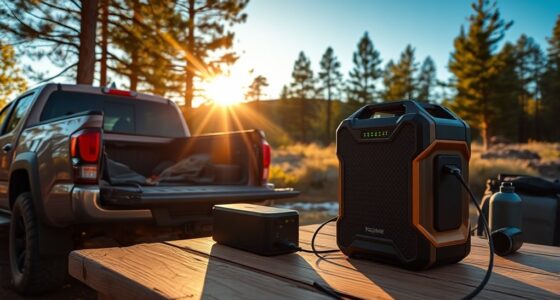
Weather resistance is another critical element to keep in mind. Your portable power station might be exposed to rain, snow, dust, or extreme temperatures, especially if you’re using it outdoors. Devices with good weather resistance are built to withstand these conditions without malfunctioning. Check for features like an IP (Ingress Protection) rating, which indicates how well the device is protected against dust and water. An IP65 or higher rating generally means your power station can handle splashes of water and dust without getting damaged. This ensures your power station remains reliable when you need it most, whether you’re caught in a sudden downpour or working in a dusty environment.
Durability also encompasses the device’s physical construction. Look for models with sturdy, shock-absorbing casings made from high-quality materials like reinforced plastic or aluminum. These materials can absorb impacts and prevent damage if you accidentally drop the unit. Additionally, consider the design of the handles and ports. Well-designed handles make it easier to carry, and protected ports prevent dust or water ingress, further enhancing durability.
While thinking about durability, don’t forget to evaluate the warranty and customer reviews. A reputable brand that offers a solid warranty demonstrates confidence in its product’s durability. Reading reviews can give you insights into how the power station performs in real-world conditions, especially regarding battery lifespan and weather resistance. Furthermore, understanding the natural environments in which these devices are used can help you select a model that truly withstands outdoor challenges. Ultimately, investing in a durable portable power station ensures that you’re prepared for whatever your adventures or emergencies throw at you, with a reliable device that stands the test of time and weather.
Products Worth Considering

Bose SoundLink Plus Portable Bluetooth Speaker, Black

Samsung 55-Inch S90H OLED 4K UHD Smart TV Bundle with Full-Motion Mount and Surge Protector

Blueair Blue Pure 211i Max Smart Air Purifier for Large Rooms
As an affiliate, we earn on qualifying purchases.
Frequently Asked Questions
How Do Temperature Fluctuations Affect Power Station Durability?
Temperature fluctuations can impact your power station’s durability by causing thermal expansion and contraction, which stresses internal components. Over time, this can lead to material fatigue, reducing the device’s lifespan and reliability. To prevent damage, look for power stations with robust designs and materials that withstand extreme temperatures. Proper storage and avoiding rapid temperature changes also help maintain your power station’s longevity and performance.
Can Portable Power Stations Withstand Rough Handling During Outdoor Activities?
Yes, portable power stations can withstand rough handling during outdoor activities if you choose models with shock resistance and water resistance features. These stations are built tough to endure drops, bumps, and exposure to rain or splashes. Always check the IP rating for water resistance and shockproof certifications before buying. Properly handling and storing your power station also helps extend its lifespan in rugged environments.
What Is the Impact of Long-Term Storage on Battery Health?
Long-term storage can lead to battery degradation if you don’t consider proper storage conditions. When stored improperly, the battery’s capacity diminishes over time, reducing its lifespan and effectiveness. To protect your portable power station’s battery health, keep it in a cool, dry place, and avoid letting it fully discharge or stay fully charged for long periods. Proper storage helps preserve battery performance and extends its overall durability.
Are There Specific Durability Standards or Certifications to Look For?
You should look for durability standards or certifications like IP ratings and UL listings, which guarantee the power station meets safety and resilience benchmarks. Pay attention to the battery material, as high-quality materials like lithium-ion or lithium-polymer improve longevity. Also, consider the construction quality—robust casing and secure connections help withstand rough handling and environmental factors, giving you confidence in your portable power station’s durability during outdoor adventures or emergencies.
How Does Frequent Charging and Discharging Influence Lifespan?
Frequent charging and discharging impact your power station’s lifespan mainly through battery chemistry and charging cycles. Each cycle slightly reduces the battery’s capacity, so regularly draining and recharging shortens its overall life. Lithium-ion batteries, common in portable power stations, handle numerous cycles well but still degrade over time. To maximize longevity, avoid deep discharges and maintain moderate charge levels, ensuring your device lasts longer and performs reliably.
Conclusion
When choosing a portable power station, durability should be your top priority—think of it as the backbone of your reliable energy companion. A sturdy build guarantees it can withstand the roughest adventures and toughest conditions, almost like a superhero armor defending your power needs. Don’t settle for less; invest in quality, so your station can outlast even the longest blackout or wildest camping trip. Remember, durability isn’t just a feature—it’s the ultimate power protector you can’t afford to overlook.