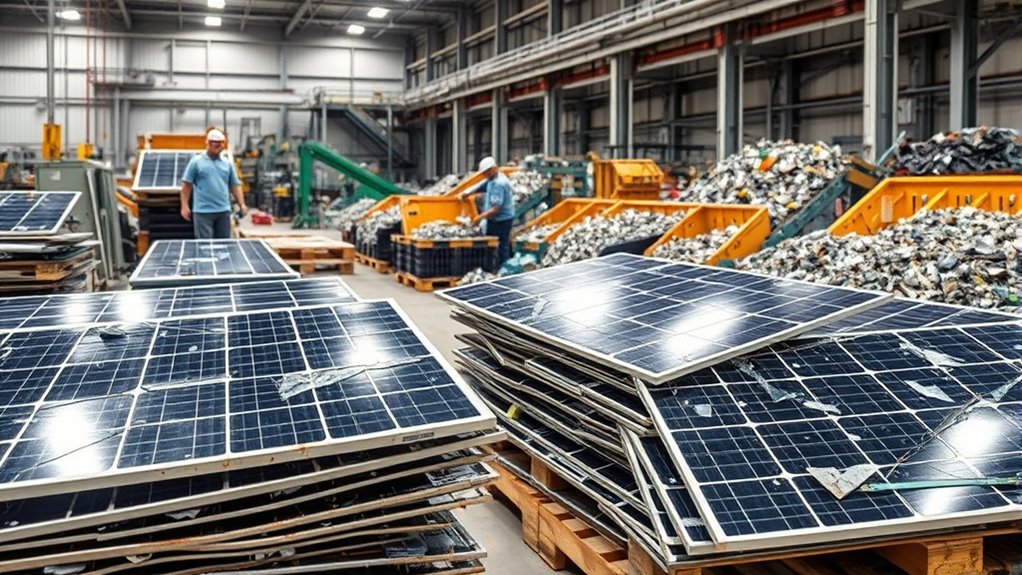

When dealing with old solar panels, you should avoid tossing them in the trash because they contain hazardous materials like lead and cadmium that can harm the environment. Instead, find certified recycling centers or manufacturer take-back programs that specialize in safely dismantling panels and recovering valuable materials such as silicon and metals. Using proper recycling methods guarantees safety, environmental protection, and resource conservation. Keep exploring to discover how modern innovations are making solar panel recycling more efficient and sustainable.
Key Takeaways
- Contact certified recycling facilities or manufacturer take-back programs for proper disposal of old solar panels.
- Avoid trash disposal; instead, utilize specialized recycling centers that recover valuable materials responsibly.
- Ensure recyclers follow safety standards to prevent hazardous material leakage into the environment.
- Take advantage of local e-waste collection events or government programs supporting solar panel recycling.
- Support advances in recycling technology to maximize material recovery and minimize environmental impact.
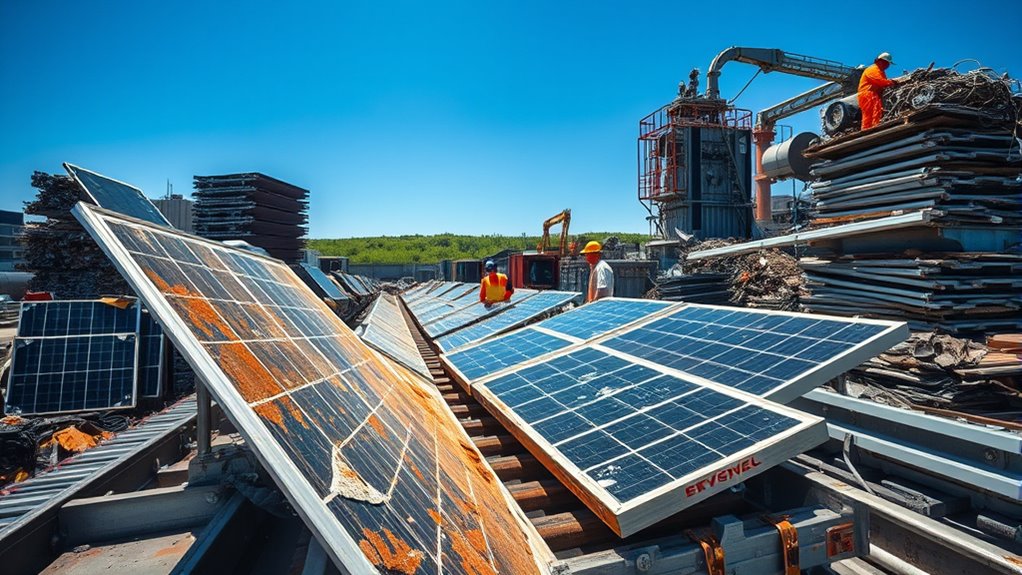
As solar panels become increasingly common, their proper disposal and recycling are more important than ever. When your solar panels reach the end of their lifespan, simply tossing them in the trash isn’t an option—and it can harm the environment. The environmental impact of improperly discarded panels is significant; they contain hazardous materials like lead, cadmium, and other toxic substances that can leach into soil and water, posing risks to ecosystems and human health. That’s why understanding how to responsibly manage old modules is essential. Fortunately, advances in recycling technology have made it easier to handle these panels safely and efficiently. Modern recycling processes can recover valuable materials such as silicon, aluminum, and rare metals like silver and tellurium, which can be reused in manufacturing new panels or other products. This not only reduces waste but also conserves natural resources, making solar energy a truly sustainable solution.
Getting your old panels recycled involves finding certified facilities that specialize in solar module disposal. These centers use specialized recycling technology to dismantle the panels carefully, separating the glass, plastics, and metals. This process minimizes environmental impact by preventing hazardous components from contaminating the environment. As you prepare to recycle your panels, it’s worth noting that many manufacturers and local governments now offer take-back programs or partnerships with recycling centers. These programs often cover the costs or provide incentives, encouraging responsible disposal. You should also check whether your local waste management services accept solar panels or if there are dedicated e-waste recycling events. By choosing authorized recyclers, you guarantee that your old modules are processed correctly, aligning with environmental regulations and safety standards. Additionally, advances in AI Security are helping improve the efficiency and safety of recycling processes through smarter monitoring and automation.
The process of recycling solar panels is continually improving thanks to ongoing research and technological innovation. New methods aim to increase material recovery efficiency and reduce energy consumption during recycling, making the process even more eco-friendly. For example, some emerging technologies can extract metals at a higher purity level, enabling their reuse in high-quality applications. This progress means that as you recycle your panels, you’re contributing to a circular economy—reducing the need for mining new raw materials and lowering the overall carbon footprint of solar power systems. Ultimately, handling your old modules responsibly isn’t just about compliance; it’s about actively protecting the environment. By staying informed about recycling options and supporting advances in recycling technology, you help ensure that solar energy remains a clean, sustainable choice for generations to come.

ECO WORTHY 10000W Output Complete Off-Grid Solar Panel Kit for Home| 10KW 120V/240V Output Split Phase Inverter| 48V 314Ah16.1kWh High Capacity Energy Storage| 2950W Solar Panel PV| Whole House System
System Components:Delivers up to 10kW power output with 120V/240V single-phase split-phase support, making it suitable for smoothly running…
As an affiliate, we earn on qualifying purchases.
As an affiliate, we earn on qualifying purchases.
Frequently Asked Questions
How Long Do Solar Panels Typically Last Before Needing Recycling?
Your solar panels usually last about 25 to 30 years, depending on their panel lifespan and maintenance. As they approach this recycling timeline, you should start planning for disposal or recycling to prevent environmental harm. Recycling can be done at any point once panels reach the end of their useful life, but it’s best to do so before they degrade markedly, ensuring maximum efficiency and environmental responsibility.
Are There Regional Differences in Solar Panel Recycling Regulations?
Think of regional policies and recycling standards as the map guiding your solar panel disposal journey. You’ll find that regulations vary widely—some regions have strict mandates, others are more relaxed. These differences influence how you recycle old modules, ensuring proper disposal and resource recovery. To stay compliant and eco-friendly, research your local rules, as they shape your recycling options and help protect the environment.
What Are the Environmental Impacts of Improper Solar Panel Disposal?
Improper disposal of solar panels can cause serious environmental impacts. You risk creating toxic waste that contaminates soil and water, harming wildlife and human health. Land contamination from hazardous materials like lead and cadmium leaches into the ground, making land unsafe for agriculture or development. To protect the environment, it’s essential to follow proper recycling procedures, ensuring harmful substances are safely managed and reused, reducing ecological harm.
Can Recycled Solar Materials Be Reused in New Panels?
Yes, recycled solar materials can be reused in new panels. During the recycling process, valuable materials like silicon, glass, and metals are extracted and purified. You can then incorporate these recovered materials into the manufacturing of new solar modules, reducing the need for virgin resources. This material reuse helps lower environmental impact and promotes sustainable solar energy development, making your solar investments more eco-friendly and efficient.
What Costs Are Involved in Solar Panel Recycling Services?
You’ll find that the costs of solar panel recycling services vary, but a cost comparison shows they’re often affordable, especially when factoring in recycling incentives. These incentives can markedly reduce your expenses and encourage eco-friendly disposal. Typically, costs include collection, transportation, and processing. By exploring different providers, you can choose a service that fits your budget while benefiting from available incentives, making recycling both economical and environmentally responsible.

EF ECOFLOW 220W Portable Solar Panel, Bifacial Design Up to 25% Conversion Efficiency N-Type Solar Cell, with Adjustable Kickstand, IP68 Waterproof, Foldable Solar Panel for Camping RVing Home Backup
[High-Efficiency Solar Panel] With the portable solar panel industry's first use of N-Type solar technology, we've raised the…
As an affiliate, we earn on qualifying purchases.
As an affiliate, we earn on qualifying purchases.
Conclusion
Don’t just toss your old solar panels in the trash—imagine unleashing a pollution monster or wasting precious resources! Recycling your modules isn’t just responsible; it’s your superpower to save the planet from disaster. Every panel you recycle is like slamming the brakes on environmental chaos. So, take charge, do the right thing, and turn your outdated panels into a force for good. Because when it comes to saving Earth, every little bit counts—don’t let your old panels become a disaster!
solar module recycling center
As an affiliate, we earn on qualifying purchases.
As an affiliate, we earn on qualifying purchases.
![SOKIOVOLA [Upgraded] Foldable Solar Panels 50W Portable Solar Panel Charger 3 Output Ports (USB-A USB-C DC) Folding Solar Panel for Camping Hiking RV Outdoor Activities](https://m.media-amazon.com/images/I/41AsXb6R0CL._SL500_.jpg)
SOKIOVOLA [Upgraded] Foldable Solar Panels 50W Portable Solar Panel Charger 3 Output Ports (USB-A USB-C DC) Folding Solar Panel for Camping Hiking RV Outdoor Activities
【Lightweight and Portable】This 50W portable solar panel features a compact size (14.69×7.88×1.19 inches after folding) and lightweight (2.095lbs)…
As an affiliate, we earn on qualifying purchases.
As an affiliate, we earn on qualifying purchases.