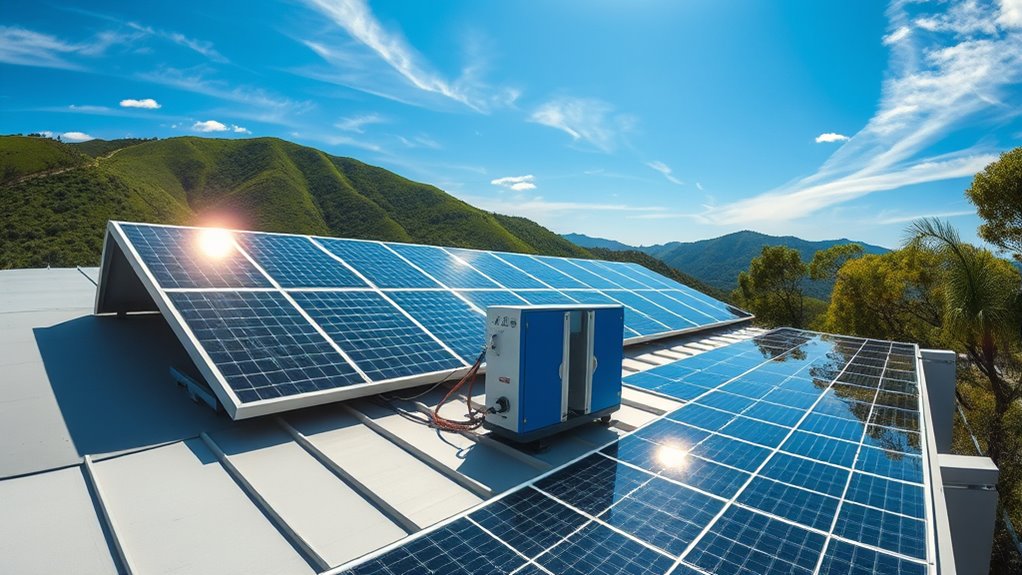

Switching to solar power with battery storage gives you more control over your energy use and reduces your reliance on the grid. You can generate your own electricity, store excess power for cloudy days and nights, and enjoy backup power during outages. This setup not only lowers your utility bills but also boosts your energy independence and environmental sustainability. Keep exploring to discover how this combination can transform your home and future energy security.
Key Takeaways
- Solar panels generate renewable energy, reducing reliance on the grid and promoting energy independence.
- Battery storage captures excess solar power for use during cloudy days or outages, ensuring continuous supply.
- Integrating solar and batteries optimizes energy flow, minimizing grid dependence and maximizing self-consumption.
- Backup batteries provide resilience during power outages, maintaining essential home functions independently.
- Using solar with storage lowers utility bills and decreases environmental impact, supporting long-term energy independence.

Have you ever wondered how you can become less reliant on the grid and take control of your energy? The key lies in understanding how solar panels and battery storage work together to give you greater independence. When you install solar panels, you generate your own electricity directly from sunlight, reducing your dependence on the grid. But just producing power isn’t enough—you need a reliable way to store excess energy for cloudy days or nighttime. That’s where battery storage comes in, allowing you to keep a reserve of power on hand whenever you need it.
Grid integration plays an essential role in this setup. It ensures that your solar system can communicate seamlessly with the larger electrical grid, which is vital for managing energy flow efficiently. During the day, when your panels produce more power than you consume, the grid can either absorb your excess energy or store it in your batteries. Conversely, when your solar system isn’t generating enough electricity, your stored energy can seamlessly supplement your needs without disrupting your daily routines. This intelligent integration minimizes reliance on the grid and maximizes your use of renewable energy.
Seamless grid communication maximizes renewable energy use and minimizes reliance on the electrical grid.
Having a well-designed system with backup power capabilities means you’re prepared for outages or emergencies. When the grid goes down, your solar panels alone often can’t keep your home powered unless you’ve integrated a battery backup system. By pairing your solar and batteries, you create a resilient energy setup that keeps your essential appliances running even during blackouts. This independence not only provides peace of mind but also helps you avoid the inconvenience and costs associated with power interruptions.
Furthermore, investing in solar and battery storage can lead to long-term savings. As you generate your own electricity, you reduce your utility bills and become less vulnerable to rate hikes. Your backup power system ensures that even during peak grid demand or outages, your energy supply remains stable. Over time, this combination increases your energy self-sufficiency and decreases your environmental impact by relying less on fossil fuels. Energy independence is a key benefit, empowering you to manage your power needs actively.
Ultimately, harnessing solar energy with integrated battery storage puts you in control. It’s a smart move toward energy independence, giving you the ability to manage your power needs actively. By understanding how grid integration works and guaranteeing you have backup power, you transform your home into a self-sustaining energy hub. This setup empowers you to reduce reliance on the grid, save money, and contribute to a cleaner, more resilient energy future.
Frequently Asked Questions
How Long Do Solar Batteries Typically Last Before Replacement?
You can expect solar batteries to last around 5 to 15 years, depending on the battery lifespan and usage. Replacement timing varies, but most manufacturers recommend monitoring performance and capacity for signs of degradation. When your battery’s capacity drops considerably or it no longer meets your energy needs, it’s time to contemplate replacement. Proper maintenance and choosing high-quality batteries can extend their lifespan, helping you maximize your energy independence.
What Are the Initial Costs of Installing a Solar and Battery System?
The initial costs for installing a solar and battery system typically range from $15,000 to $30,000, depending on system size and location. You should consider a detailed cost estimation to understand expenses better. Financing options like loans, leases, or incentives can make it more affordable. With proper planning and available incentives, you can reduce upfront costs and start saving on energy bills sooner.
Can Battery Storage Work During Power Outages?
Yes, battery storage can work during power outages, providing you with greater power reliability. While your solar panels generate electricity during the day, the battery’s capacity stores enough energy to keep your essential appliances running when the grid is down. This seamless shift offers peace of mind, ensuring your home remains powered even in emergencies. With the right system, you gain independence and enhanced resilience against unexpected outages.
What Maintenance Is Required for Solar Batteries?
You’ll need to perform regular maintenance to keep your solar batteries in top shape. Check for corrosion, make sure connections are tight, and keep the batteries clean. Proper maintenance can extend the battery lifespan and optimize performance. Typically, manufacturers recommend inspecting batteries every few months and following specific maintenance requirements outlined in your manual. Regular monitoring helps catch issues early, ensuring your system remains reliable and efficient over time.
Are There Government Incentives for Solar and Battery Storage?
Like finding hidden treasure, government incentives can boost your solar and battery storage investment. You can qualify for government grants and tax credits that markedly reduce your upfront costs. These incentives make it easier to go green, saving you money while gaining energy independence. Be sure to check federal and state programs, as eligibility varies. Taking advantage of these offers accelerates your path to a sustainable, self-sufficient energy setup.
Conclusion
Imagine your home as a lighthouse, shining steadily through storms and darkness. By harnessing solar power and battery storage, you become the beacon of independence, guiding yourself away from reliance on external grids. This energy freedom isn’t just about electricity; it’s about reclaiming control and illuminating your future with resilience. Embrace this solar lighthouse, and let your independence shine brighter than ever, standing tall against any storm that comes your way.