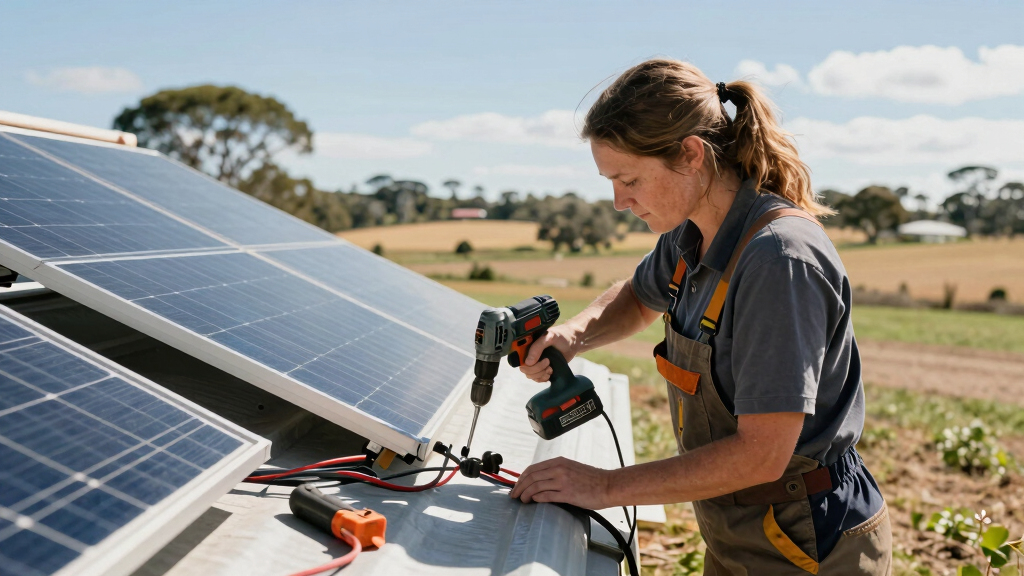

TL;DR
Australian farmers are advocating for increased support and policy reforms to accelerate electrification of farm equipment. A new report highlights potential cost savings and energy resilience benefits. The move aims to reduce reliance on imported diesel amid rising fuel prices.
Australian farmers are urging policymakers to support the electrification of farm equipment and processes, citing the need to reduce dependence on imported diesel and improve energy resilience. A new report from Farmers for Climate Action advocates for reforms to accelerate the adoption of clean energy technologies on farms, highlighting cost savings and climate benefits.

Get backup power and energy gear delivered free with Prime
- Fast, free delivery on millions of items
- Prime Video, Amazon Music and more included
- Member-only deals all year
The report, titled Energy Sovereignty for Regional Australia, emphasizes that rising fuel prices and supply insecurity are driving the push for electrification. It notes that farmers are already transitioning to electric irrigation, water pumps, and processing machinery, which reduces diesel use. The report advocates for policy reforms, including capping the Fuel Tax Credit Scheme at $50 million per claimant, to incentivize electrification while protecting farmers from financial risks.
Case studies within the report demonstrate that replacing diesel with electric alternatives can significantly cut energy costs. For example, a 6,000-hectare seeding operation could reduce fuel consumption from 30,000 litres of diesel to around 110 MWh of electricity, supplied by solar PV and batteries. The report suggests that stationary and short-range equipment are the initial targets for electrification, with mobile machinery following as technology matures.
Farmers and industry representatives see electrification as a way to build resilience and reduce operational costs. FCA CEO Verity Morgan-Schmidt highlighted that fuel supply disruptions reveal vulnerabilities in current systems, and shifting to clean energy can mitigate these risks. Farmers from Western Australia and South Australia emphasized their ongoing efforts and the need for supportive policies to remove barriers to technology adoption.
Implications for Australian Agricultural Energy Security
The push for on-farm electrification is significant because it offers a pathway for Australian agriculture to reduce reliance on imported fuels, which are subject to price volatility and supply disruptions. Widespread adoption of clean energy technologies can lower operational costs, increase resilience to external shocks, and contribute to national climate commitments. Policy reforms and support are critical to overcoming current barriers and enabling a large-scale transition, which could reshape the sector’s energy landscape over the next decade.
Products Worth Considering

Arlo Pro Wireless Security Camera, 2K HDR, 6th Gen, 4-Camera System

eufy Security eufyCam C37 4-Camera Kit with 360° Pan and Tilt, Auto Tracking, 2K Color Night Vision, and Solar Panels

VIZIO 65-Inch V-Series 4K HDR Smart TV
As an affiliate, we earn on qualifying purchases.
Background on Energy Transition in Australian Farming
Australian farmers have historically relied heavily on diesel for irrigation, machinery, and utilities. Recent fuel price hikes and supply issues have highlighted vulnerabilities in this dependence. Earlier efforts include remote power units and solar-powered pumps, demonstrating early adoption of renewables. The new report builds on these developments, proposing a comprehensive roadmap for accelerating electrification across the sector, aligned with global trends toward clean energy and technological innovation.
“Why would we rely on imported diesel we can’t control when, with sensible shifts, we can help build the systems to get us to electric machines running on cheap, clean energy powered by the Aussie sun?”
— Verity Morgan-Schmidt
Uncertainties in Policy Implementation and Technology Adoption
It is not yet clear how quickly government policy reforms will be enacted or how effectively they will support farmers in transitioning. The availability, reliability, and cost of future electric and biofuel technologies remain uncertain, especially for heavier mobile machinery. Further, the timeline for widespread adoption and the impact on farm productivity are still developing.
Next Steps for Policy and Industry Engagement
Policymakers are expected to review and consider the report’s recommendations, potentially implementing reforms to support electrification incentives. Industry groups and farmers will likely pilot new technologies and infrastructure projects to demonstrate viability. Monitoring the rollout of policy changes and technology adoption over the coming years will be critical to assessing the sector’s progress toward energy sovereignty.
Key Questions
What are the main benefits of electrifying farm equipment?
Electrification can reduce operational costs, improve energy resilience, decrease dependence on imported fuels, and lower greenhouse gas emissions.
What policy changes are being proposed to support electrification?
The report suggests capping the Fuel Tax Credit Scheme at $50 million per claimant and implementing incentives for on-farm renewable energy projects.
Are there examples of farms already using renewable energy?
Yes, some farms have adopted solar-powered pumps and remote power units, demonstrating early success in renewable integration.
What are the main barriers to on-farm electrification?
Barriers include high upfront costs, limited access to reliable technology, and policy or regulatory hurdles that slow adoption.
When might we see wider adoption of electric heavy machinery?
Industry projections suggest that heavier machinery and long-haul freight could become mainstream in Australian markets around the early 2030s as technology matures and costs decline.
Source: PV Magazine