
TL;DR

Get backup power and energy gear delivered free with Prime
- Fast, free delivery on millions of items
- Prime Video, Amazon Music and more included
- Member-only deals all year
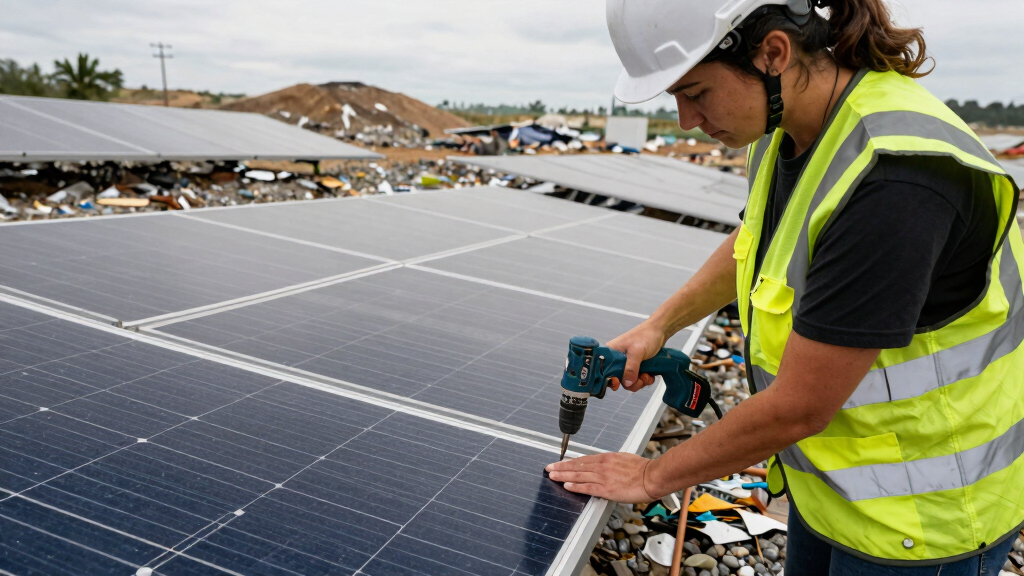
Verogy has initiated construction on four solar projects at municipal landfills in Connecticut, adding over 5.7 MW of clean energy capacity. These projects aim to transform closed landfills into economic and environmental assets, benefiting local communities.
Construction has begun on four municipal landfill solar projects in Connecticut, developed by Verogy at sites in Mansfield, Morris, Somers, and Suffield. These projects are part of Connecticut’s Non-Residential Renewable Energy Solutions (NRES) program and aim to convert closed landfills into renewable energy sources, providing economic benefits to local communities.
The four projects, with capacities ranging from approximately 1.01 MW to 2.3 MW, are situated on capped landfills that are now being repurposed for solar energy generation. Verogy is handling all aspects of development, construction, and long-term operations for these installations. The projects are expected to contribute over 5.7 MW of renewable capacity upon completion, bringing Verogy’s total landfill solar installations in Connecticut to seven.
These projects are part of the Connecticut NRES program, which incentivizes renewable energy development on non-residential sites such as landfills and brownfields by offering a 20% bid price preference in state procurement. The program has supported 14 landfill projects totaling more than 17 MW, according to the Connecticut Department of Energy and Environmental Protection. The municipalities hosting these projects will benefit from rental income, increased tax revenues, and local job creation, as confirmed by Verogy’s CEO.
Economic and Environmental Benefits of Landfill Solar
These projects demonstrate how land that was previously a challenge for communities can be transformed into valuable renewable energy assets, contributing to local economic development and climate goals. By repurposing closed landfills, Connecticut showcases a model for sustainable land use and clean energy expansion, which could influence policies nationwide. The projects also support Connecticut’s broader climate commitments by increasing renewable energy capacity and reducing reliance on fossil fuels.
As an affiliate, we earn on qualifying purchases.
Connecticut’s Landfill Solar Development Under NRES
Connecticut’s NRES program has facilitated the siting of 14 landfill-based solar projects totaling over 17 MW since its inception. The program offers a 20% bid price preference, encouraging municipalities and developers to utilize capped landfills for renewable energy projects. Verogy, a key developer in this space, has now completed seven landfill projects in the state, with the latest four breaking ground in 2026. This initiative aligns with Connecticut’s efforts to expand renewable energy and promote sustainable land reuse.
“Every one of these projects tells a similar story: land that once represented a challenge for a community is now generating renewable energy and delivering lasting economic benefits to residents.”
— an anonymous researcher
residential solar energy systems
As an affiliate, we earn on qualifying purchases.
As an affiliate, we earn on qualifying purchases.
Details on Project Completion and Future Expansion
While construction has begun, it is not yet clear when all four projects will be fully operational or the total economic impact on each municipality. Additionally, future expansion plans beyond these seven landfill projects by Verogy or other developers remain unspecified at this stage.
As an affiliate, we earn on qualifying purchases.
Expected Timeline and Next Steps for Projects
Verogy is expected to complete construction on these projects within the coming months. Once operational, the projects will contribute to Connecticut’s renewable energy capacity and provide ongoing economic benefits. Further updates on project performance and potential additional landfill sites are anticipated in the near future.
As an affiliate, we earn on qualifying purchases.
Key Questions
How much energy will these landfill solar projects generate?
Once completed, the four projects will produce over 5.7 MW of renewable energy capacity, enough to power hundreds of homes and reduce greenhouse gas emissions.
What benefits do municipalities receive from these projects?
Host municipalities will benefit from rental income, increased tax revenues, and local job creation during construction and operation.
Are these projects part of Connecticut’s broader climate strategy?
Yes, they align with Connecticut’s climate goals to expand renewable energy capacity and promote sustainable land reuse.
When will the projects be operational?
Construction is underway, with completion expected in the coming months. Exact dates depend on project-specific timelines.
Will Verogy develop more landfill solar projects in the future?
While there are no specific announcements, Verogy’s active involvement suggests potential for further landfill projects beyond the current seven in Connecticut.
Source: Solar Power World
Fall Picks
fall essentials
As an affiliate, we earn on qualifying purchases.