

TL;DR

Get backup power and energy gear delivered free with Prime
- Fast, free delivery on millions of items
- Prime Video, Amazon Music and more included
- Member-only deals all year
Intel has unveiled a new processor architecture claiming to surpass ARM chips in performance per Watt. This marks a potential shift in the competitive landscape of energy-efficient computing, but full performance details remain unverified.
Intel has announced a new processor architecture claiming to deliver superior performance per Watt compared to ARM-based chips. This development could significantly impact the ongoing competition in energy-efficient computing, especially in mobile and data center markets. While Intel has provided initial performance metrics, detailed independent verification is still pending.
Intel’s latest architecture, codenamed ‘Meteor Lake,’ was unveiled during a press event, where the company stated that it has achieved a notable increase in energy efficiency. According to Intel officials, the new chips reportedly offer a performance per Watt advantage over leading ARM processors used in smartphones, laptops, and servers. The company attributes this to a combination of advanced process technology, architectural improvements, and power management innovations.
Intel’s CEO, Pat Gelsinger, emphasized that this breakthrough positions Intel as a serious competitor in markets traditionally dominated by ARM, especially in areas where energy efficiency is critical. The company claims that their new chips can deliver comparable or better performance while consuming less power, potentially extending battery life and reducing cooling requirements.
However, these claims are primarily based on Intel’s internal benchmarks and demonstrations. Independent third-party testing and validation are still awaited to confirm whether the performance per Watt advantage is sustained across real-world workloads and diverse applications.
Potential Shift in Energy-Efficient Computing Leadership
This announcement is significant because it challenges ARM’s long-standing dominance in energy-efficient processor markets. If verified, Intel’s advancements could lead to a major shift in the design and deployment of mobile devices, laptops, and data centers, where power consumption directly impacts operational costs and environmental sustainability. It also signals increased competition, which could accelerate innovation across the industry.
Products Worth Considering

Dyson V8 Cordless Vacuum
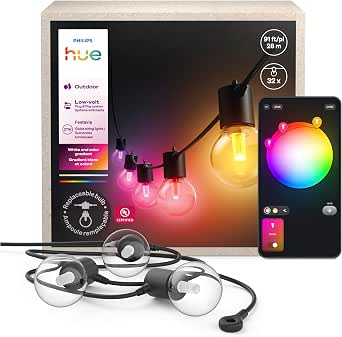
Philips Hue Festavia Globe Outdoor String Lights, 32 Bulbs, 91 ft

Coway Airmega 250 Air Purifier for Large Rooms
As an affiliate, we earn on qualifying purchases.
Intel’s Long-standing Power Efficiency Race Against ARM
For years, ARM-based processors have led in energy efficiency, powering most smartphones, tablets, and many laptops. ARM’s architecture benefits from a design optimized for low power consumption, making it the choice for battery-powered devices and large-scale data centers prioritizing energy savings. Intel, traditionally dominant in high-performance computing, has struggled to match ARM’s efficiency in mobile and low-power segments.
Recent years have seen Intel attempt to close this gap with various low-power architectures, but progress has been incremental. The company’s latest announcement suggests a more substantial leap, potentially redefining the competitive landscape. The industry has been watching closely for independent validation of Intel’s claims, as the performance per Watt metric is critical for both consumer and enterprise markets.
Prior to this, ARM’s dominance was reinforced by the widespread adoption of its architectures in mobile devices and growing presence in servers. The new Intel chips aim to challenge this status quo, especially if they can deliver comparable or better energy efficiency at scale.
“Our new architecture marks a significant step forward in energy-efficient performance, positioning Intel to compete directly with ARM in markets where power consumption is critical.”
— Pat Gelsinger, Intel CEO
Verification of Performance Claims Still Pending
It is not yet clear whether independent benchmarks will confirm Intel’s performance per Watt improvements. The company’s data is based on internal testing, and third-party evaluations are still forthcoming. The actual impact on consumer and enterprise markets depends on these validations and real-world performance across diverse workloads.
Upcoming Independent Testing and Market Adoption
Industry experts and third-party labs are expected to conduct detailed benchmarks over the coming months. Intel might also introduce new chips based on this architecture in upcoming product cycles. Market adoption will depend on verified performance, manufacturing scalability, and how competitors respond.
Key Questions
Can Intel really outperform ARM in energy efficiency?
While Intel has announced promising improvements, independent testing is needed to confirm if their chips truly surpass ARM in performance per Watt across various workloads.
What does this mean for consumers and data centers?
If verified, Intel’s advancements could lead to longer battery life in mobile devices and lower energy costs for data centers, potentially shifting market dynamics.
Will Intel’s new architecture replace ARM chips?
It’s too early to say. Market adoption depends on verified performance gains, manufacturing capacity, and how well the chips integrate into existing ecosystems.
When will independent benchmarks be available?
Third-party testing is expected to begin within the next few months, with results likely emerging by early 2024.
How might competitors respond to Intel’s claims?
ARM and other chipmakers could accelerate their own energy-efficient designs or improve existing architectures to maintain their market lead.
Source: hn