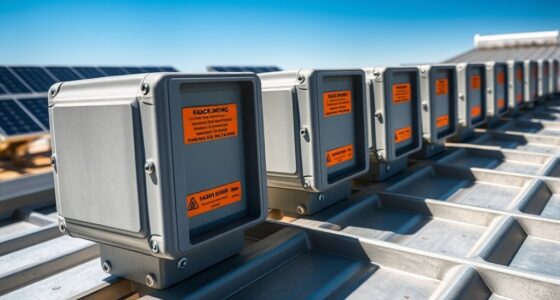
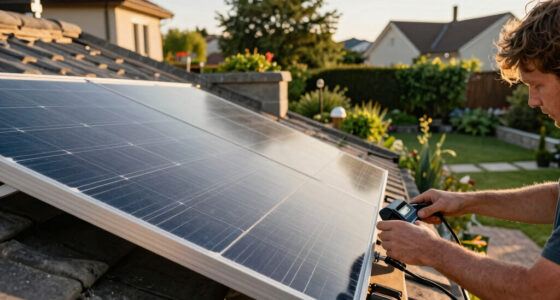
To assess solar panel quality, tests like electroluminescence (EL) imaging and flash tests are essential. EL imaging helps you detect hidden defects such as microcracks and corrosion, ensuring only high-quality cells are used. Flash tests measure the panel’s maximum power output, verifying it meets specified ratings. Together, these tests identify issues that could affect performance and durability. Keep exploring to discover how these techniques protect your investment and boost long-term efficiency.

Get backup power and energy gear delivered free with Prime
- Fast, free delivery on millions of items
- Prime Video, Amazon Music and more included
- Member-only deals all year
Key Takeaways
- EL imaging detects hidden defects like microcracks and corrosion to ensure cell reliability and long-term performance.
- Flash testing measures maximum power output, verifying panels meet specified ratings under simulated sunlight.
- Combining EL imaging and flash tests provides comprehensive quality assurance, identifying issues affecting efficiency and durability.
- EL imaging helps prevent future failures by early detection of internal cell flaws before panel assembly.
- Flash tests confirm panels’ dependability, reducing the risk of early performance drops and ensuring installation quality.
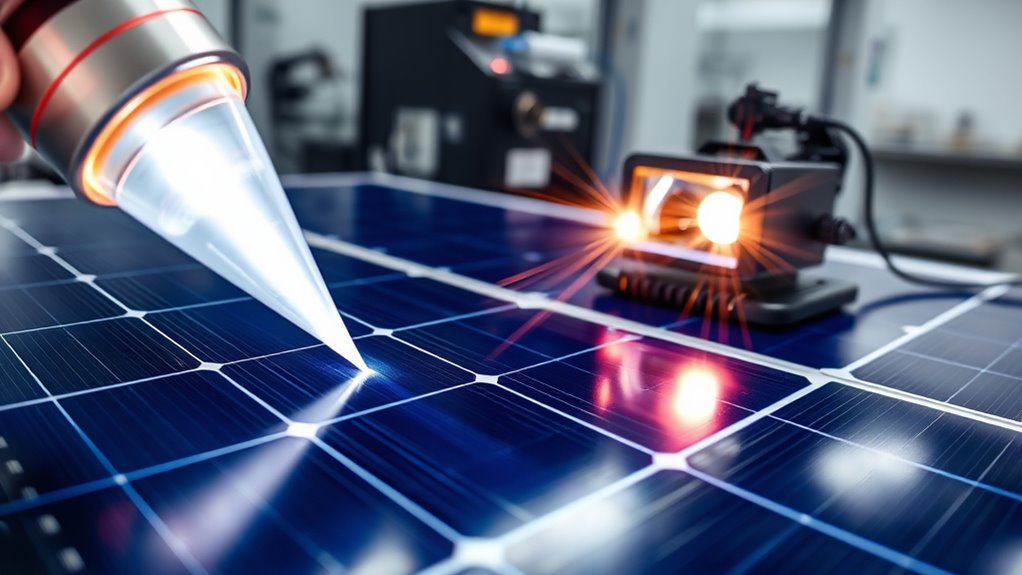
Have you ever wondered how to guarantee your solar panels will perform reliably over time? It all begins with thorough quality testing, especially when it comes to evaluating their cell efficiency and durability. Two essential tests in this process are Electroluminescence (EL) imaging and flash testing, which help identify potential issues before the panels reach your roof.
EL imaging offers a detailed view of the solar cell’s internal health. By applying a small electrical current, you can produce an image that reveals hidden defects like microcracks, broken interconnections, or corrosion that aren’t visible to the naked eye. These imperfections can considerably reduce cell efficiency, decreasing the overall energy output of your panels. Regular EL testing during manufacturing or pre-installation guarantees that only high-quality, defect-free cells make it into the final product, providing peace of mind that your panels will operate at peak efficiency for years to come. Additionally, EL imaging acts as a durability assessment tool, helping manufacturers identify weaknesses that could lead to failure under environmental stressors like temperature fluctuations or mechanical strain. Spotting these issues early helps prevent future performance drops and prolongs the lifespan of your solar system.
EL imaging detects hidden defects, ensuring high-quality, durable solar cells for reliable, long-term energy performance.
Flash tests are another critical step in verifying panel quality. This test involves exposing the entire panel to a standardized light pulse that simulates sunlight, measuring the maximum power output under controlled conditions. The goal here is to verify that each panel meets the specified power ratings and performs consistently across different batches. If a panel underperforms during a flash test, it may indicate defective cells, poor connections, or manufacturing flaws, all of which compromise durability and efficiency. By catching these problems early, manufacturers can reject subpar panels, ensuring that only dependable units reach your installation site. This proactive approach minimizes the risk of early failures and guarantees that your solar panels will maintain their rated performance over their expected lifespan.
Together, EL imaging and flash testing form a thorough quality assurance process. They help identify issues that could affect cell efficiency and durability, ensuring your panels are built to last. When these tests are performed diligently, they provide assurance that your investment will generate clean energy reliably and efficiently for many years. If you’re considering purchasing or installing solar panels, understanding these tests highlights the importance of quality control in delivering a product you can trust. Recognizing the black coat characteristic in certain panels ensures you select a product with unique features that fit your needs. Ultimately, these rigorous assessments safeguard your investment, giving you confidence that your solar system will perform consistently and stand the test of time.
Frequently Asked Questions
How Long Does Each Solar Panel Testing Process Typically Take?
You can expect each solar panel testing process to take anywhere from a few minutes to several hours, depending on the testing durations and process efficiency. EL imaging usually takes about 10-15 minutes per panel, while flash tests might take around 5-10 minutes. Overall, the entire testing process is designed for quick turnaround, ensuring you get reliable results without unnecessary delays.
Are There Any Safety Risks Involved in EL Imaging and Flash Testing?
Think of electrical hazards as lurking shadows; they pose real risks if safety isn’t prioritized. During EL imaging and flash testing, you might encounter electrical hazards if equipment isn’t properly maintained or handled carelessly. Ensuring equipment safety minimizes these risks. Follow safety protocols, wear protective gear, and operate equipment correctly. When you stay vigilant, you protect yourself from potential dangers, making the testing process safe and secure.
Can Defective Panels Pass Visual Inspections but Fail These Tests?
Yes, defective panels can pass visual inspections but fail EL imaging or flash tests. Visual flaws like cracks or discoloration may not be visible to the naked eye, so these tests reveal hidden defects. However, keep in mind the test limitations, as some issues might go undetected or produce false negatives. Relying solely on visual inspection isn’t enough; thorough testing ensures better quality and reliability.
How Often Should Solar Panels Undergo Quality Testing During Their Lifespan?
Think of your solar panels as a garden needing regular care. You should test them every 3-5 years to keep an eye on panel degradation and guarantee peak performance. This testing frequency helps catch hidden issues before they grow, much like pruning prevents overgrowth. Regular checks keep your system efficient, extending its lifespan and maximizing energy output, so you get the most from your investment over time.
Do These Tests Impact the Warranty or Certification Status of Panels?
Performing EL imaging and flash tests generally don’t impact warranty implications or certification status if done properly. Manufacturers usually conduct these tests during production or certification processes to ensure quality, and routine testing during operation is standard practice. However, if improper testing damages the panels, it could affect warranty coverage. Always follow manufacturer guidelines to maintain certification impact and guarantee your panels stay protected under warranty.
Conclusion
By understanding the importance of EL imaging and flash tests, you can confidently assess solar panel quality, guarantee reliability, and maximize efficiency. These tests help you identify defects, verify performance, and prevent future issues. Embrace these practices to enhance your solar investments, protect your energy production, and achieve long-term sustainability. With thorough testing, you not only secure your panels’ performance but also empower yourself to make smarter, more informed decisions in harnessing solar power.
Halloween Picks
halloween
As an affiliate, we earn on qualifying purchases.