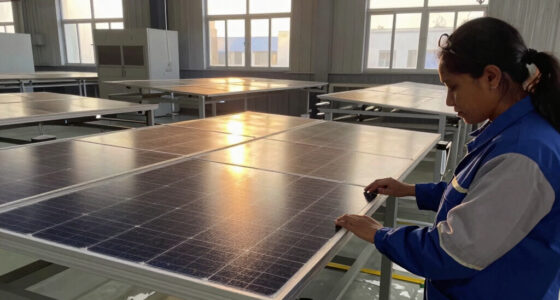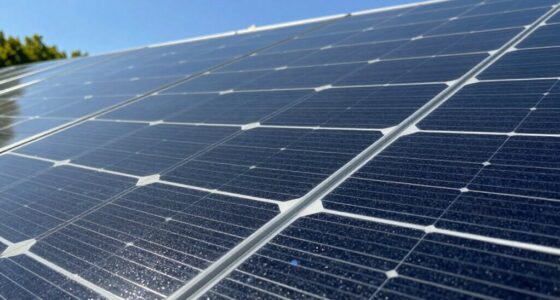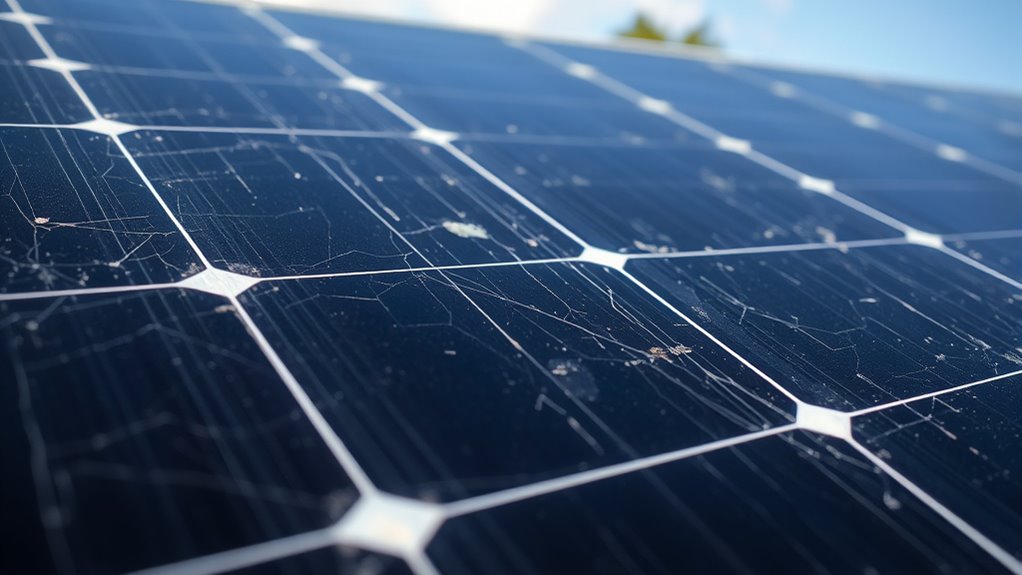
Solar panel degradation rates typically range from 0.3% to 1% annually, meaning over time, their efficiency gradually declines. Most panels are designed to retain around 80-85% of their original capacity after 25 years, with higher-quality panels lasting longer and degrading more slowly. External factors like dirt, shading, and weather can accelerate this loss. Understanding these rates helps you plan better for long-term energy production, so keep exploring to learn how to maximize your system’s lifespan.
Key Takeaways
- Typical solar panel degradation rates range from 0.3% to 1% annually, impacting long-term efficiency.
- Most panels retain 80-85% of original capacity after 25 years, depending on quality and warranty.
- Higher degradation rates accelerate efficiency loss, reducing energy output and financial returns over time.
- Environmental factors like temperature, shading, and dirt can increase degradation beyond natural decline.
- Good warranties and maintenance help ensure panels perform reliably throughout their expected lifespan.
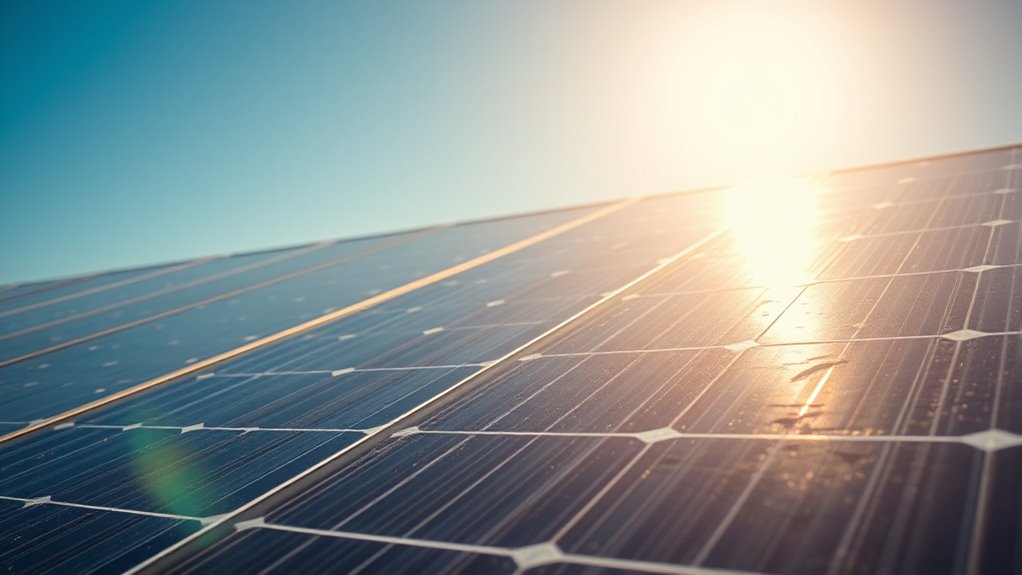
Solar panels gradually lose efficiency over time, a process known as degradation. This means that, after installation, the amount of sunlight your panels convert into electricity will slowly decrease. Usually, this performance decline is small during the first few years, but it accelerates gradually over the panel’s lifespan. Most manufacturers specify a degradation rate, often around 0.5% to 1% per year, meaning your panels might produce slightly less power each year. While this decline is expected, it’s important to understand how it impacts your system’s overall performance and financial returns. If your panels degrade faster than the warranty covers, you could face unexpected costs or reduced savings. That’s why warranty implications are vital when choosing solar panels. A good warranty should guarantee a minimal performance decline within a specified period, often 25 years. Typically, this warranty promises that your panels will produce at least 80% to 85% of their original capacity at the end of the term. If they fall below this threshold prematurely, the manufacturer is responsible for repairs or replacements. Knowing the warranty’s coverage helps you gauge the long-term reliability of your investment. It also offers peace of mind, knowing that potential performance decline won’t lead to immediate financial loss. When evaluating different panels, pay close attention to the degradation rate listed in the product specifications. Lower rates indicate that your panels will retain their efficiency longer, providing better value over time. Some premium panels have degradation rates as low as 0.3%, which means they lose less efficiency annually. In contrast, panels with higher rates could reduce your system’s output considerably over the years, impacting your energy savings and return on investment. It’s also wise to consider how the manufacturer’s warranty addresses performance decline. Some warranties are pro-rated, meaning the company’s obligation decreases as your panels age, while others offer full replacement or repair if the degradation exceeds a certain percentage. Keep in mind that environmental factors, such as high temperatures, shading, and dirt accumulation, can influence the actual degradation rate. Proper maintenance can help minimize additional performance decline caused by external factors. Additionally, understanding the degradation rates and warranty terms can help you plan for future system updates or replacements, ensuring continued energy production. Overall, understanding the natural performance decline of solar panels and their warranty implications allows you to make an informed decision. It guarantees you select a system that will serve you efficiently for decades, with predictable performance and manufacturer support should degradation occur. This knowledge helps you maximize your solar investment, ensuring consistent energy production and long-term savings.

ZOUPW 100W Portable Solar Panel for Power Station,23.5% Efficiency Mono Foldable Solar Charger for Jackery 300/Ecoflow River/Anker/Bluetti,IP67 Waterproof for Camping RV Off-Grid Emergency Power
- High-Efficiency Monocrystalline Cells: 23.5% conversion rate for faster charging
- Adjustable Kickstands for Optimal Angle: Angles up to 45° for maximum sunlight capture
- Universal 5-in-1 Connectivity: Fits 99% of power stations without adapters
As an affiliate, we earn on qualifying purchases.
As an affiliate, we earn on qualifying purchases.
Frequently Asked Questions
How Do Environmental Factors Influence Solar Panel Degradation?
Environmental stress considerably impacts your solar panels by accelerating material aging and causing degradation. Harsh conditions like extreme temperatures, humidity, and UV exposure wear down the panel materials over time. This leads to reduced efficiency and shorter lifespan. To protect your investment, guarantee proper installation, regular maintenance, and consider panels with enhanced resistance to environmental stress. Staying proactive helps you minimize degradation and extend your panels’ performance.
What Maintenance Extends a Solar Panel’s Lifespan?
You can extend your solar panel’s lifespan by maintaining regular cleaning routines to remove dirt, debris, and bird droppings that block sunlight. Additionally, sticking to inspection schedules helps you identify and address issues like cracks or corrosion early. Keep an eye on connections and mounting hardware, and promptly fix any problems. Consistent maintenance guarantees ideal performance and prolongs your panels’ durability, saving you money over time.
Are There Warranties Covering Degradation Beyond Initial Estimates?
Yes, many solar panel warranties cover degradation beyond initial estimates. You should check the warranty coverage carefully, as most manufacturers guarantee a certain level of performance for 25 years, often including coverage for unexpected degradation. This means if your panels degrade more than the predicted rate, the warranty may cover repairs or replacements. Always review the degradation estimates specified in the warranty to understand what’s protected over the panel’s lifespan.
How Does Panel Orientation Affect Degradation Over Time?
Your panel orientation, including tilt and facing direction, substantially impacts degradation over time. Proper panel tilt maximizes sunlight exposure, reducing shading effects and preventing uneven wear. Avoid shading from nearby objects, as it causes hot spots that accelerate degradation. By optimizing your panel tilt and ensuring minimal shading, you extend your panels’ lifespan and maintain efficiency, ultimately protecting your investment and ensuring consistent energy production over the years.
Can Technological Advances Reduce Long-Term Degradation Rates?
Yes, technological advances can help reduce long-term degradation rates. Imagine your panels staying vibrant longer, thanks to innovative coatings that resist environmental wear. Material improvements enhance durability, ensuring your system remains efficient over time. With ongoing research, you’re likely to see even better longevity, making your investment more resilient and reliable. These advancements paint a hopeful picture of solar technology’s future, helping you enjoy sustained energy production without worry.

AeternaSol 400w Solar Panel,2pcs 200 Watt Bifacial Solar Panel,12V N-Type
- High Efficiency Cells: Up to 25% efficiency with A+ cells
- Night Energy Loss Prevention: Reverse current blocking diode technology
- Weather Resistant Design: IP68 waterproof and dustproof certification
As an affiliate, we earn on qualifying purchases.
As an affiliate, we earn on qualifying purchases.
Conclusion
Understanding solar panel degradation rates helps you plan for long-term energy needs. On average, panels lose about 0.5% of their efficiency each year, meaning they can last around 25-30 years with minimal performance loss. That’s like still operating at about 85-90% efficiency after three decades! So, when you invest in solar, you’re not just saving money now — you’re building a sustainable, reliable energy future that can serve you for decades to come.

Buyplus 30FT Reach Solar Panel Cleaning Brush Kit with 5-24FT Telescoping Pole, Water Fed Window Cleaner Tool with 20" Brush, Soap Dispenser, Cobweb Duster, Squeegee for Roof, RV, Gutter, Deck,Orange
- Wide 20" Cleaning Brush: Large coverage for solar panels
- High-Density Nylon Bristles: Protects photovoltaic panels during cleaning
- Four High-Flow Nozzles: Extensive water coverage for deep cleaning
As an affiliate, we earn on qualifying purchases.
As an affiliate, we earn on qualifying purchases.

200A Digital Watt Meter Solar Panel Power Analyzer Voltage Current Tester
- Multi-Functional Measurement: Measures voltage, current, power, capacity, and time
- High Precision: 0.01A current, 0.01V voltage, 0.01W power accuracy
- Wide Compatibility: Suitable for solar, wind, EV, and batteries
As an affiliate, we earn on qualifying purchases.
As an affiliate, we earn on qualifying purchases.