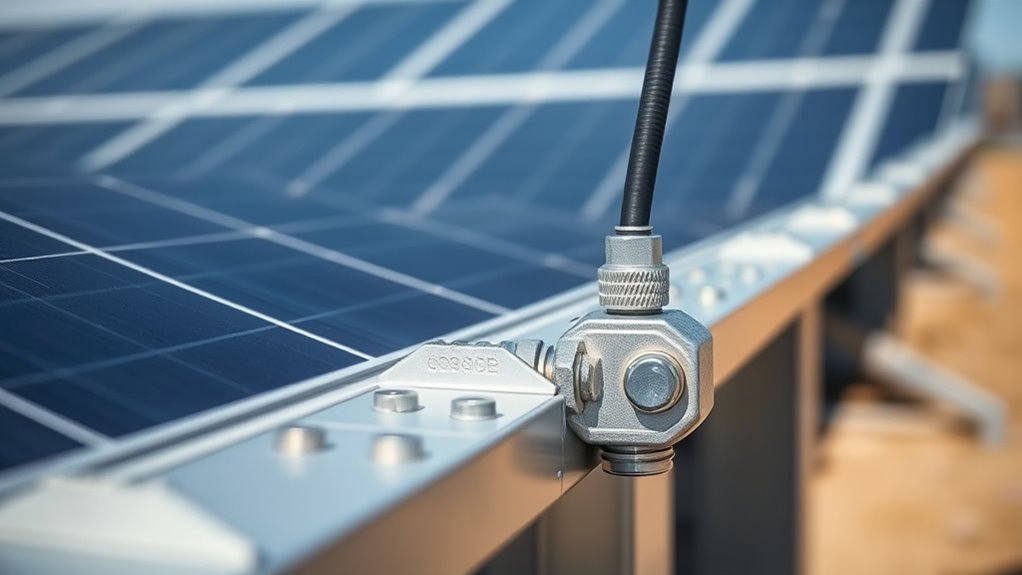
When installing solar panels, using the right grounding lugs and equipment is essential for safety and system performance. Select compatible ring or compression lugs that match your wire gauge and material, ensuring secure connections. Proper installation involves cleaning contact points, tightening bolts to specifications, and making sure all components are corrosion-resistant and outdoor-rated. Following these steps helps maintain a reliable grounding system. Keep going to discover more tips on creating a safe and efficient solar setup.
Key Takeaways
- Select compatible grounding lugs designed for solar panel systems, ensuring proper size and material (copper or aluminum).
- Use corrosion-resistant grounding lugs and equipment rated for outdoor solar applications to ensure durability.
- Properly strip conductors and securely crimp or bolt grounding lugs to maintain low-resistance, reliable connections.
- Connect all grounding components to a common grounding bus or rod, following electrical codes and manufacturer guidelines.
- Regularly inspect and maintain grounding lugs and equipment to prevent corrosion, looseness, or damage, ensuring system safety and performance.
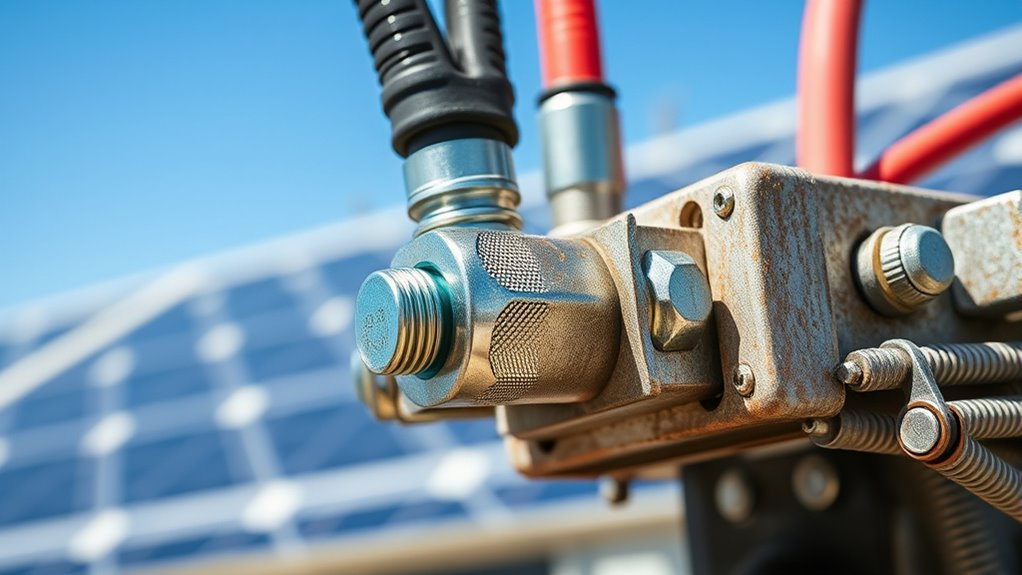
Proper grounding of solar panel systems is essential for safety and ideal performance. When you’re setting up a solar power system, understanding the different grounding lug types is vital. These lugs serve as the connection points that link your solar panels, racking, and other equipment to the grounding system, guaranteeing that any electrical faults are safely directed into the earth. There are various grounding lug types available, including ring terminals, compression lugs, and clamp-style connectors. Each type offers specific advantages, so choosing the right one depends on your system’s design and the materials you’re working with. For example, ring terminals provide a solid, secure connection when attached with a bolt, making them suitable for permanent installations. Compression lugs, on the other hand, are excellent for high-current connections and offer tight, reliable contact when properly crimped. Clamp-style connectors are often used in more flexible setups and can be quickly installed or removed as needed. The key is to select grounding lug types that are compatible with your wiring gauge and the grounding conductor material, such as copper or aluminum.
Equally vital is applying the correct equipment installation techniques to guarantee a robust and compliant grounding system. When installing grounding lugs, make sure to strip the insulation properly from the wire, exposing enough conductor to make a solid connection without damaging the wire. Secure the wire firmly within the lug, avoiding loose connections that could lead to increased resistance or corrosion over time. Use appropriate tools, like crimpers for compression lugs, to ensure a tight fit, and always torque bolts to manufacturer specifications. Properly tightening connections minimizes the risk of arcing and ensures consistent electrical continuity. Additionally, when attaching the lug to the equipment or mounting structure, verify that all contact points are clean and free of rust, paint, or debris. This helps maintain low resistance pathways and enhances system safety.
Furthermore, your equipment installation techniques should include grounding the entire system according to local electrical codes and standards. This often involves connecting all grounding components to a common grounding bus or grounding rod driven into the earth. Make sure that the grounding conductor is continuous and properly secured at every connection point. Using grounding lugs designed for outdoor use and corrosion resistance adds longevity and reliability to your system. Regular inspections can help identify any loose or corroded connections, allowing you to address issues before they compromise safety or performance. To ensure the longevity and safety of your system, choosing appropriate grounding lug types that are rated for outdoor use and compatible with your materials is crucial. By paying close attention to the selection of grounding lug types and adhering to sound equipment installation techniques, you create a safe, efficient, and compliant solar power system that performs reliably over its lifespan.

QWORK Grounding Lug 25 Pack – Aluminum Alloy Solar Rail Connector for Rooftop, Ground Mount & Carport Systems – Fits 14-6 AWG Wire, PV Mounting Clip
RELIABLE GROUNDING CONNECTION: Establishes a secure bond between your solar mounting rails and the grounding wire, a critical…
As an affiliate, we earn on qualifying purchases.
As an affiliate, we earn on qualifying purchases.
Frequently Asked Questions
How Do Grounding Lugs Prevent Electrical Shock?
Grounding lugs prevent electrical shock by providing a safe path for stray currents to securely dissipate into the ground. When you perform grounding lug installation properly, you reduce the risk of dangerous voltage buildup that could shock you or others. This electrical shock prevention ensures your solar system remains safe to work on and minimizes the risk of electrical accidents, protecting both you and your equipment effectively.
Can Grounding Equipment Be Reused for Different Solar Systems?
You can’t reuse grounding equipment across different solar systems without verifying for compatibility. Grounding equipment reuse depends on the solar system grounding compatibility, as each system may have unique grounding requirements. Reusing grounding lugs or equipment without proper verification risks improper grounding, which can be unsafe. Always inspect and confirm that the grounding components meet the specifications of the new system before reuse to ensure safety and compliance.
What Are the Signs of Faulty Grounding Connections?
Did you know that improper grounding causes about 10% of solar system failures? You’ll notice faulty grounding connections if you see corrosion on the grounding connection or loose grounding terminals. These signs indicate poor contact, risking safety and system performance. Regular inspections help catch these issues early. If you spot corrosion or loose terminals, tighten or replace the grounding components to keep your system safe and functioning efficiently.
Are There Specific Grounding Requirements for Outdoor Solar Panels?
Yes, outdoor solar panel installations must follow specific grounding standards to guarantee safety and proper operation. You should use grounding methods compliant with local electrical codes, such as UL standards, and ensure all grounding connections are secure and corrosion-resistant. Proper grounding in outdoor installations minimizes electrical faults and protects against lightning strikes. Always verify that your grounding system meets the requirements for outdoor solar panels to maintain system integrity and safety.
How Often Should Grounding Connections Be Inspected or Maintained?
You should inspect your grounding connections at least once a year. Follow a regular inspection schedule to make certain of safety and proper functioning. During maintenance procedures, look for corrosion, loose connections, or damage that could compromise grounding. If you notice any issues, tighten connections or replace damaged components promptly. Regular maintenance helps prevent electrical faults and extends the lifespan of your solar system, keeping it safe and efficient.

Two Hole Lug Compression Connector, 8 AWG
Price For: Each Tongue Style: Standard Connector Type: Straight Barrel Hole Center to Center: 0.625" Length: 2.06" Hole…
As an affiliate, we earn on qualifying purchases.
As an affiliate, we earn on qualifying purchases.
Conclusion
By choosing the right grounding lugs and equipment, you guarantee safety, improve system performance, and prevent damage. Proper grounding protects your panels, your investment, and your home. Using quality components, following best practices, and staying vigilant keeps your solar setup reliable and efficient. Grounding isn’t just a step—it’s a safeguard, a necessity, and a commitment. Prioritize safety, enhance performance, and protect your system by paying close attention to your grounding practices.
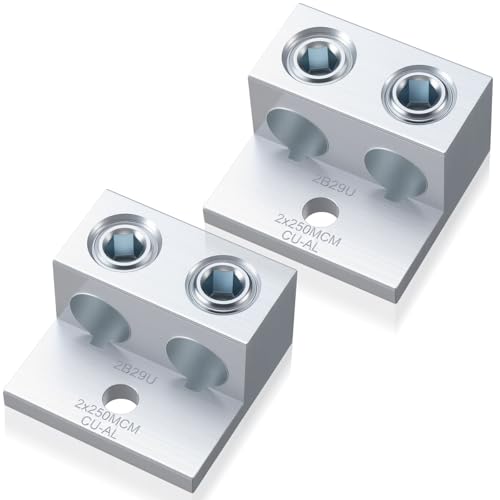
Blulu 2 Pieces Dual Aluminum Ground Lug Dual Rated Double Wire Barrel Aluminum Mechanical Lug (250 Mcm-6sol)
This package includes 2 dual rated grounding lugs, providing flexibility and multiple solutions for various electrical grounding needs;…
As an affiliate, we earn on qualifying purchases.
As an affiliate, we earn on qualifying purchases.

16 Pack Solar Panel Grounding Clamps Set – Aluminum Alloy Thunder Protection Grounding Clips for PV Mounting Systems (Silver)
【Thunder Protection & Safety】Designed to collect static electricity from solar panels and mounting structures, directing it safely to…
As an affiliate, we earn on qualifying purchases.
As an affiliate, we earn on qualifying purchases.