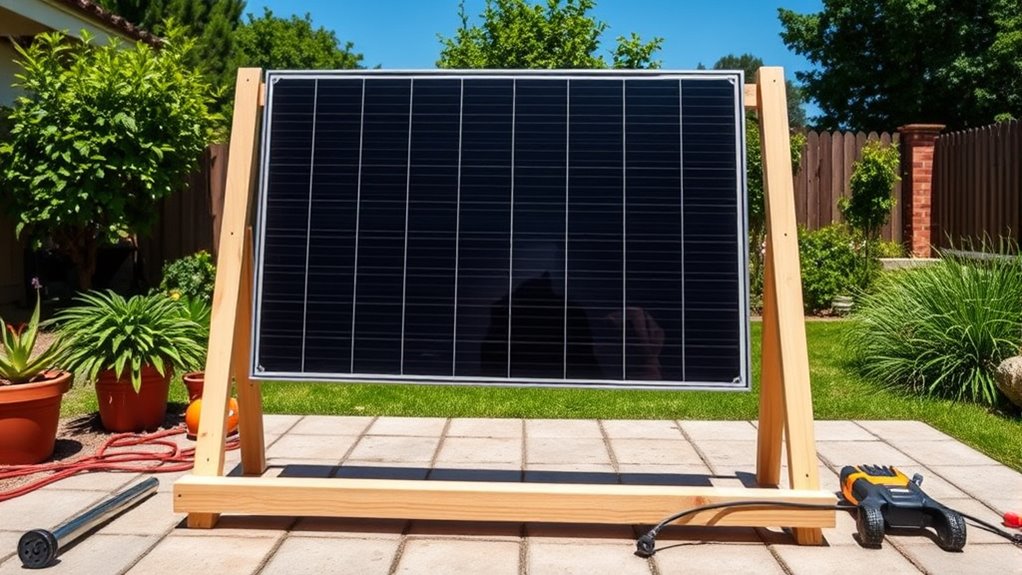
To build a DIY solar panel stand, select weather-resistant materials like treated lumber, galvanized steel, or PVC based on your climate and panel weight. design adjustable tilt and height features using brackets or support slots to optimize sunlight capture throughout the year. Reinforce joints with sturdy fasteners and add cross braces for stability. Make certain your structure is level and secure, and consider modular parts for easy adjustments. Keep going to learn more tips for a durable, efficient setup.
Key Takeaways
- Choose weather-resistant materials like treated lumber, galvanized steel, or heavy-duty PVC based on climate and panel weight.
- Design for an adjustable tilt of 30-45 degrees using brackets, hinges, or support slots for seasonal optimization.
- Secure joints with sturdy fasteners, add cross braces or diagonal supports, and ensure stability against outdoor forces.
- Incorporate modular and adjustable features for easy repositioning and maintenance, using lightweight materials for portability.
- Verify the structure is level, stable, and weather-resistant before installation to maximize solar energy capture and durability.
Ever wondered how to build a sturdy, cost-effective stand for your solar panels? If you’re looking to maximize your solar energy setup without breaking the bank, creating your own stand is a smart move. The first step is understanding the solar panel materials you’ll need. You want something durable and weather-resistant, like treated lumber, galvanized steel, or heavy-duty PVC pipes. These materials can withstand the elements and provide long-lasting support. Wood is easy to work with and affordable, but make sure it’s treated to resist rot. Metal stands are more robust and require less maintenance, while PVC offers a lightweight, rust-proof option. Choosing the right materials depends on your local climate, budget, and the weight of your panels.
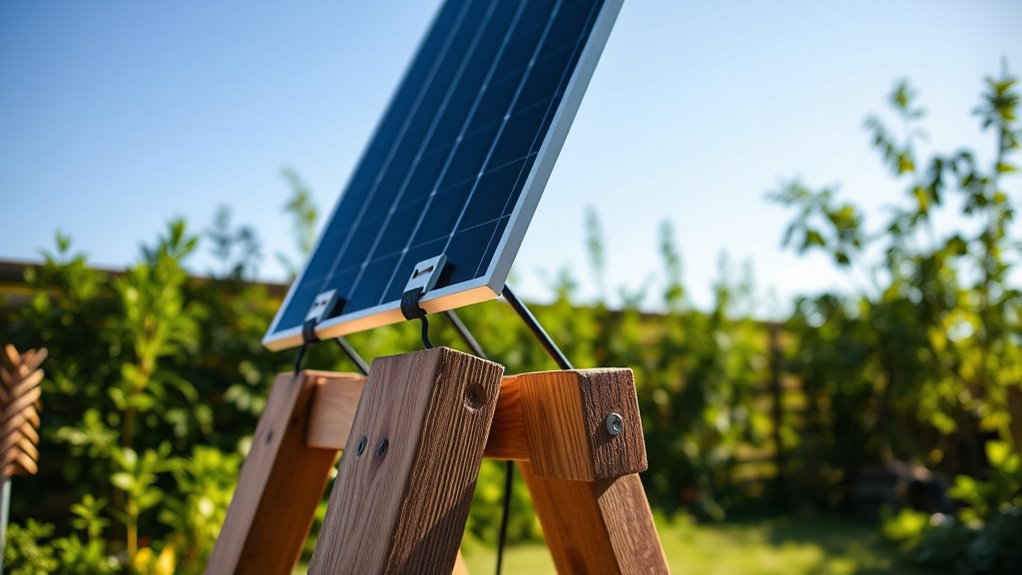
Next, think about the stand height adjustment. Proper height is vital for maximum sunlight exposure and ease of maintenance. You should aim for a stand height that keeps your solar panels tilted at the ideal angle for your location—usually between 30 and 45 degrees. To achieve this, incorporate adjustable features into your stand design. For example, you can build a base with multiple slots or holes where you can insert support beams at different heights. Alternatively, use adjustable brackets or hinges that allow you to modify the tilt and height as needed. This flexibility helps you fine-tune the panels’ position throughout the year, capturing the maximum sunlight and increasing efficiency.
Adjust your stand height with adjustable brackets or support slots for optimal sunlight and maintenance.
When constructing the stand, make sure to secure all joints tightly. Use sturdy fasteners like galvanized bolts, screws, or stainless steel brackets to prevent rust and guarantee stability. If you’re working with wood, consider adding cross braces or diagonal supports to enhance strength and prevent wobbling. For metal frames, welding or heavy-duty brackets can provide extra durability. Remember, the goal is a stable, weather-resistant structure that can handle wind and other outdoor forces.
Additionally, incorporating adjustable features can significantly enhance the functionality of your stand by allowing seasonal modifications and optimizing performance. Remember, the goal is a stable, weather-resistant structure that can handle wind and other outdoor forces.
Finally, don’t forget to think about portability if you plan to move or adjust your setup frequently. Lightweight materials and a simple, modular design will make it easier to reposition your solar panels when needed. Also, verify your stand is level and secure to avoid any tilting or slipping. With the right materials, thoughtful height adjustment, and solid construction, you’ll create a DIY solar panel stand that’s both affordable and effective, boosting your solar energy harvest and making your project a rewarding success.
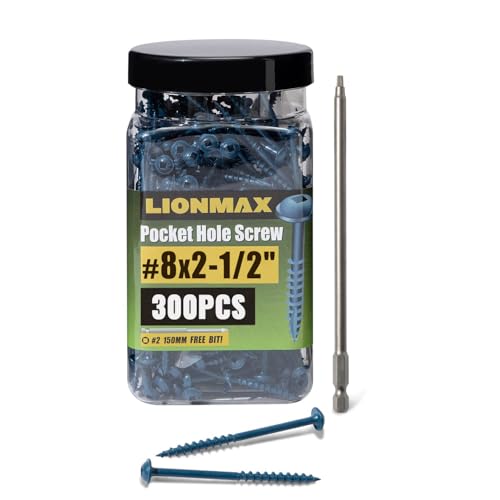
LIONMAX Pocket Hole Screws 2-1/2 Inch, 300 PCS Exterior Pocket Screw #8 x 2-1/2", Coarse Thread, Square Drive, Washer Head, Blue Coated Weather Resistant, 150MM Drive Bit Included
- Blue Coating for Corrosion Resistance: Weather-resistant, rust-proof finish
- Designed for Pocket Hole Joinery: 2-1/2 inch length with washer head
- Square Drive for Better Grip: Reduces stripping and torque
As an affiliate, we earn on qualifying purchases.
As an affiliate, we earn on qualifying purchases.
Frequently Asked Questions
What Tools Are Needed for Building the Stand?
You’ll need basic tools for solar panel mounting in your DIY projects, such as a drill, screwdriver, measuring tape, level, and saw. These tools help you cut, drill, and assemble parts accurately, ensuring your stand is sturdy and properly aligned. A wrench or pliers can also come in handy for tightening bolts. With these tools, you can confidently build a reliable solar panel stand that maximizes your solar energy efficiency.
Can the Stand Be Adjusted for Different Angles?
Yes, your stand can be modified for different angles to maximize efficiency. You’ll want to incorporate angle adjustment features, like adjustable hinges or a tilting mechanism, to enhance stand versatility. This allows you to easily change the solar panel’s tilt throughout the year, optimizing sunlight exposure. By designing your stand with these adjustments in mind, you ensure better performance and flexibility, making your solar setup more effective and adaptable to your needs.
How Weather-Resistant Should the Materials Be?
You should use weatherproof materials with strong corrosion resistance to guarantee your stand withstands the elements. Opt for treated wood, galvanized steel, or aluminum, as these materials resist rust and decay. Applying protective coatings or sealants adds extra durability. This way, your solar panel stand remains sturdy and functional through rain, snow, and sun, maximizing its lifespan and efficiency without frequent repairs or replacements.
Is the Stand Suitable for All Roof Types?
Think of your stand as a sturdy ship ready to weather any storm; it’s suitable for most roof types if you consider roof compatibility and stand stability. You’ll want to make certain it anchors well on different surfaces, from shingles to metal. By adjusting the design for your roof’s angle and material, you make your solar setup reliable and secure, no matter where you place it.
What Is the Estimated Cost of Materials?
The cost estimation for building your DIY solar panel stand varies depending on materials, but generally, you can expect material costs between $50 and $150. You’ll need sturdy lumber, screws, brackets, and possibly paint or sealant. By shopping smart and choosing affordable options, you keep costs low. Remember, investing in quality materials guarantees your stand’s durability and safety, ultimately saving you money in the long run.

2 Sets 45 inch Solar Panel Mount Brackets
- Reliable & Multi-Functional: Torsion and corrosion resistant
- Adjustable Tilt Legs: 0-90° tilt without tools
- Sturdy Construction: High-strength aluminum rails
As an affiliate, we earn on qualifying purchases.
As an affiliate, we earn on qualifying purchases.
Conclusion
Now that you’ve built your own solar panel stand, you’re well on your way to harnessing the sun’s energy and saving money. Remember, a job worth doing is worth doing right, so take pride in your work. With your new setup, you can enjoy clean energy and reduce your carbon footprint. Keep your eyes on the prize and don’t let this project fall by the wayside. The sun’s shining—grab the opportunity and make it count!

SKORVA Center Support Beam, Galvanized Steel Midbeam – Bed Frame Compatible with IKEA Bedframes
- Material: Galvanized steel for durability
- Design: Center support for stability
- Compatibility: Fits IKEA bedframes requiring SKORVA
As an affiliate, we earn on qualifying purchases.
As an affiliate, we earn on qualifying purchases.

CKVIHAV 6Pcs 1/2 Inch PVC Pipe 17" Long Sch40 Industrial Pipes for Home DIY, Greenhouse, Garden, Farm, Workshop, Furniture Grade, White (0.50" x 17"L)
- Pipe Length: 17 inches per pipe
- Pipe Diameter: 1/2 inch Schedule 40
- Material: High-quality PVC for indoor/outdoor use
As an affiliate, we earn on qualifying purchases.
As an affiliate, we earn on qualifying purchases.