
IP ratings on solar panels and accessories show how well they resist dust and water ingress, protecting your system from environmental damage. The first digit indicates protection against solid particles like dust, while the second digit shows water resistance, such as rain or submersion. Higher ratings mean better durability, especially in tough weather conditions. Choosing the right IP rating guarantees your system stays reliable and lasts longer. Keep exploring to learn how to select the best ratings for your needs.
Key Takeaways
- IP ratings indicate the level of protection against dust and water ingress for solar panels and accessories.
- The first digit shows protection against solid particles; the second digit indicates water resistance.
- Higher IP ratings (e.g., IP68) mean better durability in harsh outdoor environments.
- Proper matching of IP ratings ensures system performance and reduces maintenance risks.
- Installation and sealing techniques depend on the specific IP rating requirements.

Understanding the IP rating on solar panels is essential because it indicates how well the panels are protected against dust and water ingress. This rating directly influences your installation requirements and how well your system will withstand various weather conditions. IP, or Ingress Protection, ratings consist of two digits: the first shows protection against solid particles like dust, while the second indicates resistance to liquids such as water. A higher IP rating means better protection, which is crucial if you’re installing panels in environments exposed to dust, rain, snow, or humidity.
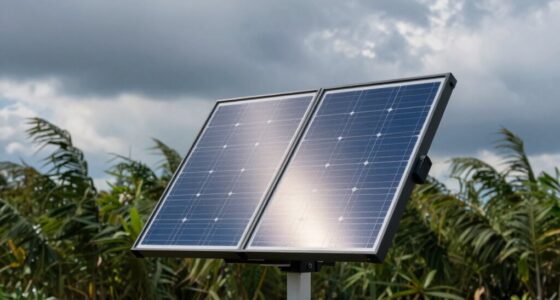
Higher IP ratings ensure better dust and water protection, vital for outdoor solar panel durability and performance.
When selecting solar panels, you need to contemplate the environment where they’ll be installed to meet the appropriate weather resistance standards. For example, if you’re in a dusty or polluted area, a panel with a higher first digit (such as IP6X) ensures dust won’t interfere with performance or cause damage. Conversely, if your location experiences frequent rain or snow, you’ll want a panel with a high second digit (like IP67 or IP68) that guarantees water ingress protection. This helps guarantee your system remains operational and safe over time, even in harsh weather conditions.
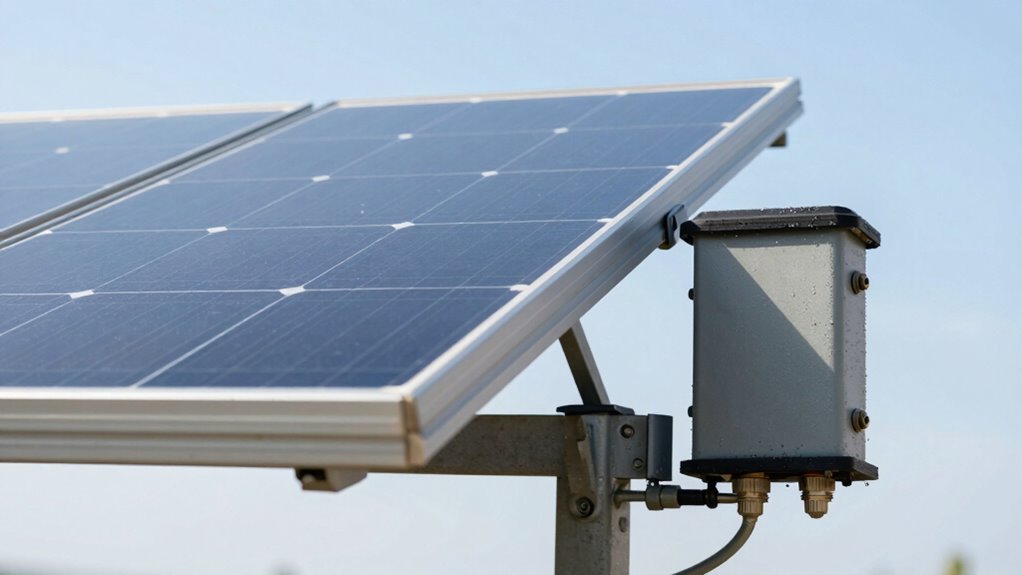
The installation requirements are closely tied to the IP rating because different ratings demand specific mounting and sealing techniques. For instance, a panel rated IP65 can resist water jets but isn’t fully waterproof, so you might need additional sealing or enclosures if you’re installing in areas with heavy rainfall. On the other hand, panels with IP67 or IP68 ratings are designed to be submerged temporarily or withstand continuous exposure to water, reducing the need for extra protective measures. Knowing the IP rating helps you determine whether your installation setup needs additional weatherproofing or if the panels are ready for outdoor use without extra modifications. Proper sealing techniques are essential for ensuring that the protection level indicated by the IP rating is maintained throughout the lifespan of the solar panel. Additionally, selecting components with matching or higher IP ratings can further enhance the weather resistance of your entire solar system. Using appropriate sealing techniques can significantly extend the durability and performance of your solar installation. Being aware of dust and water ingress concerns is also vital for choosing the right protective measures and accessories for your setup.
Weather resistance is a critical factor in maintaining the longevity and efficiency of your solar system. A panel with a suitable IP rating will protect sensitive components from dust and moisture, preventing corrosion and electrical faults. This durability reduces maintenance costs and downtime, ensuring your system performs reliably year-round. When choosing accessories like junction boxes or connectors, look for matching or higher IP ratings to maintain overall weather resistance. Additionally, understanding IP ratings can assist you in selecting compatible components that will uphold the integrity of your entire solar setup.
As an affiliate, we earn on qualifying purchases.
Frequently Asked Questions
How Are IP Ratings Determined for Solar Panels?
You determine IP ratings for solar panels based on their ability to withstand environmental conditions, especially during installation. Testing involves exposing panels to specific levels of dust, water, and other elements, then measuring their resistance. This rating helps you assess their environmental durability and suitability for your installation site. Higher IP ratings mean better protection, ensuring your solar panels perform reliably in diverse weather conditions and environments.
Do Higher IP Ratings Affect Solar Panel Efficiency?
Ever wondered if higher IP ratings impact your solar panel’s efficiency? They don’t directly affect power output, but they boost weather resilience, protecting panels from dust, water, and debris. This means fewer maintenance requirements and consistent performance over time. So, while a higher IP rating doesn’t boost efficiency per se, it guarantees your panels stay cleaner and safer, helping them operate at their best in challenging weather conditions.
Can IP Ratings Change Over a Solar Panel’s Lifespan?
IP ratings generally stay consistent over a solar panel’s lifespan because they depend on the manufacturing quality and environmental durability features. However, extreme weather or physical damage can compromise the panel’s protective seal, potentially lowering its IP rating. You should regularly inspect your panels for any damage or wear, ensuring they maintain their intended resistance to dust, water, and other environmental factors, which safeguards their longevity and performance.
Are IP Ratings Standardized Across Different Manufacturers?
IP ratings are not fully standardized across different manufacturers, as they depend on manufacturer standards and testing procedures. While many follow international standards like IEC, variations can exist in testing methods and interpretations. You should always check specific manufacturer details to understand a solar panel’s or accessory’s actual protection level, rather than relying solely on the IP rating number. This guarantees you get the right protection for your installation environment.
How Do IP Ratings Influence Warranty Coverage?
IP ratings considerably influence your warranty coverage by indicating the environmental durability of solar panels and accessories. Higher ratings suggest better protection against dust and water, aligning with strict manufacturing standards. If your equipment has a low IP rating, manufacturers might limit or deny warranty claims related to environmental damage. Understanding these ratings helps you choose products that meet your durability needs and guarantees your warranty covers potential issues caused by environmental exposure.
dust resistant outdoor solar panels
As an affiliate, we earn on qualifying purchases.
As an affiliate, we earn on qualifying purchases.
Conclusion
Now that you understand what IP ratings mean on solar panels and accessories, you’re better equipped to choose the right equipment for your needs. Remember, it’s better to be safe than sorry—don’t cut corners when it comes to protecting your investment from the elements. By paying attention to these ratings, you’ll guarantee your solar setup stays efficient and durable for years to come. After all, a stitch in time saves nine!
As an affiliate, we earn on qualifying purchases.
weatherproof solar panel enclosure
As an affiliate, we earn on qualifying purchases.
As an affiliate, we earn on qualifying purchases.