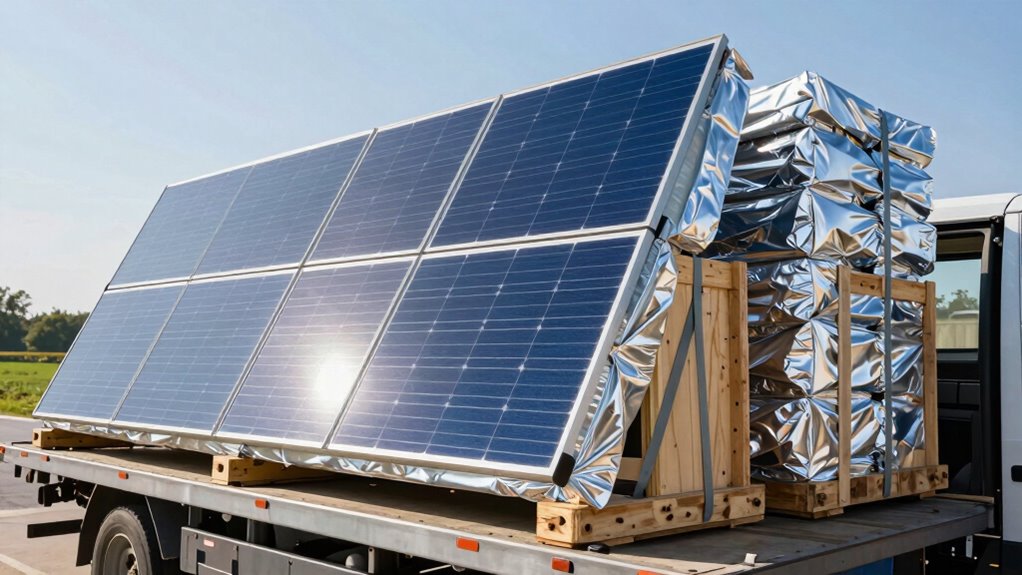
To protect solar panels during transport, guarantee they’re securely mounted using sturdy frames or pallets and tightly strapped without overstressing the panels. Wrap each panel with shock-absorbent materials like foam or bubble wrap, and add corner protectors for extra edges safety. Use weatherproof coverings to prevent moisture damage. Make sure loading is careful, avoiding sudden stops or sharp turns, and use vehicles with suspension to absorb impacts. Keep all securing measures tight throughout transit for safer delivery—discover more essential tips as you continue.
Key Takeaways
- Secure panels firmly with high-quality straps to prevent movement without overstressing or deforming them.
- Use shock-absorbent packaging materials like foam or bubble wrap to cushion panels against impacts.
- Ensure panels are mounted on sturdy frames or pallets designed for safe transport.
- Handle panels carefully during loading and unloading, following proper procedures to avoid damage.
- Regularly inspect securing devices and protective coverings throughout transit for safety and stability.
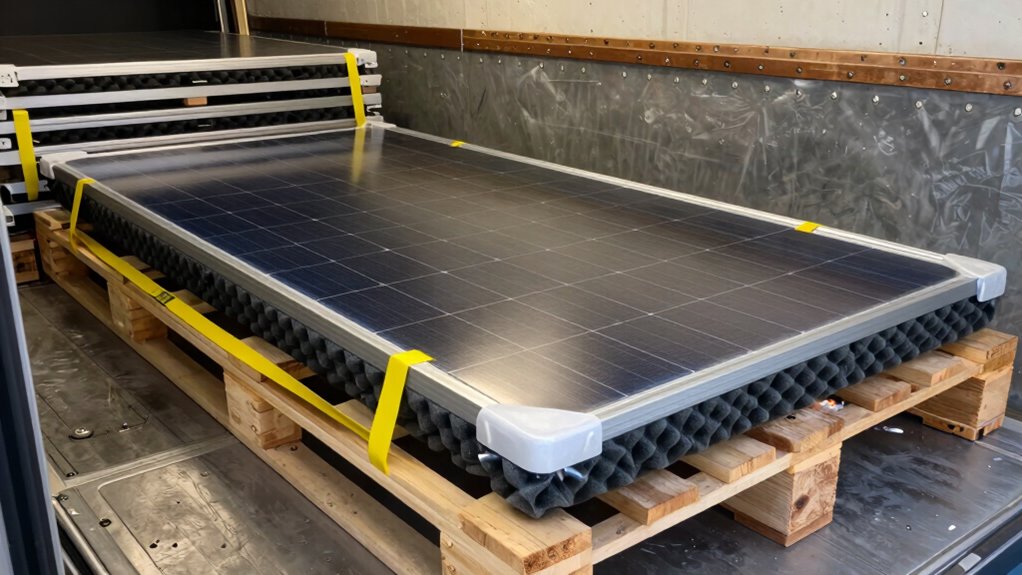
Transporting solar panels requires careful planning to prevent damage and guarantee they arrive in peak condition. Since these panels are delicate and often costly, assuring their safety during transit is essential. When preparing for transport, you need to focus on proper panel mounting to keep everything secure. Properly mounted panels won’t shift or fall during the journey, reducing the risk of cracks, scratches, or other damage. Use sturdy, reinforced frames or pallets designed specifically for solar panel transport. Secure each panel with high-quality straps, making sure they’re tight enough to prevent movement but not so tight that they cause stress or deformation.
Secure panels with sturdy frames and high-quality straps to prevent shifting and damage during transit.
Understanding and adhering to transport regulations is equally important. Different regions or countries may have specific rules regarding the size, weight, and packaging of solar panels. You should familiarize yourself with these regulations well in advance to avoid delays or fines. For example, some transport authorities require certain markings or safety labels on the packaging. Guaranteeing these rules ensures your panels are handled correctly and safely throughout the entire journey. Additionally, check if any permits are needed, especially when transporting large or heavy panels across borders or through restricted zones. Working with carriers experienced in solar panel transportation can help you navigate these regulations smoothly. Being aware of transport safety standards can further prevent compliance issues. Proper packaging techniques can also help mitigate the horsepower of electric dirt bikes or other motorized equipment involved in transportation, which can sometimes cause jolts or impacts. Ensuring proper handling procedures are followed during loading and unloading can significantly reduce the risk of accidental damage.
Packaging plays a vital role in protecting panels during transit. Wrap each panel with shock-absorbent materials like foam or bubble wrap to cushion against impacts. Enclose the panels in weatherproof coverings to prevent moisture damage from rain or humidity. When stacking panels, leave enough space between them to avoid pressure points that could cause cracks. Use corner protectors to shield vulnerable edges, and make sure the entire package is stable and well-balanced before loading onto the transport vehicle. Incorporating proper packaging techniques helps to minimize damage risks during handling and shipping. It’s also helpful to label packages clearly with handling instructions for carriers.
Once your panels are properly secured and packaged, double-check the entire setup before departure. Confirm that all straps are tight, mounting points are stable, and protective coverings are intact. During transit, avoid sudden stops or sharp turns that might shift your load. If possible, choose a vehicle with suspension designed to absorb shocks, minimizing jarring impacts. Regularly inspect the load during long journeys, especially after rough patches or stops, to assure everything remains secure.

6-inch * 100 Foot Solar Panel Protective net, Black PVC Coated Rolled net, with 70 Sets of Fasteners, Anti cat/Squirrel/Bird Intrusion Solar Panel Internal Welding Protective net
- Size and Hole Spacing: 6-inch x 100-foot with 1/2 inch holes
- Durable Material: Galvanized steel with PVC coating
- Corrosion and Rust Resistant: Weatherproof and long-lasting
As an affiliate, we earn on qualifying purchases.
As an affiliate, we earn on qualifying purchases.
Frequently Asked Questions
What Are the Best Packaging Materials for Solar Panels?
You should use sturdy, impact-resistant packaging materials like foam boards, corner protectors, and heavy-duty corrugated cardboard. Incorporate packaging innovations such as inflatable bladders or air cushions to absorb shocks. Opt for eco-friendly materials like recycled cardboard or biodegradable padding to minimize environmental impact. These options guarantee your solar panels stay secure and protected during transport, reducing the risk of damage while supporting sustainable practices.
How Should Solar Panels Be Secured in a Transport Vehicle?
Imagine your solar panels as delicate ships sailing across rough seas. You should secure them with sturdy mounting brackets, acting like anchor chains, to prevent shifting. Use shock absorption padding around the panels, like cushioned life vests, to absorb vibrations and impacts. Fasten everything tightly to the vehicle’s frame, ensuring they stay steady amid bumps and turns. This way, your solar panels arrive safely, ready to harness the sun’s power.
Are There Specific Regulations for Transporting Solar Panels?
You need to follow specific regulations when transporting solar panels, including guaranteeing regulatory compliance and obtaining necessary permits. Check local, state, and federal guidelines, as they often specify securement methods, weight limits, and packaging standards. Failing to meet permit requirements can lead to fines or delays. Always verify all regulations beforehand, document your compliance, and keep permits accessible during transit to avoid issues and ensure safe, legal transport.
How Can I Prevent Theft During Transport?
You can prevent theft during transport by implementing strong security measures like GPS tracking, sealed containers, and secure locks. Always use professional carriers with a proven safety record. Additionally, guarantee your solar panels are covered by extensive insurance coverage that protects against theft and damage. Staying vigilant, coordinating with trusted logistics providers, and documenting everything also help deter theft and provide peace of mind during transit.
What Should I Do if a Solar Panel Gets Damaged in Transit?
Imagine your solar panel as a delicate glass butterfly. If it gets damaged in transit, handle the accidental damage carefully, avoiding further harm. First, document the damage with photos. Then, follow emergency repair steps like covering cracks with plastic or tape to prevent debris penetration. Contact your supplier promptly, and consider professional repairs to ensure safety and maximum performance. Acting quickly can save your investment and restore your system efficiently.

Foamzz by Big UGGLY High-Density Foam Panels, Closed-Cell Insulation Foam Pads, Black, 12" X 12" X 1" (2 Pack)
- Firm Foam Sheets Pads: Made from durable yet cushioning…
- Versatile Craft Foam Pads: Use these pads as bumper…
- Quality Foam Padding: Made from automotive OEM, high-grade,…
As an affiliate, we earn on qualifying purchases.
As an affiliate, we earn on qualifying purchases.
Conclusion
As you secure your solar panels, picture them wrapped in a protective cocoon, ready to glide smoothly over bumps and turns. Imagine the journey as a gentle river, where each carefully placed cushion and strap keeps the panels steady and safe. With your attentive care, the panels stay pristine, their surfaces gleaming like new stars in the night sky. Trust in your preparation, and let your diligent efforts carry them safely to their new home, ready to harness the sun’s energy again.

LINK SOLAR Weatherproof ABS Solar Double Cable Entry Gland
- Cable Compatibility: Suitable for 2mm² to 6mm² cables
- Application Use: Ideal for solar, DC, aerial, satellite
- Installation Options: Fix with sealant or screws
As an affiliate, we earn on qualifying purchases.
As an affiliate, we earn on qualifying purchases.

High-Strength Woven Polyester Hold-Down Strap for Solar Pool Heaters – 150 ft. Roll
- High-strength woven polyester: Ensures secure hold for solar systems
- Protects panels from damage: Durable material prevents panel digging
- Designed for pool solar panels: 5/8 inch width for tight hold
As an affiliate, we earn on qualifying purchases.
As an affiliate, we earn on qualifying purchases.