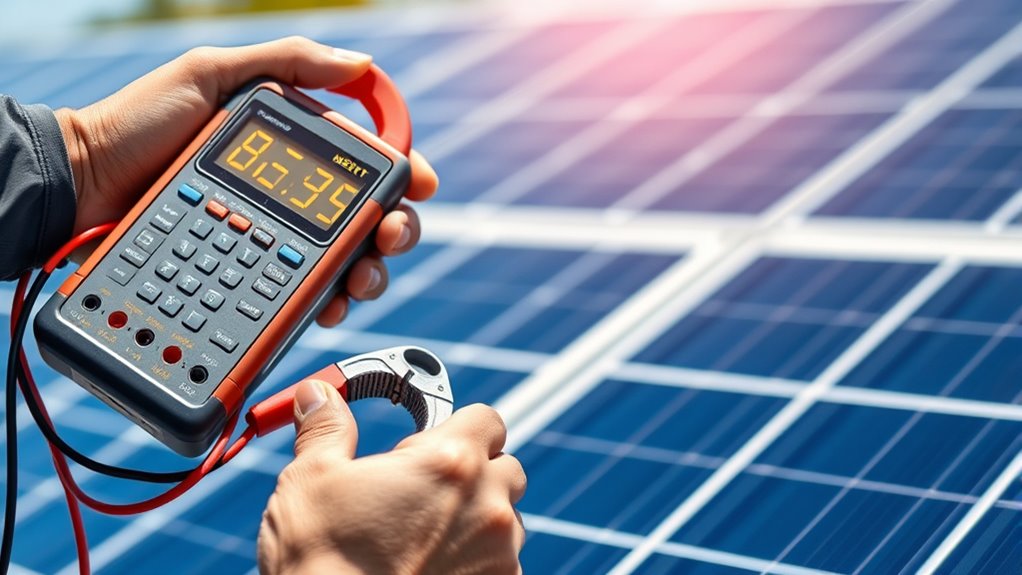
Using the right solar panel testing equipment like multimeters and clamp meters is essential to guarantee your system runs efficiently and reliably. Multimeters help you verify voltage, continuity, and troubleshoot wiring issues, while clamp meters measure current without disconnecting wires. Proper testing can identify problems early and optimize performance. If you want a clear understanding of how to use these tools effectively, there’s more valuable information waiting for you.
Key Takeaways
- Multimeters verify voltage, continuity, and troubleshoot wiring issues in solar panels efficiently.
- Clamp meters measure current without disconnecting wires, ensuring safe, quick diagnostics.
- Both tools help identify faulty components and optimize solar system performance.
- Proper testing with these devices prevents system failures and extends equipment lifespan.
- Accurate measurements from multimeters and clamp meters improve system setup and maintenance.
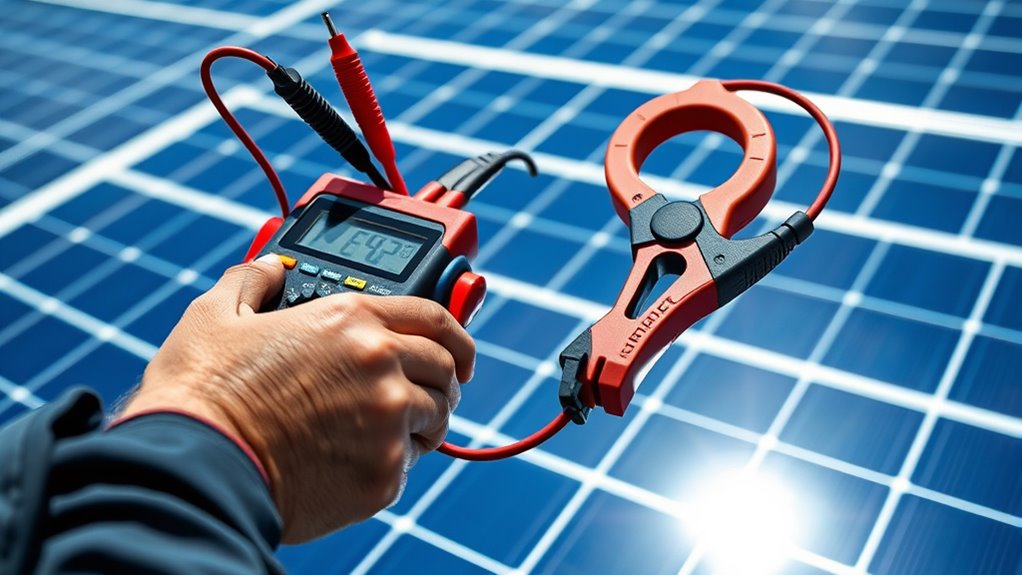
Solar panel testing equipment plays a crucial role in ensuring your solar systems perform efficiently and reliably. When you’re working to optimize or troubleshoot a solar installation, accurate testing tools are essential. Among these, devices like multimeters and clamp meters are your go-to instruments. They help you measure electrical parameters safely and precisely, but for more specialized tasks like solar panel calibration, you’ll need equipment like a photovoltaic analyzer. This device allows you to assess the performance of individual panels and the entire system, guaranteeing they operate at peak efficiency.
A photovoltaic analyzer is a sophisticated tool that provides detailed insights into your solar panels’ performance. It measures key parameters such as voltage, current, power output, and efficiency, giving you a thorough view of how well your panels are functioning. When you perform solar panel calibration, you fine-tune your system to match manufacturer specifications and optimize energy production. Proper calibration can prevent issues like uneven wear or reduced output, which can happen if panels aren’t aligned or functioning correctly. The photovoltaic analyzer simplifies this process by providing accurate, real-time data, so you can make informed adjustments.
In addition to specialized analyzers, multimeters are fundamental for basic electrical measurements. With a high-quality multimeter, you can quickly check voltage across panels, test continuity in wiring, or verify connections. When used correctly, these devices help you identify faulty components or wiring issues that could be impairing your system’s performance. Clamp meters, on the other hand, are invaluable for measuring current without disconnecting wires. They allow you to clamp around cables and read current flow safely, which is especially useful when troubleshooting or verifying that your system is drawing or producing the expected amount of power.
Together, these tools form a thorough testing setup. While multimeters and clamp meters are excellent for general diagnostics, a photovoltaic analyzer becomes indispensable when you need precise data for solar panel calibration or system optimization. Using them correctly can save you time, money, and headaches by preventing minor issues from escalating into major failures. Proper testing guarantees your solar panels operate at their maximum potential, maximizing energy output and prolonging their lifespan. Whether you’re a professional installer or a dedicated DIY enthusiast, having the right testing equipment at hand will make your solar projects more efficient, reliable, and ultimately more successful.
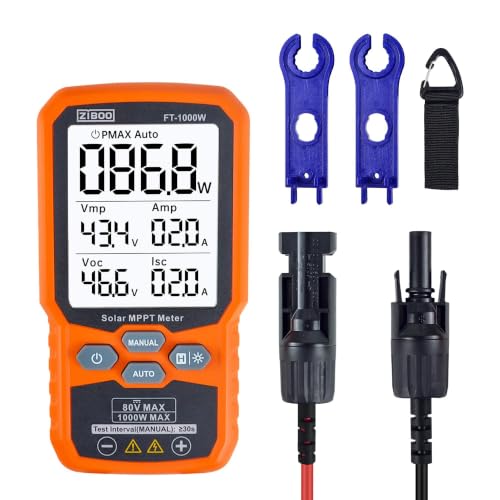
ZIBOO FT-1000W Solar Panel Tester MPPT Meter – 1000W Max Power, 80V/35A PV Module Tester for Voc/Isc, Open Circuit Voltage & Short Circuit Current, with Backlight & Data Hold
- Maximum Power Measurement: Up to 1000W with 0.8% accuracy
- Voltage and Current Testing: Measures Voc (12-80V) and Isc (35A)
- Real-Time MPPT Tracking: Optimizes Vmp and current for efficiency
As an affiliate, we earn on qualifying purchases.
As an affiliate, we earn on qualifying purchases.
Frequently Asked Questions
How Often Should Solar Panel Testing Equipment Be Calibrated?
You should calibrate your solar panel testing equipment, like multimeters and clamp meters, at least once a year to guarantee calibration frequency and maintain equipment accuracy. If you use the tools frequently or in harsh conditions, consider calibrating more often, such as every six months. Regular calibration helps prevent measurement errors, ensuring your readings are reliable and your solar system performs at its best. Always follow the manufacturer’s recommendations for calibration intervals.
Can Multimeters Test Both AC and DC Solar Circuits?
Yes, your multimeter can test both AC and DC solar circuits, making it an incredibly versatile tool. With the right multimeter functions, you can measure voltage, current, and resistance across different circuit types. Just verify your device is compatible with the circuit’s voltage and current levels. This all-in-one capability saves you from juggling multiple testers, giving you the power to troubleshoot and maintain your solar system efficiently and accurately.
What Safety Precautions Are Necessary During Solar Testing?
When testing solar circuits, you need to prioritize safety by wearing proper Personal Protective Equipment like gloves and safety glasses. Always perform Equipment Inspection beforehand to verify your multimeter or clamp meter is in good condition and rated for the voltage. Keep the work area dry, stay alert, and avoid touching live components. Following these precautions minimizes risks and keeps you safe during solar testing.
Are There Portable Testing Options for Remote Solar Installations?
A journey of a thousand miles begins with a single step, so don’t let remote locations hold you back. You can use portable solutions like handheld multimeters and clamp meters for remote testing of solar panels. These tools are lightweight, easy to carry, and provide accurate readings, making your inspections efficient and safe. With portable options, you guarantee reliable performance even in the most secluded areas.
How Do Environmental Factors Affect Testing Accuracy?
Environmental factors like temperature stability and humidity impact testing accuracy profoundly. Fluctuating temperatures can cause readings to drift, so you should perform tests in consistent conditions or use equipment designed for temperature compensation. High humidity may lead to corrosion or short circuits, skewing results. To guarantee precise measurements, test in stable environments whenever possible, and regularly maintain your equipment to mitigate the effects of these environmental factors.

KPS DCM8500PV True RMS Solar Clamp Meter, 2000V DC, Bluetooth
- Solar Voltage Measurement: Measures up to 2000V DC and 1500V AC
- High Current Capability: Supports up to 600A AC/DC current
- Multi-Function Testing: Measures resistance, capacitance, frequency, temperature, continuity, diodes, and μA signals
As an affiliate, we earn on qualifying purchases.
As an affiliate, we earn on qualifying purchases.
Conclusion
Testing your solar panels with the right equipment is vital for peak performance. Did you know that using a multimeter or clamp meter can help identify issues early, saving you up to 30% in energy costs annually? By choosing the right tools, you guarantee your system runs efficiently and lasts longer. Stay proactive, keep testing, and maximize your solar investment’s potential for years to come.

ZIBOO FT-2000W Solar Panel Tester MPPT Meter – 2000W Max Power, 150V/35A PV Module Tester for Voc/Isc, Open Circuit Voltage & Short Circuit Current, with Backlight & Data Hold
- Maximum Power Measurement: Up to 2000W with high accuracy
- Voltage and Current Testing: Measures Voc 12-150V, Isc 35A
- Real-Time MPPT Tracking: Optimizes panel efficiency in real-time
As an affiliate, we earn on qualifying purchases.
As an affiliate, we earn on qualifying purchases.

FROGBRO 1600W MPPT Solar Panel Tester LCD Photovoltaic Multimeter
- Measurement Capacity: Supports panels under 1600W and 60V
- Clear LCD Display: Large screen readable in sunlight
- Automatic VOC Reading: Full automatic voltage measurement
As an affiliate, we earn on qualifying purchases.
As an affiliate, we earn on qualifying purchases.