To use mounting rails in a permanent solar install, start by evaluating your roof’s compatibility and selecting the appropriate rail system. Secure the rails firmly to the roof, ensuring they stay level and align properly for ideal panel placement. Use proper spacing and hardware to support the panels and prevent movement. Accurate positioning maximizes energy output and system longevity. If you want detailed steps on installation and alignment, keep exploring the process in more detail.

Get backup power and energy gear delivered free with Prime
- Fast, free delivery on millions of items
- Prime Video, Amazon Music and more included
- Member-only deals all year
Key Takeaways
- Select compatible mounting rails based on roof material and system type (flush, tilt, or ballasted).
- Determine optimal rail spacing for proper panel support and alignment, considering environmental factors.
- Secure rails firmly to roof structures using appropriate clamps or fasteners for safety and durability.
- Ensure rails are installed in a straight line at the correct angle for maximum energy output.
- Use level tools and quality hardware to maintain precise alignment and facilitate maintenance access.
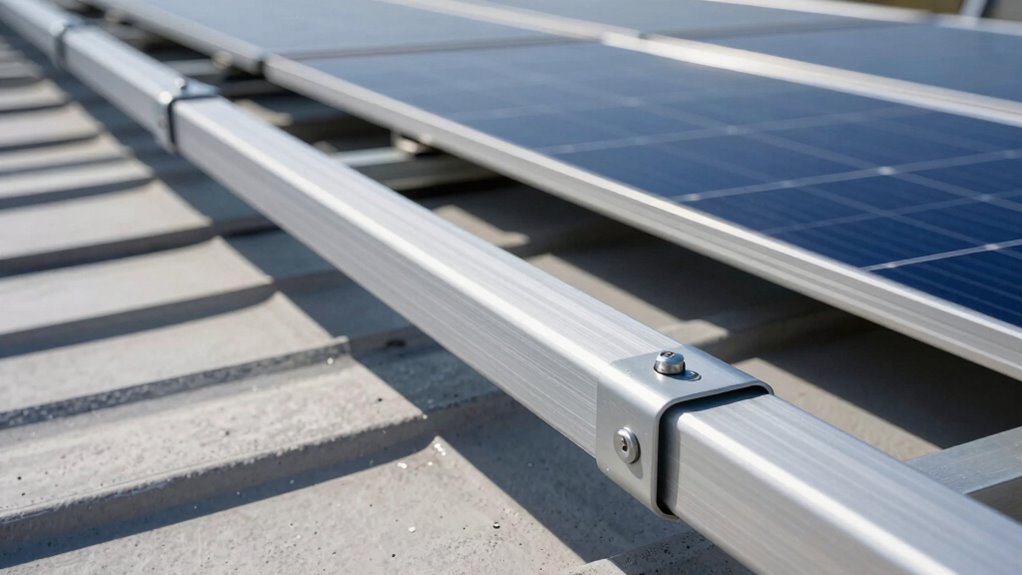
Are you wondering how mounting rails play an indispensable role in solar installations? These rails are the backbone of your entire setup, providing a sturdy framework that holds your solar panels securely in place. Properly installed mounting rails guarantee your panels are correctly aligned, which is crucial for maximizing energy production. When you’re planning a permanent solar install, understanding how these rails work helps you achieve ideal solar panel alignment, making sure you get the most out of your investment. Additionally, selecting the right mounting rails involves considering roof compatibility — making certain your chosen system fits your roof’s structure, material, and pitch. Utilizing landscaping to enhance natural beauty can also be integrated into your overall system design, ensuring the installation complements your property.
Your first step is to assess your roof’s compatibility with different mounting rail systems. Not all roofs are the same, so you need to determine if your roof is suitable for a flush mount, tilt mount, or a ballasted system. For example, metal roofs with standing seams often require specific mounting rails and clamps designed to fit seamlessly, whereas shingle roofs may need rails that attach directly to the rafters or decking. Once you’ve figured out what your roof can support, you can select mounting rails that match the material and slope, assuring a secure and reliable connection. This compatibility influences not just the safety and durability of your system but also the ease of installation. Incorporating proper rail spacing is essential to ensure the panels are adequately supported and aligned correctly, which can also impact the overall system efficiency. Properly spaced and secured rails also help prevent movement caused by wind or other environmental factors, further extending the longevity of the installation. Recognizing the importance of system design in your setup can significantly improve installation outcomes and long-term performance.
Next, focus on how mounting rails facilitate solar panel alignment. Proper alignment isn’t just about aesthetics; it’s about maximizing sunlight exposure throughout the day. You’ll need to position the rails at an angle that optimizes solar gain based on your geographic location. Once the rails are securely mounted, you can attach the rails in a straight line, ensuring each panel is aligned precisely. This alignment minimizes shading and improves overall system efficiency. Using level tools and measuring devices during rail installation helps maintain consistent spacing and alignment, which directly impacts the energy output. Remember, the durability of your system depends heavily on the quality of your mounting hardware and the correct installation techniques. Ensuring proper installation techniques can prevent potential issues such as panel misalignment or loosening over time.
Mounting rails also make future maintenance easier. When panels are securely fastened to well-installed rails, you can clean, inspect, or replace individual panels without disturbing the entire system. This durability is fundamental for long-term performance, especially in areas prone to harsh weather conditions. Furthermore, choosing quality rails that are compatible with your roof type ensures your solar installation remains stable and effective for decades. Proper use of mounting rails means you’re not just installing panels; you’re creating a reliable, efficient, and long-lasting solar power system that’s tailored to your roof’s unique characteristics.
As an affiliate, we earn on qualifying purchases.
Frequently Asked Questions
Can Mounting Rails Be Reused for Future Solar Panel Upgrades?
Yes, mounting rails can often be reused for future solar panel upgrades if they have good mounting rail durability. Check that the rails are still in solid condition, free of rust or damage. Confirm they’re compatible with your new panels, as upgrade compatibility depends on size and mounting system. Reusing rails saves money and effort, but always verify compatibility and structural integrity before installation to maintain safety and efficiency.
Are Mounting Rails Compatible With All Roof Types?
Mounting rails are incredibly versatile, but they aren’t compatible with all roof types. Roof compatibility depends on material choices—metal roofs often require different mounts than shingle or tile roofs. You might think your roof’s unique design is a challenge, but with the right rails and adapters, almost anything’s possible. Always check specific product guidelines to verify your mounting system fits your roof’s material and structure perfectly.
How Do I Prevent Corrosion of Mounting Rails Over Time?
To prevent corrosion of mounting rails over time, you should focus on corrosion prevention techniques and material selection. Choose rails made from corrosion-resistant materials like aluminum with a protective coating or stainless steel. Regularly inspect your system for signs of rust or damage, and clean the rails to remove dirt and salt that can accelerate corrosion. Applying protective coatings or sealants also helps extend the lifespan of your mounting rails.
What Tools Are Required to Install Mounting Rails Securely?
You need a set of installation tools like a drill, wrench, and screwdriver to secure mounting rails properly. Don’t forget safety equipment—gloves, goggles, and a harness—to keep yourself safe during installation. Having a level guarantees precise alignment, and a tape measure helps with accurate positioning. With these tools and safety gear in hand, you’ll have no trouble getting your rails mounted securely, like a well-oiled machine ready for action.
Do Mounting Rails Affect the Overall Efficiency of the Solar System?
Mounting rails don’t substantially affect your solar system’s efficiency if you choose the right material and roof mounting techniques. High-quality mounting rail material, like aluminum or stainless steel, resists corrosion and maintains strength. Proper roof mounting techniques ensure ideal panel alignment and airflow, preventing shading and heat buildup that can reduce performance. So, focus on quality materials and precise installation to keep your solar system running at peak efficiency.
solar panel roof mounting brackets
As an affiliate, we earn on qualifying purchases.
As an affiliate, we earn on qualifying purchases.
Conclusion
Using mounting rails correctly guarantees your solar panels are secure and optimized for maximum efficiency. Proper installation not only prolongs the lifespan of your system but also enhances safety. Did you know that solar panel mounting systems can improve energy output by up to 25%? By choosing the right mounting rails and following best practices, you’re making a smart investment in sustainable energy. Keep these tips in mind, and you’ll enjoy reliable, efficient solar power for years to come.
adjustable solar panel mounting system
As an affiliate, we earn on qualifying purchases.
As an affiliate, we earn on qualifying purchases.
As an affiliate, we earn on qualifying purchases.
Halloween Picks
halloween
As an affiliate, we earn on qualifying purchases.