TL;DR

Get backup power and energy gear delivered free with Prime
- Fast, free delivery on millions of items
- Prime Video, Amazon Music and more included
- Member-only deals all year
A GreenBuildingAdvisor contributor described adding a separate weatherproof enclosure for an electricity monitor after the device would not fit inside an HVAC subpanel. The project also required an additional breaker; the writer says the panel was de-energized and advises readers to consult a licensed electrician.
A homeowner who monitors electricity use in an all-electric house added a separate enclosure for an electricity monitor after finding that the device would not fit inside the home’s HVAC subpanel, according to a report by GreenBuildingAdvisor. The installation also involved adding a breaker, a detail that underscores why panel work requires careful attention to electrical safety and local code.
The writer said they had monitored the home’s electricity since 2022, initially with one electrical panel to track. After a basement remodel, the electrical system included a 200-amp main panel, a basement subpanel, an HVAC subpanel, a panel beneath the meter and a photovoltaic system. The writer had installed three monitors and wanted another to track the HVAC subpanel, which supplies two heat pumps.
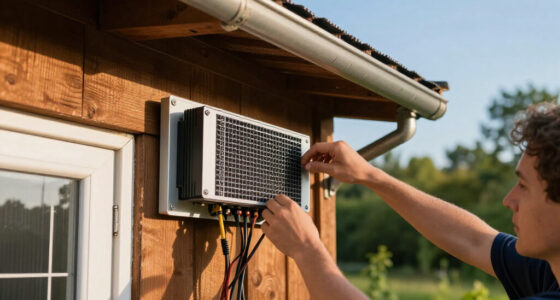
The selected monitor was a Refoss EM16P. Although there was room in the subpanel for its current transformers (CTs), which measure current around circuit conductors, the monitor itself was too large to fit. The writer’s solution was to install a separate electrical enclosure above the subpanel and connect it using conduit and fittings. The writer said the enclosure installation took most of the project’s time and that the completed monitor had continued working.
A further complication involved providing the monitor with power and the electrical references needed to track both sides, or phases, of the panel. The writer said the existing outlet breaker provided a point for one side, but the heat-pump circuits’ heavier-gauge wires made the usual pigtail connection unsuitable for the other. The writer added a fourth breaker, matching the outlet breaker, rather than connecting the monitor wire directly at a heat-pump breaker. The supplied report ends while describing that change, and does not provide further installation specifications.
Monitoring a Crowded HVAC Panel
The account shows that fitting an electricity monitor can involve more than attaching CTs around wires. A monitor also needs a suitable location and electrical connections, and the available space and wiring arrangement can vary from panel to panel. In this case, a separate enclosure addressed the physical fit problem, while the additional breaker addressed the writer’s stated difficulty obtaining the needed electrical reference.
For homeowners seeking to track heat-pump electricity use, a monitor can provide data about a specific part of a home’s system. But this report is one homeowner’s experience, not a general installation plan. Electrical panel work can expose people to dangerous voltages, and the correct approach depends on the equipment, installation and rules that apply locally.
Products Worth Considering

Bose Lifestyle Ultra Wireless Home Speaker

iRobot Roomba Max 715 Pet Robot Vacuum with AutoEmpty Dock

Samsung 48-Inch S90H OLED 4K Smart TV (2026)
As an affiliate, we earn on qualifying purchases.
From One Panel to Several
The writer described the project as part of a gradual expansion of monitoring in an all-electric home. The system became more complex after the basement remodel, with separate panels serving different parts of the property. That change left the HVAC subpanel as the remaining challenge: the CTs could fit, but the monitor could not.
The existing Square D subpanel had an opening at its top, which the writer used to connect it to a weatherproof enclosure. The report says special fittings were available for that opening and that the writer used one-inch conduit, which they found just large enough. The enclosure’s knockout proved difficult to remove and required drilling. These details describe the writer’s particular setup; they do not establish that the same parts or layout will suit another panel.
“My HVAC subpanel didn’t want an electricity monitor, but I gave it one anyway. It’s been working ever since.”
— GreenBuildingAdvisor contributor
Limits of the Installation Report
The report describes one home and does not establish whether the same enclosure, fittings, conduit size or breaker arrangement would be appropriate in other installations. It does not provide a full wiring diagram, the monitor manufacturer’s complete installation instructions, or a jurisdiction-specific code review. The writer also says electrical codes vary by location and advises checking local requirements with a licensed professional.
The supplied account ends after explaining why an additional breaker was installed. It does not include further details about the breaker’s final wiring, ratings beyond the comparison to the outlet breaker, or any inspection or permit outcome. Those points cannot be confirmed from the report.
Professional Review Before Panel Work
The writer reports that the monitor has been operating since installation, but identifies no planned follow-up, inspection or additional project milestone. For readers considering similar monitoring, the next step is not to assume this setup can be copied: consult a licensed electrician, check local code and permit requirements, and follow the equipment instructions.
The report says the writer shut off the upstream breaker and verified the subpanel was dead before working inside it. That warning does not make panel work safe for an unqualified person. Electrical work should be left to a qualified professional when the homeowner cannot establish that the equipment is safely de-energized or is unsure how to meet applicable requirements.
Key Questions
Why did the homeowner need a separate enclosure?
The Refoss EM16P monitor was too large to fit inside the HVAC subpanel, although its current transformers could fit. The writer mounted the monitor in a separate enclosure connected to the panel.
What additional electrical change did the project require?
The writer added a fourth breaker to provide a connection for the monitor’s electrical reference. The report says the existing heat-pump wiring was too heavy for the standard pigtail approach and that directly joining the monitor wire at a heat-pump breaker would raise code and safety concerns.
Is this installation suitable for every HVAC subpanel?
No. The report documents one homeowner’s installation, and panel layouts, equipment and local electrical requirements differ. It does not provide a universal wiring plan.
What safety precautions does the report describe?
The writer says the upstream breaker was shut off and the panel was verified de-energized before work began, warning readers not to assume a panel is safe just because a breaker is off. The report recommends checking local rules and consulting a licensed electrician.
Source: rss