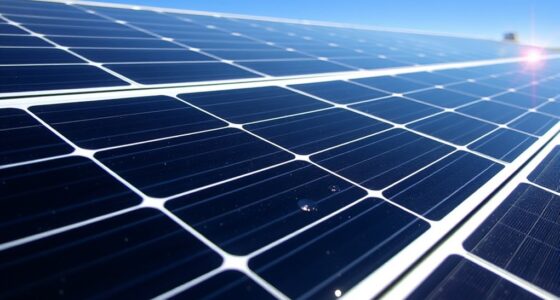
Bifacial solar panels capture sunlight on both sides, increasing your energy output compared to traditional modules. They use special glass covers that allow light to reach solar cells on the front and back. Reflective surfaces like snow or water bounce extra sunlight onto the back, boosting your system’s efficiency. Proper installation and site selection are key for maximum benefits. If you want to discover more about how these panels optimize sunlight capture, keep exploring.
Key Takeaways
- Bifacial solar panels capture sunlight on both the front and back sides, increasing overall energy production.
- The back side absorbs reflected light from surfaces like snow or water, boosting efficiency.
- Proper installation angles and reflective site conditions enhance the amount of light captured on the rear side.
- Surface reflectivity (albedo) plays a crucial role in determining how much additional light the back side can absorb.
- Advanced mounting systems optimize tilt and positioning to maximize dual-sided light capture and energy output.

Bifacial solar panels are an innovative technology that captures sunlight on both sides, boosting energy production compared to traditional panels. This dual-sided design allows you to harness more sunlight throughout the day, especially in environments with reflective surfaces like snow, water, or white rooftops. As a result, you can generate more power with fewer panels, which enhances overall system efficiency. When considering cost efficiency, bifacial modules often provide better value over their lifespan because of their increased energy output. Although they tend to have higher initial costs, the extra energy they produce can lead to quicker payback periods and greater long-term savings, especially in suitable locations. The improved energy yield means you need fewer panels to meet your energy needs, helping to reduce the overall installation footprint and associated costs. Additionally, selecting the right installation site can significantly impact the overall performance of bifacial panels, making careful site assessment essential.
However, installing bifacial solar panels does come with certain challenges you should be aware of. One major hurdle is the installation process itself, which can be more complex than with traditional monofacial panels. These panels usually require precise mounting systems to maximize their exposure to sunlight on both sides, and the tilt or angle must be carefully optimized. You might need specialized racking or mounting structures, which can add to the upfront costs and require more meticulous planning. Additionally, the positioning of the panels becomes more critical; shading or dirt on the back side can considerably diminish their performance, so maintaining cleanliness and avoiding obstructions is essential. You also need to consider the ground or surface reflectivity, as higher albedo (reflectivity) translates into more light bouncing onto the back side, boosting energy output.
Despite these installation challenges, many find that the long-term benefits outweigh the initial hurdles. The key is to work with experienced installers familiar with bifacial technology, ensuring the system is set up for maximum efficiency. Proper site assessment and planning can mitigate many installation challenges, helping you optimize energy capture and maximize return on investment. As technology advances, mounting systems are becoming more streamlined and cost-effective, making bifacial panels increasingly accessible. Overall, while the upfront costs and installation considerations might seem formidable at first, the potential for higher energy yields and improved cost efficiency make bifacial solar panels a compelling choice for those looking to maximize their solar investment.
Frequently Asked Questions
How Do Bifacial Panels Perform in Cloudy Weather?
In cloudy weather, bifacial panels perform well because they can capture diffuse light from the sky, not just direct sunlight. You’ll notice they generate power even when the sun isn’t shining brightly, thanks to their dual-sided design that absorbs light from both sides. This means you get better energy output in overcast conditions, maximizing your solar investment despite the clouds blocking direct sunlight.
What Are the Maintenance Requirements for Bifacial Modules?
Think of your bifacial modules as a well-tended garden needing regular care. You should follow a consistent cleaning schedule to keep dirt and debris from casting shadows, and perform panel inspections to catch any damage early. Gently remove dust, leaves, and snow, and check for cracks or soiling that can block sunlight. With attentive maintenance, your bifacial solar system will continue to soak up light and generate power efficiently.
Are Bifacial Panels More Cost-Effective Than Traditional Panels?
Yes, bifacial panels can be more cost-effective than traditional panels when you consider the overall cost analysis. Although installation costs might be higher upfront due to their complexity, they generate more energy over time, increasing your return on investment. Their efficiency gains can offset initial expenses, making them a smart choice if you have adequate space and proper installation conditions. Ultimately, they can save you money in the long run.
How Does Dirt or Snow Impact Bifacial Panel Efficiency?
Imagine sunlight reflecting off a clean bifacial panel, soaking in every ray. Dirt accumulation and snow coverage can block this light, reducing efficiency markedly. When dirt or snow cover the backside, less light reaches the solar cells, cutting down energy output. To keep your panels performing at their best, regular cleaning and snow removal are essential, ensuring maximum reflection and light absorption, even in challenging weather.
Can Bifacial Panels Be Integrated Into Existing Solar Systems?
Yes, you can integrate bifacial panels into your existing solar system through retrofit installation, but you’ll need to verify system compatibility first. Make certain your inverter and mounting structure support bifacial modules, as they often require different wiring or mounting adjustments. Consulting a professional installer helps ensure seamless integration, maximizing efficiency gains without disrupting your current setup. This way, you can upgrade your system smoothly and take advantage of bifacial technology.
Conclusion
Imagine installing bifacial solar panels on your roof and watching your energy output increase by up to 25%. For example, a commercial farm in California saw a significant boost in power generation after switching to dual-sided modules. By capturing sunlight from both sides, you maximize efficiency and get more value from your investment. Bifacial panels are truly the future of solar technology, helping you produce cleaner energy while saving money in the long run.