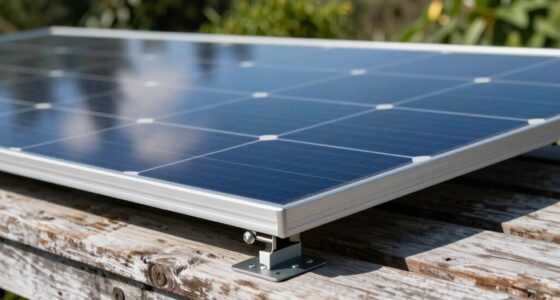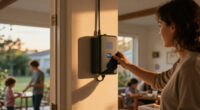
When people compare solar panel backup batteries, they are often weighing an installed home battery against a portable solar power station. Both store electricity for use when the grid is down, and both may recharge from solar panels, but they solve different problems. A home battery connects to a home’s electrical system and can provide more capacity and output; a portable unit costs less to start with and can be moved or used without a permanent installation.

Get backup power and energy gear delivered free with Prime
- Fast, free delivery on millions of items
- Prime Video, Amazon Music and more included
- Member-only deals all year

Jackery HomePower 3600 Plus & 2x200W Solar Panels, 3584Wh, 3600W AC Output
- ✔ Battery capacity: 3,584Wh
- ✔ AC output: 3,600W
- ✔ Expandable capacity: Up to 21kWh per unit

Jackery Solar Generator 1000 v2 and 200W Solar Panel, 1024Wh LiFePO4 Battery
- ✔ Battery capacity: 1,024Wh
- ✔ AC output: 1,500W
- ✔ Surge output: 3,000W

Portable Solar Generator 300W Portable Power Station with 60W Solar Panel
- ✔ Battery capacity: 280Wh
- ✔ Maximum AC output: 300W
- ✔ Included solar panel: 60W monocrystalline
The deciding question is how much of your household you need to keep running and how long an outage may last. Choose a whole-home system if you want automatic backup for configured circuits and have the budget and suitable installation. Choose a portable station if your priority is phones, lights, communications, and a refrigerator or other limited loads, and you are comfortable managing connections and recharging. Capacity, power output, installation, solar input, and total cost determine whether the higher investment buys meaningful everyday resilience.
At a Glance
| Criteria | Whole-home solar battery system | Portable solar power station | Winner |
|---|---|---|---|
| Backup capacity and loads | Can be sized for essential circuits or a broader portion of the home; capacity depends on the system. | Typically serves a limited number of devices or appliances; usable energy varies by model. | A |
| Power output | Can support larger household loads when the inverter and system are sized for them. | Output limits can rule out high-draw appliances or simultaneous loads. | A |
| Installation and operation | Requires professional planning and electrical installation; configured systems can switch to backup automatically. | Usually ready to use with devices plugged into its outlets; no house wiring is needed for basic use. | B |
| Solar recharging | Can recharge from a compatible rooftop solar array; system design and weather affect recovery. | Can recharge from compatible portable or rooftop panels, subject to the unit’s solar input limit and conditions. | Depends |
| Portability and flexibility | Fixed in place, generally serving the connected home. | Designed to move between rooms, vehicles, or locations. | B |
| Upfront cost and value | Higher installed cost, with value tied to how much of the home needs backup and how often it is used. | Lower entry cost; adding capacity or panel compatibility may raise the total. | B |
| Outage convenience | Can provide a more integrated experience, though backup coverage depends on installation and configuration. | Requires users to prioritize loads, connect devices, and monitor remaining charge. | A |
Jackery HomePower 3600 Plus & 2x200W Solar Panels, 3584Wh, 3600W AC Output
For shoppers who mean household outage backup when they say solar panel backup battery, the HomePower 3600 Plus is the most capable choice in this lineup. Its 3,584Wh capacity and 3,600W output put it well ahead of the 1,024Wh, 1,500W Solar Generator 1000 v2 and the 280Wh, 300W ZeroKor. That headroom makes it a better candidate for larger loads such as pumps or heaters, provided each appliance’s draw and startup requirements stay within the system’s limits.The package includes two 200W solar panels, and the product description claims a four-hour solar recharge under its stated conditions. It also supports AC, hybrid AC+DC, and gas-generator charging, offering alternatives when sunlight is limited. Expandability up to 21kWh per unit is useful for buyers who want to plan for more stored energy, though a larger capacity system also asks more of the buyer in space, budget, and setup planning. Confirm exactly what additional equipment expansion requires before building around that feature.At 77.2 pounds, this is not a station we would choose for frequent hand-carrying. Wheels and a telescoping handle make moving it across a home more practical, but it remains much heavier than the 23.4-pound 1000 v2. Its dual-voltage claim applies in parallel configuration, and the description refers to pairing it with an MTS for home use; buyers should verify the required accessories and installation details. Compared with the smaller Jackery, this model is built around sustained household resilience, not grab-and-go convenience.
Pros:
- 3,584Wh capacity and 3,600W output exceed the other two options in this comparison.
- Includes two 200W solar panels and supports solar, AC, hybrid, and gas-generator charging.
- Expandable capacity offers a path to longer backup duration.
- Wheels and telescoping handle help move the 77.2-pound unit around a home.
Cons:
- At 77.2 pounds, it is substantially less portable than the 1000 v2 or ZeroKor.
- Home integration and parallel dual-voltage use may require additional equipment or planning.
- The included 400W of panel capacity still depends on suitable sunlight and conditions for meaningful recharge.
Best for: Households that want a high-capacity station for selected essential appliances and value expandable storage and multiple recharge methods.
Not ideal for: Campers or buyers who need a light unit they can lift and carry often, or anyone expecting whole-home backup without checking transfer equipment and appliance loads.
Bottom line: We rank the HomePower first for buyers who need the most capacity and output here, as long as they can accommodate its weight and confirm the home setup requirements.
“We rank the HomePower first for buyers who need the most capacity and output here, as long as they can accommodate its weight and confirm the home setup requirements.”
Jackery Solar Generator 1000 v2 and 200W Solar Panel, 1024Wh LiFePO4 Battery
The Solar Generator 1000 v2 is the middle choice for buyers who need more than phone and laptop charging but do not want to move a nearly 80-pound home backup station. Its 1,024Wh battery and 1,500W AC output are a major step above the ZeroKor’s 280Wh and 300W ceiling. That gives it a broader role for camping, road trips, and essential devices during shorter outages, while the HomePower remains the better fit for higher loads and longer backup plans.A standout for outage use is the 10ms UPS switchover, intended to keep connected essentials running during a power interruption. It has two pure sine wave AC ports, USB-C with up to 100W PD charging, USB-A, and a DC car port. At 23.4 pounds, it is much easier to move than the HomePower, but it is still a substantial piece of kit for a backpacking trip. Its included 200W panel is more substantial than ZeroKor’s 60W panel, though solar recharge still depends on conditions.Jackery lists a 50-minute AC recharge when emergency charging is enabled in the app, while its default charging mode is slower to support battery health. That speed is useful when wall power is available, but it is not a solar recharge estimate. The product description also lists a 4,000-cycle life to over 70% capacity and five years of coverage. Those claims make it a strong balance of portability and longevity, yet its 1,024Wh storage will run down quickly with energy-hungry appliances. Buyers should calculate expected runtime from their actual loads instead of treating the 1,500W output as a measure of how long power will last.
Pros:
- 1,024Wh capacity and 1,500W output offer substantially more capability than the ZeroKor.
- 10ms UPS feature is designed to reduce interruption for connected essentials.
- Includes a 200W solar panel and offers multiple device ports, including 100W USB-C.
- 23.4-pound weight is much easier to manage than the HomePower.
Cons:
- Its capacity is less than one-third of the HomePower’s, limiting long outage runtimes.
- Emergency 50-minute charging requires app activation and wall power; it does not describe solar charging speed.
- At 23.4 pounds, it is still bulky for extended carry on foot.
Best for: Campers, road-trip travelers, and households seeking a portable backup for several essentials with UPS support and a useful included solar panel.
Not ideal for: Buyers who need long runtimes for high-draw appliances, or those who prioritize the lightest possible kit for carrying on foot.
Bottom line: We place the 1000 v2 second because it delivers the best balance of meaningful backup power, portability, and included solar charging in this lineup.
“We place the 1000 v2 second because it delivers the best balance of meaningful backup power, portability, and included solar charging in this lineup.”
Portable Solar Generator 300W Portable Power Station with 60W Solar Panel
The ZeroKor is the compact pick for buyers whose backup plan is limited to small electronics and modest camping gear. It includes a 60W monocrystalline solar panel with USB-A, USB-C, and DC outputs, so the panel can charge small devices directly or feed the power station through its DC connection. The station itself stores 280Wh and provides up to 300W AC output. That is enough to make it useful for phones, tablets, and some laptops, but it falls far short of the Jackery 1000 v2’s 1,024Wh capacity and 1,500W output.We like the simplicity of a smaller, lighter bundle: the listed station weight is 5.1 pounds, and it can recharge from an AC outlet, a car, or a compatible solar panel. Multiple USB and DC connections make it convenient for low-power devices, while the flashlight adds a practical camping feature. However, the 300W ceiling is a firm boundary. The supplied description specifically cautions against appliances over 300W and calls out heat-producing devices and equipment with built-in compressors as potentially unsuitable. The listing also mentions a cooling fan, which may run depending on internal temperature.The tradeoff is the panel-to-battery pairing. A 60W panel is the smallest solar input in this group, so replenishing the station can take patience and favorable sun, especially if devices are being used at the same time. The product advises regular charging and discharging and says not to leave the station unused for long periods. Its 280Wh battery is better understood as a small electronics buffer than dependable household outage storage. Compared with both Jackery options, ZeroKor is easier to carry and simpler for a campsite, but offers much less runtime and appliance flexibility.
Pros:
- The listed 5.1-pound station is the lightest option in this comparison.
- A 60W solar panel is included and can charge small devices directly.
- AC, car, and solar charging provide several ways to refill the station.
- USB, DC, AC outlets, and a flashlight cover common low-power camping needs.
Cons:
- 280Wh capacity and 300W maximum output sharply limit runtime and appliance choice.
- The included 60W panel is much smaller than either Jackery panel.
- The listing advises regular use and maintaining charge, so it is not positioned as an unattended emergency-only reserve.
Best for: Car campers and day-trip users who want a lightweight solar bundle for phones, tablets, lights, and other small devices.
Not ideal for: Anyone preparing for household outages, powering appliances above 300W, or seeking a fast solar recharge or large energy reserve.
Bottom line: We recommend the ZeroKor only for light-duty portable charging, where its low weight matters more than long runtimes or appliance support.
“We recommend the ZeroKor only for light-duty portable charging, where its low weight matters more than long runtimes or appliance support.”
As an Amazon Associate we earn from qualifying purchases.
Key Differences
The largest difference is how much of the electrical system each option can serve. A home battery is designed to work with a home’s wiring and can back up chosen circuits, or broader loads if its capacity, inverter, and installation support that plan. A portable station supplies power through its own outlets. That makes it practical for a defined set of devices, but it does not automatically energize household circuits. For either option, a refrigerator, heating equipment, pumps, and other large loads must be checked against both available energy and continuous power output.
Convenience and cost follow from that distinction. An installed system costs more and needs electrical work, but it can offer automatic changeover and a more integrated backup arrangement. A portable station is simpler to buy and move, yet it asks the owner to choose loads, connect them, and keep track of charge. Solar charging is possible with either approach, but neither guarantees uninterrupted power: panel compatibility, input limits, sunlight, battery capacity, and household demand all affect how quickly stored energy can be replenished.
For a household that needs essential circuits to remain available during outages, the installed system is usually the stronger fit if the budget and site allow it. For renters, occasional outages, camping, or a limited backup list, a portable station offers more flexibility per initial dollar. Paying more for the home system makes sense when its added output, capacity, and automatic operation will actually be used. If neither option can meet the loads you intend to run, start by reducing that list or exploring a larger, professionally designed backup system.
Detailed Comparison
Backup capacity and loads (Whole-home solar battery system wins — major)
Winner: A, by a major margin for whole-home coverage. A home battery can be sized to serve selected circuits or more of the house, depending on system capacity and design. A portable station is better treated as a supply for chosen devices. In practice, list the loads you need, their starting surges, and expected hours of use before buying either one; a high energy rating alone does not mean a unit can start every appliance.
Power output (Whole-home solar battery system wins — major)
Winner: A for larger or multiple loads; the gap is major when appliances draw heavily. Installed systems can be configured with an inverter suited to household circuits. Portable units have model-specific output ceilings and may shut down or overload if demand exceeds them. Buyers should compare continuous watts and surge ratings with actual appliance requirements, not just battery capacity.
Installation and operation (Portable solar power station wins — moderate)
Winner: B for simplicity and ease of entry; the difference is moderate. A portable station can power compatible devices directly from its outlets, with little setup beyond charging and connecting loads. A home battery requires professional electrical planning and installation. Once configured, though, it can be easier during an outage because backup circuits may receive power automatically. The better choice depends on whether simple initial setup or hands-off outage use matters more.
Solar recharging (moderate difference)
Winner: Depends; the gap is moderate and rests on the solar setup. A home battery can pair with a compatible rooftop array, while a portable station can take compatible portable panels or, in some setups, other solar input. Each has limits on input power and operating conditions. A larger array may replenish a home system more effectively in suitable conditions, but the actual result depends on system design, sunlight, and household consumption. Check compatibility and charging specifications before purchase.
Portability and flexibility (Portable solar power station wins — major)
Winner: B, by a major margin. A portable station can move from room to room, go on a trip, or serve at a location without a fixed battery installation. A home battery is stationary and tied to its configured electrical setup. Choose the portable option when backup power needs to travel with you; choose the installed system when the home’s circuits are the main concern.
Upfront cost and value (Portable solar power station wins — major)
Winner: B for lower initial spending; value depends on required coverage. A portable station generally costs less to enter, although a larger model and compatible panels can raise the total. A home battery has a substantially higher installed cost. That extra spending can be justified for households that need more power, circuit integration, and automatic backup. If your goal is just a few essential devices, its additional features may not repay their cost.
Outage convenience (Whole-home solar battery system wins — moderate)
Winner: A for a configured system; the difference is moderate. A home battery can provide power to designated circuits without requiring the owner to move appliances and reconnect them during an outage. A portable unit takes more active management: users must choose what to run and watch remaining charge. A portable setup remains convenient for a short list of small devices, so the advantage grows as the number of loads and outage duration increase.
Whole-home solar battery system: Pros and Cons
Pros:
- Can support selected household circuits or broader loads when properly sized.
- Can provide integrated, automatic backup when configured for it.
- Pairs with compatible rooftop solar systems for recharging.
Cons:
- Higher purchase and installation cost.
- Requires professional electrical planning and a suitable installation.
- Fixed in place, with actual coverage limited by design and capacity.
Portable solar power station: Pros and Cons
Pros:
- Lower initial cost for a limited backup setup.
- Portable for use around the home or away from it.
- Basic operation does not require connecting it to household wiring.
Cons:
- Limited output and capacity compared with a suitably sized home system.
- Does not normally power household circuits directly.
- Requires manual load choices and charge monitoring during outages.
Who Should Choose What
Choose Whole-home solar battery system if:
- You want selected household circuits backed up and can fund professional installation.
- Outages are frequent or long enough that automatic operation and greater capacity have real value.
- You have compatible rooftop solar and want an integrated home energy setup.
Choose Portable solar power station if:
- You mainly need phones, lights, communications, or a limited number of appliances.
- You rent, move often, camp, or want backup power that can travel.
- You want a lower-cost starting point and are comfortable managing loads yourself.
Skip both if: Your essential loads exceed the output or runtime either option can provide at your budget; reduce the load list or investigate a larger engineered backup arrangement.
Value for Money
A portable power station is usually the better value when the goal is to keep a few devices running. It avoids installation costs and provides useful backup at a lower entry price, though buyers should include compatible solar panels and any needed capacity upgrades when comparing totals. It is poor value if its output cannot run the appliance you bought it for or its stored energy runs out too quickly.
A whole-home battery costs more because it adds capacity, electrical integration, and potentially automatic backup. Paying more is worthwhile for households that need those capabilities and will use them through recurring outages. Before committing, compare installed quotes, backed-up circuits, usable energy, inverter output, solar compatibility, and expected runtime. If you only need a refrigerator and communications, a well-sized portable unit may be the more economical solution; if you need multiple circuits with minimal intervention, the installed system can justify its premium.
Final Verdict
Choose a whole-home solar battery system if keeping household circuits available is the priority and you can support the installed cost. It is the stronger option for greater coverage, larger loads, and less hands-on outage operation when properly designed. Choose a portable solar power station if you need flexible power for a defined set of devices, want a lower upfront commitment, or need to take backup power with you.
The biggest deciding factor is the load you need to run, for how long. Estimate both watts and energy use, then check the system’s output, usable capacity, and solar charging limits. For most buyers with only a few essential devices to support, a portable station is the sensible value. For households seeking configured circuit backup, the home battery is worth paying more for.
Frequently Asked Questions
Can a portable solar power station run my refrigerator?
Possibly, if its output can handle the refrigerator’s starting surge and its usable capacity can cover the expected runtime. Check the appliance’s power requirements and the station’s continuous and surge output. Actual runtime also depends on cycling, temperature, and other connected loads.
Will a solar battery keep working during a grid outage?
It can, if the system is designed to operate in backup mode and has suitable equipment for isolating the home from the grid. A rooftop solar array by itself may shut down during an outage for safety. Confirm the battery, inverter, and system configuration with the installer or manufacturer.
Can I recharge either option with solar panels during an outage?
Both may support solar recharging, but panel and battery compatibility, input limits, sunlight, and household demand affect the result. Check the specified solar input and expected charging conditions. Recharging can extend backup use, but it does not guarantee continuous power through poor weather or high demand.
Is a home battery worth the extra cost?
It can be worth the premium when you need higher output, backup for configured circuits, or less manual work during repeated outages. If you only need to charge small devices or run a few selected loads, a portable station is often better value.