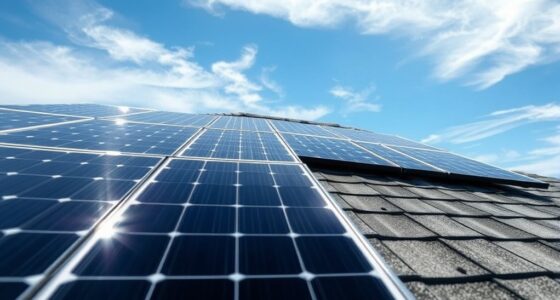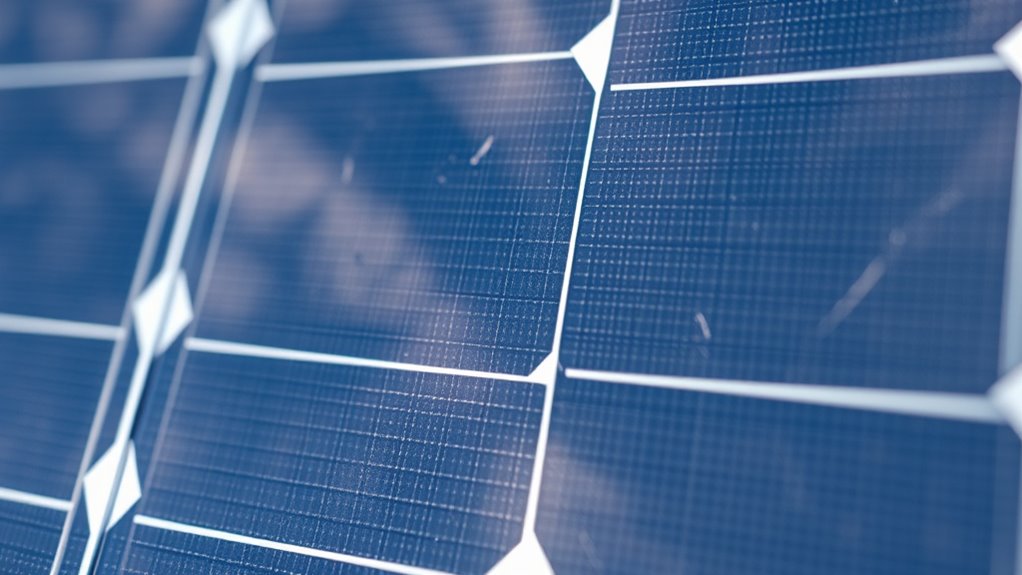

Backsheet materials in solar panels protect internal components from environmental damage, such as moisture, UV rays, and debris. They are usually made from durable materials like PVF, polyethylene, or polyester, designed to resist UV degradation and thermal stress. This protection helps extend the lifespan and maintain the efficiency of your panels. Choosing the right backsheet guarantees long-term performance and durability. Continue exploring to discover how different materials impact your solar system’s reliability.
Key Takeaways
- Backsheets protect solar panels from environmental damage, moisture, and debris, ensuring durability and long-term performance.
- Material choices like PVF, polyethylene, and polyester influence UV resistance and thermal stability of the backsheet.
- UV-resistant backsheets prevent degradation, cracking, and brittleness caused by ultraviolet radiation over time.
- Thermal stability maintains flexibility and prevents warping or delamination during temperature fluctuations.
- Proper backsheet materials extend solar panel lifespan, ensuring reliable operation and consistent efficiency.
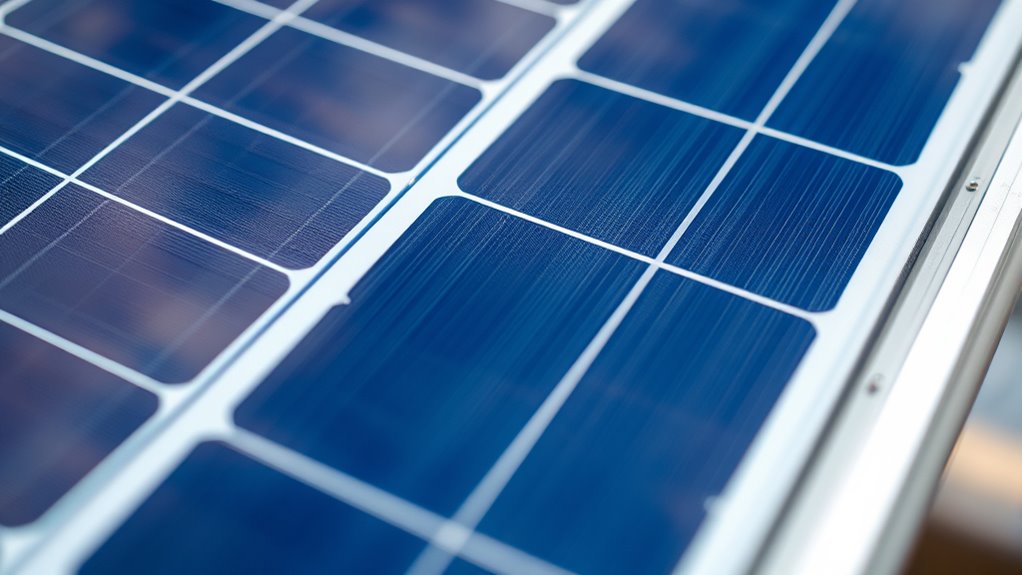
Have you ever wondered what keeps your solar panels protected from the elements? The answer lies in the backsheet material—a vital component that shields the entire panel from environmental damage. The backsheet acts as the outermost layer, facing away from the sun and the sky, and it must withstand a variety of harsh conditions. One of the most important qualities of a good backsheet is UV resistance. Ultraviolet rays from the sun can degrade materials over time, causing cracking, brittleness, and eventual failure. A backsheet with high UV resistance prevents this degradation, ensuring your solar panels remain durable and functional for many years. When selecting a backsheet, look for materials that are specifically designed to absorb or block UV radiation, thereby extending the lifespan of your solar system. Additionally, choosing recycled products for backsheet manufacturing can contribute to environmental sustainability and reduce waste. Thermal stability is another fundamental property. Solar panels operate in diverse climates—hot summers, cold winters, high humidity—all of which subject the backsheet to extreme temperature fluctuations. A backsheet with excellent thermal stability maintains its integrity and flexibility despite these changes. This stability prevents warping, cracking, or delamination, which could expose internal components to moisture and other damaging elements. Thermal stability also helps in dissipating heat effectively, keeping the panel’s temperature within safe limits and maintaining ideal efficiency. Without good thermal stability, the backsheet could become brittle in the cold or soften in the heat, compromising the entire panel’s performance.
The backsheet’s ability to resist UV rays and maintain thermal stability directly impacts your solar panel’s longevity. Materials like polyvinyl fluoride (PVF), polyethylene, or polyester are often used because they offer a good balance of these properties. PVF, for example, provides excellent UV resistance and thermal stability, making it a popular choice for long-lasting solar modules. Manufacturers often add special coatings or treatments to enhance these qualities further, ensuring the backsheet withstands prolonged exposure to sunlight, temperature swings, and other environmental stressors.
In essence, your solar panel’s durability hinges on the quality of its backsheet material. UV resistance keeps it from breaking down under relentless sunlight, while thermal stability ensures it remains resilient through temperature changes. Together, these properties safeguard your investment, helping your solar system operate efficiently and reliably for decades. When choosing panels, paying attention to the backsheet’s specifications can make all the difference in how well your solar energy system performs over time.
Frequently Asked Questions
How Do Backsheet Materials Affect Solar Panel Recycling?
You should know that backsheet materials substantially impact solar panel recycling by influencing environmental impact and creating recycling challenges. Some backsheets contain harmful substances, making recycling more complex and costly. Choosing eco-friendly, easily recyclable backsheets can reduce waste and environmental harm. When you opt for panels with sustainable backsheets, you help improve recycling efficiency and minimize negative environmental effects, supporting a greener, more sustainable future.
Are There Eco-Friendly Backsheet Options Available?
Imagine a solar panel’s backsheet as a protective cloak, now made eco-friendly with biodegradable backsheet options or recycled materials. You can choose environmentally conscious backsheets that break down naturally or are crafted from recycled plastics, reducing waste and pollution. These options help lower your carbon footprint and support sustainability. By opting for biodegradable or recycled backsheet materials, you’re making a responsible choice for a greener planet without compromising panel durability.
What Are the Latest Innovations in Backsheet Technology?
You’ll find that the latest innovations in backsheet technology include advanced polymers that boost durability and flexibility, making panels last longer. Nanotechnology coatings now provide enhanced UV resistance and waterproofing, preventing degradation over time. These advancements help your solar panels perform better in harsh environments, offering improved reliability and longevity. Companies are increasingly focusing on eco-friendly materials too, so you benefit from greener options that don’t compromise on protection.
How Does Backsheet Durability Impact Panel Lifespan?
Think of your solar panel as a sturdy ship sailing through stormy seas. When the backsheet resists weathering and prevents degradation, it keeps the vessel afloat longer, extending its lifespan. Backsheet degradation weakens this protective layer, risking damage from moisture and UV rays. Your panel’s durability depends on its backsheet’s weather resistance, ensuring it withstands harsh conditions for years, ultimately maximizing your investment and energy output.
Can Backsheet Materials Influence Panel Efficiency?
Yes, backsheet materials can influence panel efficiency. Their properties, like UV resistance, moisture barrier, and electrical insulation, directly affect performance. During manufacturing, high-quality backsheet materials and precise processes guarantee durability and peak function. If the backsheet degrades or fails, it can lead to energy loss or damage, reducing efficiency. Choosing the right backsheet with suitable properties and proper manufacturing ensures your solar panel performs at its best over time.
Conclusion
Understanding backsheet materials is essential for ensuring your solar panel’s durability and performance. These layers protect against environmental damage, preventing costly repairs down the line. Did you know that the global solar panel market is expected to reach $223 billion by 2026? Choosing the right backsheet can greatly extend your panel’s lifespan, maximizing your investment. So, pay close attention to these materials—they truly make a difference in your solar energy system’s efficiency and longevity.