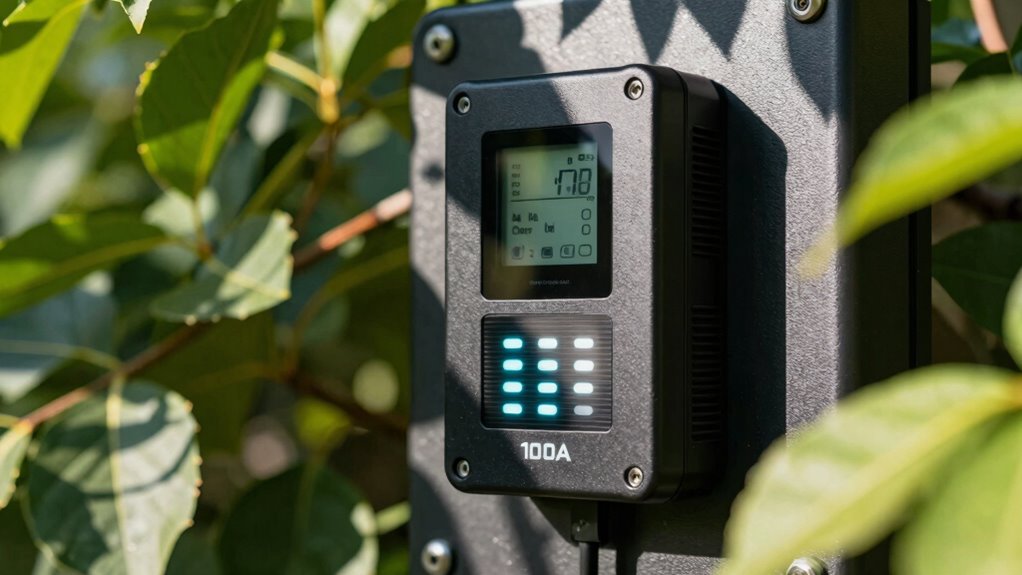

If you’re considering a 100A charge controller for your off-grid system, it’s vital to match it with your battery bank size and solar panel array. A high-capacity controller guarantees faster, efficient charging and prevents overcharging or damage to your batteries. Proper installation, compatible features like MPPT technology, and correct wiring are necessary for peak performance and longevity. Want to discover more about choosing the right controller for your setup? Keep exploring to learn valuable tips.

Get backup power and energy gear delivered free — and shop member deals
- Fast, free delivery on millions of items
- Access to Prime Big Deal Days deals on October 6–7
- Prime Video, Amazon Music and more included
Key Takeaways
- Ensuring the controller’s capacity matches your total solar panel output prevents overloading.
- MPPT technology in 100A controllers maximizes energy harvest from larger panel arrays.
- Proper wiring and grounding are critical for safe and efficient system operation.
- Compatibility with your battery bank type and size extends battery life and system reliability.
- Installation in a ventilated, dry area ensures optimal performance and longevity of the charge controller.
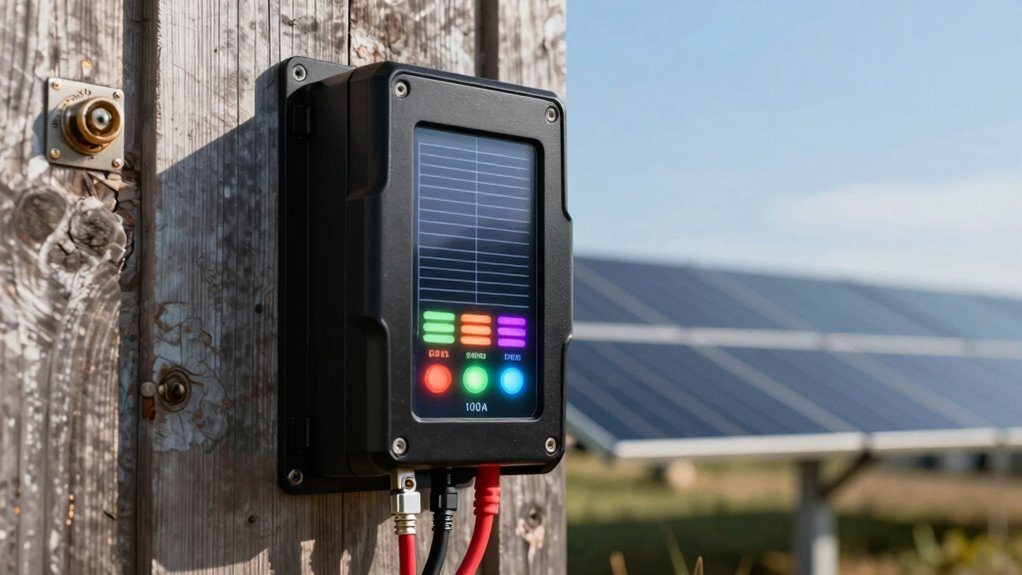
Are you unsure about how to choose the right charge controller for your solar setup? If you’re considering a 100A charge controller for your off-grid system, you’re likely focused on optimizing battery efficiency and guaranteeing a smooth installation process. The size and capacity of your charge controller are vital, especially when managing larger battery banks that demand higher current handling. A 100A controller can manage significant charging currents, which means your batteries can charge faster and more efficiently, provided you select the right model and install it correctly.
Battery efficiency is a key factor when selecting a charge controller. A high-capacity controller like a 100A model needs to be compatible with your battery bank size and type to avoid overcharging or undercharging. Properly managing the charging process helps extend your batteries’ lifespan and improves overall system performance. When choosing your controller, pay attention to features like MPPT (Maximum Power Point Tracking) technology, which maximizes energy harvest from your panels and enhances battery efficiency. This technology adjusts the input voltage and current to optimize power transfer, making your solar system more effective, especially when sunlight conditions fluctuate. Additionally, selecting a controller with advanced system monitoring features can help you keep track of your system’s health and performance in real-time.
Getting the installation right is equally important. Follow the manufacturer’s installation guidelines carefully to guarantee safety and system reliability. Proper wiring, grounding, and placement are critical to prevent issues like voltage drops or electrical faults. For a 100A controller, use appropriately rated cables and connectors, and ensure all connections are tight and secure. Mount the controller in a dry, ventilated area to prevent overheating, and avoid placing it in direct sunlight or in environments with excessive dust or moisture. Additionally, understanding system design principles ensures your components work harmoniously and safely together. Incorporating proper wiring practices can significantly reduce the risk of electrical issues and improve system longevity. Furthermore, paying close attention to battery compatibility helps prevent potential damage and ensures efficient energy transfer within your setup.
100A MPPT solar charge controller
As an affiliate, we earn on qualifying purchases.
As an affiliate, we earn on qualifying purchases.
Frequently Asked Questions
How Do I Troubleshoot a Faulty 100A Charge Controller?
To troubleshoot a faulty 100A charge controller, start by checking the voltage regulation to guarantee it matches your system’s specifications. Next, inspect all wiring for loose connections or damage, prioritizing wiring safety. Reset the controller if needed, and verify the display for error messages. If issues persist, consult the manual or contact support, as faulty components may require professional repair or replacement.
Can I Expand My Off-Grid System With Additional Batteries?
You can definitely expand your off-grid system with additional batteries, especially if your current setup handles increased battery capacity well. Coincidentally, as you add batteries, your system’s capacity grows, offering more stored energy for cloudy days or increased power needs. Just make sure your charge controller and wiring are compatible for system expansion. Properly balancing your batteries will keep everything running smoothly and extend the life of your off-grid setup.
What Maintenance Is Required for Long-Term Reliability?
To guarantee long-term reliability, you should regularly check your batteries’ health and keep connections clean to extend battery lifespan. Monitor your solar panel efficiency and clean or adjust panels as needed for peak performance. Replace batteries when their capacity diminishes considerably. Also, keep an eye on the charge controller settings, ensuring they match your system’s needs. Proper maintenance prevents system failures and maximizes your off-grid setup’s efficiency.
How Do Temperature Fluctuations Affect Charge Controller Performance?
Temperature fluctuations can markedly impact your charge controller’s performance stability. High temperatures may cause the controller to overheat, reducing efficiency or triggering protective shutdowns. Conversely, cold temperatures can slow down electronics, affecting response times and accuracy. To guarantee ideal operation, you should install your controller in a well-ventilated, temperature-controlled environment. Regularly monitoring and managing temperature effects helps maintain consistent performance and prolongs your charge controller’s lifespan.
Are There Compatibility Concerns With Different Battery Types?
Don’t put all your eggs in one basket. When choosing a charge controller, you should check its compatibility with your battery chemistry and voltage. Some controllers are designed for specific chemistries like AGM or lithium-ion, while others support multiple types. Make sure the voltage ratings match your battery bank to prevent damage. Compatibility issues can lead to reduced efficiency or even system failure, so verify these details before connecting your batteries.
off-grid solar charge controller 100A
As an affiliate, we earn on qualifying purchases.
As an affiliate, we earn on qualifying purchases.
Conclusion
So, don’t let uncertainties hold you back from choosing the right charge controller. With a little research, you’ll find that understanding your system’s needs makes the decision clear. Even if you’re new to off-grid setups, taking the time to learn about controllers guarantees your solar investment performs reliably for years. Trust yourself—you’re capable of making informed choices that power your independence, no matter how complex the question seems at first.
solar charge controller with system monitoring
As an affiliate, we earn on qualifying purchases.
As an affiliate, we earn on qualifying purchases.
high capacity solar charge controller
As an affiliate, we earn on qualifying purchases.
As an affiliate, we earn on qualifying purchases.
Fall Picks
fall essentials
As an affiliate, we earn on qualifying purchases.