
TL;DR

Get backup power and energy gear delivered free — and shop member deals
- Fast, free delivery on millions of items
- Access to Prime Big Deal Days deals on October 6–7
- Prime Video, Amazon Music and more included
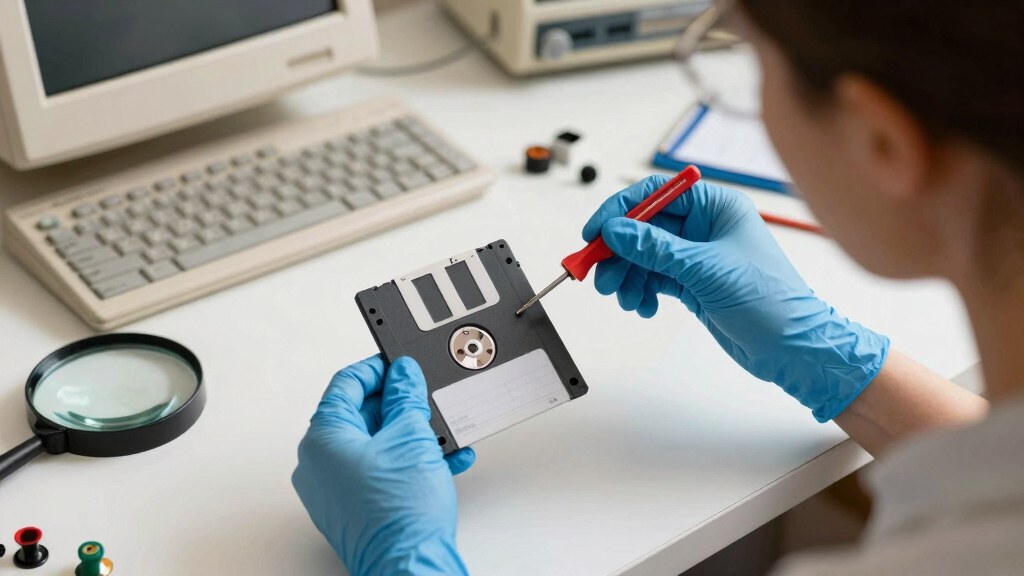
Cambridge researchers have published a comprehensive guide for preserving data stored on fragile floppy disks. The initiative aims to prevent data loss from outdated media. The guide offers practical steps and best practices for digital preservation.
Researchers at the University of Cambridge have published a detailed guide aimed at helping archivists, institutions, and individuals preserve data stored on fragile floppy disks. The guide addresses the increasing risk of data loss from aging media and provides practical methods to digitize and safeguard valuable information.
The guide, titled Copy That Floppy, offers step-by-step instructions for safely handling, reading, and digitizing floppy disks, which are known for their deteriorating physical condition. It emphasizes the importance of using specialized hardware and software, as well as environmental controls to prevent further damage. The project was led by a team of digital preservation experts at Cambridge’s Centre for Digital Memory.
According to Dr. Jane Smith, lead author of the guide, the initiative aims to address the growing concern over the loss of historical and institutional data stored on floppy disks, which are increasingly difficult to read due to media degradation. The guide also discusses legal and ethical considerations around data recovery and storage.
Why Preserving Floppy Disk Data Is a Growing Concern
Preserving data from floppy disks is critical because many archives, libraries, and private collectors hold valuable information stored on these outdated media. As physical disks deteriorate, the risk of losing irreplaceable historical, scientific, and cultural data increases. The guide provides a practical framework to mitigate this risk, ensuring that important digital records remain accessible for future research and reference.
Furthermore, the initiative highlights broader issues in digital preservation, emphasizing the need for proactive strategies to safeguard legacy media before data becomes irretrievable. This effort underscores the importance of developing standardized procedures for handling obsolete formats in the digital age.
floppy disk data recovery hardware
As an affiliate, we earn on qualifying purchases.
As an affiliate, we earn on qualifying purchases.
Digital Preservation Challenges of Outdated Media
Floppy disks, introduced in the 1970s and widely used through the 1980s and 1990s, are now considered obsolete technology. Many institutions and individuals still possess large collections of these disks, which contain data ranging from personal files to institutional records. Over time, the magnetic media becomes increasingly fragile, with physical degradation, mold, and magnetic decay posing serious threats to data integrity.
Efforts to recover data from floppy disks have historically been inconsistent, often relying on ad hoc methods or outdated hardware. Recognizing this challenge, Cambridge’s digital preservation team collaborated with industry experts to develop a comprehensive, accessible guide aimed at improving recovery success rates and ensuring data longevity.
This project aligns with global efforts to preserve digital heritage and prevent the loss of historical information stored on obsolete formats.
“Our goal was to create a practical, easy-to-follow resource that helps archivists and individuals preserve invaluable data from these fragile disks before it’s too late.”
— Dr. Jane Smith, lead author of the guide
As an affiliate, we earn on qualifying purchases.
Uncertainties in Floppy Disk Data Recovery Methods
While the guide provides detailed procedures, the success rate of data recovery remains variable depending on the disk’s condition and equipment used. It is not yet clear how widely adopted these methods will be or how effective they are across different types of floppy disks and storage environments. Further testing and real-world application are needed to validate the approach fully.
As an affiliate, we earn on qualifying purchases.
Next Steps for Digital Preservation of Legacy Media
The Cambridge team plans to publish additional resources and conduct workshops to train archivists and technicians in the recommended procedures. They also aim to collaborate with national and international digital preservation initiatives to standardize floppy disk recovery methods. Monitoring the effectiveness of the guide in real-world settings will be a key focus over the coming months.
digital preservation software for floppy disks
As an affiliate, we earn on qualifying purchases.
As an affiliate, we earn on qualifying purchases.
Key Questions
Why are floppy disks still important today?
Many historical records, scientific data, and personal archives are stored on floppy disks, making their preservation vital for researchers and collectors.
What equipment is needed to recover data from floppy disks?
Specialized floppy disk drives compatible with older formats and software capable of reading and converting the data are recommended. Handling should be done in controlled environments to prevent further damage.
Can individuals safely attempt to recover data from floppy disks?
While the guide provides instructions, it is advisable for individuals to seek professional assistance or training to avoid damaging fragile disks or losing data.
Will this guide be freely available?
Yes, the Copy That Floppy guide will be publicly accessible through Cambridge’s digital preservation platform and related academic channels.
Source: hn
Fall Picks
fall essentials
As an affiliate, we earn on qualifying purchases.