TL;DR
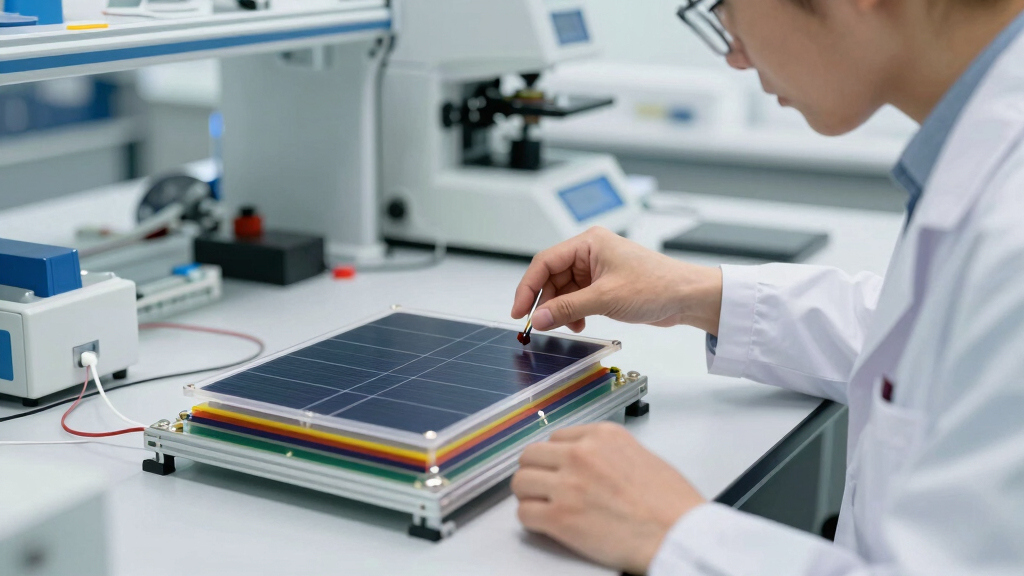
A Chinese research team has developed a pseudo-planar heterojunction organic solar cell with a world-record efficiency of 20.21%. This breakthrough was achieved through a new interfacial buffering technique that enhances device stability and performance.
Researchers from China have announced a new record efficiency of 20.21% for pseudo-planar heterojunction organic solar cells, achieved through a novel interfacial buffering strategy that improves device stability and performance. This breakthrough marks a significant advancement in organic photovoltaic technology, potentially impacting scalable solar energy solutions.
The research team incorporated a highly crystalline polymer, D18, as a buffer layer between donor and acceptor materials in the solar cell architecture. This buffer layer effectively prevents solvent-induced swelling and erosion during fabrication, maintaining the integrity of the active layers. The resulting device, built with a layered structure of ITO/2PACz/PM6/D18/L8-BO/PDINN/Ag, achieved a power conversion efficiency of 19.80%, surpassing traditional designs.
Further modifications involved adding a non-fullerene small-molecule acceptor, BTP-eC9, pre-blended with the acceptor layer. This adjustment pushed the efficiency over 20%, reaching 20.21%, which is among the highest reported for this class of organic solar cells. The team noted that the optimized morphology enhances exciton generation, reduces trap states, and improves charge transport, leading to higher efficiencies and better device stability.
Implications for Organic Solar Cell Commercialization
This development could accelerate the commercialization of high-efficiency organic photovoltaic devices, offering a more scalable and stable technology for solar energy. The interfacial buffering strategy addresses key fabrication challenges, paving the way for more reliable and reproducible production processes. Achieving over 20% efficiency in this class of cells narrows the gap with inorganic photovoltaics, potentially expanding organic solar applications.
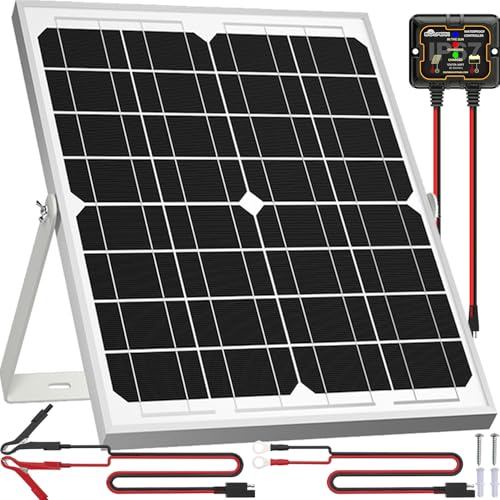
SOLPERK Solar Panel Kit 20W 12V, Waterproof Solar Battery Trickle Charger Maintainer + Smart MPPT Controller + Adjustable Mount Bracket for Boat Car RV Motorcycle Marine Automotive
- High Conversion Efficiency: 21%-30% cell efficiency for optimal charging
- Universal Battery Compatibility: Charges various 12V rechargeable batteries
- Durable Waterproof Design: Low-iron tempered glass and corrosion-resistant frame
As an affiliate, we earn on qualifying purchases.
As an affiliate, we earn on qualifying purchases.
Advances in Organic Photovoltaic Architectures
Organic solar cells have historically struggled with trade-offs between efficiency, stability, and manufacturing reproducibility. Pseudo-planar heterojunction (PPHJ) designs combine features of planar and bulk heterojunction structures, offering a promising pathway for high performance. Prior efforts focused on optimizing morphology and charge dynamics, but solvent-induced damage during layer deposition remained a challenge. The recent work introduces a simple yet effective buffer layer to mitigate these issues, building on previous research aimed at improving device stability and efficiency.
“The introduction of a crystalline buffer layer significantly enhances the morphology control and stability of the active layer, leading to record efficiencies.”
— an anonymous researcher

Progress in High-Efficient Solution Process Organic Photovoltaic Devices: Fundamentals, Materials, Devices and Fabrication (Topics in Applied Physics, 130)
As an affiliate, we earn on qualifying purchases.
As an affiliate, we earn on qualifying purchases.
Uncertainties About Long-Term Stability and Scalability
While the efficiency achievements are confirmed, it is not yet clear how well these devices will perform over long operational periods or under real-world conditions. Further testing is needed to assess their durability and stability over time, as well as the scalability of the fabrication process for commercial production.

Investigation of Organic Polymer Based Films for Flexible Solar Cells
As an affiliate, we earn on qualifying purchases.
As an affiliate, we earn on qualifying purchases.
Next Steps Toward Commercial Application
Researchers plan to conduct extended stability tests and optimize manufacturing processes for large-scale production. Additional studies will evaluate device performance under various environmental conditions, aiming to translate laboratory success into practical, commercial solar modules.
interfacial buffer layer for solar panels
As an affiliate, we earn on qualifying purchases.
As an affiliate, we earn on qualifying purchases.
Key Questions
What makes this new organic solar cell design more efficient?
The use of a crystalline buffer layer prevents solvent erosion during fabrication, resulting in better morphology, charge transport, and reduced recombination, which collectively improve efficiency.
Can this technology be scaled for commercial use?
While promising, further research is needed to confirm long-term stability and develop scalable manufacturing methods before commercial deployment.
How does this efficiency compare to inorganic solar cells?
At 20.21%, these organic cells are approaching efficiencies typical of some inorganic silicon-based panels, marking a significant milestone for organic photovoltaics.
What are the main challenges remaining for organic solar cells?
Key challenges include ensuring long-term operational stability, environmental durability, and cost-effective large-scale manufacturing.
Source: PV Magazine