
TL;DR
Researchers at UNSW have identified how bubble trapping in electrolyzers limits green hydrogen efficiency. Using advanced 3D imaging, they found that electrode structure design can reduce gas clogging, paving the way for more efficient large-scale hydrogen production.
UNSW researchers have used advanced 3D imaging to demonstrate how electrode pore structure impacts hydrogen bubble trapping in electrolyzers, addressing a critical efficiency bottleneck in green hydrogen production. This breakthrough could significantly enhance the viability of large-scale hydrogen generation, vital for decarbonising heavy industries.

Get backup power and energy gear delivered free with Prime
- Fast, free delivery on millions of items
- Prime Video, Amazon Music and more included
- Member-only deals all year
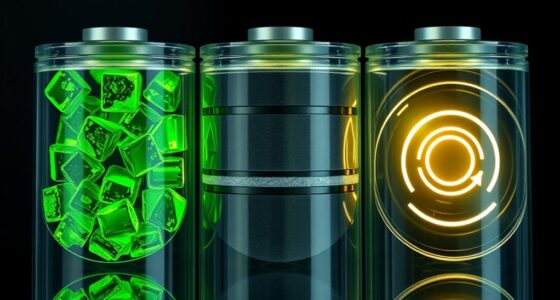
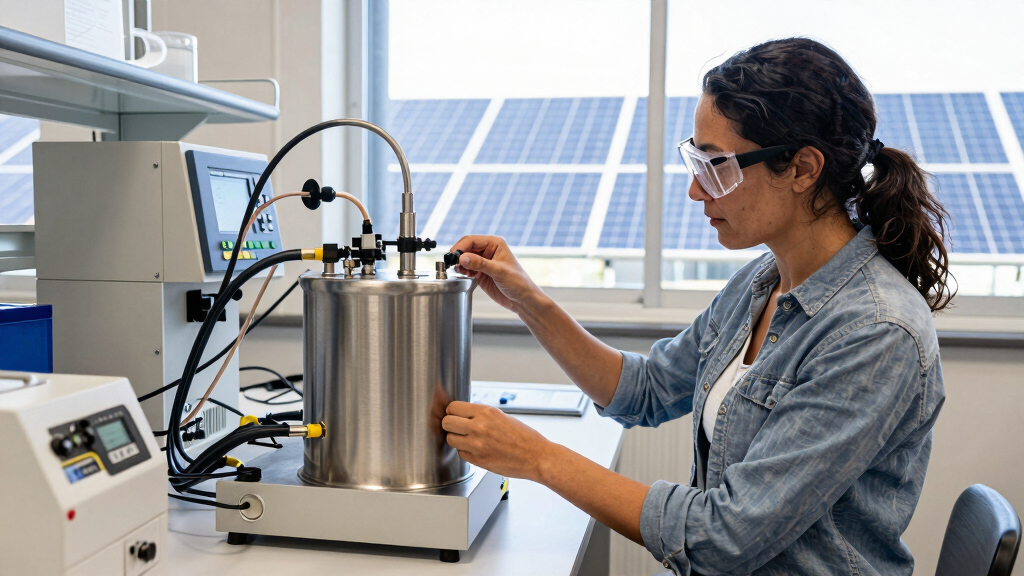
The research, conducted by the University of New South Wales (UNSW) Sydney, employed operando synchrotron imaging combined with pore-scale numerical methods to observe hydrogen bubble formation within porous electrodes during electrolysis. The team found that trapped bubbles block reaction sites and hinder water and ion transport, reducing efficiency at high current densities.
It was discovered that electrodes with a highly ordered, uniform pore structure experienced minimal gas trapping, suggesting that electrode architecture plays a crucial role alongside electrochemistry. This insight offers a pathway for manufacturers to design more effective electrodes, potentially improving the performance and cost-effectiveness of green hydrogen electrolyzers.
Implications for Large-Scale Green Hydrogen Production
This development is significant because it addresses a fundamental technical barrier to scaling up green hydrogen production. By optimizing electrode design, electrolyzer efficiency can be markedly improved, reducing energy consumption and costs. This advancement supports global efforts to produce sustainable hydrogen at an industrial scale, which is essential for decarbonising sectors like steelmaking and heavy transport.
Products Worth Considering

Ring Battery Doorbell 2K Plus, Indoor Cam 2K, and Window & Door Sensor Bundle

Philips Hue Play Gradient Light Tube, Large, Black

Bose Lifestyle Ultra Speaker
As an affiliate, we earn on qualifying purchases.
Advances in Electrolyzer Technology and Gas Bubble Challenges
Green hydrogen production via electrolysis has gained momentum as a clean energy solution, but efficiency losses caused by hydrogen bubble trapping have limited commercial viability. Prior to this research, visualizing internal bubble dynamics was challenging, hindering targeted improvements in electrode design. The use of operando synchrotron imaging marks a new era in understanding these internal processes, with previous studies focusing mainly on electrochemical performance without direct visualization.
“If the structure is designed properly, you can stop bubbles from clogging the system and make it much more efficient.”
— an anonymous researcher
Remaining Questions on Practical Application and Scale
While the research demonstrates a clear link between electrode pore structure and bubble trapping, the practical implementation of these designs at commercial scale remains to be validated. It is also unclear how these findings will translate to long-term operation and durability of electrolyzer systems in industrial settings. Further testing and development are necessary to confirm the scalability and economic viability of the proposed electrode architectures.
Next Steps for Commercialization and Broader Testing
The research team plans to collaborate with industry partners to develop prototype electrodes based on their findings and conduct pilot tests. Additionally, a techno-economic assessment of integrating optimized electrodes into large-scale electrolyzer systems is underway. These efforts aim to demonstrate the feasibility and cost benefits of the new designs, ultimately supporting commercial deployment of more efficient green hydrogen electrolyzers.
Key Questions
How does bubble trapping affect electrolyzer efficiency?
Bubble trapping blocks reaction sites and impedes water and ion transport, reducing the electrolyzer’s efficiency at high current densities.
What specific electrode design improvements were identified?
Electrodes with highly ordered, uniform pore structures experience less gas trapping, leading to better performance.
Can these findings be applied to existing electrolyzers?
Implementing the design improvements will likely require redesigning electrodes, but the principles can inform upgrades and new systems.
What are the next steps for this research?
The team will develop prototype electrodes, conduct pilot testing, and evaluate economic feasibility for large-scale deployment.
How does this research impact the future of green hydrogen?
By overcoming a key efficiency barrier, this research could accelerate the adoption of green hydrogen as a clean energy source for heavy industries and transportation.
Source: PV Magazine