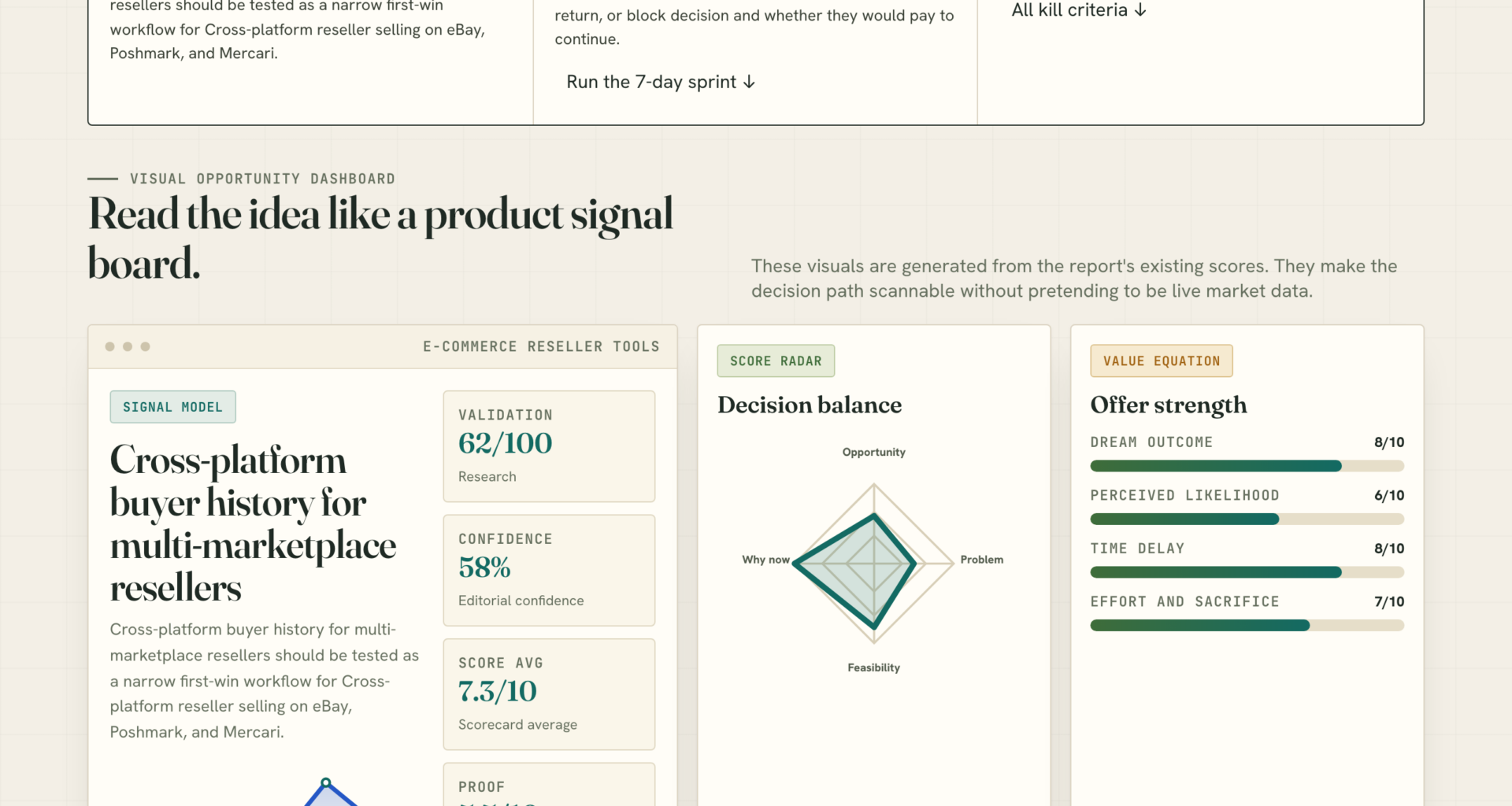

📊 Full opportunity report: Cross-platform buyer history for multi-marketplace resellers on IdeaNavigator AI — validation score, market gap, and execution plan.

Get backup power and energy gear delivered free with Prime
- Fast, free delivery on millions of items
- Prime Video, Amazon Music and more included
- Member-only deals all year
TL;DR
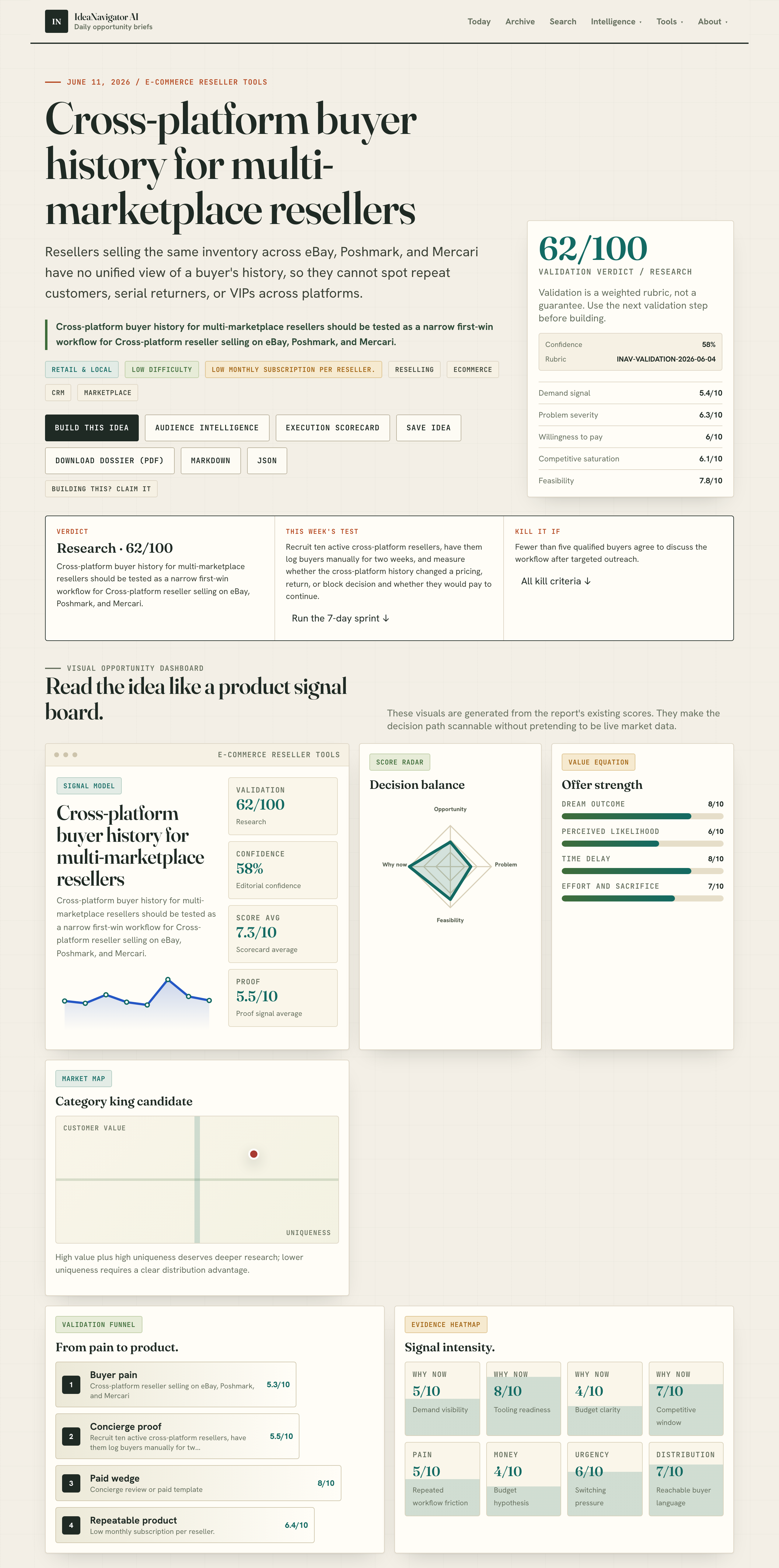
A new initiative is testing a manual buyer ledger for multi-marketplace resellers to create a unified view of buyer activity across eBay, Poshmark, and Mercari. This could enable better customer recognition and decision-making.
Resellers selling on eBay, Poshmark, and Mercari are testing a manual buyer ledger to unify buyer data across platforms, aiming to identify repeat customers, serial returners, and VIP buyers more effectively.
Currently, resellers operating across multiple marketplaces lack a unified view of buyer activity, as each platform maintains siloed data. To address this, a small group of resellers is manually logging buyer handles, platform, and purchase details into a shared ledger. This process allows them to search for a buyer across platforms and view their complete activity history before making sales or respond to offers.
The initiative is in the testing phase, with ten active resellers recruited to log their buyer data over two weeks. The goal is to assess whether having cross-platform buyer histories influences key decisions, such as pricing, returns, or blocking problematic buyers. The approach is designed to be low-cost, with a subscription model proposed for those who find it beneficial.
According to an anonymous researcher, this manual method is a first step toward creating a more integrated buyer profile system, which could eventually evolve into automated solutions. The project aims to validate whether such a system can deliver tangible benefits for resellers operating across multiple marketplaces.
Potential Impact on Multi-Marketplace Reselling Strategies
If successful, this manual buyer ledger could revolutionize how resellers manage cross-platform customer relationships, enabling more targeted marketing, better fraud detection, and improved pricing strategies. Recognizing repeat buyers and serial returners across platforms could lead to more informed decisions, reducing losses and increasing profits. This approach also highlights a broader industry need for integrated data solutions as more resellers expand their multi-marketplace presence.
Products Worth Considering

Sonos Play Portable Wi-Fi and Bluetooth Speaker, White

Roborock Qrevo S Pro Robot Vacuum and Mop with Multifunctional Dock

Dreame D30 Ultra CE Robot Vacuum and Mop
As an affiliate, we earn on qualifying purchases.
Growing Multi-Platform Selling and Data Silos
In recent years, more individual resellers have begun listing inventory simultaneously on multiple marketplaces such as eBay, Poshmark, and Mercari. However, each platform maintains its own buyer data, with no shared memory layer, making it difficult to track customer behavior across platforms. Currently, tools for cross-platform buyer insights are limited, and many resellers rely on manual record-keeping, which is time-consuming and prone to errors.
This initiative by resellers to manually log buyer data represents an early attempt to bridge this gap. Similar efforts have been discussed in industry circles, but no widely adopted automated solutions are yet available. The project reflects a broader industry trend toward more integrated customer data management in e-commerce reselling.
“This manual ledger is a simple but potentially powerful first step toward understanding cross-platform buyer behavior, which could lead to more strategic selling decisions.”
— an anonymous researcher
Unclear Long-Term Viability and Automation Potential
It is not yet clear whether this manual approach will scale effectively or lead to the development of automated, integrated buyer data systems. The impact on sales decisions and whether resellers are willing to pay for such a service remains to be validated. Further, the effectiveness of this method in reducing fraud or increasing profits has yet to be demonstrated through broader testing.
Next Steps for Cross-Platform Buyer Data Initiatives
The initial two-week testing phase will conclude soon, with participating resellers analyzing whether the manual ledger influenced their decision-making. If positive, plans may include expanding the user base, developing automated tools, or seeking funding for more sophisticated solutions. Industry observers will watch for results that could inform future product development in reseller tools.
Key Questions
How does the manual buyer ledger work?
Resellers log each buyer’s handle, platform, and purchase details into a shared ledger, allowing them to search for a buyer across all platforms and view their full activity history.
Will this system be automated in the future?
The current effort is manual, but success could lead to automated solutions that integrate buyer data across platforms more efficiently.
What are the main benefits of cross-platform buyer tracking?
It can help resellers identify repeat customers, serial returners, and VIP buyers, enabling more strategic pricing, targeting, and fraud prevention.
Is this approach legally or ethically compliant?
Since the system involves manual logging of publicly available buyer handles and purchase info, it generally complies with platform terms, but resellers should ensure they follow relevant data privacy rules.
When will a more automated solution be available?
It is too early to specify; the current project is a proof of concept, and further development depends on the outcomes of initial testing.
Source: IdeaNavigator AI