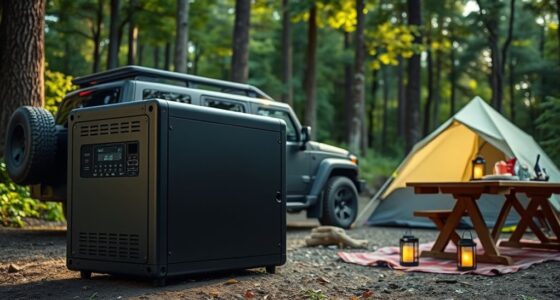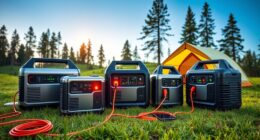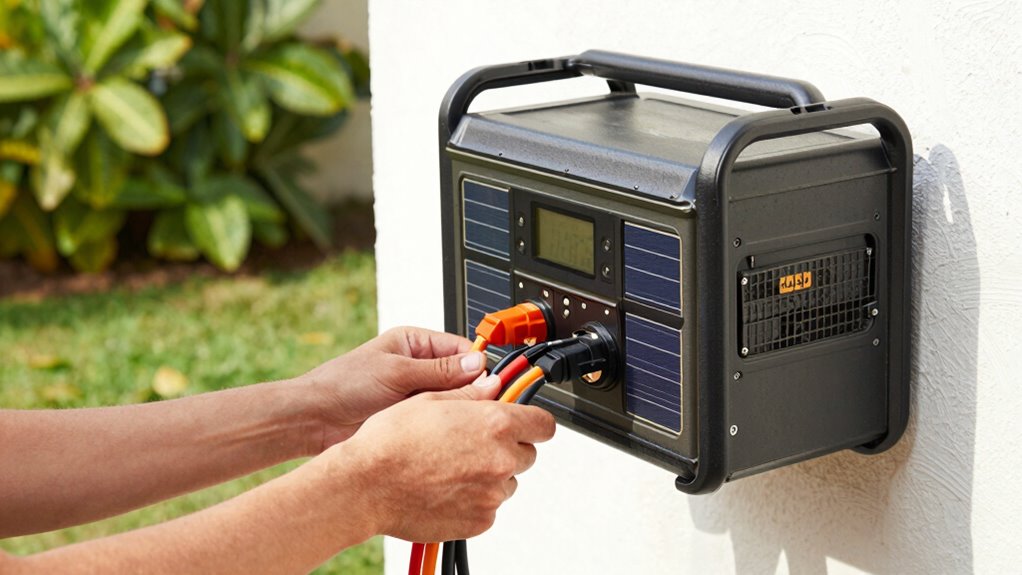

To use a solar generator with a transfer switch safely, start by ensuring the generator is fully charged and all wiring is correct and secure. Turn off the main breaker, set the transfer switch to isolate from the grid, and start the generator before switching on your home circuits. Monitor system performance closely during use, keeping an eye on warning signs. Proper maintenance and careful setup are key—there’s more to evaluate for safe, reliable operation.

Get backup power and energy gear delivered free with Prime
- Fast, free delivery on millions of items
- Prime Video, Amazon Music and more included
- Member-only deals all year
Key Takeaways
- Ensure the solar generator is fully charged and all wiring is secure before switching on.
- Turn off the main breaker and set the transfer switch to isolate from the grid before connecting.
- Start the solar generator prior to flipping the transfer switch to prevent back-feeding.
- Monitor the generator’s display for warnings and verify proper power flow during operation.
- Double-check connections and system status after use, and keep detailed maintenance records.
Using a solar generator with a transfer switch can be a safe and efficient way to power your home during outages, but it’s essential to follow proper procedures. One of the most important aspects is understanding how to manage your battery maintenance. Regularly inspecting your solar generator’s batteries ensures they stay in good condition and function effectively when needed. Keep the terminals clean and free of corrosion, and check the electrolyte levels if you’re using flooded lead-acid batteries. Proper maintenance extends battery life and guarantees reliable power delivery during emergencies. Additionally, monitor the voltage and state of charge, making sure the batteries aren’t overcharged or deeply discharged, which can damage them over time. Using a quality charge controller can help regulate this process, protecting your investment.
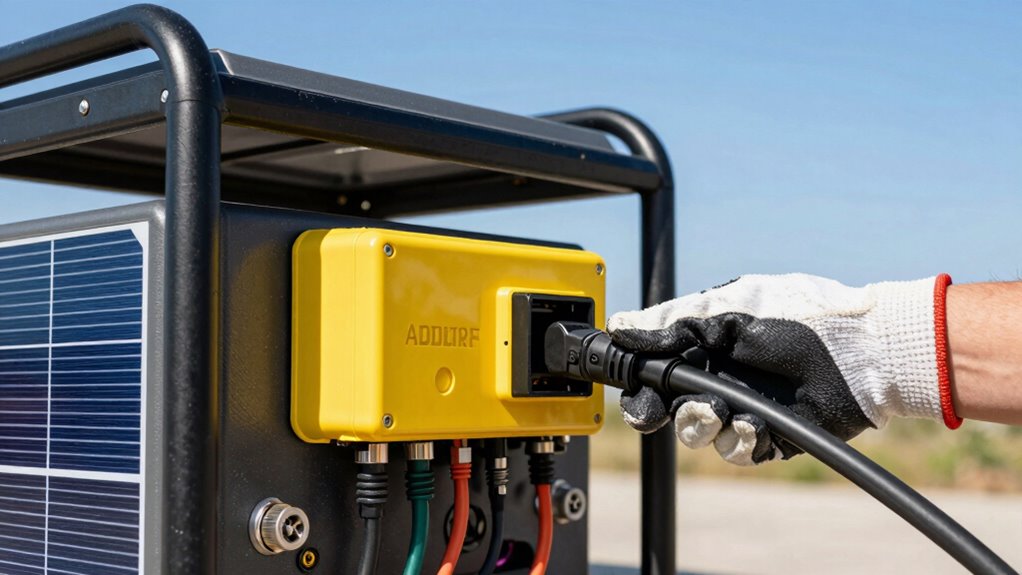
Another critical aspect is wiring configurations. When connecting your solar generator to your home via a transfer switch, correct wiring is paramount to prevent dangerous back feeds and electrical hazards. Always follow the manufacturer’s wiring diagrams and instructions carefully. Use appropriate gauge wiring to handle the load, and ensure all connections are secure and insulated. If you’re unsure about wiring configurations, consulting a licensed electrician is wise, especially to verify that your setup complies with local electrical codes. Proper wiring not only enhances safety but also optimizes the flow of power from your solar generator to your home circuits. Additionally, understanding the importance of battery maintenance can significantly influence the longevity and reliability of your power system. Recognizing how battery health impacts overall system performance is crucial for long-term operation. Regularly performing battery testing can help identify potential issues early and prevent system failures. Keeping detailed records of maintenance can also help track the system’s performance over time.
Before engaging the transfer switch, double-check that your solar generator is fully charged and that all wiring connections are secure. Turn off your main breaker and ensure the transfer switch is in the correct position to isolate your home from the grid. Start your solar generator, and then flip the transfer switch to connect your home circuits to the generator’s power supply. This step ensures that power flows smoothly without back-feeding into the grid, which could pose a risk to utility workers and damage your equipment. During operation, keep an eye on your solar generator’s display panel for any warnings or irregularities. Regularly testing your system under supervised conditions will help you confirm that everything functions properly when you need it most.
solar generator with transfer switch
As an affiliate, we earn on qualifying purchases.
As an affiliate, we earn on qualifying purchases.
Frequently Asked Questions
Can I Connect Multiple Solar Generators to One Transfer Switch?
You shouldn’t connect multiple solar generators to one transfer switch unless they’re specifically designed for that setup, ensuring the combined capacity matches the transfer switch’s limits. Check each solar generator’s capacity and verify transfer switch compatibility beforehand. Overloading the switch can cause damage or safety hazards. Always consult a professional electrician to evaluate your system, ensuring safe, efficient operation when expanding your solar power setup.
What Are the Signs of an Unsafe Transfer Switch Setup?
An unsafe transfer switch setup is like a ticking time bomb—you’ll notice signs of danger. Sparks, burning smells, or buzzing sounds indicate transfer switch hazards. Loose connections or signs of overheating point to electrical safety issues. If the switch doesn’t switch smoothly or shows visible damage, stop using it immediately. Recognizing these signs helps prevent electrical accidents, ensuring your system operates safely and effectively. Always prioritize safety and seek professional help when in doubt.
Do I Need Professional Help to Install a Transfer Switch?
Yes, you should seek professional help for installing a transfer switch. While DIY installation might seem manageable, safety precautions are vital to prevent electrical hazards or damage. An experienced electrician understands local codes and guarantees correct wiring, reducing risks of unsafe setups. Investing in professional installation ensures your solar generator and transfer switch work safely, efficiently, and reliably, giving you peace of mind during power outages.
How Often Should I Inspect My Transfer Switch and Solar Generator?
You should inspect your transfer switch and solar generator at least once a year, following a regular maintenance schedule. Use an inspection checklist to guarantee all components are functioning correctly, including wiring, connections, and safety features. Regular inspections help prevent potential issues, extend equipment lifespan, and ensure safe operation during power outages. Don’t forget to turn off and unplug your devices before inspecting to avoid hazards.
Are There Specific Transfer Switch Models Compatible With Solar Generators?
Yes, some transfer switch models are compatible with solar generators. When choosing one, check the battery capacity to guarantee it can handle your energy needs and confirm inverter compatibility for smooth operation. Look for transfer switches designed for renewable energy systems, as these are more likely to work seamlessly with solar generators. Always verify the specifications and consult the manufacturer to prevent mismatched components and ensure safety.
solar generator battery maintenance kit
As an affiliate, we earn on qualifying purchases.
As an affiliate, we earn on qualifying purchases.
Conclusion
By following these safety tips, you’ll find that using a solar generator with a transfer switch becomes a seamless part of your emergency plan. It’s funny how a simple switch can turn your home’s power source into a reliable, green energy backup—just like that, your worries about outages fade away. When safety and preparedness meet, you might just discover unexpected peace of mind hiding in your own backyard, powered by the sun’s generous gift.
solar generator charge controller
As an affiliate, we earn on qualifying purchases.
As an affiliate, we earn on qualifying purchases.
home transfer switch for solar power
As an affiliate, we earn on qualifying purchases.
As an affiliate, we earn on qualifying purchases.
Halloween Picks
halloween
As an affiliate, we earn on qualifying purchases.