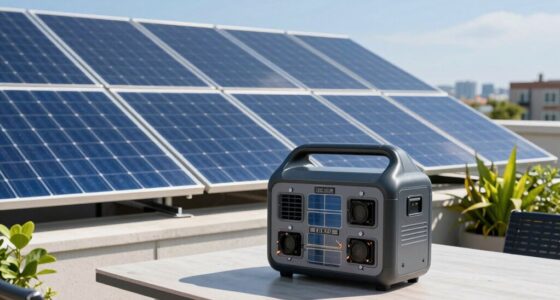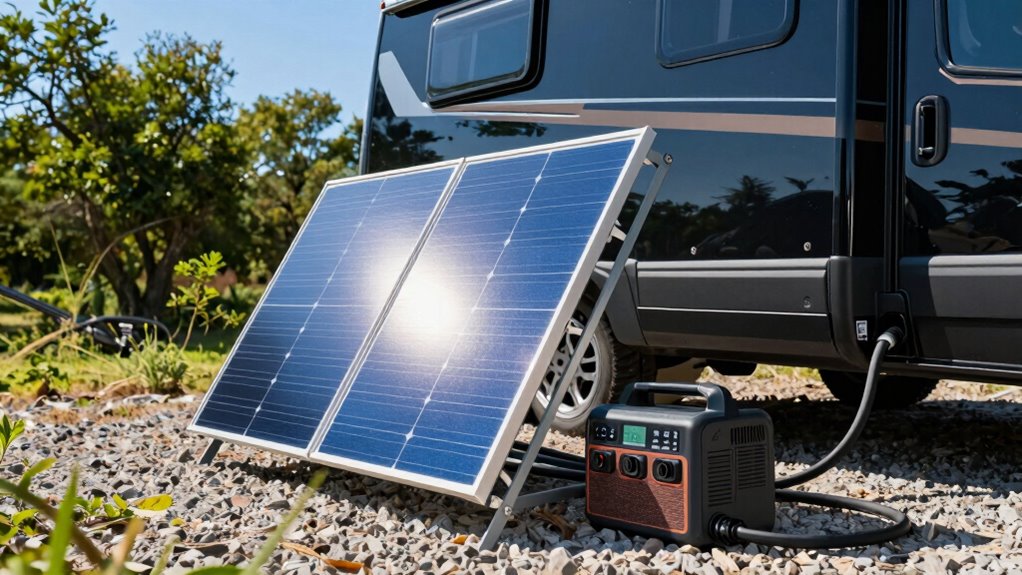

When choosing a solar generator for RV life, look for a capacity between 300-500 watt-hours to guarantee enough power for your devices and essentials. Check for multiple outlets — AC, USB, and DC — to connect various appliances easily. Confirm the inverter wattage supports your major appliances and that the unit is durable, portable, and compatible with solar panels. Features like fast charging, overcharge protection, and future upgrade options will make your off-grid adventures smoother—keep exploring to learn more.

Get backup power and energy gear delivered free with Prime
- Fast, free delivery on millions of items
- Prime Video, Amazon Music and more included
- Member-only deals all year
Key Takeaways
- Choose a capacity of 300-500Wh for reliable off-grid power and extended adventures.
- Ensure multiple ports (AC, USB-C, DC) for versatile device and appliance charging.
- Prioritize high inverter wattage for running multiple or larger appliances simultaneously.
- Verify compatibility with solar panels and modular design for future upgrades.
- Look for safety features like overcharge protection and durable build for rugged RV travel.
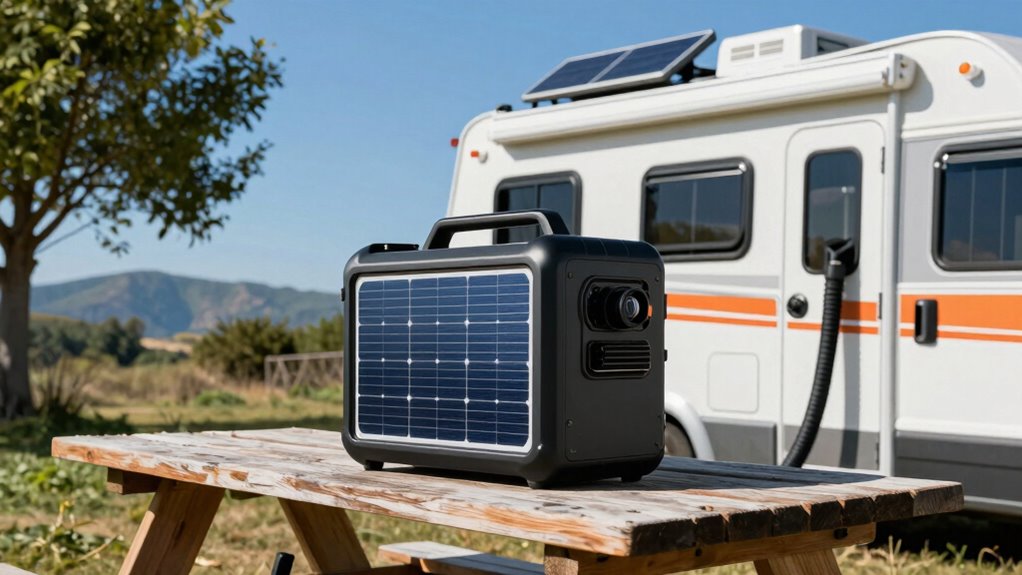
When choosing a solar generator for RV life, you need to focus on several key factors to guarantee it meets your power needs and fits your lifestyle. One of the most critical aspects is battery capacity. You want a generator with enough storage to power your devices, appliances, and essentials without constantly worrying about running out of juice. Think about your typical usage—if you often run a fridge, lights, and charge multiple devices, opt for a unit with a higher capacity, ideally one that can store at least 300-500 watt-hours. This way, you have the flexibility to extend your off-grid adventures without interruptions. Keep in mind that larger batteries tend to be heavier and more expensive, so balance your power needs with portability. Additionally, consider the long-term structure of your power system to ensure it remains adaptable as your energy requirements evolve. Understanding how your solar generator integrates with your existing setup can help prevent future mismatches and maximize efficiency. Incorporating modular components can also allow for easier upgrades and customization over time.
Choose a solar generator with 300-500Wh capacity for reliable off-grid power and balanced portability.
Port options are equally important. The right generator should have a variety of ports to connect all your gear efficiently. Look for multiple AC outlets if you plan to run larger appliances, and check for USB ports, including USB-C, to charge phones, tablets, or other small devices. Some units also feature DC ports or 12V cigarette lighter sockets, which are great for powering small appliances or connecting directly to your RV’s systems. Having a range of port options means you won’t need extra adapters or power strips, simplifying your setup and making it more convenient. Also, consider the placement and number of ports; multiple charging options allow you to connect several devices simultaneously, ensuring everyone stays powered up.
Other factors tie into these core features. For example, pay attention to the inverter capacity, which determines how much power you can draw at once. A higher inverter wattage means you can run more appliances simultaneously or power devices that require more energy. Additionally, look for a solar generator with a robust and adaptable design—portability is essential for RV life, but so is durability, especially if you’re traveling rough terrains. Consider the input options as well, such as whether it supports fast solar charging or AC wall charging, giving you flexibility in how you replenish your power bank. It’s also helpful to evaluate the charging speed of the unit, especially if you need to quickly recharge after a day of heavy use. Furthermore, checking for features like overcharge protection can safeguard your investment and prolong the lifespan of your generator.
Ultimately, the right solar generator should seamlessly fit your lifestyle, providing enough capacity and versatile ports to keep your RV running smoothly, no matter where your journey takes you. Prioritize these features, and you’ll find a reliable power solution that keeps your adventures energized and hassle-free.
Products Worth Considering

Bose QuietComfort Headphones (2nd Generation), Wireless Over‑Ear Noise‑Cancelling with Mic, USB‑C Charging, Lossless Audio, up to 24 h Playb

Bose SoundLink Plus Portable Bluetooth Speaker, Black

Roborock Qrevo 2 Pro Robot Vacuum and Mop
As an affiliate, we earn on qualifying purchases.
Frequently Asked Questions
How Long Do Solar Generators Typically Last?
Solar generators typically last around 5 to 10 years, depending on usage and maintenance. You should consider battery capacity because larger capacities usually mean longer life spans. Additionally, portability features like lightweight design and sturdy handles help you move and store your generator easily, extending its usability. Proper care and avoiding deep discharges can also considerably prolong the lifespan, ensuring your investment provides reliable power during your RV adventures.
Can Solar Generators Handle High Power Appliances?
Yes, solar generators can handle high power appliances if they have sufficient battery capacity and fast charging speed. Look for models with higher watt-hour ratings to support devices like microwaves or power tools. A generator with quick charging guarantees you won’t run out of power during use. Always check the surge capacity too, so your high-demand appliances operate smoothly without overloading the system.
Are Solar Generators Suitable for Winter Use?
You can definitely use a solar generator in winter, but consider its battery capacity and portability. Cold temperatures slow battery performance, so choose one with a higher capacity to store enough power through shorter, cloudy days. Also, make sure it’s portable enough for snowy, icy conditions. With proper planning, your solar generator can keep your RV powered, even amid winter’s chill and limited sunlight.
What’s the Best Way to Maintain a Solar Generator?
To maintain your solar generator, regularly check its battery capacity and keep it within suitable levels. Clean the solar panels to guarantee maximum charging efficiency, especially after dirt or snow accumulates. Store the generator in a cool, dry place when not in use, and avoid over-discharging the battery. Periodically test the system to catch any issues early, ensuring it performs reliably during your RV adventures.
Do Solar Generators Require Professional Installation?
Solar generators generally don’t require professional installation, especially portable power options designed for RV use. You can easily set up the solar panels and connect them to your generator, as long as you pay attention to solar panel efficiency and proper grounding. Just follow the manufacturer’s instructions to guarantee safety and peak performance. This way, you enjoy reliable, eco-friendly power without the hassle of complex installation.
Conclusion
As you set out on your RV adventures, choosing the right solar generator is like planting seeds for endless journeys. It quietly nurtures your freedom, whispering promises of sunny days and starry nights. With the right features, it becomes your steadfast companion, gracefully powering your escapades. Trust your instincts, and let this gentle partner illuminate your path, turning every mile into a vibrant tapestry of discovery and serenity. Your perfect RV companion awaits, ready to brighten every horizon.