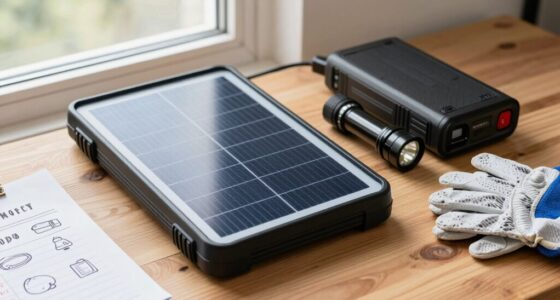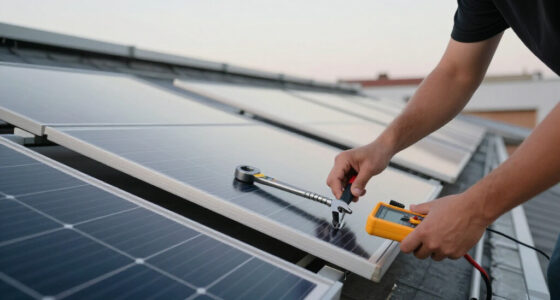
To estimate your daily energy use before buying solar gear, start by reviewing your energy bills to find your total monthly kWh. Divide that number by 30 for an average daily estimate. Track your usage over a week or two to account for variability. List your major appliances, find their wattage, and multiply by daily use hours to calculate each device’s consumption. Keep exploring for tips on making your solar setup as efficient as possible.

Get backup power and energy gear delivered free with Prime
- Fast, free delivery on millions of items
- Prime Video, Amazon Music and more included
- Member-only deals all year
Key Takeaways
- Review recent energy bills to determine your total monthly kWh consumption.
- Divide the total monthly kWh by 30 to estimate your average daily energy use.
- Track your energy consumption over a week for more accurate, variable usage insights.
- List and calculate each appliance’s daily energy consumption to identify major energy users.
- Use consumption data to select appropriately sized solar panels and battery storage.
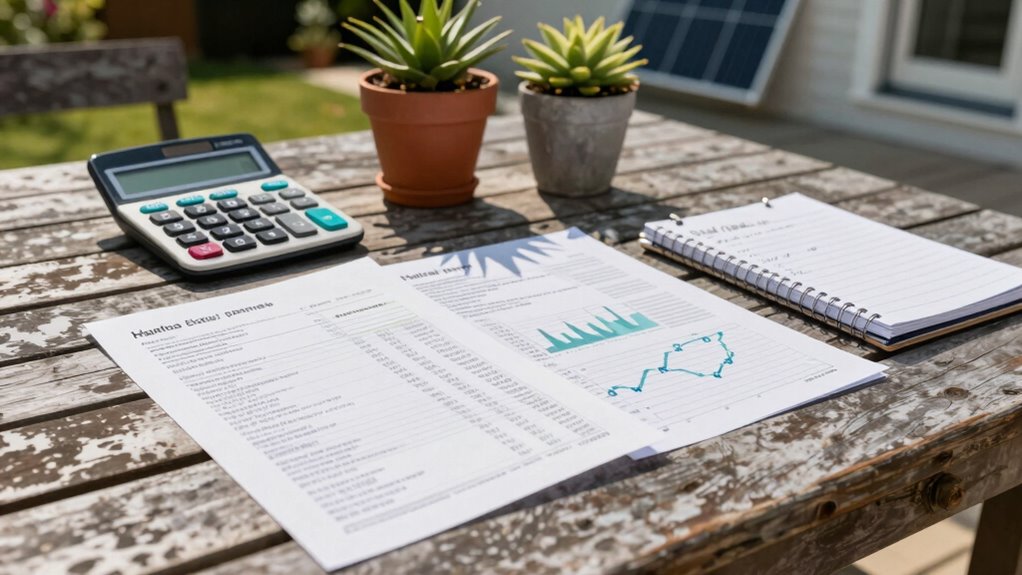
Ever wondered how much energy you use each day? Understanding your daily energy consumption is vital before investing in solar gear. It helps you determine the right size of solar panels and battery capacity needed to meet your household’s needs. To start, you should review your energy bills, which typically list your total kilowatt-hours (kWh) used in a month. Divide that number by 30 to get an average daily energy consumption. This gives you a solid initial estimate, but for a more precise picture, you should track your usage over a week or two, especially if your energy consumption varies considerably across different days or seasons.
Once you have a clearer idea of your daily energy needs, focus on your appliances. Make a list of all the devices you use regularly—lights, refrigerators, computers, heating or cooling systems, and kitchen appliances. Check their wattage ratings, usually found on labels or in user manuals. Multiply each device’s wattage by the number of hours you typically use it each day to find its daily energy consumption in watt-hours (Wh). Summing these figures provides a detailed estimate of your total daily energy use. This method not only clarifies your overall consumption but also highlights which appliances are the biggest energy hogs, so you can consider energy-efficient alternatives. Additionally, understanding the contrast ratio of your home cinema projector can help you choose a model that performs well in your lighting conditions, ensuring your viewing experience is optimal even in varying ambient light. Recognizing energy efficiency in your household can further aid in reducing overall energy consumption and optimizing your solar setup. Being aware of your energy consumption patterns can also assist in scheduling high-energy tasks during times when your solar system is most effective. Moreover, tracking this data can help you identify opportunities for energy conservation and better optimize your household’s energy use.
As an affiliate, we earn on qualifying purchases.
Frequently Asked Questions
How Accurate Are Online Energy Calculators for Estimating Usage?
Online energy calculators can give you a rough estimate, but they aren’t always precise. You’ll get better accuracy by doing an energy audit of your home and using power monitoring devices to track actual usage. These tools help identify real consumption patterns, ensuring your solar system is designed correctly. Relying solely on online calculators might lead to underestimating or overestimating your needs, so combine them with these practical methods for the best results.
How Do Seasonal Changes Affect Daily Energy Consumption Estimates?
Seasonal variability and climate impact substantially influence your daily energy consumption estimates. During colder months, you’ll likely use more energy for heating, while warmer seasons may see increased cooling needs. These fluctuations mean your typical daily use varies throughout the year. To get accurate estimates, consider seasonal changes and climate impact, adjusting your calculations accordingly. This helps ensure your solar gear meets your energy needs year-round.
What Tools Are Best for Tracking Real-Time Energy Use?
Smart meters and energy monitors are your best tools for tracking real-time energy use. Did you know that energy monitors can reduce your consumption by up to 15%? These devices provide instant data, helping you identify high-energy appliances and habits. By consistently monitoring your usage, you gain better control over your energy habits, making it easier to estimate your needs accurately before investing in solar gear.
How Do Appliance Efficiencies Impact Energy Consumption Estimates?
Appliance efficiencies directly impact your energy consumption estimates because higher efficiency ratings mean less energy use for the same tasks. When appliance ratings meet or exceed current efficiency standards, you can expect lower energy consumption, which reduces your overall energy needs. By considering these ratings, you get a more accurate estimate of daily energy use, helping you size your solar system more effectively and avoid over- or underestimating your energy requirements.
Can Energy Usage Vary Significantly Within a Single Day?
Yes, your energy usage can vary considerably within a single day due to peak demand periods and power fluctuations. During these times, appliances may draw more power, especially in the morning or evening when household activity peaks. You might notice higher energy consumption during specific hours, impacting your overall daily use. Monitoring these fluctuations helps you better estimate your energy needs and optimize solar system sizing effectively.
battery storage for solar system
As an affiliate, we earn on qualifying purchases.
As an affiliate, we earn on qualifying purchases.
Conclusion
By accurately estimating your daily energy use, you’ll be better prepared to choose the right solar gear for your needs. Remember, “A stitch in time saves nine,” so taking the time now to assess your energy habits can save you money and hassle later. With a clear understanding of your consumption, you’ll confidently invest in a solar system that truly powers your home efficiently and sustainably, ensuring you get the most out of your investment.
As an affiliate, we earn on qualifying purchases.
As an affiliate, we earn on qualifying purchases.
Halloween Picks
halloween
As an affiliate, we earn on qualifying purchases.