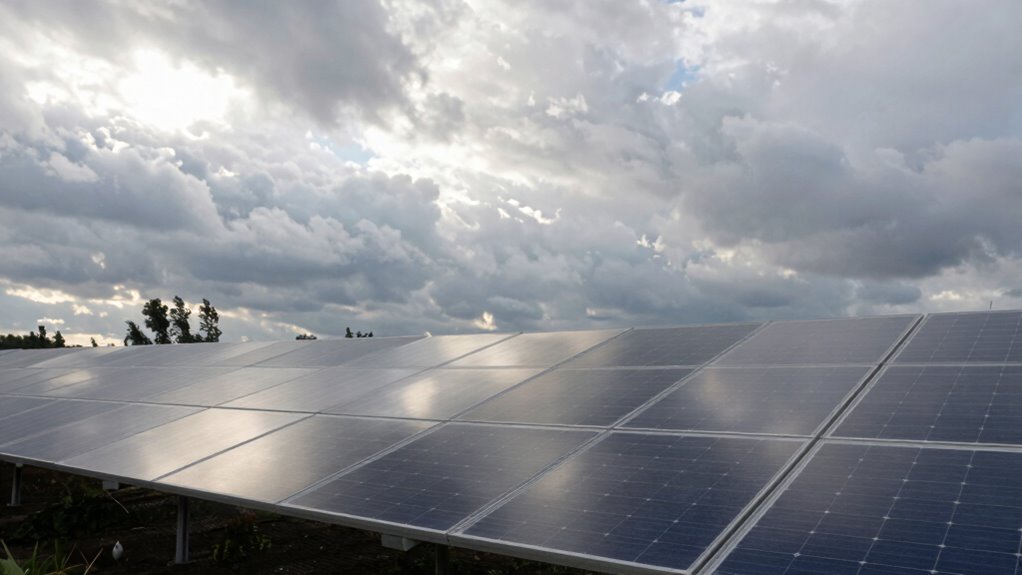

On cloudy days, your solar panel’s charging speed slows down but doesn’t stop. Reduced sunlight means less energy, so batteries charge more slowly and may take longer to reach full capacity. However, your system still generates power, ensuring you’re not completely off-grid. Proper planning, better panels, and weather-aware management can maximize your output during overcast conditions. Keep exploring to discover key strategies that help you get the most from your solar setup, even in bad weather.
Key Takeaways
- Solar panels still generate power on cloudy days, but at reduced efficiency and slower charging speeds.
- Cloud cover causes a dip in energy production, prolonging battery charging times.
- The overall charging speed depends on the extent of cloud cover and sunlight availability.
- High-quality batteries can mitigate slow charging effects during overcast weather.
- Monitoring weather forecasts and adjusting energy use can optimize charging efficiency on cloudy days.

Cloudy days can make you question whether your solar panels are still worthwhile, but the truth is that they don’t stop working entirely. Even when the sky isn’t clear, your panels can generate electricity, though at diminished efficiency. The key factor here is weather impact—cloud cover, fog, and even rain reduce the amount of sunlight reaching your panels, which directly affects how much power they produce. You might notice a dip in your energy output during overcast days, but that doesn’t mean your system is useless. Instead, it’s simply operating at a lower capacity, which is normal and expected.
One critical aspect to think about is battery efficiency. Your batteries store excess energy produced during sunnier periods, so even if your panels aren’t producing as much on cloudy days, you can still draw power from your stored reserves. However, the efficiency of your batteries also plays a role here. If your batteries are aging or of lower quality, they may not hold or deliver stored energy as effectively, making cloudy days even more challenging. Investing in high-quality, well-maintained batteries ensures you maximize your stored energy’s usability, especially when sunlight is scarce.
Weather impact doesn’t just reduce current generation; it also influences how quickly your batteries charge. On cloudy days, less sunlight means slower charging times, so your batteries might not reach full capacity as quickly as on sunny days. This can lead to a cycle where your energy reserves deplete more rapidly if your consumption remains steady. To get around this, you might need to adjust your energy use, prioritizing essential appliances or reducing overall consumption during overcast periods. Additionally, optimizing solar panel placement can significantly improve performance during low-light conditions, helping you make the most of available sunlight. Understanding weather variability and its effects on solar performance can help you better plan your energy management strategies. Moreover, the use of advanced monitoring systems can provide real-time data to optimize your energy usage and storage during unpredictable weather patterns. Incorporating weather forecasting into your planning can also help you anticipate energy dips and prepare accordingly.

Callsun N-Type 16BB 400W Bifacial Solar Panel, 2Pcs 200 Watt Solar Panel 12V, 25% High Efficiency, Dual-Module Parallel Anti-Shade Design, for RV Van Marine Home Rooftop Off-Grid Systems
【N-Type 16BB High-Efficiency Solar Cells】The Callsun 200 watt solar panel is built with advanced N-type solar cells and…
As an affiliate, we earn on qualifying purchases.
As an affiliate, we earn on qualifying purchases.
Frequently Asked Questions
How Do Different Cloud Types Affect Solar Panel Efficiency?
Different cloud types impact your solar panel efficiency by altering cloud cover and solar irradiance. Thick, dense clouds like cumulonimbus substantially block sunlight, reducing irradiance and slowing charging speeds. Thin, wispy clouds such as cirrus allow more light through, causing only minor efficiency drops. You notice this variation as your panels generate less power during overcast conditions, especially with heavy cloud cover, but they still produce energy as some sunlight penetrates.
Can Solar Chargers Fully Power Devices on Overcast Days?
While it’s not impossible to fully power your devices on overcast days, it’s quite a challenge. Cloudy weather often reduces power efficiency, meaning your solar charger may generate less energy. To guarantee continuous use, having battery storage becomes essential, allowing you to store excess energy for later. Relying solely on solar chargers during overcast conditions generally isn’t enough to fully power devices, so supplementing with stored energy is wise.
Do Solar Panels Perform Better Indoors or Outdoors During Cloudy Weather?
You’ll find solar panels perform better outdoors during cloudy weather because outdoor conditions allow for better panel placement and reduce indoor shading. When outdoors, you can position your panels in direct sunlight, even on cloudy days, maximizing energy absorption. Indoors, shading from walls or windows considerably hampers performance. So, for the best results during cloudy weather, place your panels outdoors where they can receive the most indirect sunlight, optimizing energy collection even when it’s overcast.
How Does Temperature Influence Solar Charging on Cloudy Days?
On cloudy days, temperature effects considerably influence solar charging. For example, if you’re in a warm, humid climate, high temperatures can decrease your solar panel’s heat efficiency, reducing power output even with diffuse sunlight. Cooler temperatures, however, improve heat efficiency, allowing your panels to operate more effectively. So, maintaining ideal temperatures helps maximize solar charging, especially during overcast weather, ensuring your system performs reliably despite cloud cover.
Are There Specific Solar Panel Models Optimized for Cloudy Conditions?
Yes, some solar panel models are designed specifically for cloudy conditions. These panels often feature enhanced durability to withstand moisture and temperature fluctuations, and they incorporate shading mitigation technology to optimize performance in low-light or partially shaded areas. When choosing, look for panels with high efficiency ratings and robust construction, ensuring you get reliable energy even on overcast days, maximizing your solar system’s performance regardless of weather.
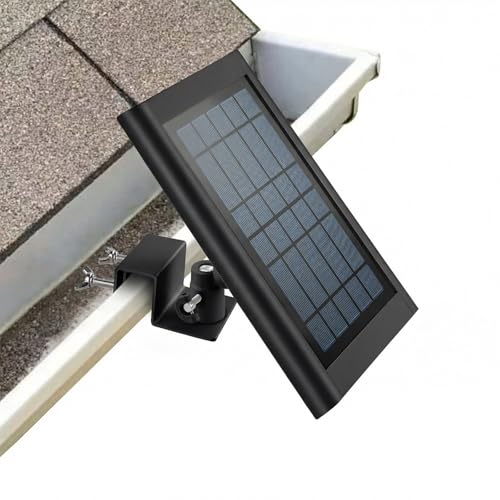
ALERTCAM Gutter Mount for Solar Panel, Adjustable Weatherproof Aluminum Alloy Mount Bracket, Perfect Angle to Get Adequate Sunlight (Black)
【Compatible with】ONLY designed for Ring Solar Panel. (Note: Solar Panel NOT Included.)
As an affiliate, we earn on qualifying purchases.
As an affiliate, we earn on qualifying purchases.
Conclusion
So, next time you see clouds drifting lazily across the sky, remember that your solar charger is still working, quietly soaking up diffused sunlight like a sponge. Even on gray days, it’s like catching tiny droplets of sunshine, slowly fueling your adventures. Don’t let overcast skies dim your plans—your solar panel is patiently turning cloudy gloom into green power, ready to light up your world when the sun finally peeks through again.

Dawnice 40kWh Home Energy Storage Battery 51.2V 206Ah LiFePO4 Battery Stacked Battery for Solar System Grade A Battery Cells Low Voltage
🌞【4PCS 51.2V 206Ah Module】 Dawnice 40kWh home energy storage battery consists of 4 3 51.2V 206Ah modules connected…
As an affiliate, we earn on qualifying purchases.
As an affiliate, we earn on qualifying purchases.
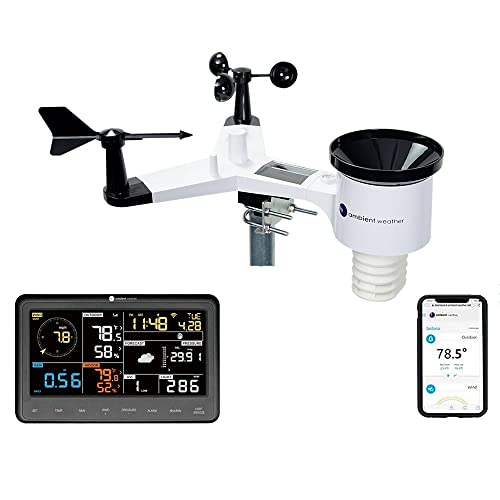
Ambient Weather WS-2902 WiFi Smart Weather Station
COMPLETE WEATHER STATION: (1) Osprey Sensor Array with Rain Cup, and (1) Brilliant, Easy-to-Read LCD Color Display
As an affiliate, we earn on qualifying purchases.
As an affiliate, we earn on qualifying purchases.