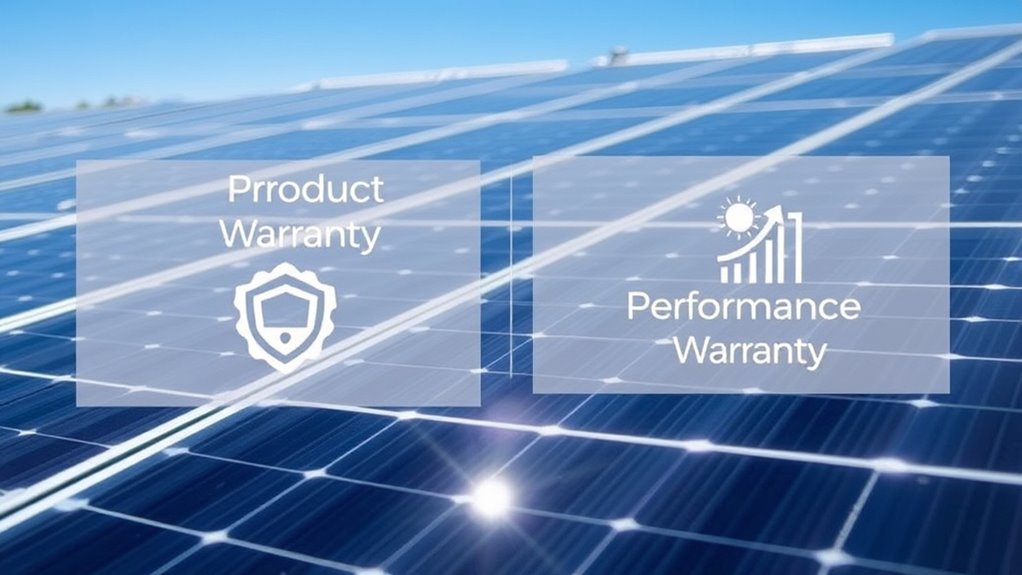

Understanding your solar panel warranty options is key to protecting your investment. A product warranty covers repairs or replacements for defective physical components like panels and inverters, usually for 10-25 years. A performance warranty guarantees your system will produce a certain level of energy over time, often lasting 25 years or more. Knowing the differences helps you grasp what’s covered and what might incur costs. Keep exploring to learn how these warranties work together to ensure your system’s efficiency.
Key Takeaways
- Product warranties cover physical defects and malfunctions, typically lasting 10-25 years, while performance warranties guarantee energy output over time.
- Performance warranties address degradation and underperformance, often extending beyond the product warranty period.
- Proper installation and maintenance are essential to ensure warranty validity and system efficiency.
- Warranty terms specify what is covered, including repair, replacement, and conditions that might void coverage.
- Understanding both warranty types helps protect your investment and ensures long-term system performance.
When investing in solar panels, understanding the warranty terms is essential to protect your long-term investment. One of the first things you should consider is the difference between product warranties and performance warranties. The product warranty covers the physical components of your solar system, such as panels and inverters, against defects or malfunctions. Typically, these warranties last between 10 to 25 years, but they may vary depending on the manufacturer. Performance warranties, on the other hand, guarantee that your panels will produce a certain percentage of their original capacity over a specified period, often 25 years or more. This means that even if the panels are physically intact, they might not perform as efficiently as they did when new, which can impact your energy savings.
Understanding these warranties helps clarify what you’re protected against and what might cost you extra. For example, if your panels fail due to manufacturing defects, the product warranty should cover the repair or replacement at no additional cost. However, if your panels degrade over time and fall below the guaranteed performance level, the performance warranty kicks in, and you could receive a rebate or replacement for the underperforming panels. This distinction is crucial because it directly influences your long-term energy output and savings, making it worth carefully reading the fine print.
Product warranties cover defects; performance warranties ensure ongoing efficiency and savings. Read the fine print carefully.
Another aspect you should keep in mind is how installation costs and maintenance plans relate to warranty coverage. Sometimes, a company’s warranty might include specific provisions about who performs repairs or inspections, so choosing a reputable installer becomes even more critical. Proper installation not only ensures your system works efficiently from the start but also affects warranty validity. Some warranties might be voided if installation procedures aren’t followed correctly, so understanding what’s covered and what’s not can save you money down the line.
Additionally, understanding the warranty coverage terms can help you identify potential gaps or overlaps, ensuring you’re fully protected in case of system failure or degradation. Maintenance plans also play a vital role in maintaining your warranty. Regular inspections, cleaning, and system checks can prevent issues that might void your warranty or reduce performance. Some manufacturers or installers offer maintenance plans that include these services, helping you stay compliant with warranty requirements. Investing in a solid maintenance plan can extend the lifespan of your system and ensure it continues to perform as promised, protecting your investment and maximizing your savings over time.

SUMRY Hybrid Solar Inverter, 4000W DC 24V to AC 120V Pure Sine Wave Power Converter, Glass Top Cover with LCD Display, 140A MPPT Charge Controller, Supports Battery-Less or AGM Lithium Battery
Unique Glass Cover Design: Tempered glass upper cover with big 6.25 inch LCD display and touchable buttons, cool…
As an affiliate, we earn on qualifying purchases.
As an affiliate, we earn on qualifying purchases.
Frequently Asked Questions
How Long Do Solar Panel Warranties Typically Last?
You can generally expect solar panel warranties to last between 10 to 25 years, depending on the manufacturer and the type of warranty. The warranty duration often covers product defects or performance issues, but be aware of coverage limitations like exclusions for damage caused by weather or improper maintenance. Always review the warranty details carefully to understand what’s included and how long you’re protected against potential issues.
Are Warranties Transferable if I Sell My Home?
Did you know that over 70% of solar warranties are transferable? If you sell your home, you can often transfer warranties to the new owner, adding value to your property. However, some warranties have limitations, like requiring notification or specific paperwork. Check your warranty’s terms to confirm if it’s transferable and understand any warranty limitations, ensuring a smooth transfer process and continued coverage for the new homeowner.
What Damages Are Covered Under a Typical Warranty?
A typical solar panel warranty covers damages caused by manufacturing defects or workmanship issues, but you should be aware of warranty exclusions like damage from improper installation, natural disasters, or misuse. Manufacturer responsibilities generally include repairing or replacing faulty panels within the warranty period. To fully understand coverage, review the warranty details carefully, as exclusions can vary, and knowing what’s covered helps protect you from unexpected costs.
Do Warranties Include Coverage for Lightning Strikes?
Did you know lightning strikes cause about 300,000 fires annually? Warranties typically don’t include lightning coverage, as it’s considered a warranty exclusion. If your solar panels get damaged from a lightning strike, you’ll likely need to pay for repairs yourself. Always check your warranty to see if lightning damage is covered—or if you’ll need to purchase supplemental insurance—since standard warranties usually exclude lightning-related issues.
How Does Performance Warranty Differ From Product Warranty?
A performance guarantee focuses on how well your solar panels produce electricity over time, ensuring they meet specific output levels. In contrast, a product warranty covers defects in materials or workmanship, addressing issues like broken panels or faulty parts. Remember, warranty limitations may restrict coverage for certain conditions, so it’s essential to understand what each warranty type covers to protect your investment effectively.

Renogy Solar Panels 200 Watt N-Type, 200W Solar Panel 16BB 25% High-Efficiency Solar Cell for 12V/24V Systems,PV Module Power Charger for Class B Van RV Marine Cabin Roof Home Farm
【Perfect Size for Class B Vans】This 200W N-Type solar panels are 7.5% smaller and 11.7% lighter than previous…
As an affiliate, we earn on qualifying purchases.
As an affiliate, we earn on qualifying purchases.
Conclusion
In summary, understanding solar panel warranty terms helps you make a smarter, safer switch to solar. By comparing product and performance warranties, you guarantee your investment stays protected. Don’t forget to scrutinize specifics, ask questions, and select a supplier that supports your solar journey. Simplify your solar experience by selecting a solid, secure warranty—saving yourself stress, strife, and surprises. Stay savvy, stay solar, and secure your sustainable future today!

Beginner's Guide to Home Solar Panel Installation: A Step-by-Step Manual for Planning, Installing and Maintaining Your Residential Solar System
As an affiliate, we earn on qualifying purchases.
As an affiliate, we earn on qualifying purchases.

Solar Pool Supply Universal Repair Kit for Solar Pool Heaters to Fix Leaky Solar Panel Pool Heaters in Minutes — Original Plugs, 0.25" Diameter
PROVEN RELIABILITY. Have a leaking solar pool heater that needs repair? No contractors are required with this easy-to-use…
As an affiliate, we earn on qualifying purchases.
As an affiliate, we earn on qualifying purchases.