
Perovskite solar cells are an exciting emerging technology that could revolutionize clean energy. They offer high efficiency, lightweight, and flexible designs, making them easier and cheaper to produce than traditional silicon panels. Their simple manufacturing process uses less energy and creates a smaller carbon footprint. However, challenges like environmental safety and scalability still need solutions. If you keep exploring, you’ll discover how these innovations could reshape solar power.
Key Takeaways
- Perovskite solar cells are an innovative, high-efficiency technology with the potential to revolutionize clean energy.
- They are easier and cheaper to manufacture than traditional silicon-based solar panels, enabling faster scalability.
- Manufacturing involves simpler, lower-temperature processes, reducing energy consumption and environmental impact.
- Key challenges include ensuring consistent quality in mass production and addressing toxicity concerns from lead-based formulations.
- Ongoing research aims to develop lead-free perovskites and improve manufacturing methods for sustainable, large-scale deployment.
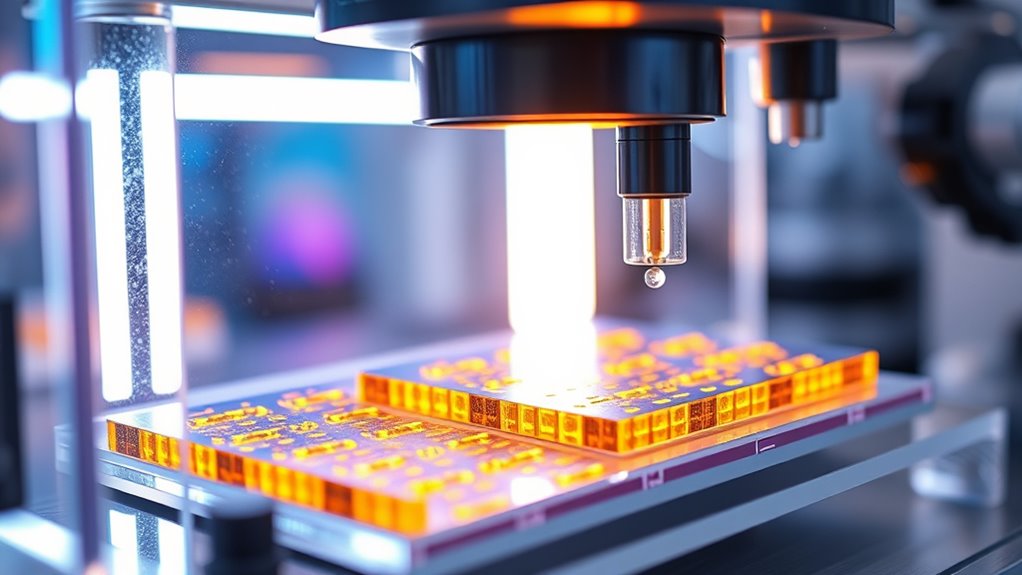
Have you ever wondered how new materials are transforming solar energy? One of the most exciting developments in recent years is the rise of perovskite solar cells. These innovative materials have the potential to revolutionize the way we generate clean energy thanks to their remarkable efficiency and versatility. But as with any emerging technology, understanding the practical aspects like manufacturing scalability and environmental impact is essential for evaluating their true potential.
Perovskite solar cells are made from a class of materials called perovskites, which are relatively easy to produce compared to traditional silicon-based solar panels. Their manufacturing process is simpler and can often be done at lower temperatures, making it easier to scale up production quickly. You might think of this as a notable advantage because it could lead to faster deployment and broader adoption. However, scaling production isn’t without challenges. Achieving consistent quality across large batches remains a hurdle, and current manufacturing methods often involve materials or processes that aren’t yet optimized for mass production. Developing scalable, cost-effective methods is critical to turning lab successes into widespread, real-world applications.
When it comes to environmental impact, perovskite solar cells offer both promising benefits and notable concerns. On the positive side, their manufacturing generally consumes less energy than traditional silicon panels, resulting in a smaller carbon footprint during production. Plus, the potential for lightweight, flexible designs means they can be integrated into a variety of surfaces, reducing material waste and expanding the ways we can harness solar power. But there’s a flip side. Many perovskite formulations contain lead, which raises questions about toxicity and environmental safety if the materials degrade or are improperly disposed of. Researchers are actively working on developing lead-free perovskite alternatives, but fully understanding and mitigating environmental risks remains a priority. Additionally, fostering a deeper understanding of creative practice can help accelerate innovative solutions for these challenges.
While perovskite solar cells have shown incredible promise, turning that promise into practical, sustainable solutions will require addressing manufacturing scalability and environmental concerns head-on. You should keep an eye on ongoing research, as innovations are happening rapidly. As these technologies mature, they could substantially lower the cost of solar energy and reduce environmental impacts compared to traditional methods. Yet, ensuring safe, scalable production will be the key to opening their full potential in our transition to cleaner energy sources.
Top picks for "perovskite solar cell"
Open Amazon search results for this keyword.
As an affiliate, we earn on qualifying purchases.
Frequently Asked Questions
What Is the Typical Lifespan of Perovskite Solar Cells?
You can expect perovskite solar cells to last around 5 to 10 years, though degradation mechanisms like moisture and UV exposure limit their lifespan. To extend their longevity, you should consider protective coatings and stable material compositions. Regularly monitoring performance helps identify early signs of degradation, enabling you to take steps for lifespan extension. With ongoing research, future improvements may substantially boost their durability and practical use.
How Do Perovskite Cells Perform in Different Weather Conditions?
You’ll find that perovskite solar cells perform variably in different weather conditions due to their weather resilience and temperature effects. They work well in sunny, moderate climates but can struggle with high humidity or extreme temperatures, which may reduce efficiency or cause degradation. However, ongoing research aims to enhance their stability, making them more resilient in diverse weather, so you can expect improved performance in various environmental conditions over time.
Are Perovskite Solar Cells Environmentally Friendly to Produce?
Perovskite solar cells are generally more environmentally friendly to produce than traditional silicon ones, but manufacturing emissions still matter. You should know that recycling challenges exist due to the materials used, which can complicate disposal. Despite some hurdles, their lower energy requirements during production make them a promising green energy source. By improving recycling methods and reducing emissions, we can make perovskite cells even more eco-friendly.
Can Perovskite Solar Cells Be Integrated Into Building Materials?
Yes, perovskite solar cells can be integrated into building materials, enhancing building integration and architectural aesthetics. You can incorporate them into windows, facades, or roof tiles, allowing your building to generate energy seamlessly. Their flexibility and transparency make them ideal for maintaining design appeal while providing sustainable power. By choosing perovskite-based solutions, you help create energy-efficient buildings that blend functionality with modern aesthetics.
What Are the Current Commercial Applications of Perovskite Technology?
You might think perovskite tech is everywhere, but market adoption is slow. Currently, you won’t find many commercial applications beyond experimental solar panels and prototypes. Manufacturing challenges like stability and scalability keep these cells from widespread use. While research progresses, real-world deployment remains limited, so don’t hold your breath for perovskite-powered gadgets or rooftops just yet. It’s a promising tech, but still in its awkward adolescence.
Conclusion
Think of perovskite solar cells as the dawn of a new era in renewable energy, shining brighter with each breakthrough. Their rapid development is like a rocket taking off, promising to revolutionize how we harness the sun’s power. With continued innovation, you’ll soon see them become a cornerstone of sustainable living. Embrace this emerging technology, because it’s not just a spark of hope—it’s a blazing trail toward a cleaner, greener future.