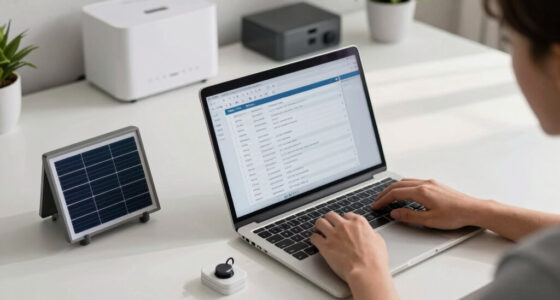
Your solar panel output in real-world conditions depends on factors like shading, temperature, weather, and maintenance. These elements can cause your system’s actual energy production to fall short of its rated capacity. Shading from trees or debris, hot weather, and dusty environments all reduce efficiency. Regular cleaning and trimming can help maximize output. If you want to understand how these conditions influence your system’s performance and improve your setup, there’s more to discover.

Get backup power and energy gear delivered free with Prime
- Fast, free delivery on millions of items
- Prime Video, Amazon Music and more included
- Member-only deals all year
Key Takeaways
- Actual solar panel output often falls below nominal ratings due to shading, weather, and temperature effects.
- Partial shading creates bottlenecks, reducing overall energy production despite mitigation technologies.
- Hot temperatures degrade panel efficiency, leading to lower power output during heatwaves.
- Regular cleaning and trimming can improve real-world performance by minimizing environmental shading.
- Monitoring system data helps understand fluctuations and optimize efficiency under varying environmental conditions.

While solar panels are often tested under ideal conditions, their real-world performance can vary considerably due to factors like weather, shading, and temperature. Understanding what solar panel output truly means requires recognizing how these elements influence energy production. At the core, solar panel output measures how much electricity your system generates over time, but this isn’t always consistent. Real-world conditions cause efficiency degradation, meaning your panels don’t operate at their peak efficiency constantly. This degradation occurs gradually as panels age and face environmental stressors, but it also happens immediately when conditions aren’t perfect.
Solar panel output varies with weather, shading, and temperature, affecting real-world energy production and efficiency.
Shading impacts are one of the most significant factors affecting output. Even partial shading from trees, buildings, or debris can drastically reduce the energy your panels produce. When part of a panel is shaded, it can create a bottleneck, limiting the entire system’s flow of electricity. Many modern systems use microinverters or power optimizers to mitigate shading impacts, allowing unshaded sections to continue producing power independently. However, even with these technologies, shading still causes a notable drop in overall energy output. You might notice less power during cloudy days or if your panels are shaded at certain times of the day, which is normal but important to account for when evaluating system performance.
Temperature also plays an essential role. Solar panels are most efficient at cooler temperatures. When it gets hot outside, the efficiency degradation increases, and your panels produce less power than they would in cooler conditions. This effect is often overlooked but can be significant, especially in warmer climates. You might see a reduction in output during heatwaves or hot summer days, even if the sunlight remains strong. Additionally, environmental stressors like dust or pollution can further reduce efficiency by blocking or soiling the panels, emphasizing the importance of regular maintenance. Recognizing the performance fluctuations caused by these factors can help you better understand your system’s behavior over time. Moreover, understanding how environmental factors impact your system can guide you in making timely adjustments or upgrades to improve overall efficiency. An awareness of cell temperature effects can also help you optimize your system’s placement and cooling strategies to maximize energy production.
It’s essential to understand that the nominal rating of your solar panels—often called their “nameplate capacity”—assumes ideal conditions. In reality, factors like shading impacts and efficiency degradation mean your actual output will often be lower. Regular monitoring of your system, including performance data, helps you understand these variations and set realistic expectations. Over time, you’ll see how weather patterns, shading changes, and temperature fluctuations influence your energy production. Recognizing these real-world impacts helps you optimize your system, whether by trimming trees, cleaning panels, or adjusting your energy usage during peak production times. Ultimately, understanding what solar panel output really means in practice empowers you to make smarter decisions about your solar investment and energy management.
As an affiliate, we earn on qualifying purchases.
Frequently Asked Questions
How Does Shading Affect Solar Panel Performance?
Shading substantially impacts your solar panel performance by reducing its energy output. When cloud cover or shadows from trees and buildings block sunlight, your panels generate less power. Proper panel orientation helps minimize shading effects by maximizing sun exposure throughout the day. Even small shadows can cause a considerable drop in efficiency, so it’s essential to position panels carefully and consider shading patterns to optimize energy production in real-world conditions.
What Is the Impact of Dirt and Debris on Output?
Dirt and debris can greatly reduce your solar panel output by causing dust accumulation and debris obstruction on the surface. When dirt builds up, it blocks sunlight from reaching the solar cells, decreasing efficiency. Regular cleaning helps maintain peak performance, ensuring your panels produce maximum power. Ignoring dirt buildup can lead to sustained energy loss over time, so stay proactive with routine maintenance to keep your solar system functioning at its best.
How Do Temperature Changes Influence Efficiency?
You’ll notice that for every 1°C rise in temperature, solar panel efficiency drops by about 0.5%, thanks to the temperature coefficient. Ambient cooling helps mitigate this loss, keeping panels cooler and maintaining higher output. When temperatures soar, your panels produce less energy, so choosing panels with a lower temperature coefficient can improve efficiency. Staying cool is key to maximizing your solar system’s performance in hot weather.
Does Panel Angle Alter Real-World Energy Production?
Yes, panel angle greatly influences your real-world energy generation. Proper panel orientation guarantees you maximize sunlight exposure throughout the day, enhancing efficiency. By adjusting the tilt to match your location and seasonal sun path, you capture more sunlight, increasing your system’s output. Regularly evaluating and fine-tuning your panel angle helps maintain ideal sunlight utilization, ensuring you get the most energy possible from your solar investment.
How Does Local Weather Variability Impact Output?
Local weather variability greatly impacts your solar panel output. Weather patterns like cloud cover, rain, or snow reduce sunlight reaching your panels, decreasing energy production. The solar cycle also influences this, as during solar minimums, less solar radiation is available. These factors combined mean your panels may produce less energy during unpredictable weather events or certain times in the solar cycle, so expect fluctuations in your system’s performance.
As an affiliate, we earn on qualifying purchases.
Conclusion
Understanding solar panel output in real-world conditions shows it’s not just about ideal lab numbers. While perfect sunlight might promise high efficiency, actual performance faces clouds, shading, and temperature drops. Think of it like a car’s horsepower—impressive on paper but affected by terrain and weather. So, don’t just chase the peak ratings; consider how your environment impacts your system. In the end, real-world conditions remind you that solar power is as much about patience as performance.
solar panel shading mitigation devices
As an affiliate, we earn on qualifying purchases.
As an affiliate, we earn on qualifying purchases.
As an affiliate, we earn on qualifying purchases.
Halloween Picks
halloween
As an affiliate, we earn on qualifying purchases.