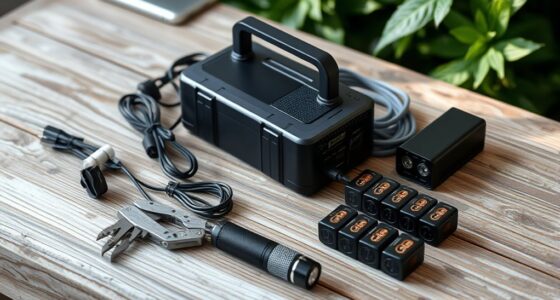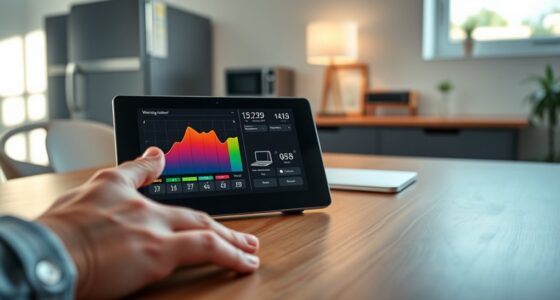

When using a solar generator, always follow safety guidelines to protect yourself and your equipment. Keep the system in a well-ventilated area, avoid overloading it, and disconnect devices when not in use. Regularly inspect connections for corrosion or damage, and never expose batteries or electrical parts to water or moisture. Make sure to use manufacturer-recommended components and wear safety gear during maintenance. Staying vigilant about these safety practices can keep your system running smoothly—more tips await if you continue.
Key Takeaways
- Keep batteries clean, dry, and ensure terminals are tightly connected to prevent corrosion and leaks.
- Install solar panels in unobstructed areas with maximum sun exposure and secure them properly.
- Avoid overloading the system beyond its rated capacity to prevent damage and safety hazards.
- Use appropriate safety gear like gloves and eye protection during maintenance or handling batteries.
- Regularly inspect the system for damage, loose connections, or corrosion and address issues immediately.
Using solar generators can be a safe and reliable way to power your devices, but it is vital to follow proper safety guidelines. One of the most important aspects of safe operation is guaranteeing correct battery maintenance. The battery is the heart of your solar generator, and neglecting its upkeep can lead to reduced performance, overheating, or even dangerous failures. Regularly check for signs of corrosion or leaks, and keep the terminals clean and tight. Avoid exposing the battery to extreme temperatures, as excessive heat can degrade its lifespan and increase the risk of fire. Always use the manufacturer-recommended batteries, and if you’re unsure, consult the user manual or a professional. Proper battery maintenance not only prolongs the life of your solar generator but also minimizes safety hazards.
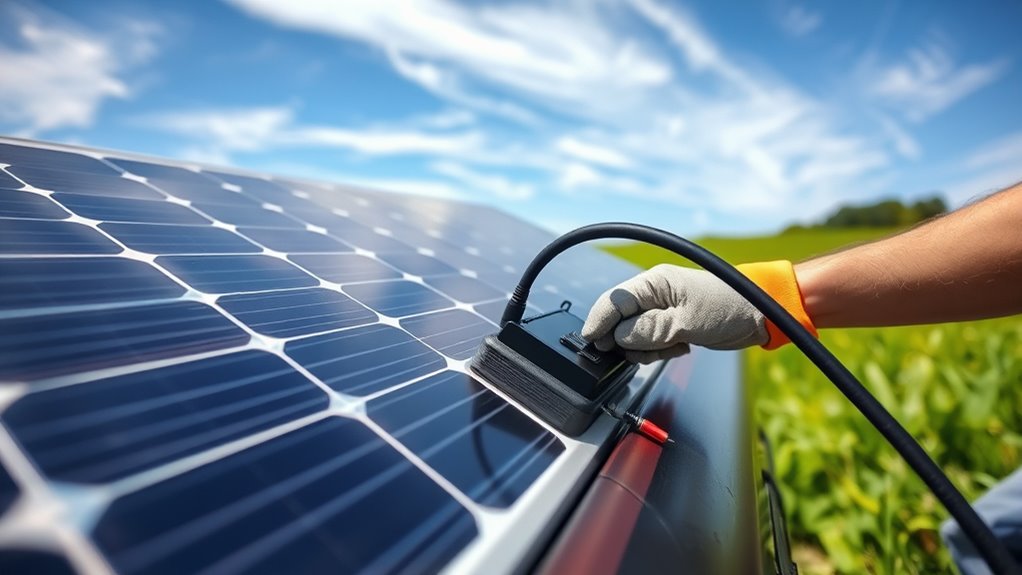
Equally important is following installation guidelines meticulously. When setting up your solar generator, make sure to follow the manufacturer’s instructions carefully. Proper installation not only guarantees optimal performance but also enhances safety. For example, position your solar panels in a location that receives adequate sunlight without obstruction, and secure them properly to prevent accidents. Keep the generator in a well-ventilated area, away from flammable materials and moisture, to reduce the risk of overheating or electrical shorts. Use the recommended cables and connectors, and avoid improvising with incompatible parts, as this can cause short circuits or damage to the system. Additionally, guarantee all connections are tight and protected from weather elements, especially if you’re installing outdoors. Adhering to installation guidelines helps prevent electrical hazards and ensures your solar generator operates smoothly over time. Being aware of automation in business and how it impacts safety protocols can also help you implement best practices for system management.
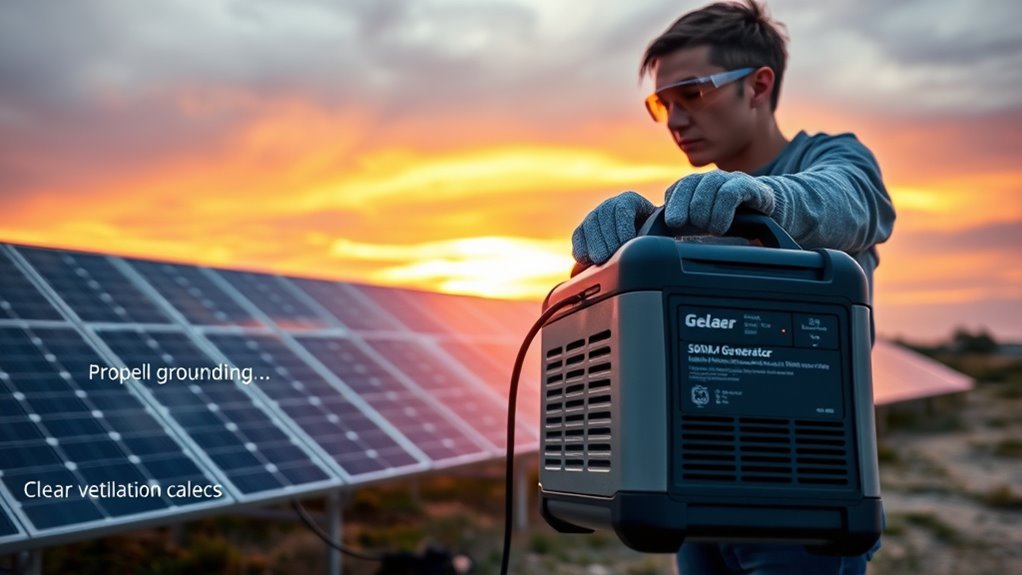
Another pivotal point is to understand the safety precautions during operation. Never overload the system beyond its rated capacity, as this can lead to overheating or component failure. Always disconnect devices when not in use and turn off the generator during maintenance or cleaning. Protect the system from water or moisture exposure, which can cause electrical shocks or damage. When handling batteries or electrical components, wear appropriate safety gear such as gloves and eye protection. Regularly inspect your setup for wear and tear, loose connections, or corrosion, and address issues immediately. Staying vigilant about safety during operation reduces the risk of accidents and extends the life of your solar generator.
Frequently Asked Questions
Can Solar Generators Be Used Underwater Safely?
No, you shouldn’t use solar generators underwater. They’re not designed with a waterproof design, so submersion risks damage to the internal components. Water can cause short circuits and pose electrical hazards. Always keep your solar generator dry and on stable, elevated surfaces. If you need power underwater, consider specialized equipment built for submerged use, but never attempt to submerge a standard solar generator.
Do Solar Generators Emit Harmful Radiation?
An ounce of prevention is worth a pound of cure, so you’ll want to know that solar generators don’t emit harmful radiation. You won’t face radiation exposure or health concerns from their operation, as they convert sunlight into electricity without producing any dangerous emissions. Rest assured, using a solar generator is safe for your health, making it a reliable, eco-friendly power source for your outdoor adventures or emergency needs.
How Do Weather Conditions Affect Solar Generator Safety?
Weather conditions greatly impact your solar generator safety. Stormy weather, heavy rain, or snow can cause electrical issues or damage the device if not properly protected. Always check weather safety reports before use, and avoid operating your solar generator during storms or high winds. During storm preparedness, make sure your generator is covered or stored safely to prevent weather-related damage. Proper precautions keep your solar generator functioning safely and efficiently in varying weather conditions.
Are There Risks of Electrical Shock During Setup?
Yes, there’s a risk of electrical shock during setup that could rival a lightning strike if you’re not careful. Always prioritize grounding safety and double-check your electrical connections. Make sure your solar generator is unplugged and your hands are dry before handling any wires. Properly securing connections minimizes shock hazards. Remember, a little caution during setup keeps you safe from potential shocks that are more dangerous than you’d ever expect.
Can Solar Generators Be Damaged by Pets or Children?
Yes, solar generators can be damaged by pets or children if they’re not properly protected. To prevent this, you should implement pet safety and childproofing measures, like placing the generator in a secure, elevated spot or using safety covers. Keep kids and pets away from the device, and never leave it unattended in accessible areas. These steps safeguard your solar generator and ensure everyone’s safety.
Conclusion
By following these safety tips, you guarantee your solar generator remains a trustworthy companion during power needs. Treat it with care, and it’ll serve you reliably when you need it most. Remember, a little attention now can prevent unexpected surprises later. Keep safety top of mind, and you’ll enjoy peace of mind while harnessing the sun’s energy. With mindful use, your solar generator will quietly work behind the scenes, brightening your days without a hitch.