Off-grid solar for your tiny house can provide reliable, clean energy independence. You’ll need solar panels to capture sunlight, a suitable battery system to store excess power, and a way to monitor performance. Regular maintenance like cleaning panels and checking connections guarantees your system runs efficiently and lasts longer. Properly sized and maintained, off-grid solar keeps your tiny home sustainable and self-sufficient. Keep exploring to learn more tips on optimizing your setup for maximum benefits.

Get backup power and energy gear delivered free with Prime
- Fast, free delivery on millions of items
- Prime Video, Amazon Music and more included
- Member-only deals all year
Key Takeaways
- Properly size battery storage to match energy needs and ensure reliable off-grid power.
- Regularly clean and inspect solar panels to maximize energy efficiency and prevent damage.
- Use monitoring systems to track energy production and consumption, enabling proactive maintenance.
- Maintain secure, clean wiring and connections to prevent system failures and ensure safety.
- Conduct periodic system checks and maintenance to extend lifespan and ensure consistent off-grid energy supply.

Living off-grid in a tiny house is becoming an increasingly popular choice for those seeking independence and sustainability. When you decide to go off-grid with solar energy, you’ll need to pay close attention to your battery storage system. Your batteries are the heart of your setup, storing the excess energy generated during sunny days so you can power your tiny home at night or during cloudy periods. Choosing the right type of batteries—whether lithium-ion or deep-cycle lead-acid—can make a significant difference in how efficiently your system operates and how long your batteries last. Properly sizing your battery bank ensures you have enough stored energy to meet your daily needs without overloading the system. Regularly checking your batteries’ health and maintaining proper charge levels extend their lifespan and prevent unexpected failures. Keeping terminals clean and securing connections tight also helps avoid performance issues caused by corrosion or loose wiring. Additionally, monitoring your system’s performance helps you identify potential issues early and optimize energy usage.
Solar panel maintenance is another critical aspect of running an off-grid tiny house smoothly. While solar panels are generally low-maintenance, they still require periodic cleaning to guarantee maximum efficiency. Dust, dirt, leaves, or snow can block sunlight and reduce energy production, so it’s a good idea to inspect and clean your panels regularly. Use gentle cleaning methods, like a soft brush or sponge with water, to avoid damaging the surface. Additionally, you should check for any physical damage, such as cracks or loose mounting hardware, which could affect the panels’ performance and safety. Regularly inspecting the wiring and connections helps identify potential issues early before they cause system failures. If your panels are tilted or mounted at an angle, ensure they are properly aligned to capture the most sunlight throughout the year.
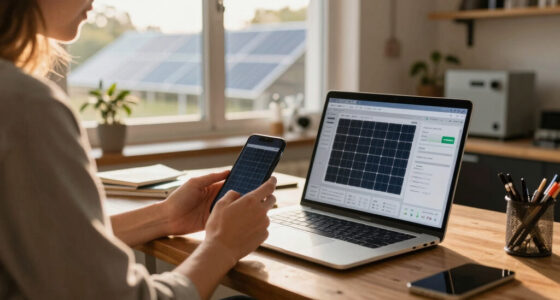
Monitoring your system’s performance is also essential. Many off-grid setups include monitoring tools that let you track energy production and consumption in real-time. This insight helps you optimize your energy use and identify if your battery storage or panels aren’t functioning as they should. When problems arise, troubleshooting quickly can save you from larger issues down the line. Proper maintenance of your solar panel system and diligent management of your battery storage ensure you get the most out of your off-grid setup. It’s all about keeping your system efficient, reliable, and ready to power your tiny house sustainably. With good care, your off-grid solar system can serve you well for many years, giving you the freedom and peace of mind that come with energy independence. Proper maintenance practices further enhance the longevity and efficiency of your entire solar energy system.
off-grid solar panel kit for tiny house
As an affiliate, we earn on qualifying purchases.
As an affiliate, we earn on qualifying purchases.
Frequently Asked Questions
How Long Does a Typical Off-Grid Solar System Last Without Maintenance?
A typical off-grid solar system can last around 20-25 years with minimal maintenance. Your battery lifespan, especially if you use high-quality lithium batteries, can extend up to 10-15 years, while inverters are durable, often lasting 10-15 years with proper care. Regular inspections and keeping components clean help guarantee your system stays efficient longer. Proper maintenance maximizes your system’s lifespan and keeps your tiny house powered reliably.
Can Off-Grid Solar Power Support High-Energy Appliances in Tiny Houses?
Yes, off-grid solar power can sustain high-energy appliances in tiny houses if you design your system properly. You need sufficient energy storage and a scalable system to handle peak loads. By increasing battery capacity and adding panels as needed, you guarantee reliable power. Careful planning allows you to run high-energy appliances without overloading your system, providing flexibility and peace of mind for your tiny house lifestyle.
What Are the Best Portable Solar Options for Tiny House Mobility?
You’ll find that portable panels and foldable solutions are your best options for tiny house mobility. These options are lightweight, easy to set up, and highly efficient, making them ideal for on-the-go energy needs. While some worry about durability, many modern foldable solar panels are built with tough materials that withstand travel and weather. This flexibility lets you enjoy reliable power wherever your tiny house takes you.
How Does Weather Affect the Efficiency of Off-Grid Solar Systems?
Weather can considerably impact your off-grid solar system’s efficiency. When solar panels experience shading from clouds, snow, or trees, their output drops. Seasonal variations also play a role; shorter days and less sunlight in winter reduce energy generation. To maximize performance, make sure your panels are clear of shading and positioned correctly to capture the most sunlight year-round. Regular maintenance helps mitigate weather-related efficiency losses.
Are There Any Government Incentives for Installing Off-Grid Solar in Tiny Houses?
Yes, you can benefit from government grants and tax credits when installing off-grid solar in your tiny house. These incentives aim to promote renewable energy use and can substantially reduce your upfront costs. Check with local, state, or federal programs, as eligibility varies. Applying for these incentives is straightforward, and they can make your off-grid solar setup more affordable, helping you enjoy cleaner energy with fewer financial worries.
deep cycle lithium battery for off-grid solar
As an affiliate, we earn on qualifying purchases.
As an affiliate, we earn on qualifying purchases.
Conclusion
Living off-grid with solar power for your tiny house isn’t just eco-friendly; it’s empowering. Did you know that tiny houses with solar systems can reduce energy costs by up to 80%? That means you save money and live more sustainably. By choosing off-grid solar, you gain independence from traditional utilities and enjoy a simpler, greener lifestyle. It’s a smart, practical solution that puts control back in your hands—making your tiny house truly your own.
As an affiliate, we earn on qualifying purchases.
As an affiliate, we earn on qualifying purchases.
Halloween Picks
halloween
As an affiliate, we earn on qualifying purchases.