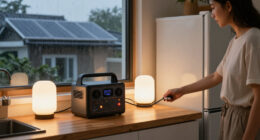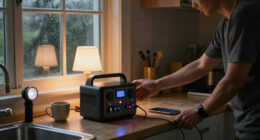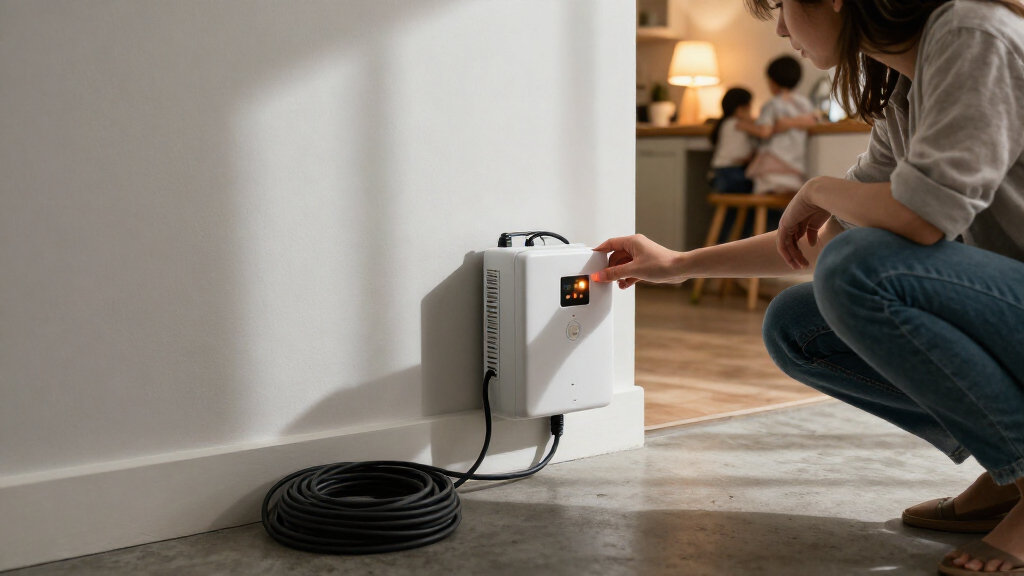
The best home battery backup systems balance enough stored energy for your essentials with the output and connections your household needs. I rank the Jackery HomePower 3600 Plus as the best overall pick for its 3,584Wh capacity and 3,600W output, while the FOSSiBOT F3600 stands out for its larger 3,840Wh capacity and five AC outlets. For a smaller setup, the BLUETTI FridgePower pairs a 2,016Wh base system with an expansion battery. The main tradeoffs are capacity versus portability, output versus the appliances you plan to run, and whether expansion or home integration matters more than a simple portable unit. Read on for the full breakdown and advice on matching a system to your outage plan.

Get backup power and energy gear delivered free with Prime
- Fast, free delivery on millions of items
- Prime Video, Amazon Music and more included
- Member-only deals all year
Complete the kit

Key Takeaways
- Jackery HomePower 3600 Plus leads this lineup for buyers who want a strong balance of 3,584Wh capacity and 3,600W output, rather than the largest battery alone.
- FOSSiBOT F3600 has the highest listed capacity here at 3,840Wh and five 120V AC outputs, a useful combination for powering several compatible devices at once.
- Jackery HomePower 3600 Pro Max and HomePower 3600 Plus share a 3,584Wh capacity, so buyers should compare their exact features and intended setup instead of choosing by capacity alone.
- The 3,072Wh Jackery HomePower 3000 and Pecron F3000LFP offer a middle ground between the larger 3,584–3,840Wh units and compact 2,010–2,048Wh systems.
- The Anker SOLIX S2000 is the lowest-capacity and lowest-output option listed, while BLUETTI FridgePower is the clearer fit for buyers who value a fridge-focused system with a named expansion battery.
| FOSSiBOT F3600 Portable Power Station, 3840Wh/3600W, 5x120V AC Output |  | Best for Expandable High-Capacity Backup | Battery capacity: 3,840Wh | Battery chemistry: LiFePO4 | Continuous AC output: 3,600W | VIEW LATEST PRICE | See Our Full Breakdown |
| Jackery HomePower 3000 Portable Power Station, 3072Wh |  | Best for Flexible Recharging | Battery capacity: 3,072Wh | Battery chemistry: LiFePO4 | AC output: 3,600W | VIEW LATEST PRICE | See Our Full Breakdown |
| Pecron F3000LFP Portable Power Station, 3072Wh LiFePO4 Battery, 3600W Output |  | Best for Multiple AC Loads | Battery capacity: 3,072Wh | Battery chemistry: LiFePO4 | AC output: 3,600W | VIEW LATEST PRICE | See Our Full Breakdown |
| Anker SOLIX S2000 Portable Power Station, 2,010Wh, 1,500W |  | Best Compact Backup | Battery capacity: 2,010Wh | Battery chemistry: LiFePO4 | Continuous output: 1,500W | VIEW LATEST PRICE | See Our Full Breakdown |
| Jackery HomePower 2000 Plus v2 Portable Power Station, 2048Wh, 2400W AC Output |  | Best for Long-Term Expandability | Battery capacity: 2,048Wh | Battery type: LFP | AC output: 2,400W in title; some specifications state 2,200W | VIEW LATEST PRICE | See Our Full Breakdown |
| Jackery HomePower 3600 Pro Max Portable Power Station, 3584Wh |  | Best for 120V/240V Backup from One Unit | Battery capacity: 3,584Wh | Expandable capacity: Up to 43kWh | Output: 4,000W, 120V/240V | VIEW LATEST PRICE | See Our Full Breakdown |
| Jackery HomePower 3600 Plus Portable Power Station, 3584Wh, 3600W |  | Best for Easier Repositioning | Battery capacity: 3,584Wh | Output wattage: 3,600W | Parallel output: 7,200W | VIEW LATEST PRICE | See Our Full Breakdown |
| BLUETTI FridgePower Backup System with BC200 Expansion Battery, 2016Wh |  | Best for Refrigerator-Focused Backup | Battery capacity: 2,016Wh, expandable to 4,032Wh | Included expansion battery: BLUETTI BC200 | AC output: 1,800W | VIEW LATEST PRICE | See Our Full Breakdown |
| home battery backup system | Battery capacity | Weight | Battery chemistry | AC output |
|---|---|---|---|---|
| FOSSiBOT F3600 Portable Power | 3,840Wh | 42kg | LiFePO4 | — |
| Jackery HomePower 3000 Portabl | 3,072Wh | 59.5lb | LiFePO4 | 3,600W |
| Pecron F3000LFP Portable Power | 3,072Wh | 63.3lb | LiFePO4 | 3,600W |
| Anker SOLIX S2000 Portable Pow | 2,010Wh | 35.7lb | LiFePO4 | — |
| Jackery HomePower 2000 Plus v2 | 2,048Wh | 40.6lb | — | 2,400W in title; some specifications state 2,200W |
| Jackery HomePower 3600 Pro Max | 3,584Wh | 74 pounds | — | — |
| Jackery HomePower 3600 Plus Po | 3,584Wh | 77.2 pounds | — | — |
| BLUETTI FridgePower Backup Sys | 2,016Wh, expandable to 4,032Wh | 41.9 pounds | — | 1,800W |
More Details on Our Top Picks
FOSSiBOT F3600 Portable Power Station, 3840Wh/3600W, 5x120V AC Output
The FOSSiBOT F3600 Pro combines the largest built-in battery in this group with 3,600W continuous output, giving it more stored energy than the Jackery HomePower 3000 while matching its output rating. That extra capacity can stretch backup time for several essential appliances, and the option to add two expansion batteries raises total capacity to 11,520Wh. Its 2000W solar input and AC-plus-solar charging support faster replenishment when compatible panels and suitable sunlight are available.
The tradeoff is substantial weight: at 42kg, its wheels and retractable handle help with repositioning but do not make it easy to lift. Solar panels and expansion batteries are separate purchases, and its listed 10ms UPS mode is rated for loads up to about 2,500W. I’d choose it over the smaller Anker SOLIX S2000 for longer outages and heavier loads, but not for frequent carrying.
Pros:- 3,840Wh built-in capacity and 3,600W continuous output suit longer backup periods and demanding compatible appliances.
- Expandable to 11,520Wh with two additional batteries.
- Up to 2,000W solar input and 3,500W combined AC-plus-solar charging support rapid replenishment under suitable conditions.
- Five AC outlets, multiple USB ports, and a 10ms UPS mode cover a broad mix of household and office devices.
Cons:- At 42kg, it is difficult to lift and move despite the built-in wheels and handle.
- Solar panels and expansion batteries are sold separately.
- UPS mode supports loads only up to approximately 2,500W, below its full 3,600W inverter rating.
Best for: Households preparing for extended outages that want high starting capacity, strong AC output, and the option to add substantial battery storage.
Not ideal for: Buyers who need a lightweight unit for stairs, frequent car loading, or a ready-to-use solar setup without separately sourced panels.
- Battery capacity:3,840Wh
- Battery chemistry:LiFePO4
- Continuous AC output:3,600W
- Surge output:7,200W
- Maximum solar input:2,000W
- Maximum expandable capacity:11,520Wh
- UPS switching time:About 10ms
- Weight:42kg
Our verdict“Choose the FOSSiBOT F3600 if you want this lineup’s strongest starting capacity with room to expand, and can accommodate a heavy unit.”
Jackery HomePower 3000 Portable Power Station, 3072Wh
The Jackery HomePower 3000 is a strong fit for households that value multiple ways to replenish a backup battery. It accepts AC, hybrid AC/DC, solar, car, and gas-generator charging, so the recharge plan can adapt to whether the grid is available or the unit is being used away from home. Its 3,072Wh battery and 3,600W output put it in the same power class as the Pecron F3000LFP, while the included TT-30 RV outlet adds a useful connection for compatible RV loads.
Jackery lists a 20ms-or-less UPS switch, slower than the FOSSiBOT F3600’s stated 10ms, and its 3,072Wh capacity is below the FOSSiBOT’s 3,840Wh. At 59.5 pounds, it is also a heavy portable unit; its four AC outlets offer fewer direct AC connections than the Pecron’s six. I’d favor this model for recharge flexibility, not for maximum capacity or easy carrying.
Pros:- 3,072Wh capacity and 3,600W output provide substantial backup power for compatible loads.
- AC, hybrid AC/DC, solar, car, and gas-generator charging offer varied replenishment options.
- TT-30 RV outlet supports compatible RV equipment.
- Dual 100W USB-C ports can power demanding laptops and other USB-C devices.
Cons:- At 59.5 pounds, it is cumbersome to carry regularly.
- The 20ms-or-less UPS switching specification is slower than the FOSSiBOT F3600’s stated 10ms.
- Solar panels are optional, and the four AC outlets are fewer than the Pecron F3000LFP’s six.
Best for: Homeowners and RV users who want a high-output battery with several charging routes, including generator, vehicle, and solar options.
Not ideal for: Buyers who prioritize the largest stored capacity, a faster stated UPS switch, or a lighter unit for frequent lifting.
- Battery capacity:3,072Wh
- Battery chemistry:LiFePO4
- AC output:3,600W
- Surge output:7,200W
- Battery cycle life:4,000 cycles to 70% capacity
- UPS switching time:20ms or less
- Weight:59.5lb
- Charging methods:AC, hybrid AC/DC, solar, car, and gas generator
Our verdict“Pick the HomePower 3000 if you want high output and the broadest stated range of charging methods, rather than the lineup’s largest capacity.”
Pecron F3000LFP Portable Power Station, 3072Wh LiFePO4 Battery, 3600W Output
The Pecron F3000LFP makes a compelling case for households that need several AC connections at once: its six AC outlets outnumber the Jackery HomePower 3000’s four, while both provide 3,072Wh of capacity and 3,600W output. It also offers 13 total ports, including two 100W USB-C connections, and supports AC, solar, and car charging. An 8–20ms UPS switching range gives it a backup role for compatible electronics, though buyers should check whether their equipment can tolerate that transfer time.
Compared with the FOSSiBOT F3600, the Pecron starts with less stored energy and has a lower stated maximum solar input of 1,600W. Its expansion path reaches 10,752Wh, but requires a separately sold cable as well as an added battery. At 63.3 pounds, it is the heaviest of these three large-capacity choices. I’d select it for outlet count and broad device support, not for portability.
Pros:- Six AC outlets provide more direct AC connections than the Jackery HomePower 3000.
- 3,072Wh battery and 3,600W output support substantial loads within the unit’s limits.
- Two 100W USB-C ports and 13 total ports accommodate a wide range of devices.
- Supports AC, solar, and car charging, with capacity expandable to 10,752Wh.
Cons:- At 63.3 pounds, it is difficult to carry and reposition.
- Expansion requires a separately sold cable and an additional battery.
- Its 1,600W maximum solar input is lower than the FOSSiBOT F3600’s 2,000W rating.
Best for: Households that want to power several AC appliances or devices simultaneously and value a large number of built-in ports.
Not ideal for: Buyers who need a lighter station, the highest starting capacity, or a simple expansion setup without buying a separate cable.
- Battery capacity:3,072Wh
- Battery chemistry:LiFePO4
- AC output:3,600W
- AC charging input:Up to 1,800W
- Solar input:Up to 1,600W, 25–120V
- Total ports:13, including six AC outlets
- Expandable capacity:Up to 10,752Wh
- Weight:63.3lb
Our verdict“Choose the Pecron F3000LFP if you need six AC outlets and abundant port options more than low weight or the simplest expansion setup.”
Anker SOLIX S2000 Portable Power Station, 2,010Wh, 1,500W
The Anker SOLIX S2000 trades the 3,600W output of the Jackery HomePower 3000 and Pecron F3000LFP for a more manageable 35.7-pound weight and a compact footprint. Its 2,010Wh battery is still substantial for a focused backup plan, such as keeping a refrigerator and smaller essentials running, and its under-10ms UPS switchover is the quickest stated transfer time in this group. Eight outlets also help spread power across several devices, provided their combined draw stays within the 1,500W continuous limit.
This is not the pick for high-demand appliances or longer multi-device outages: its capacity is well below the FOSSiBOT F3600’s 3,840Wh, and its output is less than half that model’s rating. The S2000 also lacks a 12V DC port, limiting direct support for some DC equipment. I’d favor it when compact storage and quick UPS switching matter more than heavy-load capability.
Pros:- At 35.7 pounds, it is lighter than the large-capacity Jackery and Pecron units.
- Under-10ms UPS switchover suits compatible electronics that need a quick backup handoff.
- Eight outlets offer room to connect several devices within the output limit.
- Supports up to 400W solar input and several other recharge methods.
Cons:- 1,500W continuous output is far below the 3,600W ratings of the larger Jackery and Pecron models.
- The 2,010Wh capacity provides less stored energy than the 3,072Wh and 3,840Wh options.
- No 12V DC port is provided.
Best for: Apartment dwellers and home-office users seeking a comparatively compact battery for a refrigerator, networking equipment, and other moderate loads.
Not ideal for: Households that need to run high-wattage appliances, extend backup across several days, or power 12V DC devices directly.
- Battery capacity:2,010Wh
- Battery chemistry:LiFePO4
- Continuous output:1,500W
- Peak output:3,000W
- Maximum solar input:400W
- Outlets:8
- UPS switchover:Under 10ms
- Weight:35.7lb
Our verdict“Choose the Anker SOLIX S2000 for a lighter, compact backup with fast UPS switchover, but skip it if your plan depends on high-wattage loads.”
Jackery HomePower 2000 Plus v2 Portable Power Station, 2048Wh, 2400W AC Output
The Jackery HomePower 2000 Plus v2 stands apart from the Anker SOLIX S2000 by pairing a similar roughly 2kWh starting capacity with a stated path to 12kWh of expanded storage. That makes it a better match for a household planning to build out backup capacity over time than for someone who only needs a compact, fixed-capacity unit. Its listed 6,000+ cycle LFP battery life and 140W USB-C output add useful longevity and laptop-charging capability.
At 40.6 pounds, it is heavier than the Anker, though its stated 2,400W AC output is higher than the Anker’s 1,500W. There is a specification conflict to resolve before buying: the product title lists 2,400W, while some product data lists 2,200W. The supplied details also do not specify its UPS switching time or charging input limits. I’d choose it for expansion potential, but verify the output rating and compatibility for intended loads.
Pros:- Stated expansion potential up to 12kWh exceeds the Anker SOLIX S2000’s listed capacity.
- LFP battery is rated for more than 6,000 cycles.
- Listed 2,400W AC output exceeds the Anker SOLIX S2000’s 1,500W continuous rating.
- 140W USB-C output supports higher-power USB-C devices.
Cons:- Output data conflicts: the title states 2,400W, while some specifications state 2,200W.
- At 40.6 pounds, it is heavier than the Anker SOLIX S2000.
- Solar panels are optional, and the supplied data does not state UPS switching time or charging input limits.
Best for: Households that want a roughly 2kWh starting unit with a stated expansion path for a larger future backup setup.
Not ideal for: Buyers who need a clearly confirmed output rating, a lightweight unit, or detailed UPS and recharge specifications before choosing.
- Battery capacity:2,048Wh
- Battery type:LFP
- AC output:2,400W in title; some specifications state 2,200W
- Expandable capacity:Up to 12kWh
- USB-C output:140W
- Voltage:120V AC
- Weight:40.6lb
Our verdict“Pick the HomePower 2000 Plus v2 if expandable storage is your priority, after confirming its AC output rating and suitability for your loads.”
Jackery HomePower 3600 Pro Max Portable Power Station, 3584Wh
The HomePower 3600 Pro Max suits households that want both 120V and 240V output without relying on a parallel setup. Its 4,000W output, 3,584Wh starting capacity, and expansion path to 43kWh give it more room to handle a growing backup plan than the Jackery HomePower 3600 Plus, which needs parallel units for 240V operation. A sub-10ms UPS switch can help keep connected equipment running through a brief outage, while operation below 30dB is less intrusive indoors than a gas generator. The LFP battery is rated for 6,000 cycles, and eight charging options add flexibility, including gas-generator compatibility. The tradeoff is portability: at 74 pounds, it is a substantial lift, and solar panels are optional. I’d choose it for home-focused flexibility, not frequent carrying.
Pros:- Provides 120V and 240V output from a single unit.
- Expandable capacity reaches up to 43kWh.
- Sub-10ms UPS switching can help protect connected devices from brief power interruptions.
- Quiet operation below 30dB is better suited to indoor use than a gas generator.
Cons:- At 74 pounds, it is difficult to move regularly without help.
- Solar panels are optional, adding a separate purchase for solar charging.
Best for: Homeowners who need 120V and 240V backup from one unit and may expand capacity for longer outages.
Not ideal for: Buyers who need a lightweight station for frequent trips or expect solar panels to be included.
- Battery capacity:3,584Wh
- Expandable capacity:Up to 43kWh
- Output:4,000W, 120V/240V
- Battery type:LFP
- Battery cycle life:6,000 cycles
- UPS switch time:Less than 10ms
- Charging options:8
- Weight:74 pounds
Our verdict“Choose the Pro Max if single-unit 240V output and a large expansion path matter more than easy portability.”
Jackery HomePower 3600 Plus Portable Power Station, 3584Wh, 3600W
The HomePower 3600 Plus is a strong fit for buyers who want a substantial home battery but may need to roll it between storage and living areas. Its wheels and telescopic handle make repositioning more manageable than carrying the 74-pound HomePower 3600 Pro Max, though the Plus itself weighs 77.2 pounds and still is not easy to lift. It delivers 3,600W from a 3,584Wh battery, with expansion options up to 21kWh per unit or 43kWh with multiple units. Unlike the Pro Max, this model provides 240V in parallel, so buyers planning for 240V loads need a compatible multi-unit arrangement. Four charging methods include AC, solar, gas generator, and hybrid AC+DC; hybrid charging is listed at two hours. The main compromise is that its convenience features do not remove the need for help with stairs or lifting.
Pros:- 3,600W output and 3,584Wh capacity support a broad range of household backup needs.
- Wheels and a telescopic handle aid movement across level surfaces.
- Expandable capacity supports larger backup plans.
- Hybrid AC+DC charging is listed at two hours.
Cons:- 240V operation requires parallel units, unlike the Pro Max’s single-unit 120V/240V output.
- At 77.2 pounds, it remains heavy to lift despite the wheeled design.
- Solar panels are optional.
Best for: Households that want a high-capacity backup station they can roll across a level floor and expand over time.
Not ideal for: Buyers needing 240V from a single unit or who must carry their battery up stairs frequently.
- Battery capacity:3,584Wh
- Output wattage:3,600W
- Parallel output:7,200W
- Voltage:120V; 240V in parallel
- Expandable capacity:Up to 21kWh per unit or 43kWh with multiple units
- Battery type and cycle life:LFP; 6,000 cycles
- Charging time:2 hours hybrid AC+DC; 2.5 hours AC or gas generator; 4 hours solar
- Weight:77.2 pounds
Our verdict“Pick the HomePower 3600 Plus if you want expandable capacity and wheeled movement, and can accept parallel units for 240V.”
BLUETTI FridgePower Backup System with BC200 Expansion Battery, 2016Wh
The BLUETTI FridgePower with BC200 is aimed at buyers who want a backup setup centered on a refrigerator and other essential 120V appliances, rather than a high-output system for whole-home loads. Its included expansion battery brings capacity to 2,016Wh, with room to reach 4,032Wh, and the 10ms UPS transfer helps reduce interruptions for connected equipment. At 1,800W AC output, it is less suited to demanding loads than either Jackery 3,600-series model, but its 3,600W surge rating gives appliances with a brief startup draw more headroom. Multiple power sources—including solar, car, lead-acid, and generator—offer charging flexibility. The system weighs 41.9 pounds, lighter than the Jackery units here, though that is still a substantial load to carry. Its listed runtime is only two minutes, so buyers should verify expected runtime for their appliances rather than rely on that figure as a household estimate.
Pros:- Includes an expansion battery for 2,016Wh of capacity, expandable to 4,032Wh.
- 10ms UPS transfer supports continuity for connected appliances.
- 3,600W surge capacity accommodates brief startup demands above its 1,800W AC output.
- Accepts solar, AC, car, lead-acid, and generator power sources.
Cons:- 1,800W AC output is lower than the 3,600W and 4,000W Jackery options.
- The listed runtime is only two minutes and does not provide a useful household runtime estimate.
- At 41.9 pounds, the system is still burdensome to carry.
Best for: Households seeking a dedicated refrigerator-and-essentials backup setup with expandable capacity and several charging options.
Not ideal for: Buyers who need 240V output, high continuous wattage, or a clearly stated long runtime for their specific loads.
- Battery capacity:2,016Wh, expandable to 4,032Wh
- Included expansion battery:BLUETTI BC200
- AC output:1,800W
- Surge output:3,600W
- UPS transfer time:10ms
- Standby power draw:4W
- Voltage:120V
- Power sources:Solar, AC, car, lead-acid, generator
- Weight:41.9 pounds
Our verdict“Choose FridgePower for expandable, refrigerator-focused 120V backup, but look to the Jackery 3600 models for higher output or 240V support.”
How We Picked
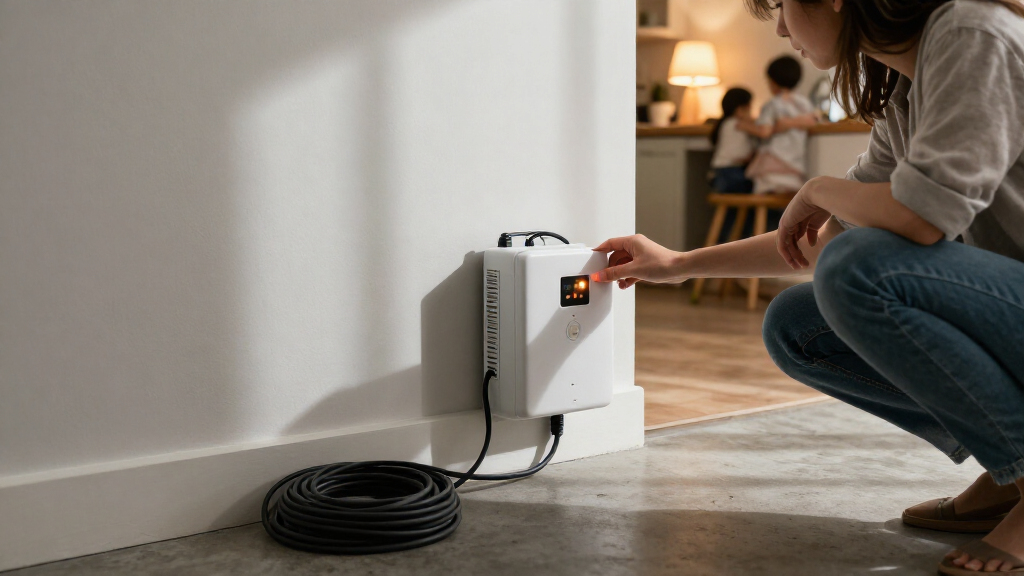
I compared these systems through the needs of a home outage plan: usable capacity, stated AC output, outlet availability, and the ability to expand or tailor a setup. Capacity and output matter together: a larger battery can store more energy, but the inverter’s output still limits which appliances can run at the same time. I also weighed the practical difference between a portable power station and a system presented around a particular home backup task, such as the BLUETTI fridge setup.
The ranking favors options with a useful combination of capacity and output for a range of essential loads, then accounts for how clearly each product fits a narrower need. That puts the Jackery HomePower 3600 Plus first for its listed capacity and output balance, with FOSSiBOT close behind for higher capacity and multiple AC outlets. Mid-capacity models follow, while the lower-capacity Anker and fridge-focused BLUETTI have distinct roles rather than a claim to serve every household. I treat listed specifications as selection criteria, not as a guarantee of runtime, which depends on connected loads and operating conditions.
| home battery backup system | Expandable capacity |
|---|---|
| FOSSiBOT F3600 Portable Power | — |
| Jackery HomePower 3000 Portabl | — |
| Pecron F3000LFP Portable Power | Up to 10,752Wh |
| Anker SOLIX S2000 Portable Pow | — |
| Jackery HomePower 2000 Plus v2 | Up to 12kWh |
| Jackery HomePower 3600 Pro Max | Up to 43kWh |
| Jackery HomePower 3600 Plus Po | Up to 21kWh per unit or 43kWh with multiple units |
| BLUETTI FridgePower Backup Sys | — |
Factors to Consider When Choosing Best Home Battery Backup Systems
Before choosing a system, I would start with the outage plan rather than the biggest capacity figure. The right setup depends on what must stay on, how long it needs to run, and whether you want a portable unit or a more dedicated arrangement.
1. List Essential Loads Before Comparing Capacity
Write down the devices you would actually power during an outage, such as a refrigerator, router, lights, or medical equipment. Check each device’s running wattage and, where relevant, its startup surge; motors and compressors can briefly demand more power than their normal draw. Add only loads you expect to use together, since planning for every household appliance at once can push you toward a heavier and more costly system than you need. Then estimate daily energy use in watt-hours to compare with battery capacity. Rated capacity alone does not tell you how long a unit will run a particular appliance, because conversion losses and changing loads affect runtime. This simple inventory can reveal whether you need more stored energy, more output, or both.
2. Match AC Output to the Hardest-Starting Appliance
Capacity answers how much energy is stored; inverter output answers how much power the system can supply at a given moment. A unit with ample watt-hours can still be a poor match if its output is too low for a pump, refrigerator compressor, or several devices running together. Check both continuous output and any published surge rating, then compare those figures with appliance labels or manufacturer documentation. Avoid adding appliance wattages without accounting for startup behavior and overlap. If you plan to run high-draw equipment, confirm the power station’s output and outlet type support the intended load. This is a better way to compare a 1,500W-class option with the 3,600W models than relying on capacity figures alone.
3. Plan Runtime Around Your Actual Outage Length
Estimate energy use over the hours you need backup, not just the initial load. A refrigerator cycles on and off, while lights and communications gear may run steadily, so a household’s energy draw changes through the day. Build in a reserve for unexpected needs rather than assuming the battery’s full listed capacity will be available to every device. If outages are brief and you only need a few essentials, a smaller system may be easier to manage. For longer interruptions, look at recharging options and expansion support as well as base capacity. A larger battery is useful only if it meaningfully reduces the chance of running out before power returns.
4. Check Recharge Options and Expansion Before You Buy
A backup system is more useful when you can restore its charge between outages or during a prolonged interruption. Compare the charging methods available on the exact model, their stated input limits, and whether your home setup can use them. Solar charging can help in some circumstances, but panel compatibility, available sunlight, and charging time all affect the result. Expansion batteries can add stored energy, though they may also add cost, weight, space needs, and setup steps. Confirm that expansion accessories are designed for the specific unit rather than assuming batteries from the same brand will work across a range. The BLUETTI FridgePower listing names a BC200 expansion battery, while buyers considering other systems should verify the supported accessories for their chosen model.
5. Decide Whether Portability or a Dedicated Setup Matters More
Portable power stations can be moved between rooms or taken away from home, but greater capacity often means a bulkier unit that is less convenient to relocate. Think about where the battery will sit, who may need to move it, and how close it must be to the appliances or extension cords it will serve. A fridge-focused setup may suit someone prioritizing food preservation, while a general-purpose station offers more flexibility across devices. Check outlet count and placement, not only total output, so you can connect your planned loads without unnecessary adapters. Also confirm the unit’s operating and storage requirements in its documentation. Choosing for the actual location and routine can matter as much as the headline watt-hour rating.
6. Know When Paying for More Capacity Makes Sense
Extra capacity is worthwhile when it extends backup for loads you genuinely need or leaves room for longer outages. It is less compelling if your plan covers only a router, a few lights, and short interruptions. Higher output can also matter more than additional watt-hours when the challenge is starting a demanding appliance or running several devices simultaneously. Compare the cost, footprint, and recharge demands of a larger unit against the value of the added runtime and load support, using current product specifications rather than assumptions based on model names. A middle-capacity system may be a better fit when your essential-load list is modest. Pay for headroom that serves a defined use, not capacity you have no plan to use.
Frequently Asked Questions
Can a portable power station run my whole home during an outage?
These products are portable battery systems, and their listed output does not by itself mean they can power every circuit in a home. Start by identifying the appliances and circuits you want backed up, then check the system’s output, available outlets, and connection method. Whole-home or panel-based backup may require compatible equipment and a qualified electrician, depending on the system and local rules. A portable unit is more often used for selected essentials rather than every household load. Confirm the manufacturer’s instructions before connecting it to home wiring.
How do I estimate how long a system will run my refrigerator?
Check the refrigerator’s energy label or measure its consumption over a representative period, since compressor cycles make a single wattage reading misleading. Convert the expected use into watt-hours, then compare it with the battery’s capacity while allowing for conversion losses and other devices sharing the system. Also verify that the inverter can handle the compressor’s startup demand. If you plan to keep a router or lights on too, include their use in the estimate. Treat runtime estimates as ranges, because ambient temperature, door openings, and appliance condition can change consumption.
Should I choose more battery capacity or higher AC output?
Choose higher output when your key appliance needs more power at once, especially during startup or when several loads run together. Choose more capacity when the system can already handle those loads but needs to run them for more hours. Some homes need both, but an appliance list usually makes the priority clear. Compare continuous and surge output figures as well as watt-hours; one number cannot substitute for the other. The lineup illustrates this distinction: the Anker SOLIX S2000 lists 2,010Wh and 1,500W, while several larger options list output above 2,400W or 3,600W.
Is an expansion battery better than buying a larger base unit?
An expansion battery can be a practical way to add storage when a compatible system supports it, especially if you want to start with a smaller setup. A larger base unit may be simpler if you already know you need more capacity and do not want to manage separate components. Compare total supported capacity, accessory compatibility, charging behavior, footprint, and the added setup requirements. Do not assume an expansion battery works with every model from its brand. Check the product documentation for the exact power station and battery pairing before making a decision.
What should I check before relying on a battery system for medical equipment?
Ask the equipment provider or manufacturer for its power requirements, including startup demand, expected energy use, and any need for a particular power quality or uninterrupted operation. Then confirm that the battery system can support those requirements for the needed duration and that its outlet and connection method are appropriate. A portable power station may not provide seamless switchover when utility power fails, so check its operating mode and response time rather than assuming it acts like a dedicated medical UPS. Plan a backup option for extended outages and follow the equipment maker’s guidance. Do not make a medical power plan based on capacity alone.
Conclusion
For most buyers seeking a versatile balance, I recommend the Jackery HomePower 3600 Plus as the best overall pick, with its listed 3,584Wh capacity and 3,600W output. The FOSSiBOT F3600 is my best value-oriented fit for buyers who prioritize the largest listed capacity and five AC outlets, while the Jackery HomePower 3600 Pro Max is the premium-leaning choice for shoppers comparing Jackery’s large-capacity range and should be judged by its full feature set, not capacity alone. For beginners with a short essentials list, the Anker SOLIX S2000 offers a simpler, lower-capacity starting point, though its 1,500W output narrows the loads it can handle. For fridge-focused backup with a named expansion option, choose BLUETTI FridgePower with BC200. If your plan calls for a middle capacity, compare the Jackery HomePower 3000 and Pecron F3000LFP against your output and battery requirements before deciding.