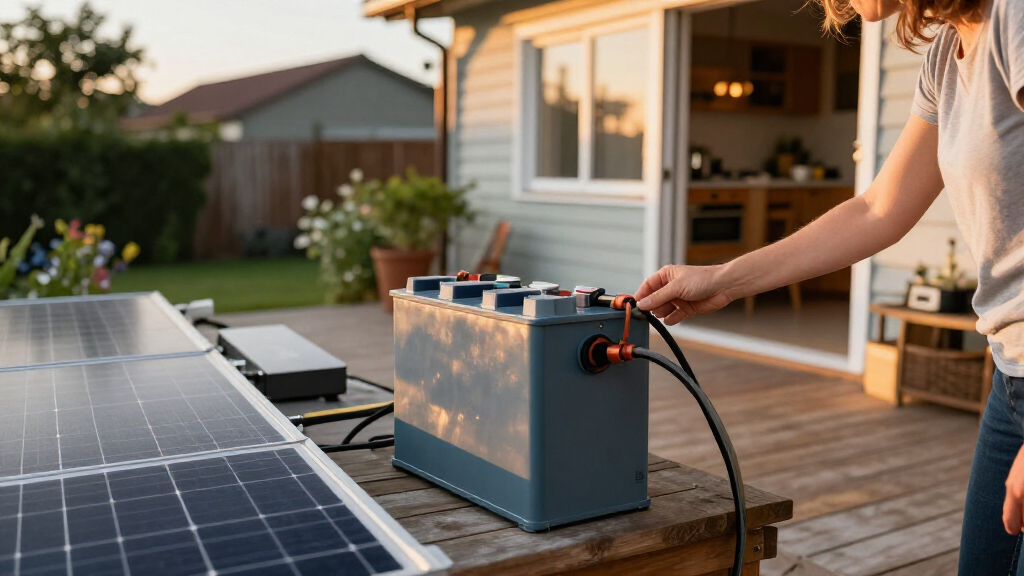

I would start with the CSI Group 31 for broad starter-battery capability, the Down4Sound DNA-13 for short, demanding car-audio bursts, and the Limitless Lithium NoLi-50AH for high-output motorsport systems. They lead different use cases rather than competing as interchangeable batteries: the CSI emphasizes starting power and built-in protections, Down4Sound targets audio transients, and Limitless offers much higher system output at the cost of demanding charging requirements.

Get backup power and energy gear delivered free with Prime
- Fast, free delivery on millions of items
- Prime Video, Amazon Music and more included
- Member-only deals all year
This roundup also includes a lightweight motorcycle replacement and a more uncertain H6 option. Sodium-ion chemistry alone does not tell me whether a battery fits a vehicle, works with its charging system, or can deliver the needed current. Physical dimensions, terminal layout, voltage limits, and intended duty matter just as much. I rank these picks by how clearly their stated specifications map to a real buyer need, while calling out where the supplied details leave compatibility questions.
Key Takeaways
- Best all-around starter pick: The CSI Group 31 pairs 1,500 CCA with a jump start button and built-in battery-management protections, but buyers still need to confirm fit and engine compatibility.
- Best for high-output car audio: Down4Sound’s DNA-13 is designed for brief 400A pulses and audio systems rated at 3,500–5,500W; it is not a substitute for the recommended alternator and Big 3 upgrades.
- Best for motorsport output: The Limitless NoLi-50AH specifies up to 15,000W burst output at 16V, but it has no installed BMS and calls for a compatible high-output charging system.
- Best motorcycle-focused option: Acoucou is a light, 12V replacement with a stated 200A starting current and wide operating-temperature range, though it needs a dedicated sodium-ion charger.
- Most caution needed before buying: YGSAM lists a 1,500-cycle figure, yet the supplied information leaves vehicle fit and some construction details unclear, so I would verify the exact battery and terminal specifications first.
| CSI Group 31 12V Sodium-Ion Starter Battery with Jump Start Button |  | Best Overall Starter Battery | Chemistry: Sodium-ion | Voltage: 12 V | Capacity: 68 Ah | VIEW LATEST PRICE | See Our Full Breakdown |
| Down4Sound DNA-13 13.5Ah 12V Sodium-Ion Car Audio Battery |  | Best for High-Output Car Audio | Chemistry: Sodium-ion | Voltage: 12V | Capacity: 13.5Ah | VIEW LATEST PRICE | See Our Full Breakdown |
| Limitless Lithium NoLi Sodium 50Ah Battery, 10–16V, Up to 15,000W |  | Best for High-Output Motorsport Systems | Chemistry: Sodium-ion | Capacity: 50Ah | Voltage range: 10–16V | VIEW LATEST PRICE | See Our Full Breakdown |
| Acoucou YTX7A-Na Sodium-Ion Motorcycle Battery |  | Best Sodium-Ion Motorcycle Replacement | Chemistry: Sodium-ion | Voltage: 12V | Capacity: 3.4Ah | VIEW LATEST PRICE | See Our Full Breakdown |
| YGSAM H6 Sodium-Ion Car Battery, 12V, 10,000mAh, Universal Fit |  | Best for Buyers Willing to Verify Unclear Fit Details | Chemistry: Sodium-ion | Voltage: 12V | Capacity: 10,000mAh | VIEW LATEST PRICE | See Our Full Breakdown |
| sodium-ion batterie | Chemistry | Capacity | Voltage | Weight |
|---|---|---|---|---|
| CSI Group 31 12V Sodium-Ion St | Sodium-ion | 68 Ah | 12 V | 24 lb |
| Down4Sound DNA-13 13.5Ah 12V S | Sodium-ion | 13.5Ah | 12V | 6.1 lb |
| Limitless Lithium NoLi Sodium | Sodium-ion | 50Ah | — | 14.4 lb |
| Acoucou YTX7A-Na Sodium-Ion Mo | Sodium-ion | 3.4Ah | 12V | — |
| YGSAM H6 Sodium-Ion Car Batter | Sodium-ion | 10,000mAh | 12V | 14.3 lb |
More Details on Our Top Picks
CSI Group 31 12V Sodium-Ion Starter Battery with Jump Start Button
The CSI Group 31 is my leading pick for buyers seeking a sodium-ion starter battery with clearly stated cranking output. Its 1,500 CCA and 68Ah capacity suit a broader starting-battery role than the smaller motorcycle and car-audio options in this list. The built-in jump start button and battery-management protections also make its feature set more directly relevant to vehicle starting than Down4Sound’s pulse-focused design or Limitless’s high-output motorsport setup.
Its stated 24-pound weight is described as 60% lighter than comparable lead-acid or AGM batteries, which may help where battery mass matters. The Group 31 format and standard terminals give buyers tangible fit details to compare, while a three-year warranty adds a stated ownership-support term. I still would not read “universal” as a guarantee: tray dimensions, cable reach, terminal orientation, and the vehicle’s charging requirements need checking against the actual installation.
The tradeoff is that the CSI is not the most specialized battery here. Down4Sound specifies short high-current pulses for demanding audio, and Limitless claims much higher wattage for a 16V motorsport system; neither is a like-for-like alternative for an ordinary starter-battery buyer. The CSI’s strongest case is its more balanced combination of 1,500 CCA, integrated protections, and a jump start button, not a claim to lead every performance category. I would confirm compatibility with the engine and charging system before ordering, especially when replacing a battery in a vehicle with unusual electrical demands.
Pros:- 1,500 CCA gives it the clearest stated cold-starting figure in this lineup.
- Jump start button and built-in battery-management protections are directly useful for its starter-battery role.
- Group 31 size, standard terminals, and stated dimensions make physical fit easier to evaluate.
- 24-pound weight is stated to be 60% lighter than lead-acid or AGM alternatives.
Cons:- “Universal” fit does not replace checking tray dimensions, terminal position, and vehicle charging compatibility.
- It is less specialized for short audio-system pulses than Down4Sound or high-voltage motorsport output than Limitless.
Best for: Drivers and equipment owners looking for a 12V Group 31 starter battery with stated 1,500 CCA, built-in protections, and a jump start button.
Not ideal for: Buyers who need a compact motorcycle battery, a car-audio pulse battery, a 16V motorsport battery, or a guaranteed fit without checking vehicle-specific requirements.
- Chemistry:Sodium-ion
- Voltage:12 V
- Capacity:68 Ah
- Cold cranking amps:1,500 CCA
- Group size:31
- Weight:24 lb
- Dimensions:6.8 × 13 × 9.4 in (D × W × H)
- Warranty:3 years
Our verdict“I rank the CSI first for its balanced starter-battery specification set, provided the Group 31 format and charging requirements suit the vehicle.”
Down4Sound DNA-13 13.5Ah 12V Sodium-Ion Car Audio Battery
For an audio installation, I would choose the Down4Sound DNA-13 over the general-purpose starter batteries in this group because its stated job is specific: supporting 3,500–5,500W car-audio systems with pulses up to 400A for three seconds. That short-burst rating speaks to sudden amplifier demand, while its claimed 10,000-plus full-power pulse cycles describes repeated use under the stated pulse framing. These figures should not be mistaken for a continuous 400A output rating.
At 6.1 pounds, the DNA-13 is notably compact compared with the 24-pound CSI Group 31 and the 14.4-pound Limitless NoLi-50AH. Its 13.5Ah capacity is also a reminder that this is an audio support battery, not the largest reserve-capacity option in the roundup. The listed voltage floor above 10.4V and maximum charging voltage of 15.8V provide useful system-planning details, but the buyer still needs to follow the manufacturer’s charging guidance and build a charging system that can supply the load.
The biggest caveat is installation context: a high-output alternator and Big 3 electrical upgrade are recommended. The battery cannot compensate for an undersized vehicle electrical system, and its three-second pulse limit makes it the wrong pick for a load requiring sustained output at that level. Compared with Limitless, it is the more focused, compact audio option; compared with Acoucou, it is designed around amplifier demand rather than motorcycle starting. I would shortlist it only after matching the alternator, wiring, and amplifier expectations to its pulse specifications.
Pros:- Designed around high-output audio systems rather than being a generic starter battery.
- States up to 400A for three-second pulses and more than 10,000 full-power pulse cycles.
- Compact 6.1-pound construction helps limit added vehicle weight.
- Lists a voltage floor and maximum charging voltage useful for electrical-system planning.
Cons:- The 400A figure applies to pulses lasting three seconds, not continuous output.
- A high-output alternator and Big 3 upgrade are recommended, adding system requirements beyond the battery itself.
Best for: Car-audio builders with a 3,500–5,500W system who need a compact sodium-ion battery for brief high-current pulses and have suitable charging and wiring upgrades.
Not ideal for: Drivers seeking a conventional vehicle starter replacement, continuous 400A output, or a battery to compensate for an inadequate alternator or wiring system.
- Chemistry:Sodium-ion
- Voltage:12V
- Capacity:13.5Ah
- Maximum pulse discharge:400A for 3 seconds
- Supported audio system power:3,500–5,500W
- Pulse cycle life:10,000+ full-power pulse cycles
- Weight:6.1 lb
- Maximum charging voltage:15.8V
Our verdict“I recommend the DNA-13 to audio builders who can support its brief-pulse role with the alternator and wiring upgrades it calls for.”
Limitless Lithium NoLi Sodium 50Ah Battery, 10–16V, Up to 15,000W
The Limitless Lithium NoLi-50AH sits at the performance end of this roundup. Its stated 10–16V operating range, 50Ah capacity, and up to 15,000W burst output at 16V give it a very different role from the 12V CSI starter battery or the compact Down4Sound audio battery. The product description also states up to 13,000W RMS with a 250A high-output alternator, along with 3,000 cranking amps and 2,250 CCA. Those claims make it a motorsport-oriented choice, not a simple drop-in replacement for every 12V vehicle.
Its 14.4-pound weight and listed BCI Group 86 format offer useful packaging details, while the stated 4,000-cycle life at 80% depth of discharge gives buyers a use condition alongside the cycle figure. That is more informative than a cycle count with no depth-of-discharge context, though operating conditions and charging setup still affect real service life. The M6-1.0 terminal bolt size is another practical installation detail to verify against the cables and hardware in the build.
The major compromise is no battery management system is installed. That makes system design and protection choices more important than with the CSI, which lists built-in protections. Limitless also recommends 300A charging current, lists 450A as the maximum, and warns that charging above that level shortens cycle life. Its high voltage and output figures require a compatible high-output alternator; without one, the headline wattage is not a reason to buy it. I place it behind CSI for broad starter use, but ahead of the smaller batteries for buyers whose priority is a properly supported high-output motorsport setup.
Pros:- States up to 15,000W burst output at 16V and up to 13,000W RMS with a specified alternator.
- 50Ah capacity and stated 3,000 cranking amps suit a performance-focused application.
- 4,000-cycle claim includes an 80% depth-of-discharge condition.
- Lists dimensions, Group 86 designation, and M6 terminal bolt size for installation planning.
Cons:- No battery management system is installed, unlike the CSI’s stated built-in protections.
- Its high-output claims depend on a compatible 250A high-output alternator and 16V-capable system.
- The recommended 300A and maximum 450A charging figures require close charging-system control.
Best for: Motorsport and high-output audio-system builders who need a 50Ah sodium-ion battery, can run a compatible 16V system, and have a suitable high-output alternator and protection plan.
Not ideal for: Buyers seeking a straightforward stock-vehicle replacement, an installed BMS, or a battery that can reach its stated system output on an ordinary charging setup.
- Chemistry:Sodium-ion
- Capacity:50Ah
- Voltage range:10–16V
- Maximum burst output:15,000W at 16V
- RMS output:10,000–13,000W at 16V with a 250A high-output alternator
- Cranking amps:3,000A; 2,250 CCA
- Cycle life:4,000 cycles at 80% DOD
- Weight:14.4 lb
- Battery management system:Not installed
Our verdict“I would pick the NoLi-50AH for a carefully planned motorsport electrical system, not as a casual replacement for a stock 12V battery.”
Acoucou YTX7A-Na Sodium-Ion Motorcycle Battery
The Acoucou YTX7A-Na is the clearest motorcycle-specific option here. It is a 12V, 3.4Ah battery weighing 2.4 pounds, with a stated 200A starting current and more than 3,000 cycles. That makes its appeal easy to distinguish from the heavier CSI Group 31: Acoucou is aimed at a compatible motorcycle battery bay, while CSI is a much larger starter battery for vehicles and equipment. Its low weight and maintenance-free construction may suit riders who want to avoid an acid-activation process.
The stated operating range of -40°F to 176°F is broad, and the long cycle-life claim is attractive for a small replacement battery. I would treat those as product specifications rather than a promise of identical performance in every bike. Fit remains the first gate: the listed case measures 5.91 × 3.4 × 3.7 inches, and its positive terminal is on the left with the negative on the right. The description lists a long set of replacement-size references, but a cross-reference is not a substitute for confirming the motorcycle manufacturer’s dimensions, polarity, and starting needs.
Charging is the main ownership difference. Acoucou calls for a dedicated sodium-ion charger and gives a standard voltage of 14.8V ± 0.2V, so an existing lead-acid charging accessory should not be assumed compatible. This is less convenient than a product with a broadly familiar charging specification. Compared with YGSAM, Acoucou provides more concrete dimensions and terminal polarity; compared with the audio batteries, it states a conventional motorcycle starting role. I rank it as the best two-wheel fit, while keeping it below CSI overall because the CSI offers much higher stated CCA and integrated protection features for a broader starter-battery role.
Pros:- Light 2.4-pound package is suited to buyers watching motorcycle battery weight.
- States 200A starting current and more than 3,000 cycles.
- Maintenance-free design does not require acid activation.
- Broad stated operating range and specific case dimensions aid fit checks.
Cons:- Requires a dedicated sodium-ion charger with a stated standard voltage of 14.8V ± 0.2V.
- Incorrect dimensions or reversed terminal polarity can prevent a safe, compatible installation.
- Its 3.4Ah capacity and motorcycle focus are not substitutes for a larger vehicle or audio battery.
Best for: Motorcycle owners whose original battery dimensions, polarity, terminal arrangement, and charging setup match the Acoucou specifications.
Not ideal for: Riders unwilling to obtain a dedicated sodium-ion charger, or anyone who has not verified battery-bay dimensions and terminal polarity against the motorcycle.
- Chemistry:Sodium-ion
- Voltage:12V
- Capacity:3.4Ah
- Energy:40.8Wh
- Starting current:200A
- Cycle life:3,000+ cycles
- Operating temperature:-40°F to 176°F (-40°C to 80°C)
- Dimensions and weight:5.91 × 3.4 × 3.7 in; 2.4 lb
- Charging and polarity:Dedicated sodium-ion charger; positive left, negative right
Our verdict“I recommend the Acoucou for a motorcycle with a verified size and polarity match, especially when low weight matters more than universal charging convenience.”
YGSAM H6 Sodium-Ion Car Battery, 12V, 10,000mAh, Universal Fit
The YGSAM H6 is the hardest option in this lineup to recommend without further verification. Its stated 12V sodium-ion construction, 10,000mAh capacity, six-cell configuration, and 1,500-cycle figure give buyers a starting point, and the listing says capacity remains at least 70% at that cycle count. Yet the supplied fit information is thin: the compatible-vehicle field says ATV, while the description also refers to universal automotive use. I would not treat those labels as proof that it fits a particular car or ATV.
Its stated 14.3-pound weight places it between the small Acoucou motorcycle battery and the larger CSI Group 31 starter battery. That does not by itself indicate whether it can meet a particular engine’s starting requirement. Unlike CSI, YGSAM does not give a cranking-amp figure in the supplied specifications. Compared with Acoucou, its listed capacity is higher, but Acoucou provides a more explicit motorcycle fit envelope, terminal polarity, and starting-current figure. For an engine-starting purchase, missing output and fit information carry real weight.
The product details also report conflicting dimensions and terminal materials: the description identifies copper terminals, but the supplied caveat says the description gives conflicting terminal materials and dimensions. Until the actual case size and terminal construction are confirmed, even a seemingly suitable battery tray may not solve the fit question. I place YGSAM fifth not because sodium-ion chemistry is inherently unsuitable, but because the information available here makes it harder to judge compatibility than the other four picks. I would only proceed after obtaining the exact model’s confirmed dimensions, terminal layout, charging requirements, and starting specifications.
Pros:- States a 12V sodium-ion, six-cell design with 10,000mAh capacity.
- Lists 1,500 cycles to at least 70% capacity, giving a stated retention threshold.
- At 14.3 pounds, it is lighter than the listed CSI Group 31 battery.
- May merit further investigation for buyers whose vehicle specifications match the confirmed product.
Cons:- Vehicle fit details conflict between ATV and broad automotive-use descriptions.
- Supplied information flags conflicting dimensions and terminal materials.
- No cranking-amp figure is provided, making starting suitability difficult to compare with CSI or Acoucou.
Best for: A buyer who has already confirmed the exact H6 dimensions, terminal layout, charging requirements, and starting capability directly against the intended vehicle.
Not ideal for: Anyone who needs clear vehicle fitment, documented cranking output, or unambiguous terminal and dimension specifications before purchasing.
- Chemistry:Sodium-ion
- Voltage:12V
- Capacity:10,000mAh
- Cell configuration:6 cells
- Cycle life:1,500 cycles to at least 70% capacity
- Shelf life:3 years
- Weight:14.3 lb
- Dimensions:6.89 × 9.53 × 7.48 in listed; confirm because supplied details conflict
- Fit information:Described as universal automotive fit; compatible-vehicle field says ATV
Our verdict“I would consider the YGSAM only after the seller confirms its exact fit, terminals, charging limits, and starting output for the intended vehicle.”
How We Picked
I ranked these products by the practical questions a sodium-ion buyer needs answered: what job the battery is designed to do, what electrical output it states, and what the vehicle or installation must support. A motorcycle starter, a Group 31 vehicle battery, and an audio-system support battery do not serve the same purpose. I did not treat their capacities or cycle-life claims as directly comparable when their applications and test conditions differ.
I gave more weight to useful, specific information such as voltage, capacity, cranking or pulse output, dimensions, charging limits, and stated protections. I also treated clear tradeoffs as part of the ranking. For example, CSI’s built-in protections make its starter-battery role easier to assess, while the Limitless battery’s high output is paired with an explicit warning that it has no BMS and needs a suitable high-output alternator. A strong number does not make a product a fit for every setup.
Compatibility and charging deserve special attention with sodium-ion batteries. I therefore called out the Acoucou’s dedicated-charger requirement, its terminal orientation, and the need to compare dimensions before purchase. I placed YGSAM lower because the supplied description does not give enough reliable fit detail and reports conflicting dimensions and terminal materials. Product claims here are treated as stated specifications, not as independently verified test results; I do not infer vehicle compatibility from a generic “universal” label.
Factors to Consider When Choosing Best Sodium-ion Batteries
I would choose a sodium-ion battery by matching the battery to the job and the electrical system, rather than ranking products by one headline number. These five picks span motorcycle starting, general vehicle starting, and high-output audio or motorsport use. Their figures describe different workloads, so a 400A audio pulse, a 1,500 CCA starter rating, and a 15,000W burst claim are not interchangeable measures.Start With the Application, Not the Chemistry
First decide whether the battery must start an engine, support a high-output amplifier, or serve a motorsport electrical system. For conventional starter-battery use, CSI gives the clearest combination of Group 31 size, 68Ah capacity, and 1,500 CCA. Acoucou is specifically a motorcycle replacement with a smaller 3.4Ah capacity and 200A starting-current figure. Down4Sound and Limitless instead center their claims on audio or performance-system output. Buying either of those solely because its wattage looks large can leave a buyer with the wrong form factor or charging needs.
Keep the job distinction in mind when comparing capacity. Ah describes stored charge under a specified test basis, while CCA is a starting-performance rating and a pulse-current figure describes brief delivery. None alone tells the whole story. Ask which number matches the actual load, then verify the manufacturer’s guidance for that application.
Check Physical Fit and Terminal Layout
Before ordering, compare the battery’s case dimensions with the tray, hold-down, and available cable reach. Confirm terminal position and polarity as well; a battery that fits the space can still be unusable if the cables do not reach safely or the terminals are reversed. Acoucou is especially explicit about this: its positive terminal is on the left and its dimensions are 5.91 × 3.4 × 3.7 inches. CSI lists a Group 31 format and dimensions, while Limitless specifies a Group 86 designation and M6-1.0 terminal bolts.
I would be most cautious with YGSAM because the supplied information identifies conflicting dimensions and terminal materials, as well as unclear vehicle fit. A broad “universal” label should not overrule measurements or manufacturer fitment guidance. If exact dimensions, terminal layout, or cable hardware cannot be confirmed, I would pause rather than guess.
Match Charging Voltage and Current
A sodium-ion battery may have charging requirements that differ from the battery it replaces. Acoucou calls for a dedicated sodium-ion charger and lists a standard voltage of 14.8V ± 0.2V. Down4Sound lists a maximum charging voltage of 15.8V. Limitless spans 10–16V, recommends 300A charging current, and states a 450A maximum, warning that charging above that level shortens cycle life. Those requirements can affect whether an existing alternator, charger, regulator, and wiring are suitable.
Do not infer charger compatibility from a 12V label. Verify the exact charging profile with the battery maker and the vehicle or audio-system installer. A battery that fits physically may still be a poor purchase if the charging system cannot stay within its specified limits. The CSI description does not provide a full charging profile in the details here, so I would ask for one before installation if the vehicle’s system is not stock.
Read Output Ratings in Context
For engine starting, look for a relevant cranking specification and confirm it matches the engine and climate. CSI states 1,500 CCA; Limitless states 2,250 CCA and 3,000 cranking amps; Acoucou lists 200A starting current, which is not the same rating format as CCA. I would avoid comparing those figures as though they came from one shared test. YGSAM supplies no cranking-amp number in the provided details, making it harder to judge against the other starter-oriented choices.
For car audio, Down4Sound’s 400A figure is limited to three-second pulses, while Limitless lists a burst wattage and separate RMS output that depend on a compatible high-output alternator. A brief peak can help with transient demand but does not promise sustained output. Match the rating to the length and shape of the load, and treat amplifier power claims as part of a complete system plan, not a battery-only guarantee.
Understand Cycle-Life Claims and Protection
Cycle counts are useful only when their conditions are understood. Acoucou states more than 3,000 cycles, YGSAM specifies 1,500 cycles to at least 70% capacity, and Limitless states 4,000 cycles at 80% depth of discharge. Those claims use different conditions and should not be read as a direct contest. Temperature, charging practice, discharge depth, current, and real operating patterns all affect service life.
Protection features also differ. CSI lists built-in battery-management protections, while Limitless explicitly states that a BMS is not installed. That absence matters because the buyer must account for system protection and charging control rather than assuming they are integrated. For any of these products, check the manufacturer’s requirements for overcurrent, short-circuit, temperature, and charging safeguards before installation.
Budget for the Rest of the Electrical System
The battery is only one part of a starting or audio installation. Down4Sound recommends a high-output alternator and a Big 3 electrical upgrade for its 3,500–5,500W audio use. Limitless ties its stated RMS output to a 250A high-output alternator, and its charging-current limits call for careful system planning. If those supporting upgrades are not part of the build, the smaller or more modestly rated option may be a better fit—or the project may need a revised output target.
For a standard vehicle or motorcycle replacement, check the owner’s manual and battery supplier guidance for dimensions, terminal configuration, charging behavior, and starting requirements. The CSI’s protections and jump start button are useful distinctions, but they do not remove the need to confirm fit. Acoucou’s dedicated charger requirement also belongs in the total ownership decision, not as an afterthought.
Use Missing Information as a Buying Signal
When a listing leaves out an important specification, I do not fill the gap with assumptions. YGSAM’s uncertain fit and conflicting construction details deserve a direct answer from the seller before purchase. The same principle applies to any battery with a generic compatibility claim, unclear charger rules, or an output figure that does not state how long it can be sustained. Ask for a manufacturer’s data sheet or written confirmation tied to the exact model.
The strongest choice is the one whose stated specifications line up with your application and whose unanswered questions are manageable. CSI is the most balanced starter-oriented choice in this group; Down4Sound and Limitless are specialist performance picks; Acoucou is tailored to motorcycle replacement; and YGSAM calls for the most verification. That ranking reflects clarity and fit for purpose, not a claim that one chemistry or model suits every vehicle.
Frequently Asked Questions
What makes a sodium-ion battery different from a lead-acid or AGM battery?
Sodium-ion identifies the battery chemistry, but it does not by itself tell me whether a particular model fits a vehicle or can power a load. These products vary in size, capacity, starting output, charging limits, and built-in protections. The CSI listing states that it is lighter than lead-acid or AGM alternatives, while Acoucou and the performance-focused batteries publish different application-specific figures. I would compare the full specification set and charging instructions rather than treating chemistry as the only deciding factor.
Can I use an existing lead-acid battery charger with one of these products?
Do not assume that an existing charger is compatible. Acoucou specifically calls for a dedicated sodium-ion charger and lists a standard voltage of 14.8V ± 0.2V, while Down4Sound and Limitless publish their own charging limits. The supplied CSI and YGSAM details do not give complete charging profiles. Before connecting any charger or vehicle charging system, confirm the exact model’s required voltage, current, and charging procedure with its manufacturer.
Which option is best for a normal car or truck starter battery?
Among these five, I would begin with the CSI Group 31 because it is explicitly presented as a starter battery and states 1,500 CCA, 68Ah capacity, built-in protections, and a jump start button. That does not make it a guaranteed fit for every car or truck: Group 31 dimensions, terminal location, engine requirements, and charging compatibility still need checking. The Acoucou is motorcycle-focused, while Down4Sound and Limitless are specialist audio or motorsport picks.
Are the Down4Sound and Limitless batteries interchangeable for car audio?
No. Down4Sound is a compact 12V battery rated for 400A pulses lasting three seconds and audio systems listed at 3,500–5,500W. Limitless is a 50Ah, 10–16V battery with a much higher stated output, but it has no installed BMS and its RMS claim depends on a compatible 250A high-output alternator. Their voltage, current behavior, protection, and system requirements differ, so I would select only after planning the entire installation.
What should I verify before buying the YGSAM H6?
I would ask the seller to confirm the exact case dimensions, terminal material and layout, charging limits, and cranking capability for the specific model. The supplied details describe broad automotive use but identify ATV compatibility, flag conflicting dimensions and terminal materials, and do not state a cranking-amp rating. That leaves more fit and starting questions than the other picks. If those points cannot be resolved in writing, I would choose a battery with clearer vehicle-specific specifications.
Conclusion
My recommendation depends on the job. For a general starter-battery buyer, I would start with the CSI Group 31, then confirm the Group 31 fit and vehicle charging requirements. For a motorcycle owner, Acoucou is the purpose-built choice if its dimensions, left-positive polarity, and charger requirements match the bike. For a car-audio builder needing brief pulses, Down4Sound makes the most sense when the recommended alternator and Big 3 upgrades are in place.
For a motorsport or very high-output system, Limitless offers the most ambitious stated output here, but I would choose it only with a compatible high-output alternator and a plan for its lack of an installed BMS. I would reserve YGSAM for buyers who can get its conflicting fit details resolved before purchase. Across all five, the deciding factors are application, fit, charging compatibility, and output duration—not the sodium-ion label alone.
Fall Picks

Philips Hue Essential Starter Kit with Bridge and 4 E26 Smart Bulbs
As an affiliate, we earn on qualifying purchases.