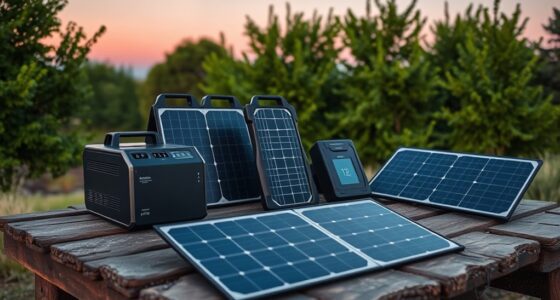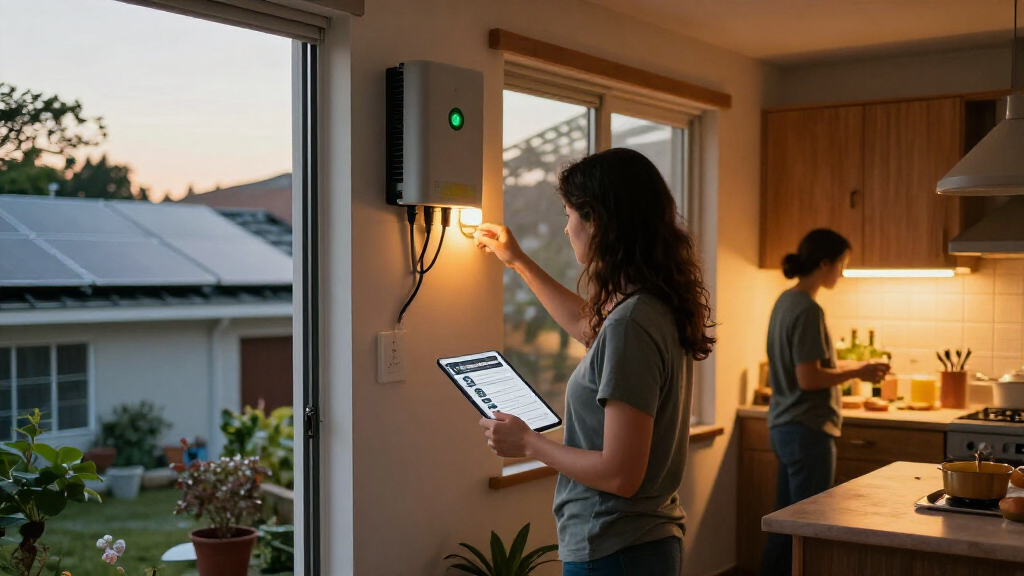
This checklist is for homeowners preparing solar and backup equipment for a grid outage. It covers connection, protection, cold-weather battery support, and outdoor lighting, with practical notes on what to check before choosing a product.

Get backup power and energy gear delivered free with Prime
- Fast, free delivery on millions of items
- Prime Video, Amazon Music and more included
- Member-only deals all year
The sections follow the listed equipment slots. Some include a named pick; others are advice only, so they focus on selection considerations without recommending a specific product.
Use each section to compare the item with your system’s ratings, connections, and installation requirements. Confirm compatibility with your equipment documentation and consult a qualified installer when wiring or electrical protection is involved.
Solar Generator Transfer Switch
A transfer switch is a key connection point when backup power needs to serve selected circuits. The listed pick is the GenerLink 30-Amp Automatic Transfer Switch with Surge Protection. Before choosing it, check that its rating and connection arrangement suit the generator, service equipment, and intended loads. A product name alone cannot establish compatibility with a particular home or solar generator.
A common mistake is assuming that any transfer switch will work with any backup source or panel. Compare the switch instructions with your equipment documentation, and confirm which circuits can be supplied and how the installation must be performed. Check whether the stated amperage fits the planned setup, and make sure surge protection details meet your needs. Have a qualified electrician assess the service configuration and installation requirements before purchase. Clear compatibility checks help keep the choice tied to the actual system rather than assumptions.
What to look for:
- Check the 30-amp rating against the planned equipment and service.
- Confirm the connection type matches the generator and service setup.
- Review installation requirements with a qualified electrician.
- Check which circuits the setup is intended to supply.
- Read the surge protection specifications in the product documentation.
GenerLink 30-Amp Automatic Transfer Switch with Surge Protection

This outdoor, meter-mounted transfer switch connects a compatible portable generator to a home’s electrical panel and supports up to 200-amp service. It is rated for 30 amps and 240 volts, works with generators under 8,500 watts, and includes a 20-foot power cable, 75 kA surge protection, and an audible surge alarm.
Pros:
- Connects a generator to the home’s breaker panel without extension cords or manual rewiring.
- Includes 75 kA surge protection and an audible surge alarm.
- Weather-resistant design for outdoor use.
- Supports the entire breaker panel with no circuit limit.
Cons:
- Installation requires coordination with the local utility or a licensed electrician.
- Limited to 30-amp service and compatible generators under 8,500 watts.
Best for: Homeowners whose setup matches the listed 30-amp switch requirements
Not ideal for: Systems with different ratings or incompatible connections
Bottom line: Confirm ratings, connections, and installation requirements with a qualified electrician before selecting this switch.
Solar Panel Combiner Box
A combiner box brings solar panel connections together, so enclosure and system compatibility deserve careful attention. The listed pick is the MidNite Solar MNPV6 Combiner NEMA 3R Aluminum. Its name identifies a six-position model and an enclosure designation, but you should verify the details against your array and installation environment before buying.
One common mistake is treating the number of positions or enclosure label as proof that the box suits a particular array. Check the product documentation for supported configuration, electrical ratings, protection requirements, and mounting instructions. Compare those details with the panels, wiring, and inverter or charge controller documentation. Confirm that the enclosure is appropriate for the location and installation conditions. Because combiner box selection and wiring involve electrical hazards, have a qualified solar installer verify the design and installation. This prevents a seemingly close match from being used in a system it was not specified for.
What to look for:
- Verify the number of supported inputs against the array design.
- Compare electrical ratings with panel and downstream equipment documentation.
- Review protection and fuse requirements for the configuration.
- Confirm the enclosure suits the installation location.
- Have a qualified installer check wiring and mounting requirements.
MidNite Solar MNPV6 Combiner NEMA 3R Aluminum

The MidNite Solar MNPV6 is a weatherproof aluminum PV combiner box designed for DC systems up to 150 VDC with multiple breaker or fuse options. It features bus bars for negative, ground, and positive connections, suitable for grid-tie inverters and charge controllers.
Pros:
- Weatherproof NEMA 3R aluminum enclosure suitable for outdoor use
- Supports multiple breaker or fuse configurations
- Includes comprehensive bus bar arrangements for various connections
- Popular and reliable in North America
Cons:
- Breakers and fuse holders are sold separately
- Not compatible with microinverters (DC only)
Best for: Arrays whose configuration and ratings match the product documentation
Not ideal for: Systems needing a different input count or enclosure specification
Bottom line: Match the box’s documented configuration and ratings to the full solar system before installation.
Battery Backup Fuse Block
A fuse block helps organize circuit protection in a battery backup setup, making correct selection and installation important. This slot is advice only; no product is specified. Begin by listing the battery, conductors, connected equipment, and circuits that need protection. Their documentation should guide the required fuse types and ratings.
A frequent mistake is choosing a fuse block by appearance or terminal count alone. Check its voltage and current specifications, supported fuse format, connection sizes, and installation requirements against the system design. The fuse itself must also be selected for the protected circuit and conductor, not simply because it fits the holder. Keep the block accessible as required by its instructions, and verify that the enclosure and mounting suit the location. Battery circuits can deliver hazardous current, so ask a qualified installer to review protection coordination and wiring before purchase or use.
What to look for:
- Match voltage and current specifications to the system design.
- Confirm the block accepts the required fuse format and size.
- Check terminal capacity against conductor sizes and connections.
- Select fuse ratings for the protected circuit and wiring.
- Review mounting, enclosure, and installation guidance with a qualified installer.
Solar Battery Heating Pad
Cold conditions can make battery planning more involved, so a heating accessory should be considered alongside the battery’s own operating guidance. The listed pick is the Weighted Portable Cordless Heating Pad with 12V 15000mAh Battery. Its name gives a voltage and battery capacity, but does not establish that it is designed for warming a solar battery or compatible with a particular battery bank.
A common mistake is assuming a portable heating pad can safely or effectively heat a stationary battery. Check the product’s intended use, temperature controls, power draw, runtime information, and safety instructions. Compare these with the battery manufacturer’s permitted temperature range and any requirements for charging or heating. Consider how the pad will be positioned, whether it can remain in place as needed, and how it will be powered in an outage. Do not use an accessory in a way its instructions prohibit. Ask the battery maker or a qualified installer to confirm suitability before relying on it for backup readiness.
What to look for:
- Verify that the pad is intended for the planned battery application.
- Check voltage, power draw, and runtime documentation.
- Review temperature controls and safety instructions.
- Compare use conditions with the battery manufacturer’s guidance.
- Confirm placement and power arrangements for outage use.
Weighted Portable Cordless Heating Pad with 12V 15000mAh Battery

This rechargeable heating pad features a powerful 12V battery for fast, long-lasting warmth. It offers adjustable fit, multiple heating modes, and even heat distribution for targeted comfort.
Pros:
- Fast heating with long-lasting warmth
- Cordless and portable for convenience
- Adjustable fit and multiple heat modes
- Machine washable for easy maintenance
Cons:
- Battery life may vary with usage
- Limited to 3 heating modes
- Requires charging before use
Best for: Shoppers whose battery maker confirms the pad’s intended use is suitable
Not ideal for: Battery setups without confirmed compatibility or safe placement
Bottom line: Treat the named pad as unverified for battery heating until both product and battery guidance support that use.
Weatherproof Cable Gland
A cable gland provides a managed point where a cable passes through an enclosure, so its fit and environmental suitability matter. This section is advice only; no product is specified. Start by identifying the enclosure opening, cable type, and conditions where the connection will be installed. Use the enclosure and cable documentation to determine the needed specifications.
A common mistake is choosing a gland based only on a rough cable diameter or the word “weatherproof.” Check the supported cable diameter range, thread or hole dimensions, enclosure material compatibility, and installation method. Confirm the protection claims and limitations in the manufacturer’s documentation for the actual location and exposure. Make sure the gland does not interfere with internal components or strain relief needs. For outdoor solar wiring, follow applicable equipment instructions and have a qualified installer confirm the entry point and sealing approach. A correctly sized part and properly prepared opening are both necessary for the intended fit.
What to look for:
- Measure the cable and compare it with the gland’s supported diameter range.
- Match thread or opening dimensions to the enclosure.
- Check material compatibility with the enclosure and cable jacket.
- Review documented environmental protection limits.
- Follow installation and sealing instructions for the location.
Solar Powered Motion Light
Outdoor lighting can help make pathways easier to navigate during an outage, and motion sensing is one feature to compare when choosing a fixture. The listed pick is the XMCOSY+ Solar Pathway Lights, 6 Pack Metal Motion Sensor Outdoor Light. Check the product documentation for how the lights are installed, charged, and activated, then compare those details with the locations you want to illuminate.
A common mistake is assuming the word “solar” means a light will perform the same way in every placement or weather condition. Review the panel positioning needs, charging guidance, sensor coverage, operating modes, and any stated limitations. Consider spacing, mounting surface, and whether nearby obstructions could affect sunlight or sensor detection. Confirm that the light’s construction and installation instructions suit the intended outdoor location. If pathway illumination is important during an outage, think through where dependable light is needed and whether the listed six-pack provides suitable placement for those areas. Product documentation is the basis for judging fit.
What to look for:
- Check solar charging and placement guidance for each fixture.
- Review sensor coverage and activation behavior.
- Confirm mounting method and suitable surfaces.
- Consider spacing and obstructions along the intended path.
- Read operating limitations and outdoor installation instructions.
XMCOSY+ Solar Pathway Lights, 6 Pack Metal Motion Sensor Outdoor Lights

These solar pathway lights feature three lighting modes, including constant and motion sensing options, with dual color temperatures for versatile outdoor illumination. Made from durable all-metal construction with IP65 waterproof rating, they are easy to install and suitable for year-round use in various weather conditions.
Pros:
- Multiple lighting modes for versatile use
- Durable all-metal construction with weather resistance
- Easy tool-free installation
Cons:
- Battery life may vary with weather conditions
- Limited to outdoor use only
- Light brightness may not be sufficient for large areas
Best for: Walkways where the fixtures can be positioned as instructed
Not ideal for: Locations without suitable panel exposure or sensor placement
Bottom line: Plan fixture locations first, then verify charging and sensor details in the product documentation.
Set a budget-first buying order by addressing system compatibility and electrical protection before optional accessories: verify the transfer switch and combiner box requirements, define fuse protection, then assess cable entry and lighting needs. Consider the heating pad only after confirming it is appropriate for the battery application.
Work through the checklist using your equipment manuals and installation conditions, and ask a qualified professional to review electrical connections. A few careful compatibility checks can make your outage preparation more organized and help you choose items that fit the system you actually have.
Halloween Picks

Max Fun 10-Foot Halloween Dragon and Pumpkin Inflatable Archway with LED Lights

Gemmy Bluey Family Halloween Inflatable Scene, 5.5 ft Lighted Yard Decoration

Vexalify 11-Inch Halloween Pumpkin Fog Machine with 12-Color Lights
As an affiliate, we earn on qualifying purchases.