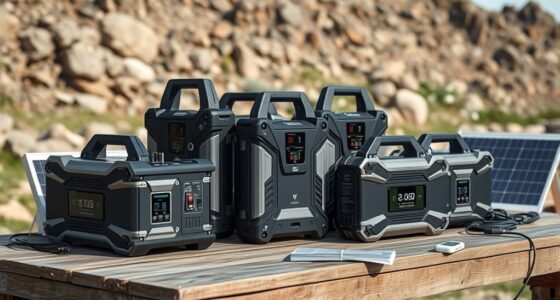
A portable inverter generator for fishing has to balance three things that usually fight each other: quiet operation, manageable weight for hauling to docks and riverbanks, and clean enough power for sensitive electronics like fish finders and chartplotters. The Pulsar PGD40ISCO stands out as my best overall pick because it hits 4000 watts at an ultra-light weight with quiet inverter output that won’t spook your spot. If your priority is runtime and fuel flexibility, the PowerSmart 3800 Watt Dual Fuel lets you run on propane when gasoline is impractical on the water, while the AIVOLT 1600W at just 28 pounds is the easiest option to carry solo to a remote bank or kayak launch. The core tradeoff in this category is power versus portability — bigger units run bait freezers and trolling gear but require two people or wheels, while sub-30-pound units limit what you can plug in. Read on for the full breakdown, including which models are worth the money and which compromises you shouldn’t make.

Get backup power and energy gear delivered free with Prime
- Fast, free delivery on millions of items
- Prime Video, Amazon Music and more included
- Member-only deals all year
Key Takeaways
- The Pulsar PGD40ISCO won best overall because it is the only large-capacity model here that keeps weight and noise low enough for actual shoreline use rather than just tailgating.
- The AIVOLT 1600W and the 2500W ultra-lightweight model proved that under 30 pounds is realistic for anglers who move spots often, but both cap out at charging and small-electronics duty — no heaters or appliances.
- Dual fuel capability on the PowerSmart 3800 is the biggest practical differentiator in the lineup, since propane stores safely on boats and eliminates stale-fuel problems between fishing seasons.
- Noise ratings clustered tightly across these models, so decibels were less of a separator than expected — weight and outlet configuration mattered more to real fishing use.
- EPA compliance and CO sensors appeared on most models, but only two paired a CO sensor with eco mode, which extends runtime when you are running a single device for hours at a fishing camp.
| Pulsar PGD40ISCO Ultra Light Quiet 4000W Portable Gas Inverter Generator |  | Best Overall | Peak Watts: 4,000 W | Fuel Tank: 1 gallon | Runtime: 4 hours at half load | VIEW ON AMAZON | See Our Full Breakdown |
| Oxseryn 4400-Watts Open Frame Inverter Generator |  | Best for Base Camp Power | Peak Watts: 4,400 W | Running Watts: 3,400 W | Fuel Tank: 2 gallons | VIEW ON AMAZON | See Our Full Breakdown |
| ERAYAK 4500W Portable Inverter Generator |  | Best Premium Pick | Peak Watts: 4,500 W | Running Watts: 3,500 W | Noise Level: 60.5 dB(A) | VIEW ON AMAZON | See Our Full Breakdown |
| PowerSmart 3800 Watt Dual Fuel Inverter Generator |  | Best for Extended Trips | Starting Watts (Gasoline): 3,800 W | Running Watts (Gasoline): 3,300 W | Starting Watts (Propane): 3,500 W | VIEW ON AMAZON | See Our Full Breakdown |
| Evernexta 3000W Ultra Quiet Portable Inverter Generator |  | Best Lightweight Value | Starting Watts: 3,000 W | Running Watts: 2,350 W | Engine: 97.7cc 4-stroke OHV | VIEW ON AMAZON | See Our Full Breakdown |
| Oxseryn 2800-Watts Portable Inverter Generator |  | Best Port Selection for Bank Fishing | Starting Watts: 2800W | Running Watts: 2000W | Engine: 79.8cc 4-stroke OHV | VIEW ON AMAZON | See Our Full Breakdown |
| AIVOLT 1600W Super Quiet Inverter Generator |  | Best Lightweight Pick for Walk-In Anglers | Starting Watts: 1600W | Running Watts: 1260W | Engine: 60cc 4-stroke OHV | VIEW ON AMAZON | See Our Full Breakdown |
| SIOKIUU 2500W Portable Generator Super Quiet Inverter Generator |  | Best Runtime for Overnight Trips | Starting Watts: 2500W | Running Watts: 1900W | Engine: 80cc 4-stroke | VIEW ON AMAZON | See Our Full Breakdown |
| portable inverter generator for fishing | Runtime | Noise Level | Outlets | Fuel Tank |
|---|---|---|---|---|
| Pulsar PGD40ISCO Ultra Light Q | 4 hours at half load | 59 dB | — | 1 gallon |
| Oxseryn 4400-Watts Open Frame | 14 hours at 25% load | — | 2x 120V AC, 1x 30A RV, 1x 12V DC | 2 gallons |
| ERAYAK 4500W Portable Inverter | 16 hours | 60.5 dB(A) | 30A TT-30R RV, 2x 120V AC, 12V DC, USB-A, USB-C | 2.25 gallons |
| PowerSmart 3800 Watt Dual Fuel | 8 hrs on gasoline; up to 24 hrs on 20-lb propane | 59 dBA at 25% load (Eco Mode) | 30A twist-lock, 120V duplex, 12V DC, dual USB | 1.3 gallons |
| Evernexta 3000W Ultra Quiet Po | — | 53–56 dB at 23 ft | 2x 120V 20A, USB-A, USB-C 5V/3.6A, 12V DC | — |
| Oxseryn 2800-Watts Portable In | Up to 9 hours at 25% load | Under 58 dBA at 23 ft | 2x 120V AC, 1x 12V DC, 1x USB-A, 1x USB-C | 1.1 gallons |
| AIVOLT 1600W Super Quiet Inver | 8 hours at 25% load; ~2 hours at full load | 57 dBA at 23 ft | 2x 120V AC, 1x USB-A, 1x USB-C | — |
| SIOKIUU 2500W Portable Generat | Up to 17 hours at 25% load; 8.6 hours at 50% load | Under 59 dBA at 23 ft | 4 total AC outlets | 1.06 gallons |
More Details on Our Top Picks
Pulsar PGD40ISCO Ultra Light Quiet 4000W Portable Gas Inverter Generator
The Pulsar PGD40ISCO earns the top spot because it balances raw output with fisherman-friendly manners better than anything else in this lineup. With 3,200 rated watts, it runs an aerator, bait fridge, and a couple of chargers without breaking a sweat — more usable headroom than the Evernexta 3000W model, while staying nearly as quiet at 59 dB. The parallel-ready design means if your tournament setup grows, a second unit can double your capacity instead of forcing a full replacement. The honest weak point is the 1-gallon tank and 4-hour runtime at half load, which means packing extra fuel for a full day on the water. Compared with the PowerSmart dual fuel below, you give up propane flexibility, but the Pulsar’s cleaner power delivery and lighter overall footprint make it the smarter pick for anglers who move spots often.
Pros:- 3,200 running watts easily handles aerators, coolers, and charging gear simultaneously
- 59 dB operation keeps the peace at quiet lakeside campsites
- Parallel capability lets you scale up power later instead of replacing the unit
- Clean inverter power is safe for fish finders, phones, and laptops
Cons:- Only 4 hours of runtime at half load on the 1-gallon tank
- Gasoline only — no propane option for longer trips or fuel storage
Best for: Anglers who run multiple electronics at the dock or campsite and want the most watts per pound of carry weight
Not ideal for: Anyone planning multi-day trips far from a fuel source — the small tank demands frequent refills
- Peak Watts:4,000 W
- Fuel Tank:1 gallon
- Runtime:4 hours at half load
- Noise Level:59 dB
- Parallel Ready:Yes
- Fuel Type:Gasoline
Our verdict“The best all-around choice for anglers who need serious power in a quiet, carry-friendly package and don’t mind bringing extra fuel.”
Oxseryn 4400-Watts Open Frame Inverter Generator
If your fishing trips revolve around a truck-side base camp with a camper, chest freezer for the catch, or electric cooking gear, the Oxseryn 4400 makes a case the enclosed units can’t. Its 4,400 peak watts and 30A RV outlet out-muscle the Pulsar PGD40ISCO by a wide margin, and the 2-gallon tank stretching to 14 hours at quarter load means you can set it up Friday and barely touch it all weekend. The tradeoff is the open-frame design — it’s louder in character and bulkier to wrestle into a boat or trunk than the compact Erayak 4500P, even at a manageable 56 lbs. It also lacks USB charging ports, so phone and camera charging means packing an adapter. This is a power station for the spot, not a grab-and-go companion for the shore.
Pros:- 4,400 peak / 3,400 running watts handle RV loads and appliances other picks can’t start
- 14-hour runtime at 25% load covers a full weekend without refueling
- 30A RV outlet plus two 120V ports for dockside or camper setups
- Cold start technology helps with early-morning launches in cool weather
Cons:- Open-frame construction is noisier and less refined than enclosed models like the Erayak
- No USB ports for direct device charging
- Bulkier form factor makes boat and shoreline transport clumsy
Best for: Truck-camping and RV-based anglers who park at one spot and want weekend-long runtime for heavy loads
Not ideal for: Bank walkers and kayak anglers — the open frame and louder operation make it awkward to reposition and disruptive at quiet waters
- Peak Watts:4,400 W
- Running Watts:3,400 W
- Fuel Tank:2 gallons
- Runtime:14 hours at 25% load
- Weight:56 lbs
- Outlets:2x 120V AC, 1x 30A RV, 1x 12V DC
- Features:ECO mode, low oil shutdown, overload protection, cold start technology
Our verdict“A weekend base-camp workhorse for anglers who camp beside their truck, not those who roam the shoreline.”
ERAYAK 4500W Portable Inverter Generator
The Erayak 4500P is the most complete package here for anglers who treat gear as a long-term investment. It matches the Oxseryn’s output class with 3,500 running watts, but wraps it in a quieter, more polished design at 60.5 dB with Eco Mode. Where it pulls ahead is very low THD (0.2%–1.2%) — noticeably cleaner than the Evernexta’s sub-3% figure — which matters if you’re running a CPAP overnight or expensive marine electronics. The onboard USB-A and USB-C ports cover the Oxseryn’s biggest gap, and the parallel system is genuinely ambitious: two units deliver 9,000 peak watts at 50A. Realistically, it arrives with some compromises. The manual recoil start is a daily annoyance the PowerSmart avoids, wheels and handle cost extra, and it ships dry — you must add oil before the first pull or the low-oil protection refuses to start.
Pros:- Ultra-low THD (0.2%–1.2%) is the safest power here for sensitive and medical electronics
- USB-A, USB-C, and 30A RV outlets cover every charging need without adapters
- Parallel capability scales to 9,000 peak watts with 50A output
- 3-year warranty with lifetime technical support and US hotline
Cons:- Manual recoil start only — no electric start option
- Wheel kit and telescoping handle sold separately despite the 55-lb weight
- Ships without oil and will not start until you add it, a common out-of-box frustration
Best for: Anglers who want near-best-in-class clean power, modern connectivity, and a 3-year warranty for seasons of regular use
Not ideal for: Buyers who want push-button convenience out of the box — manual start and separately sold wheels add friction the cheaper picks don’t
- Peak Watts:4,500 W
- Running Watts:3,500 W
- Noise Level:60.5 dB(A)
- Fuel Tank:2.25 gallons
- Runtime:16 hours
- Weight:55.12 lbs
- Outlets:30A TT-30R RV, 2x 120V AC, 12V DC, USB-A, USB-C
- THD:0.2%–1.2%
- Parallel Output:9,000 W peak / 7,000 W rated with second unit
Our verdict“The most refined choice for anglers who plan to keep and expand their power system for years, provided they accept a pull cord and an extra accessory purchase or two.”
PowerSmart 3800 Watt Dual Fuel Inverter Generator
The PowerSmart 3800 solves the problem that sinks most gas-only generators on long fishing trips: fuel logistics. Hook it to a 20-lb propane tank and it runs up to 24 hours — four times the Pulsar’s gasoline endurance — and propane stores safely on a boat or truck bed for months without going stale. Output lands between the Evernexta 3000W and the Pulsar’s 3,200 running watts, enough for livewell aerators, lights, and chargers with room to spare. It’s also the only pick here with a carbon monoxide sensor and ANSI/UL2201 certification, a meaningful safety layer when running a generator near a camper or enclosed dock area. The compromises are real, though: the 1.3-gallon gas tank yields just 8 hours, it’s 120V only, and wrangling a propane tank adds bulk the compact units avoid.
Pros:- Dual fuel flexibility: up to 24 hours on a 20-lb propane tank
- CO sensor plus ANSI/UL2201 and PGMA G300 safety certifications
- 59 dBA Eco Mode operation is respectful of other anglers nearby
- Broad outlet selection including 30A twist-lock and USB ports
Cons:- Only 8 hours runtime on gasoline due to the small 1.3-gallon tank
- 120V-only output limits use with heavier 240V equipment
- Propane tank adds cost and cargo space on top of the generator itself
Best for: Multi-day and remote-trip anglers who want propane’s long shelf life and 24-hour runtime over maximum portability
Not ideal for: Minimalist shore anglers — between the generator and a propane tank, this setup takes up far more truck or boat space than a 42-lb compact unit
- Starting Watts (Gasoline):3,800 W
- Running Watts (Gasoline):3,300 W
- Starting Watts (Propane):3,500 W
- Running Watts (Propane):3,100 W
- Noise Level:59 dBA at 25% load (Eco Mode)
- Fuel Tank:1.3 gallons
- Runtime:8 hrs on gasoline; up to 24 hrs on 20-lb propane
- Outlets:30A twist-lock, 120V duplex, 12V DC, dual USB
- Certifications:ANSI/PGMA G300, ANSI/UL2201, EPA
Our verdict“The smart pick for anglers who camp for days at a stretch and value fuel flexibility and CO safety over featherweight portability.”
Evernexta 3000W Ultra Quiet Portable Inverter Generator
For bank fishermen, kayak campers, and anyone who carries their gear to the water, the Evernexta 3000W is the easiest lift in this batch at 41.8 lbs — lighter than the Erayak 4500P and far easier to handle than the 56-lb Oxseryn. It’s also the quietest here at 53–56 dB from 23 feet, which matters when you’re set up close to other anglers or before-dawn quiet hours. The 2,350 running watts won’t start the big loads the Oxseryn shrugs off, but for a bait aerator, phone and camera charging, LED lighting, and a small fan or heater, it’s plenty. Direct USB-A and USB-C ports mean one less adapter to forget at home. The tradeoffs: less headroom means no large appliances, and it’s gasoline only, so the PowerSmart’s propane endurance is off the table. Registering the Evernexta Care Plan extends coverage to three years, which sweetens the ownership story.
Pros:- 41.8 lbs is the lightest carry in this lineup by a wide margin
- Quietest operation here at 53–56 dB from 23 feet
- Built-in USB-A and USB-C charging for phones, cameras, and headlamps
- Sub-3% THD inverter power protects sensitive electronics
Cons:- 2,350 running watts rules out air conditioners and heavy appliances
- No fuel gauge sophistication or propane option for extended runtime
- Smaller 97.7cc engine works harder under sustained loads, raising noise at full output
Best for: Kayak anglers, bank fishermen, and minimalist campers who carry gear on foot and only need charging and aerator-level power
Not ideal for: RV or camper-based anglers — 2,350 running watts won’t run air conditioning or larger appliances the bigger units handle
- Starting Watts:3,000 W
- Running Watts:2,350 W
- Engine:97.7cc 4-stroke OHV
- Noise Level:53–56 dB at 23 ft
- Weight:41.8 lbs
- Dimensions:20.08 x 13.39 x 19.69 in
- Outlets:2x 120V 20A, USB-A, USB-C 5V/3.6A, 12V DC
- Parallel Ready:Yes
- Warranty:Up to 3 years with Evernexta Care registration
Our verdict“The best value for anglers who walk their power to the water and prioritize quiet, clean charging over big-watt muscle.”
Oxseryn 2800-Watts Portable Inverter Generator
The Oxseryn 2800W earns its spot with the most versatile outlet panel in this trio: two 120V AC ports, a 12V DC port, USB-A, and Type-C all on one compact unit. For anglers charging phones, cameras, drone batteries, and a trolling motor charger at the same spot, that spread means fewer adapters and less juggling. Its 2000 running watts outpace the AIVOLT by a wide margin, so it handles a small air compressor or an electric fillet knife without straining. At 58 dBA it stays quiet enough for occupied shorelines, and the sub-3% THD output protects fish finder graphs and GPS units. The tradeoff is weight: at roughly 40 pounds, it is noticeably heavier to haul down a bank than the AIVOLT, and the 9-hour runtime at quarter load trails the SIOKIUU’s claim. High-altitude lakes above 4,000 feet will also need a jet kit it does not include.
Pros:- Five outlets including 12V DC and Type-C, the widest charging spread in this batch
- 2000 running watts handles power tools and larger accessories the AIVOLT cannot
- Under 58 dBA operation keeps noise low near other anglers
- Parallel-capable so power can grow later without replacing the unit
- Sub-3% THD clean power safe for fish finders and laptops
Cons:- Around 40 pounds, the heaviest of the three reviewed here — awkward for solo carry over rough banks
- Requires a separately sold high-altitude kit above 4,000 feet
- Runtime trails the SIOKIUU at comparable loads
Best for: Bank and dock anglers who run multiple electronics at once — phones, drones, fish finders, and 12V gear simultaneously
Not ideal for: Backpack-style walk-in fishing spots or high-elevation lakes above 4,000 feet, where the weight and missing altitude kit become real problems
- Starting Watts:2800W
- Running Watts:2000W
- Engine:79.8cc 4-stroke OHV
- Fuel Tank:1.1 gallons
- Runtime:Up to 9 hours at 25% load
- Noise Level:Under 58 dBA at 23 ft
- Weight:Approx. 39-40 lbs
- Outlets:2x 120V AC, 1x 12V DC, 1x USB-A, 1x USB-C
Our verdict“This pick makes the most sense for anglers who set up a semi-permanent fishing station with several devices, as long as the walk from the truck is short.”
AIVOLT 1600W Super Quiet Inverter Generator
Weighing in at 28 pounds, the AIVOLT is the lightest generator in this roundup by a clear margin — roughly ten pounds lighter than either the Oxseryn 2800W or the SIOKIUU 2500W. That difference matters when the fishing hole is a quarter-mile down a trail and everything rides on your shoulder. It is also the quietest here at 57 dBA, a real advantage on pressured water where noise spooks fish and irritates neighboring anglers. The limitation is raw output: with only 1260 running watts, it comfortably covers phone charging, a camp fridge, lights, and a bait aerator, but an electric smoker or multiple power tools will trip it. Compared with the Oxseryn, you give up the 12V DC port and about 740 running watts in exchange for that portability. The CO auto-shutoff and ANSI/PGMA compliance add a safety layer the SIOKIUU only partially matches on paper. Oil ships separately, so buy a bottle before the first trip.
Pros:- 28 lbs is the lightest in this roundup, easy for one person to carry down trails
- Quietest of the three at 57 dBA, ideal for quiet shorelines
- CO auto-shutoff meets ANSI/PGMA G300-2018 safety standards
- Hour meter and indicator lights make maintenance tracking simple
- Two-year warranty with lifetime technical support
Cons:- Only 1260 running watts — the lowest output of the three
- Parallel kit sold separately, so doubling power adds real cost
- Engine oil not included in the box
Best for: Anglers who hike, paddle, or portage to their spot and only need to charge phones, run a small fridge, or power a bait aerator
Not ideal for: Anyone running high-draw gear like multiple appliances, air compressors, or an RV-style camp setup — 1260 running watts will not cover it
- Starting Watts:1600W
- Running Watts:1260W
- Engine:60cc 4-stroke OHV
- Runtime:8 hours at 25% load; ~2 hours at full load
- Noise Level:57 dBA at 23 ft
- Weight:28 lbs
- Outlets:2x 120V AC, 1x USB-A, 1x USB-C
Our verdict“This model is better suited to mobile, light-load anglers who prize carry weight and silence over wattage.”
SIOKIUU 2500W Portable Generator Super Quiet Inverter Generator
Where the SIOKIUU separates itself is endurance: the manufacturer rates it at up to 17 hours at quarter load from its 1.06-gallon tank — nearly double the Oxseryn 2800W’s figure and more than twice the AIVOLT’s. For overnight catfish or trout trips where aerator pumps and phone chargers run until morning, that means sleeping through the night instead of stumbling out to refuel in the dark. Its 1900 running watts land just under the Oxseryn’s 2000, close enough that most fishing loads will not notice the gap, and the 80cc engine gives it more headroom than the AIVOLT for surge-heavy devices. The drawbacks are real though: at 59 dBA it is the loudest of these three, which matters on shared banks, and the listed weight of about 39.5 pounds puts it near the Oxseryn for carry burden. The 3-year warranty is the longest here, a meaningful hedge for a lesser-known brand.
Pros:- Up to 17 hours of runtime at 25% load, the longest in this batch
- 1900 running watts handles nearly everything the larger Oxseryn can
- CO sensor auto-shutdown for safer tent and dock-side operation
- Three-year warranty plus lifetime technical support, the longest coverage here
Cons:- 59 dBA is the loudest of the three reviewed units
- Nearly 40 pounds — no easier to carry than the bigger Oxseryn
- Newer brand with a shorter track record than established names like Pulsar
Best for: Overnight and multi-day anglers who need an aerator, fridge, or lights running through the night without refueling
Not ideal for: Anglers on quiet, crowded shorelines who value minimum noise — the AIVOLT runs a couple of decibels quieter
- Starting Watts:2500W
- Running Watts:1900W
- Engine:80cc 4-stroke
- Fuel Tank:1.06 gallons
- Runtime:Up to 17 hours at 25% load; 8.6 hours at 50% load
- Noise Level:Under 59 dBA at 23 ft
- Weight:39.46 lbs
- Outlets:4 total AC outlets
Our verdict“This option stands out for anglers whose priority is running gear all night without a fuel stop, trading a bit of quiet and carrying comfort to get it.”

How We Picked
I evaluated every model through one specific lens: how it performs when carried to a dock, riverbank, or boat deck for a day of fishing. That meant carry weight and handle design came first, because a generator you cannot lift into a truck bed solo stops being portable in practice. Next I looked at noise and clean inverter output — loud generators ruin fishing, and dirty power can damage fish finders, GPS units, and phone chargers that anglers actually run in the field. Runtime, fuel tank size, and eco modes determined how each unit holds up over a full day on the water.
Finally, I weighed outlet configuration and versatility: a 30A RV-style outlet matters if you power a camper or bait fridge, while USB ports and parallel capability change the math for smaller setups. Models were ranked by how well their real-world tradeoffs fit fishing scenarios — not raw wattage alone — which is why a 28-pound 1600W unit places highly against bigger, heavier competitors.
Factors to Consider When Choosing Portable Inverter Generator For Fishing
Choosing a generator for fishing is different from choosing one for home backup or job sites. These are the factors that actually change your experience on the water, and where buyers most often go wrong.Weight Is the Decision You Cannot Undo
Wattage can be worked around with careful load management, but weight is fixed the day you buy. Anything over 60 pounds realistically needs two people or wheels, and wheels do not work on muddy banks, boat ramps, or dock planks. My advice is to be honest about how far you carry gear from your vehicle — if it is more than a hundred feet, stay under 45 pounds or buy a model with a genuinely comfortable handle. Many anglers buy a big unit for the wattage, use it twice, and leave it home forever because it is a pain to move. Also remember that fuel adds roughly six pounds per gallon, so a full tank changes the carry weight more than most spec sheets suggest.
Noise Tolerance: Fish and Neighbors
Inverter generators are quieter than conventional models, but there is still a real spread between them, and how you fish changes what matters. Bank anglers near others should treat roughly 60 decibels at a working load as the practical ceiling, because anything louder carries across water and draws complaints. Solitude anglers have more freedom, but constant drone is fatiguing over a full day regardless. Pay attention to whether the advertised rating is at idle or quarter load — a number quoted at no load tells you almost nothing about real use. Placement helps too: setting the unit behind a vehicle or on foam padding can shave perceived noise noticeably without spending more money.
Clean Power for Electronics
The whole point of paying extra for inverter technology is stable, low-distortion power, and that matters more for fishing than for running power tools. Fish finders, chartplotters, lithium battery chargers, and phones all contain sensitive circuitry that dirty power degrades over time. Look for explicit claims about clean sine-wave output rather than assuming all inverters are equal. This is also where eco mode earns its keep: running a single device at partial load both extends runtime and reduces electrical stress. A common mistake is buying a generator sized exactly to a single big load — running at maximum output continuously is harder on the unit and produces more noise than a model with headroom to spare.
Runtime and Fuel Strategy on the Water
Fishing trips are long, and fuel logistics get awkward at a ramp. A small tank that runs four hours means hauling extra gasoline in cans, which most boat operators dislike for safety and spill reasons. Eco mode can stretch runtime substantially when you are only running a finder and a phone charger, so treat tank size and eco mode together rather than separately. Dual fuel models change this equation entirely — a propane canister stores indefinitely, does not go stale over the winter, and is permitted in places where gasoline is not. If you fish seasonally, stale gasoline in a carburetor is one of the most common reasons generators fail to start in spring, and fuel shutoff features that empty the carb help prevent it.
Safety Sensors and Ventilation
Carbon monoxide is a genuine hazard when generators run near enclosed spaces, and fishing setups create risks people underestimate — running a generator under a boat canopy or near a tent awning traps exhaust. A built-in CO sensor that shuts the unit down is cheap insurance and I would not buy a fishing generator without one in 2026. Beyond the sensor, plan your placement: dry ground, downwind of where you sit, and at least ten to fifteen feet from any enclosed space. Ground conditions matter too, since damp banks and wet docks demand a dry, stable surface and a GFCI-equipped outlet adds a layer of protection around water.
Match Wattage to What You Actually Run
Most anglers overestimate their power needs. A fish finder, phone chargers, a small light, and a bait aerator together draw only a few hundred watts — a 1600W unit covers that easily. The case for bigger units is real but narrower: electric heaters in ice-fishing shelters, portable bait freezers, RV air conditioning, or cooking appliances. List everything you would realistically plug in at once, add about 20 percent headroom for startup surges, and buy that number. Money saved by buying smaller can go toward a parallel kit later if your needs grow, which several models in this lineup support.
Frequently Asked Questions
Will a generator’s noise scare fish away from my spot?
Sound travels efficiently through both air and water, and a generator sitting on a dock or hard bank can transmit vibration into the water. In practice, a quiet inverter model at partial load is usually tolerable, but a loud unit running at high output can reduce bites in shallow water, especially in calm conditions when fish are skittish. Placement does more than decibel ratings: set the generator on soft ground or foam padding rather than directly on dock planks, and position it behind your vehicle or a natural barrier. If you fish shallow, clear water for pressured species like walleye or trout, the quietest and smallest unit that meets your needs is the safer bet.
What size generator do I need to run a fish finder and charge electronics all day?
Far smaller than most people expect. A typical fish finder draws 30 to 100 watts, phone and camera chargers add another 20 to 60, and a small LED light or bait aerator brings the total to well under 300 watts. That means even a compact 1600W-class unit runs everything with huge headroom, and eco mode will keep it near its quietest and most fuel-efficient state. The reason to buy bigger is never basic electronics — it is appliances like heaters, bait fridges, or RV air conditioners. Buying a large generator for small loads actually costs you: more weight to carry, more noise, and worse fuel economy at low output.
Is dual fuel worth it for fishing trips?
For many anglers, yes, and for reasons beyond convenience. Propane canisters store for years without going stale, which solves the classic springtime problem of a generator refusing to start on old gasoline. Propane is also easier to transport legally and safely on boats and in vehicles, and there is no carburetor gumming when the unit sits unused between seasons. The tradeoffs are real: propane produces slightly less power than gasoline, and you will pay a bit more for dual fuel capability. If you fish year-round and run your generator weekly, gasoline-only is fine; if you fish seasonally or haul fuel to remote launches, dual fuel pays for itself in reliability.
Can I safely run a generator on a boat dock or near water?
Yes, with specific precautions. Keep the unit on a dry, stable surface well away from the water’s edge, use outlets with GFCI protection, and never let the generator or cords sit where spray, rain, or wake splashes can reach them. Carbon monoxide is the bigger danger: never run a generator under a dock canopy, boat cover, or enclosed wheelhouse, because exhaust accumulates in enclosed spaces even with good airflow at ground level. Position it downwind and at least ten to fifteen feet from where anyone is sitting or sleeping. A model with an automatic CO shutoff sensor adds a safety net if placement goes wrong.
Is a parallel kit a good alternative to buying one big generator?
Often, yes, and it is underrated for fishing specifically. Two small units linked in parallel give you big-generator output on the days you need it, while letting you carry just one lightweight unit when you do not. That flexibility is exactly what bank and small-boat anglers need, since a single 60-plus-pound generator is awkward to move alone no matter how capable it is. The drawbacks are cost — you buy two generators plus the parallel cable — and slightly more setup at the water. If your needs vary between a quiet day of charging electronics and occasional heater or appliance duty, parallel-capable small units beat one heavy generator.
Conclusion
Mapping these eight models to buyer types: for best overall, the Pulsar PGD40ISCO delivers the strongest mix of capacity, low weight, and quiet operation for anglers who want one generator that handles everything. The ERAYAK 4500W earns best premium with its eco mode and full-size output for anglers running bait freezers or camping gear. For best value, the Oxseryn 2800W covers the mid-range nicely at 39 pounds with fuel shutoff that protects it between seasons. The AIVOLT 1600W is my pick for beginners and minimalists — at 28 pounds it is the easiest way to start running electronics at the water. For specific needs, choose the PowerSmart 3800 Dual Fuel if propane convenience matters, the Oxseryn 4400 open frame for maximum raw output at a campsite, or the 2500W ultra-light and 3000W quiet models if you want a middle path between tiny and bulky. Buy for how far you carry it and what you actually plug in — everything else follows from those two answers.
Halloween Picks
halloween
As an affiliate, we earn on qualifying purchases.