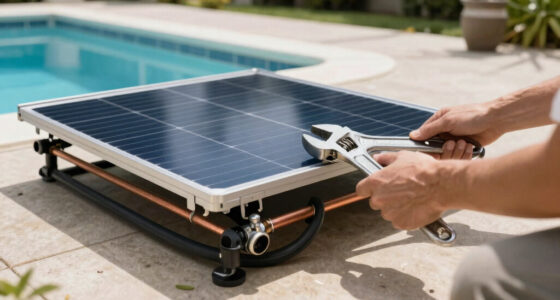
The best home energy storage systems balance backup capacity, solar compatibility, and installation needs—not just battery size. I name the ECO-WORTHY 10kW kit with 32.2kWh storage best overall for buyers seeking a substantial off-grid setup, while the Anker SOLIX E10 options stand out for a more integrated backup approach. The main tradeoff is between a larger, more involved solar-and-battery system and a simpler setup with less storage or more specific compatibility requirements. Battery chemistry, inverter capacity, and whether the system can power your essential circuits all affect the fit. Read on for the full comparison and guidance on choosing a system that matches your home.

Get backup power and energy gear delivered free with Prime
- Fast, free delivery on millions of items
- Prime Video, Amazon Music and more included
- Member-only deals all year
Key Takeaways
- The ECO-WORTHY 10kW kit with 32.2kWh storage has the largest stated battery capacity in this lineup, making it the clearest fit for buyers prioritizing extended off-grid use.
- The two Anker SOLIX E10 packages pair a 6kWh battery with different connection and solar details, so the right choice depends on the proposed setup—not battery capacity alone.
- The ECO-WORTHY 16.1kWh kit offers the same stated 10kW solar-kit scale as its 32.2kWh sibling with less storage, a meaningful compromise for buyers who do not need as much reserve.
- The Cubix100 and WattCycle rack-battery options are component-oriented choices; buyers need to pay closer attention to inverter matching, system design, and installation requirements.
- Product names do not establish whole-home backup capability. Inverter output, transfer equipment, circuit selection, and local installation rules can matter as much as the battery’s kWh rating.
| ECO-WORTHY 10kW Off-Grid Solar Panel Kit with 32.2kWh Battery Storage |  | Best for High-Capacity Off-Grid Living | Solar panel capacity: 10,620W (18 × 590W) | Battery storage: 32.2kWh (2 × 48V 314Ah LiFePO₄ batteries) | Inverter continuous output: 10,000W | VIEW LATEST PRICE | See Our Full Breakdown |
| ECO-WORTHY Solar Panel and LiFePO4 Home Backup System |  | Best for Built-In Battery Protection | Solar panels: Six 590W N-type monocrystalline panels | Battery: Two 48V 314Ah LiFePO₄ batteries | Usable energy: 30kWh+ | VIEW LATEST PRICE | See Our Full Breakdown |
| Anker SOLIX E10 Power Dock with 6 kWh Battery |  | Best for Expandable Whole-Home Backup | Battery capacity: 6kWh, expandable to 90kWh | Continuous output: 7.6kW | Solar input: 9kW per unit | VIEW LATEST PRICE | See Our Full Breakdown |
| ECO-WORTHY Cubix100 51.2V 100Ah LiFePO4 Server Rack Battery |  | Best Modular Battery Upgrade | Battery chemistry: LiFePO₄ | Voltage: 51.2V | Capacity: 100Ah | VIEW LATEST PRICE | See Our Full Breakdown |
| ECO-WORTHY 10 kW Off-Grid Solar Panel Kit with 16.1 kWh Battery |  | Best for Smaller Off-Grid Setups | Total PV capacity: 2,950W (5 × 590W panels) | Battery voltage: 48V | Battery capacity: 314Ah | VIEW LATEST PRICE | See Our Full Breakdown |
| Anker SOLIX E10 Smart Inlet Box with 6kWh Battery and 9kW Solar |  | Best for Whole-Home Backup | Continuous power output: 7.6 kW | Base battery capacity: 6 kWh | Expandable battery capacity: Up to 30 kWh | VIEW LATEST PRICE | See Our Full Breakdown |
| WattCycle 48V 100Ah Server Rack Batteries with 12kW Split-Phase Inverter |  | Best for High-Input Solar and Expandable Capacity | Battery configuration: Two 48V 100Ah server rack batteries | Total energy storage: 10.24 kWh | Inverter output: 12 kW, 120V/240V split phase, pure sine wave | VIEW LATEST PRICE | See Our Full Breakdown |
More Details on Our Top Picks
ECO-WORTHY 10kW Off-Grid Solar Panel Kit with 32.2kWh Battery Storage
This kit suits buyers who need a substantial off-grid energy reserve, not just short-term outage coverage. Its 32.2kWh of LiFePO₄ storage and 10kW split-phase inverter can support a broader mix of household loads than the ECO-WORTHY 10 kW kit with 16.1 kWh battery, which trades reserve time for a smaller battery bank. The 18 panels provide 10,620W of solar capacity, while dual MPPT controllers and Wi-Fi monitoring help track production and system status. Batteries with wheels and handles may make positioning easier, though each still weighs enough to require planning. The main compromises are the professional installation recommendation and truck delivery of a large pallet. Choose it for extended off-grid use; skip it if you need a compact, simple backup unit.
Pros:- 32.2kWh of LiFePO₄ storage supports longer use between charging periods.
- 10kW continuous inverter output with 120V/240V split-phase support.
- 18 panels provide 10,620W of listed solar capacity.
- Dual MPPT controllers, Wi-Fi and Bluetooth monitoring, and a 7-inch display.
Cons:- Professional installation is recommended for the large off-grid system.
- Pallet-sized truck delivery requires a suitable receiving address.
- The extensive panel array requires substantial roof or ground-mount space.
Best for: Households planning full-time off-grid use that need substantial battery reserve and 120V/240V split-phase power.
Not ideal for: Homeowners seeking a small outage-only battery or a system that can be installed without specialist help or truck access.
- Solar panel capacity:10,620W (18 × 590W)
- Battery storage:32.2kWh (2 × 48V 314Ah LiFePO₄ batteries)
- Inverter continuous output:10,000W
- Inverter peak output:20,000W
- Output voltage:120V or 120V/240V split phase
- Maximum charging current:200A
- Battery management system:PACE 200A BMS
- Monitoring:Wi-Fi, Bluetooth, and 7-inch display
Our verdict“Choose this kit for a large, solar-fed off-grid home where battery reserve matters more than easy installation or a compact footprint.”
ECO-WORTHY Solar Panel and LiFePO4 Home Backup System
This package stands out for combining more than 30kWh of usable storage with several built-in battery safeguards. Its active-balancing BMS, circuit breaker, fire suppression module, and buzzer alarm give buyers more specified protection features than the ECO-WORTHY 10kW kit with 32.2kWh storage, whose supplied data emphasizes capacity and monitoring instead. The 10kW hybrid inverter supports 120V and 240V output, and six 590W panels provide a solar starting point without the 18-panel footprint of that larger kit. App monitoring and RS485, CAN, and RS232 communication add flexibility for system oversight and integration. Tradeoffs include heavy pallet delivery and an inverter exterior version selected at random. This is a stronger fit for buyers who value documented protection features, but less appealing if hardware appearance must be selected in advance.
Pros:- More than 30kWh of stated usable energy from two LiFePO₄ batteries.
- Includes six panels, inverter, batteries, and cables as a bundled system.
- Active-balancing BMS, circuit breaker, fire suppression module, and buzzer alarm.
- App monitoring and RS485, CAN, and RS232 battery communication.
Cons:- Large, heavy equipment ships on a pallet by truck.
- The inverter exterior version is selected randomly.
- The six-panel array is a smaller listed solar capacity than the 18-panel ECO-WORTHY 32.2kWh kit.
Best for: Homeowners seeking a bundled solar backup system with over 30kWh of storage and multiple specified battery protection features.
Not ideal for: Buyers who need to choose the inverter exterior version or cannot receive a heavy shipment by truck.
- Solar panels:Six 590W N-type monocrystalline panels
- Battery:Two 48V 314Ah LiFePO₄ batteries
- Usable energy:30kWh+
- Inverter:10kW hybrid inverter
- MPPT tracking efficiency:99.9%
- Battery cycle life:9,000+ cycles at 80% DoD
- Output voltage:120V and 240V
- Battery protection:Active-balancing BMS, circuit breaker, fire suppression module, and buzzer alarm
Our verdict“Pick this package if you want substantial backup storage with specified battery safeguards and can accept pallet delivery and an unselected inverter exterior.”
Anker SOLIX E10 Power Dock with 6 kWh Battery
The Anker SOLIX E10 is the most grid-service-oriented choice in this group: its Power Dock supports up to 200A service, and automatic switchover in 20ms or less is designed to keep interruption short when power fails. That differs from the ECO-WORTHY kits, which pair larger included battery banks with off-grid-focused solar packages but do not list this whole-home dock feature. The E10 starts with 6kWh of battery capacity and can expand to 90kWh, so buyers can begin with a smaller reserve and add capacity later. It also supports 9kW of solar input per unit and existing solar. The tradeoff is that the base battery capacity is modest beside the ECO-WORTHY systems’ 16.1kWh and 30kWh-plus options, and professional installation may be needed. Its E10 warranty is five years, shorter than the Power Dock’s ten.
Pros:- Power Dock coverage supports up to 200A service.
- Automatic switchover is specified at 20ms or less.
- Battery capacity can expand from 6kWh to 90kWh.
- Supports up to 9kW solar input per unit and existing solar.
Cons:- The included battery capacity is smaller than either large ECO-WORTHY battery kit.
- Professional installation may be needed.
- The E10 has a five-year warranty, shorter than the Power Dock’s ten-year warranty.
Best for: Homeowners who want a professionally integrated whole-home backup system, fast automatic switchover, and room to expand storage later.
Not ideal for: Off-grid buyers who want a large battery bank and solar array included from the start, rather than a 6kWh base system.
- Battery capacity:6kWh, expandable to 90kWh
- Continuous output:7.6kW
- Solar input:9kW per unit
- Power Dock coverage:200A
- Switchover time:20ms or less
- Weight:60.6lb
- Operating temperature:-4°F to 131°F
- Warranty:5 years for E10; 10 years for Power Dock
Our verdict“Choose the E10 for expandable, dock-based whole-home backup; choose an ECO-WORTHY kit instead if you need a larger included battery reserve for off-grid use.”
ECO-WORTHY Cubix100 51.2V 100Ah LiFePO4 Server Rack Battery
The Cubix100 is a battery component, not a complete home storage system, which makes it a better fit for an existing compatible inverter setup than for someone starting from scratch. Each unit supplies 5.12kWh, and support for up to 32 units in parallel gives buyers a modular path to larger storage. That contrasts with the bundled ECO-WORTHY 10kW kits, which include panels and an inverter but commit buyers to a much larger package at once. CAN and RS485 connections plus Bluetooth and Wi-Fi monitoring provide several ways to track or connect the battery. Its listed UL9540, UL1973, and CEC status and 10-year limited warranty are useful selection details. The tradeoffs are straightforward: at 103lb it is heavy to handle, and the listing may be non-returnable. Check inverter compatibility before choosing it.
Pros:- 5.12kWh LiFePO₄ capacity in a modular battery format.
- Supports parallel connection of up to 32 units.
- CAN, RS485, Bluetooth, and Wi-Fi connectivity.
- Listed UL9540, UL1973, and CEC status with a 10-year limited warranty.
Cons:- Does not include solar panels or an inverter.
- Weighs 103lb, making installation and handling difficult.
- The listing indicates the item may be non-returnable.
Best for: Solar and backup system owners with a compatible 51.2V setup who want to add storage in modular increments.
Not ideal for: First-time buyers who need a complete system with panels and inverter, or anyone unable to manage a 103lb battery.
- Battery chemistry:LiFePO₄
- Voltage:51.2V
- Capacity:100Ah
- Energy:5,120Wh
- Weight:103lb
- Communication:CAN, RS485, Bluetooth, and Wi-Fi
- Maximum parallel units:32
- Certifications and warranty:UL9540, UL1973, and CEC listed; 10-year limited warranty
Our verdict“Choose the Cubix100 to expand a compatible existing storage system incrementally, not as a standalone home energy solution.”
ECO-WORTHY 10 kW Off-Grid Solar Panel Kit with 16.1 kWh Battery
This kit keeps the 10kW split-phase inverter found in the larger ECO-WORTHY 32.2kWh package but cuts the included battery storage to about 16.1kWh and the array to five panels. That makes it a more restrained starting point for buyers who need 120V/240V output and off-grid capability without the larger kit’s 18-panel array and deeper reserve. The battery supports expansion through parallel connections, so capacity can grow as needs change, while its display, Bluetooth, and Wi-Fi provide monitoring options. The listed array is 2,950W, with maximum daily generation stated as 11.8kWh under optimal conditions; actual production depends on conditions. This is not the best pick for long stretches of high household demand without sun. Professional installation is recommended, and the large components require truck delivery.
Pros:- 10kW continuous inverter output with 20kW peak output.
- Supports 120V or 120V/240V split-phase output.
- Includes panels, inverter, battery, and necessary cables.
- Battery monitoring includes a display, Bluetooth, and Wi-Fi, with parallel expansion supported.
Cons:- The 16.076kWh battery stores about half as much as the ECO-WORTHY 32.2kWh kit.
- Five panels provide only 2,950W of listed PV capacity.
- Professional installation and truck delivery may be needed.
Best for: Off-grid homeowners who want a 10kW split-phase inverter and a smaller initial solar-and-battery package with a path to expansion.
Not ideal for: Households that need long-duration backup immediately or expect to run heavy loads through extended low-sun periods.
- Total PV capacity:2,950W (5 × 590W panels)
- Battery voltage:48V
- Battery capacity:314Ah
- Battery energy:16.076kWh
- Battery chemistry:LiFePO₄
- Maximum continuous inverter power:10,000W
- Peak inverter output:20,000W
- Output voltage:120V or 120V/240V split phase
- Maximum daily solar generation:11.8kWh under optimal conditions
Our verdict“Choose this kit for a smaller expandable off-grid setup with a high-output inverter, but select the 32.2kWh ECO-WORTHY kit if you need more stored energy from day one.”
Anker SOLIX E10 Smart Inlet Box with 6kWh Battery and 9kW Solar
I rank the Anker SOLIX E10 as the strongest fit here for homeowners who want an integrated path to whole-home backup, rather than a battery-first system they must configure around a separate inverter. Its 7.6 kW continuous output and expandable 6–30 kWh storage give buyers room to match capacity to their outage needs. The Smart Inlet Box also supports off-peak grid charging and solar storage, adding bill-management flexibility that the WattCycle system’s supplied details emphasize less.
The tradeoff is a modest 6 kWh starting capacity: buyers seeking longer backup from day one may prefer the WattCycle’s stated 10.24 kWh. The E10 weighs 60.6 pounds, and its professional installation support signals that this is not a casual plug-in setup. I would choose it for managed home integration, not portability.
Pros:- 7.6 kW continuous output is suited to substantial residential backup loads.
- Battery capacity can expand from 6 kWh to as much as 30 kWh.
- Smart Inlet Box supports off-peak grid charging and solar energy storage.
- Weatherproof construction and wall- or floor-mounting support outdoor installation.
Cons:- The base 6 kWh capacity may not cover extended outages without expansion.
- At 60.6 pounds, the unit is heavy and may call for professional installation.
- A fixed home installation offers less flexibility than a portable backup system.
Best for: Homeowners seeking professionally supported whole-home backup with solar and off-peak grid charging, plus the option to expand storage as needs grow.
Not ideal for: Renters, buyers who need a portable battery, or households that want more than 6 kWh of storage without buying expansion batteries.
- Continuous power output:7.6 kW
- Base battery capacity:6 kWh
- Expandable battery capacity:Up to 30 kWh
- Maximum solar capacity per unit:9 kW
- Weight:60.6 lb
- Dimensions:26.4 × 11.8 × 10.2 in
- Operating temperature range:-4°F to 131°F
- Warranty:5 years for E10; 10 years for Smart Inlet Box
Our verdict“Choose the E10 if you want an expandable, professionally supported home backup system with grid and solar charging options.”
WattCycle 48V 100Ah Server Rack Batteries with 12kW Split-Phase Inverter
The WattCycle 48V system suits buyers who want a substantial battery-and-inverter package with room to build a larger installation. It supplies 10.24 kWh of stated storage and a 12 kW split-phase inverter, so it starts with more stored energy than the Anker SOLIX E10’s 6 kWh base configuration. Its stated 24,000 W maximum solar input and dual MPPT controllers also make it the more solar-input-focused choice in this pair.
That capacity and input headroom come with setup demands: this is a server-rack battery arrangement, not the Anker’s more home-integration-oriented Smart Inlet Box package. Expansion to as much as 102.4 kWh and 72 kW requires additional batteries or inverters, so the headline ceiling is not included capacity. I’d shortlist it for solar-led builds, but skip it if you want a simple, professionally supported home backup path.
Pros:- Includes two batteries with 10.24 kWh total stated storage.
- 12 kW, 120V/240V split-phase inverter supports residential loads that need both voltage options.
- Up to 24,000 W solar input and dual MPPT controllers suit high-input solar configurations.
- Parallel expansion supports up to 20 batteries and six inverters.
Cons:- Large residential loads may require system-level installation and setup.
- The maximum expansion capacity requires purchasing additional batteries or inverters.
- The 100A battery BMS rating is a constraint buyers should check against their intended loads and charging plan.
Best for: Solar-focused homeowners or system builders who want 10.24 kWh of starting storage, split-phase output, and a modular path to a larger installation.
Not ideal for: Buyers seeking a simple integrated home backup installation, or households unwilling to plan and configure a rack-battery and inverter system.
- Battery configuration:Two 48V 100Ah server rack batteries
- Total energy storage:10.24 kWh
- Inverter output:12 kW, 120V/240V split phase, pure sine wave
- Maximum solar input:24,000 W
- MPPT controllers:Dual
- UPS transfer time:Under 10 ms
- Battery cells:BYD LiFePO4
- Maximum parallel expansion:6 inverters (72 kW) and 20 batteries (102.4 kWh)
Our verdict“Choose WattCycle if you want more included storage than the Anker E10 base system and can handle a configurable, expandable solar installation.”
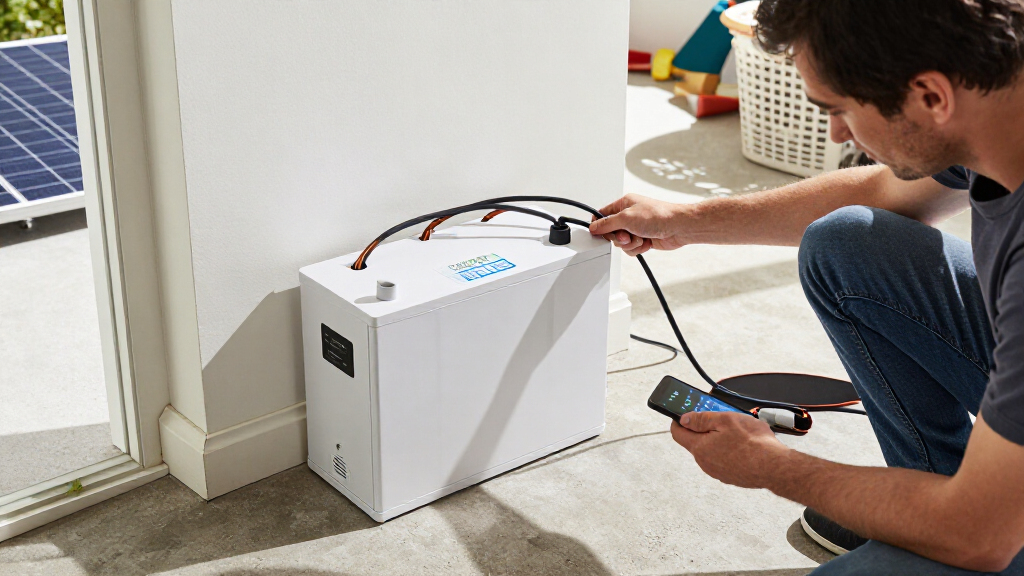
How We Picked
I ranked these products by how clearly their stated components address real home-energy needs: stored capacity, solar and inverter integration, connection approach, and the likely complexity of building a working system. A large battery can support longer backup, but it does not tell you how much power the system can deliver at once or whether it connects to your home’s circuits.
The ranking favors packages that present a more complete path to solar generation and storage, then distinguishes them by reserve capacity and setup specificity. The ECO-WORTHY 32.2kWh kit leads for scale; the Anker E10 options serve a different buyer seeking a defined backup interface. Rack batteries rank lower as turnkey choices because the buyer must confirm compatible equipment and system design. I treat listed specifications as comparison points, not proof of runtime, whole-home coverage, or installation compatibility.
Factors to Consider When Choosing Best Home Energy Storage Systems
Before choosing a system, I would match the equipment to the job: keeping selected circuits running, storing solar energy for later, or operating with greater independence from the grid. These choices affect battery size, inverter output, installation work, and future expansion in different ways.
Separate Battery Capacity From Power Output
Capacity, measured in kWh, describes stored energy; inverter output describes how much power can be supplied at one time. A large battery may run essential loads for longer but still be unable to start or operate several high-demand appliances together. List the appliances you want backed up, their running loads, and any startup surges before comparing systems. Then ask an installer or manufacturer whether the inverter can handle those loads simultaneously. This distinction is especially important when comparing a large battery package with a smaller system built around a specific backup interface.
Decide Which Circuits Need Backup
Whole-home backup and essential-circuit backup are different projects. A system may support a selected group of circuits without powering every appliance in the house. Identify must-run loads—such as refrigeration, communications, lighting, or medical equipment—and decide whether heating, cooling, cooking, or well pumps also need coverage. The larger and more varied the load list, the more attention you should give to inverter output and electrical-panel integration, not just battery capacity. Ask how the system isolates the home from the grid during an outage and which transfer equipment is required. This helps prevent buying storage that cannot serve the circuits you had in mind.
Check Solar and Battery Compatibility Before Expanding
Solar panels, charge controllers, batteries, and inverters must work as a matched system. A listed solar wattage does not by itself confirm compatibility with panels you already own or plan to add. Verify the inverter’s accepted voltage range, maximum solar input, battery chemistry support, and communication requirements with the exact equipment model. For rack batteries, confirm whether the inverter supports the battery’s voltage and battery-management communications. Ask what happens if you add another battery later, since expansion can be limited by firmware, wiring, or inverter capacity. Planning these details upfront can prevent a seemingly simple add-on from becoming a system redesign.
Budget for Installation and Electrical Work
Equipment completeness affects how much work remains after delivery. Packaged solar kits may bundle major components, while standalone batteries or docks can require additional compatible equipment, wiring, panel work, or professional configuration. Before choosing, request a written list of included components and a separate list of anything needed for your intended setup. Confirm installation requirements with a qualified electrician and check local permitting and utility rules, especially for systems connected to home circuits or the grid. Do not assume that a product described as a home backup system can be plugged into any household outlet. The extra planning is part of comparing system cost and effort, even when product specifications look similar.
Choose Storage Around Outage Length and Recharge
Battery size only helps if you can recharge it when needed. For brief outages, a smaller reserve may be sufficient if you can limit loads; longer interruptions call for more stored energy or a reliable way to replenish it. Solar output varies with weather, season, panel orientation, and household demand, so a solar kit’s stated capacity does not promise a fixed daily recharge. Consider how much energy your essential loads use in a typical day and whether panels can recover that amount under realistic conditions. Buyers who need dependable backup through poor solar conditions should ask about alternate charging options and operating limits. This is a better basis for sizing than choosing the largest battery available.
Weigh Turnkey Convenience Against Modular Control
A packaged system can simplify component selection, while modular equipment offers more control. Buyers who want a defined solar-and-storage package may prefer a kit with major parts specified together. A rack battery can suit someone building around existing equipment, but that flexibility comes with responsibility for compatibility, enclosure, wiring, and configuration. Check warranty coverage across the complete system, not only the battery, and ask which party handles support when components come from different makers. Also confirm service access and replacement procedures before installing equipment in a hard-to-reach location. Pay more for integration when it reduces work or uncertainty you do not want to manage; choose modular parts when you can verify the system design.
Frequently Asked Questions
Is a 32.2kWh battery enough to run my whole home during an outage?
Capacity alone cannot answer that. It indicates how much energy is stored, not the maximum power the system can deliver or which circuits it can support. Your runtime depends on the household loads, inverter output, usable battery capacity, and any energy produced while the outage continues. Large appliances such as air conditioners, electric ranges, or pumps can change the calculation quickly. Compare your actual load list with the inverter specifications and ask an installer to assess panel connections before treating any system as whole-home backup.
Can I connect one of these systems to solar panels I already own?
Possibly, but the product name is not enough to confirm compatibility. Check the inverter’s solar input limits, accepted voltage range, connector and wiring requirements, and whether it can work with your panel configuration. Battery chemistry and communications protocols also need to match the storage equipment. Existing panels may require different wiring or additional components to operate with a new system. Share the exact panel and inverter model numbers with the manufacturer or installer before purchasing.
What should I verify before buying a rack battery instead of a complete kit?
Confirm the complete system design, not just the battery’s voltage and capacity. Ask whether your inverter supports the battery’s chemistry, voltage range, battery-management system, and communications protocol. Check what is needed for safe mounting, cabling, protection, and connection to the home’s electrical panel. A rack battery can be a sensible fit when you already have compatible equipment or want a configurable system, but it may require more design and installation work than a bundled kit. Get a written compatibility confirmation for the exact models you plan to combine.
Should I choose the Anker SOLIX E10 Smart Inlet Box package or the Power Dock package?
Choose by the connection and solar arrangement your home needs, not by the shared 6kWh battery figure. The Smart Inlet Box package explicitly lists 9kW solar, while the Power Dock listing highlights its dock-based connection. Compare the included components, supported circuits, inverter output, and installation requirements for each exact package. Ask whether either setup requires extra equipment for your intended backup loads or solar panels. If those details are unclear, have an installer review the package contents against your electrical panel before deciding.
How much battery storage should I plan for if outages can last several days?
Start with daily energy use for the loads you cannot do without. Estimate those loads in kWh, then multiply by the number of days you want to cover, while allowing for operating limits and conversion losses. Next, consider whether solar or another charging source can replenish the battery during the outage; cloudy weather can reduce solar recovery. A larger reserve can help, but it cannot compensate for insufficient inverter output or a weak recharge plan. Use a load assessment and realistic seasonal solar estimates to compare system sizes.
Conclusion
For the best overall fit, I recommend the ECO-WORTHY 10kW kit with 32.2kWh storage to buyers prioritizing substantial storage in a solar-oriented package. The ECO-WORTHY 16.1kWh kit is my value-oriented pick for shoppers who want a 10kW solar-kit format but do not need the larger listed reserve; confirm the full package and installation requirements before deciding what value means for your home. For a more integrated backup path, I would compare the Anker SOLIX E10 packages against your panel and circuit needs; the Smart Inlet Box option is the clearest match for buyers drawn to its stated 9kW solar configuration. Beginners should favor a package with clearly specified components and installer support rather than a standalone rack battery. For buyers with existing compatible equipment or a configurable build in mind, the Cubix100 or WattCycle rack-battery options may suit specific needs, but require careful inverter matching. In every case, confirm usable capacity, output, wiring, and installation scope before choosing.
Halloween Picks
halloween
As an affiliate, we earn on qualifying purchases.