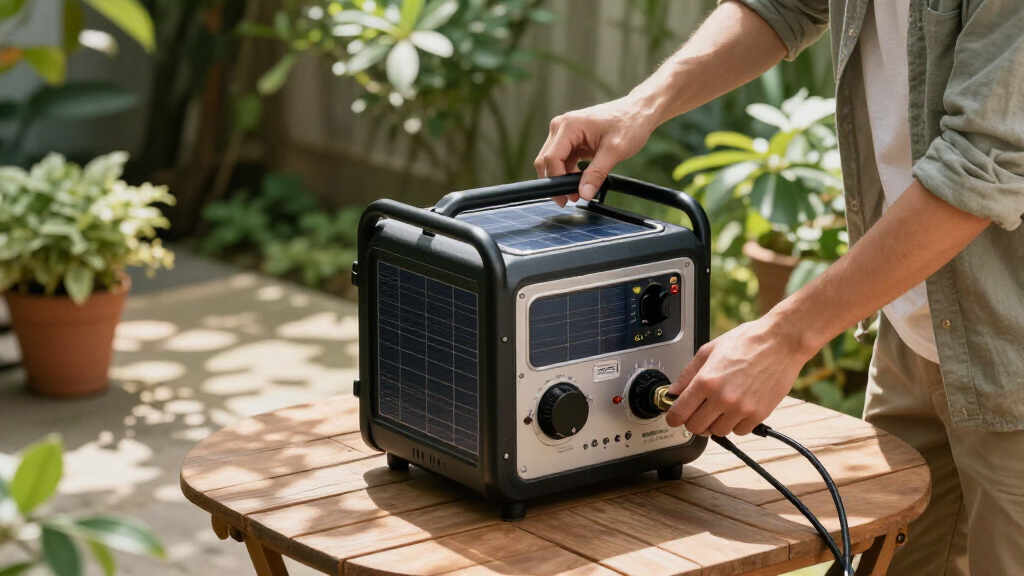
Solar-powered backup generators pair a battery station with solar panels so you can keep essentials running during outages or off-grid trips without gas, fumes, or engine noise. My top pick is the Growatt Helios 3600, which balances a 3600Wh capacity, fast solar charging, and a price well below full home-battery systems. The Jackery HomePower 3600 Plus stands out if you want expandability up to 21kWh for serious home backup, while the MARBERO 237Wh kit is the budget-friendly entry point for camping and short outages. The main tradeoff in this category is capacity versus cost and portability: big units run refrigerators and medical devices but cost thousands and need panel space, while small units are easy to carry but only cover phones, lights, and laptops. Keep reading for the full breakdown of all 13 models.

Get backup power and energy gear delivered free with Prime
- Fast, free delivery on millions of items
- Prime Video, Amazon Music and more included
- Member-only deals all year
Complete the kit


Key Takeaways
- The mid-size 3600Wh class (Growatt Helios 3600, Jackery HomePower 3600 Plus, BLUETTI Elite 400) delivered the best cost-per-watt-hour in the lineup, roughly half the price per Wh of small 300W kits.
- Built-in solar panels (BROWEY 1600W and Blavor 1600W) are convenient but charge far slower than separate panel kits — expect 40W of built-in input versus 400W+ from bundled panel sets.
- LiFePO4 chemistry is now standard across nearly every pick here, so cycle life (3000+ cycles) is no longer a differentiator — solar input speed and inverter wattage are.
- Units under 300Wh (Jackery 300, MARBERO, 300W kits) cannot run refrigerators or most home appliances; they suit phones, lights, CPAP, and laptops only.
- Expandability separates the serious home-backup contenders: only the Jackery HomePower 3600 Plus (up to 21kWh) and OSCAL PowerMax offer a genuine path from emergency use to whole-home coverage.
| BROWEY 1600W Portable Power Station with 1024Wh LiFePO4 Battery and Built-in Solar Panel |  | Best All-in-One Design | Power Output: 1600W (3200W peak) | Capacity: 1024Wh | Battery Type: LiFePO4 | VIEW LATEST PRICE | See Our Full Breakdown |
| OSCAL PowerMax 6000 Solar Generator with 3×400W Solar Panels |  | Best Whole-Home Backup | Capacity: 3600Wh | Rated Power: 6000W (9000W peak) | Battery Type: LiFePO4 (up to 3500 cycles) | VIEW LATEST PRICE | See Our Full Breakdown |
| Growatt Helios 3600 Portable Power Station, 3600Wh LFP Solar Generator |  | Best Expandable System | Battery Capacity: 3600Wh (expandable to 36kWh) | Power Output: 3600W | Battery Type: LFP, 4000 cycles to 80% capacity | VIEW LATEST PRICE | See Our Full Breakdown |
| Portable Solar Generator 300W with 40W Solar Panel |  | Best Budget Starter Kit | Wattage: 300W | Battery Capacity: 220Wh (60,000mAh) | Output Ports: 2 AC, 2 USB-C PD, 3 USB-A, 1 DC carport | VIEW LATEST PRICE | See Our Full Breakdown |
| BROWEY 1600W Portable Power Station with 1024Wh LiFePO4 Battery and Built-in Solar Panel |  | Best for Off-Grid Weekends | Capacity: 1024Wh | Power Output: 1600W (3200W peak), pure sine wave | Battery Type: LiFePO4 | VIEW LATEST PRICE | See Our Full Breakdown |
| Jackery Solar Generator 300 with 40W Solar Panel |  | Best Ultralight Pick | Capacity: 292Wh | Output: 300W (600W peak) | Weight: 7.5 lbs | VIEW LATEST PRICE | See Our Full Breakdown |
| Jackery HomePower 3600 Plus Portable Power Station |  | Best Expandable Home Backup | Capacity: 3584Wh (expandable to 21kWh) | AC Output: 3600W | Voltage: 120V & 240V in parallel | VIEW LATEST PRICE | See Our Full Breakdown |
| MARBERO 237Wh Portable Solar Generator with Foldable 60W Solar Panel |  | Best Budget Starter Kit | Battery Capacity: 237Wh / 64,000mAh | Output Power: 300W (375W peak) | AC Outlets: 2 (pure sine wave) | VIEW LATEST PRICE | See Our Full Breakdown |
| BLUETTI Solar Generator Elite 400 with 2x200W Solar Panels |  | Best Complete Home Backup Kit | Capacity: 3840Wh | Power Output: 2600W (3900W surge) | Solar Panels Included: 2 x 200W | VIEW LATEST PRICE | See Our Full Breakdown |
| Jackery Solar Generator 1000 V2 with 200W Solar Panel |  | Best Mid-Size All-Rounder | Capacity: 1070Wh | AC Output: 1500W running / 3000W starting | Voltage: 120V, 60Hz | VIEW LATEST PRICE | See Our Full Breakdown |
| Jackery Explorer 300 Portable Power Station, 292Wh |  | Best Ultralight Pick | Weight: 7.5 lbs | Capacity: 292Wh | AC Outlets: 2 | VIEW LATEST PRICE | See Our Full Breakdown |
| Blavor 1600W Solar Generator with 1024Wh Capacity and Built-In 40W Panel |  | Best Built-In Solar Convenience | Capacity: 1024Wh | Rated Output: 1600W | Peak Power: 3200W | VIEW LATEST PRICE | See Our Full Breakdown |
| Portable Solar Generator 300W with 60W Solar Panel | 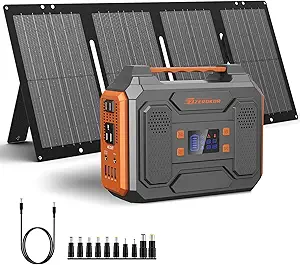 | Best Budget Complete Kit | Power Output: 300W | Solar Panel: 60W foldable monocrystalline | Conversion Efficiency: 20.5% | VIEW LATEST PRICE | See Our Full Breakdown |
| solar-powered backup generator | Capacity |
|---|---|
| BROWEY 1600W Portable Power St | 1024Wh |
| OSCAL PowerMax 6000 Solar Gene | 3600Wh |
| Growatt Helios 3600 Portable P | — |
| Portable Solar Generator 300W | — |
| BROWEY 1600W Portable Power St | 1024Wh |
| Jackery Solar Generator 300 wi | 292Wh |
| Jackery HomePower 3600 Plus Po | 3584Wh (expandable to 21kWh) |
| MARBERO 237Wh Portable Solar G | — |
| BLUETTI Solar Generator Elite | 3840Wh |
| Jackery Solar Generator 1000 V | 1070Wh |
| Jackery Explorer 300 Portable | 292Wh |
| Blavor 1600W Solar Generator w | 1024Wh |
| Portable Solar Generator 300W | — |
More Details on Our Top Picks
BROWEY 1600W Portable Power Station with 1024Wh LiFePO4 Battery and Built-in Solar Panel
What makes this BROWEY unit stand out is that the solar panel is built in — no separate panels to carry, no cables to untangle. Compared with the Jackery Solar Generator 1000 V2, which requires you to set up an external 200W panel every time you want sunlight charging, this one is genuinely grab-and-go. The 1024Wh LiFePO4 battery is enough to run a mini-fridge overnight or keep a campsite’s phones, lights, and laptops alive for a weekend, and the 100W USB-C PD port means modern laptops charge at full speed without an adapter. The tradeoff is capacity versus portability: at this weight, it is a car-to-campsite carry, not a backpack item, and buyers who need whole-home outage coverage should look at the OSCAL PowerMax 6000 instead.
Pros:- Built-in solar panel with MPPT controller eliminates separate panel setup and storage
- 1024Wh LiFePO4 battery rated for far more cycles than standard lithium-ion
- 8 ports including 100W USB-C PD for fast laptop charging
- Pure sine wave output safe for sensitive electronics
- Award-winning compact design for its capacity class
Cons:- Heavy enough that portability is limited to short carries
- Built-in panel charges slower than a dedicated 200W+ folding panel array
- Priced higher than competitors with similar capacity and no integrated panel
Best for: Campers and RV owners who want a single self-contained unit with no separate solar panels to manage
Not ideal for: Homeowners preparing for multi-day outages — 1024Wh won’t carry a refrigerator, lights, and devices through extended blackouts
- Power Output:1600W (3200W peak)
- Capacity:1024Wh
- Battery Type:LiFePO4
- Charging Time:3 hours to 80%
- Ports:8 (AC/DC/USB-C PD 100W)
- Solar Panel:Built-in with MPPT controller
Our verdict“This pick makes the most sense for campers and van-lifers who value a one-piece solar solution over maximum charging speed.”
OSCAL PowerMax 6000 Solar Generator with 3×400W Solar Panels
The OSCAL PowerMax 6000 is the option in this lineup that behaves like a real standby power system rather than a big camping battery. Its automatic switchover kicks in during an outage without you touching anything, and with 3600Wh of capacity plus 6000W of output across both 120V and 240V, it can run a well pump, a furnace blower, or a window AC unit — loads that would instantly trip the Growatt Helios 3600‘s lower inverter ceiling or be outright impossible for the BROWEY 1600W. The bundled 3×400W solar panels can push 2400W of input, which means meaningful daytime recharge during an extended grid-down scenario. The cost of that capability is weight and price: this is a unit you position once, not one you shuttle to campsites.
Pros:- 6000W output with 120V/240V dual voltage handles heavy appliances like well pumps and AC units
- Automatic switchover functions like a true standby generator during outages
- 2400W solar input recharges meaningfully even mid-outage
- LiFePO4 battery rated for up to 3500 cycles with app-based monitoring
Cons:- Very heavy and bulky — effectively stationary once placed
- Premium price reflects capability many casual buyers won’t use
- Moving and positioning three large solar panels requires yard space and planning
Best for: Homeowners in outage-prone areas who want automatic, whole-circuit backup that recharges itself with solar during multi-day blackouts
Not ideal for: Campers and road-trippers — it’s far too heavy and bulky for anything but stationary home installation
- Capacity:3600Wh
- Rated Power:6000W (9000W peak)
- Battery Type:LiFePO4 (up to 3500 cycles)
- Charging Time:1.44–1.96 hours
- Input Power:2200W AC / 2400W solar
- Outlets:4 AC outlets, 120V/240V dual voltage
- Included Panels:3×400W solar panels
- App Control:Yes
Our verdict“This model is better suited to serious home backup than anything portable — buy it if outages at your house are a when, not an if.”
Growatt Helios 3600 Portable Power Station, 3600Wh LFP Solar Generator
The Growatt Helios 3600 earns its spot for one reason above all: expandability up to 36kWh. The OSCAL PowerMax 6000 beats it on raw inverter output, and the Jackery HomePower 3600 Plus is a close peer at 21kWh expansion, but nothing else in this roundup scales to genuinely running a household off-grid. That makes this the pick for buyers who want to start with one unit and grow rather than pay for everything up front. Its 4000-cycle LFP battery and -22°F operating range also make it the most cold-weather-capable option here, a real advantage for cabin owners in northern climates. The tradeoffs: setup of an expanded system takes some technical comfort, and at 3600W output it can’t drive the 240V heavy appliances the OSCAL can.
Pros:- Expandable up to 36kWh — the largest growth path in this roundup
- 4000-cycle LFP battery with 80% capacity retention over its life
- Operates down to -22°F, outperforming rivals in cold climates
- Fast charging: 2.8 hours via solar, 1.5 hours at 240V AC
Cons:- 3600W output can’t run 240V appliances the way the OSCAL PowerMax can
- Highest long-term cost if you actually expand to full capacity
- Expanded configurations demand more setup knowledge than a single-box solution
Best for: Off-grid cabin owners and buyers who want to start with 3600Wh and expand toward whole-house capacity over time
Not ideal for: Buyers who just want a plug-and-play emergency box — expansion setup requires wiring decisions and technical patience
- Battery Capacity:3600Wh (expandable to 36kWh)
- Power Output:3600W
- Battery Type:LFP, 4000 cycles to 80% capacity
- Solar Charging Time:2.8 hours
- AC Charging Time:3 hours at 120V / 1.5 hours at 240V
- Operating Temperature:-22°F and up
Our verdict“Buy this if your endgame is a scalable off-grid system rather than a one-time backup purchase; skip it if you want simple, single-box plug-and-play.”
Portable Solar Generator 300W with 40W Solar Panel
At roughly the price of a nice cooler, this 300W kit is the cheapest way to find out whether solar backup is for you. The 220Wh capacity and included 40W panel mirror the more recognizable Jackery Solar Generator 300 and MARBERO 237Wh kit, but this one undercuts them on price while adding a genuinely useful LED floodlight — a feature that matters more than it sounds during a nighttime outage. At 5 pounds, it’s the only option in this roundup you’d actually carry on a trail. Be clear-eyed about limits, though: 300W won’t run a microwave or a fridge, and at full load you get about two hours. Compared with the BROWEY 1600W, it’s a completely different tool — this keeps phones, headlamps, and a drone battery alive, not appliances.
Pros:- Genuinely portable at just 5 pounds — carryable in a backpack
- Eight output ports across AC, USB-C PD, USB-A, and DC for the money
- Included 40W panel makes it a complete solar kit out of the box
- Built-in LED floodlight doubles as an emergency light source
Cons:- Around 2 hours of runtime at full load — capacity disappears fast under real use
- 40W panel takes most of a sunny day to fully recharge the battery
- 300W ceiling rules out nearly all kitchen and heating appliances
Best for: First-time buyers, hikers, and car campers who want to try solar backup cheaply for lights, phones, and small devices
Not ideal for: Anyone expecting appliance backup — 220Wh and 300W can’t touch a refrigerator, CPAP overnight, or power tools
- Wattage:300W
- Battery Capacity:220Wh (60,000mAh)
- Output Ports:2 AC, 2 USB-C PD, 3 USB-A, 1 DC carport
- Solar Input:40W panel included
- Weight:5 lbs
- Dimensions:8.5 × 6.7 × 4.1 inches
Our verdict“A low-risk entry point for small-device solar backup — just go in knowing it powers gear, not appliances.”
BROWEY 1600W Portable Power Station with 1024Wh LiFePO4 Battery and Built-in Solar Panel
Sharing its core platform with the BROWEY 1600W (B0F4D67J3L) earlier in this list, this version targets a slightly different buyer: the person whose priority is sustained weekend autonomy rather than quick grab-and-go convenience. The 1024Wh LiFePO4 battery and 1600W pure sine inverter put it in direct competition with the Blavor 1600W and Jackery Solar Generator 1000 V2, and its edge is the MPPT-equipped built-in panel trickle-charging all day while you’re away from camp. The advanced BMS protection also makes it the safer choice for unattended charging at a cabin or campsite. The honest tradeoff: three hours only gets you to 80%, so a full recharge from empty takes noticeably longer than the Growatt Helios‘s fast-charge options, and the integrated panel can’t match a dedicated 200W folding array for speed.
Pros:- Built-in solar panel keeps the battery topped up without any user effort
- LiFePO4 chemistry with advanced BMS suits unattended, long-term use
- 1024Wh capacity comfortably covers a weekend of moderate device loads
- 100W USB-C PD plus 8 total ports handles mixed device charging
Cons:- Full recharge from empty is slow — 3 hours only reaches 80%
- Heavy and bulky for frequent repositioning between locations
- Carries a premium price for features buyers with external panels may not need
Best for: Cabin owners and weekend off-grinders who want a set-it-and-forget-it unit that solar-trickle-charges unattended between visits
Not ideal for: Anyone who needs fast full recharges or plans to move the unit frequently — slow top-off and awkward weight work against both
- Capacity:1024Wh
- Power Output:1600W (3200W peak), pure sine wave
- Battery Type:LiFePO4
- Charging Time:3 hours to 80%
- Ports:8 (AC/DC/USB-C PD 100W)
- Solar Charging:Built-in panel with MPPT controller
- Protection:Advanced BMS safety management
Our verdict“This pick makes the most sense for semi-permanent off-grid setups where slow, unattended solar charging is a feature, not a flaw.”
Jackery Solar Generator 300 with 40W Solar Panel
At 7.5 pounds, this is the lightest genuine power station in the lineup, and that single fact defines who it’s for. The 292Wh capacity covers phones, tablets, drones, and a laptop for a weekend, and the LiFePO4 battery rated past 4,000 cycles means it will survive years of trips, not just one season. Paired with the included 40W panel, full sunlight recharging takes about 7.5 hours to 80%, which is workable for a campsite but sluggish compared to the Jackery Solar Generator 1000 V2, which charges faster and holds nearly four times the energy. The 300W continuous output ceiling is the real limit — no kettles, no induction cooktops, no hair dryers. This pick makes the most sense for weight-obsessed hikers and paddlers who would rather carry spare watts than spare pounds, and who already know their gear stays under 300W.
Pros:- Featherweight 7.5 lb build that genuinely fits in a backpack
- LiFePO4 battery rated for over 4,000 charge cycles
- Versatile outlet selection for charging several devices at once
- Fast solar recovery when paired with a 100W panel
Cons:- 7.5-hour charge time to 80% with the included 40W panel
- 300W continuous output excludes most appliances
- 292Wh capacity runs dry quickly on multi-day trips without sun
Best for: Backpackers, kayak campers, and drone pilots who prioritize pack weight over raw capacity
Not ideal for: Anyone planning to run kitchen appliances or power tools — the 300W ceiling rules out nearly everything with a heating element
- Capacity:292Wh
- Output:300W (600W peak)
- Weight:7.5 lbs
- Charge Time to 80% (40W panel):7.5 hours
- Charge Time to 80% (100W panel):2.8 hours
- Battery Chemistry:LiFePO4
- Charge Cycles:Over 4,000
Our verdict“Buy this if every ounce in your pack counts and your devices stay small; skip it if you ever need to plug in anything that heats or motors.”
Jackery HomePower 3600 Plus Portable Power Station
This is the grown-up option in the lineup: 3584Wh of capacity, a 3600W inverter, and expansion headroom to 21kWh, which is enough to carry a refrigerator, furnace blower, and lights through a multi-day outage. Compared with the BLUETTI Elite 400, the HomePower’s advantage is architecture rather than raw numbers — parallel stacking unlocks 240V output for well pumps and larger appliances, something the BLUETTI can’t replicate. The 6,000-cycle battery with 10-year durability also makes it a long-term home asset rather than camping gear. The tradeoffs are honest ones: at 77.2 pounds, the luggage-style wheels help but don’t erase the weight, and reaching that 21kWh ceiling means buying additional expansion batteries at a cost that stacks up fast. With only two built-in outlets, most buyers will want a heavy-duty power strip from day one.
Pros:- Expands from 3584Wh up to 21kWh as needs and budget grow
- 3600W output with 240V capability when units run in parallel
- 6,000-cycle battery rated for 10 years of service
- Luggage-style design makes a 77-pound unit manageable indoors
Cons:- Only two built-in outlets despite the massive output capacity
- Full 21kWh expansion requires purchasing extra battery units at high cost
- Premium price point puts it out of casual-buyer territory
Best for: Homeowners in outage-prone areas who want a system that starts big and grows to whole-house coverage over time
Not ideal for: Campers and van lifers — the weight and two-outlet layout make it a poor fit for mobile, lightweight use
- Capacity:3584Wh (expandable to 21kWh)
- AC Output:3600W
- Voltage:120V & 240V in parallel
- Number of Outlets:2
- Battery Cycles:6,000 (10-year durability)
- Weight:77.2 lbs
- Dimensions:15.2 x 12.2 x 19.3 inches
Our verdict“The right choice for buyers building a permanent home backup system in stages — overkill for anyone whose needs stop at camping.”
MARBERO 237Wh Portable Solar Generator with Foldable 60W Solar Panel
For first-time buyers, this bundle answers the biggest objection to solar generators — cost — by including both the 237Wh power station and a foldable 60W panel in one affordable package. Compare that to the Jackery Solar Generator 300, whose entry price buys a smaller 40W panel and less total wattage here. The MARBERO offers two pure sine wave AC outlets, four USB ports, and a built-in LED flashlight with SOS mode, which makes it a genuinely useful glovebox or emergency-kit companion. Its 300W output ceiling (375W peak) mirrors the Jackery 300’s limits, but the lithium-ion chemistry behind it will age faster than the Jackery’s LiFePO4 cell — expect fewer years of service, not just fewer cycles. Sunlight dependency is real too: the panel’s 21.5-23.5% conversion efficiency drops sharply under clouds. This option stands out as a low-risk way to learn what you actually need before spending four figures.
Pros:- Complete kit with a 60W foldable panel included at a budget price
- Two pure sine wave AC outlets plus four USB ports on a small unit
- Built-in LED flashlight with SOS mode adds emergency utility
- Panel folds compactly for storage in a car or emergency bin
Cons:- Lithium-ion battery degrades faster than the LiFePO4 cells in rivals like the Jackery 300
- 237Wh capacity exhausts quickly during extended outages
- Panel output drops sharply in anything less than direct sun
Best for: Budget-conscious beginners and emergency-kit builders who want a complete station-plus-panel kit for under the price of a big-brand station alone
Not ideal for: Households preparing for real outages — 237Wh won’t run a fridge even briefly, and the battery chemistry ages faster than LiFePO4 rivals
- Battery Capacity:237Wh / 64,000mAh
- Output Power:300W (375W peak)
- AC Outlets:2 (pure sine wave)
- USB Ports:4 (including USB-C and QC3.0)
- DC Output:12-16.8V / 10A
- Solar Panel Power:60W foldable
- Solar Conversion Rate:21.5-23.5%
Our verdict“A smart, cheap on-ramp to solar power for device-level needs — just don’t mistake it for genuine home backup.”
BLUETTI Solar Generator Elite 400 with 2x200W Solar Panels
Where the Jackery HomePower 3600 Plus sells you a powerful station and expects you to buy panels and expansion separately, the BLUETTI Elite 400 arrives as a finished system: 3840Wh of capacity, a 2600W inverter with 3900W surge, and two 200W panels in the box. That bundle logic is the whole pitch — unbox it, wheel it into place on the included trolley, and you have outage coverage for refrigeration, medical devices, and small appliances without shopping for anything else. The 15ms switchover time means sensitive electronics like routers and CPAP machines ride through outages without rebooting. The compromises sit at the edges: 400W of solar takes 9.5 to 19 hours for a full recharge depending on conditions, so a drained battery may not recover before the next outage, and the whole assembly is heavy despite the trolley. Nine ports, though, fix the two-outlet problem that plagues the Jackery HomePower.
Pros:- Two 200W solar panels included, so the system works out of the box
- 3840Wh capacity and 2600W output handle refrigerators and power tools
- 15ms switchover keeps computers and medical devices running through outages
- Nine ports eliminate the need for extra power strips
Cons:- Full solar recharge takes 9.5-19 hours depending on sunlight
- Heavy unit even with the included rolling trolley
- Cannot expand capacity the way the Jackery HomePower 3600 Plus can
Best for: Buyers who want one purchase to deliver a ready-to-run home backup system with panels included — no add-on shopping required
Not ideal for: Frequent movers and campers — the weight and slow solar recharge make it better as a stationary home asset than mobile gear
- Capacity:3840Wh
- Power Output:2600W (3900W surge)
- Solar Panels Included:2 x 200W
- Recharge Time (0-100%):9.5-19 hours via solar
- Ports:9
- Switchover Time:15ms
- Transport:Included mobile trolley
Our verdict“The strongest one-and-done purchase in the roundup for home outage preparedness, provided you accept slow solar recharging between events.”
Jackery Solar Generator 1000 V2 with 200W Solar Panel
This is the sweet-spot pick between the tiny Jackery 300 and the home-scale BLUETTI Elite 400: 1070Wh of capacity and a 1500W inverter with 3000W starting watts, which is enough to run a portable fridge, a microwave briefly, or a full camp kitchen’s worth of small appliances. At 23.8 pounds with a foldable handle, it’s one of the few units in this roundup that genuinely works as both a home emergency unit and car-camping gear. The bundled 200W panel gives it a real solar recovery path that the MARBERO’s 60W panel can’t match in speed. Two friction points deserve attention: the advertised 1-hour fast charge requires manually enabling an emergency charging mode, which is easy to miss, and running flat-out at 1500W drains the battery in roughly two hours. Panel and station also ship separately, so don’t panic when one box arrives alone.
Pros:- 1500W output with 3000W starting watts handles motor-driven appliances
- 23.8 lb weight with foldable handle makes it truly dual-use for camping and home
- Included 200W panel provides meaningful solar recharging, not just a trickle
- Battery chemistry rated for over 10 years of regular use
Cons:- 1-hour fast charge only works after manually enabling emergency charging mode
- Roughly 2-hour runtime at full 1500W load
- Panel and station ship in separate boxes, which complicates delivery and setup
Best for: Weekend campers and small households who want fridge-and-appliance power in a unit that’s still car-portable
Not ideal for: Buyers expecting whole-home outage coverage — 1070Wh disappears quickly against a refrigerator plus lights plus devices
- Capacity:1070Wh
- AC Output:1500W running / 3000W starting
- Voltage:120V, 60Hz
- Solar Panel Included:200W
- Total Power Outlets:3
- Runtime at Full Load:~2 hours
- Weight:23.8 lbs
- Dimensions:12.87 x 8.82 x 9.72 inches
Our verdict“The best balance of power, portability, and price in the middle of this lineup — buy it if you split your time between campsites and home emergencies.”
Jackery Explorer 300 Portable Power Station, 292Wh
At 7.5 lbs, the Explorer 300 is the lightest option in this entire roundup, and that alone defines who it’s for. Compared with the Blavor 1600W, which trades portability for over three times the capacity, this model prioritizes grab-and-go convenience over raw runtime — think phones, laptops, cameras, and a CPAP overnight, not a mini fridge. The LiFePO4 chemistry rated for 4,000+ cycles means years of weekend trips before meaningful degradation, which cheaper lead-acid-style units can’t match. Pair it with a 100W panel and it reaches 80% in under three hours, though the panel is sold separately — unlike the bundled 300W generator with 60W panel elsewhere in this guide. The 300W output ceiling is the real limit: hair dryers and kettles are off the table. For weight-conscious campers, that tradeoff is an easy one.
Pros:- Featherlight 7.5 lb build, the most portable in this roundup
- Durable LiFePO4 battery rated for 4,000+ charge cycles
- Fast solar charging — 80% in 2.8 hours with a 100W panel
- Versatile port selection including 100W USB-C PD and a car port
Cons:- Solar panel not included, adding to the true cost
- 300W rated output rules out most appliances
Best for: Backpackers, van lifers, and ultralight campers who need reliable device charging without hauling a heavy power station
Not ideal for: Anyone planning home backup or running appliances above 300W — the capacity and output are simply too small
- Weight:7.5 lbs
- Capacity:292Wh
- AC Outlets:2
- USB-C Port:100W PD
- USB-A Ports:2
- Car Port:120W
- Charge Cycles:4000+
- Charge Time (80%), 100W Panel:2.8 hours
Our verdict“Buy this if your priority is carrying power on your back rather than keeping a household running.”
Blavor 1600W Solar Generator with 1024Wh Capacity and Built-In 40W Panel
The Blavor’s party trick is the built-in 40W solar panel — no folding panel to pack, no cables to lose, just set it in the sun and it trickle-charges itself. That makes it more self-contained than the Jackery Explorer 300, which needs a separate panel purchase, and the gap shows in capability: 1024Wh with 1600W of rated output means it can actually run a microwave, a TV, or power tools, not just gadgets. The LiFePO4 battery’s 4,000+ cycle lifespan puts it in the same durability class as pricier units like the Jackery Solar Generator 1000 V2. The catch: the built-in panel is slow on its own, and external solar input caps at 200W — far below what dedicated solar generators like the OSCAL PowerMax 6000 kit can absorb. It also leans heavy for a ‘portable’ station. This pick makes the most sense for buyers who value never being without a charging option over maximum solar speed.
Pros:- Integrated 40W panel means solar charging is always available
- 1024Wh capacity and 1600W output handle real appliances
- 4,000+ cycle LiFePO4 battery for long-term reliability
- Multiple recharge paths: solar, wall outlet, and car
Cons:- External solar input limited to 200W, slowing serious off-grid recharging
- Heavy compared with genuinely portable units like the Explorer 300
- External panel needed for meaningful solar speed costs extra
Best for: Campers and emergency preppers who want meaningful home-backup capacity plus a solar panel that can never be forgotten at home
Not ideal for: Anyone needing fast off-grid recharging — the 200W input ceiling means slow full-solar recovery compared with panel-kit competitors
- Capacity:1024Wh
- Rated Output:1600W
- Peak Power:3200W
- Battery Type:LiFePO4
- Cycle Life:4000+ cycles
- Built-In Solar Panel:40W
- External Solar Input:up to 200W
- USB-C Port:100W fast charge
Our verdict“This is the middle-weight choice for buyers who want appliance-capable backup with solar always on board, as long as slow recharging doesn’t bother them.”
Portable Solar Generator 300W with 60W Solar Panel
Most entry-level solar generators quietly leave the panel out of the price — this one doesn’t. The bundled 60W foldable monocrystalline panel, AC adapter, and car cables arrive in the box, making it the most complete low-cost kit in this roundup and a direct answer to the Jackery Explorer 300, where the panel is a separate expense. The 20.5% conversion efficiency is respectable for this price class, and the built-in SOS flashlight plus five-way protection circuitry add genuine emergency value. But the constraints are real: 300W output means it powers phones, tablets, laptops, and small fans — not the appliances the Blavor 1600W handles easily. The junction box isn’t waterproof, so the panel needs dry storage, and the battery prefers regular cycling to stay healthy. Compared with the similar 300W kit with only a 40W panel, the larger panel here noticeably shortens recharge days in the field.
Pros:- 60W foldable solar panel included, a complete kit at this price
- Multiple outlets: 2 AC, 1 DC, and 4 USB ports with quick charge
- Full safety suite covering short circuit, overload, and overheating
- 20.5% panel efficiency performs well in low light
Cons:- 300W ceiling excludes virtually all high-draw appliances
- Non-waterproof junction box demands careful storage and setup
- Battery health declines if the unit sits unused for long stretches
Best for: First-time buyers and budget-conscious campers who want a working solar setup out of the box without piecemeal purchases
Not ideal for: Households expecting real emergency backup — 300W and modest capacity won’t run refrigerators, heaters, or most kitchen appliances
- Power Output:300W
- Solar Panel:60W foldable monocrystalline
- Conversion Efficiency:20.5%
- Charging Outlets:2 AC, 1 DC, 4 USB
- Recharge Methods:AC, solar, car
- Battery Management System:Yes
- Protection Features:Short circuit, over-current, over-voltage, overload, overheating
- Included Accessories:AC adapter, car charger, solar panel kit, cables
Our verdict“The smartest cheap way to get started with solar power, provided your ambitions stop at devices and small appliances.”

How We Picked
My ranking centers on four factors that actually determine whether a solar generator works when you need it. First, usable capacity and inverter output: a unit needs enough watt-hours to run your essentials for hours, and enough AC output to start them — a refrigerator or microwave demands 1000W+ that small kits simply cannot supply. Second, solar charging speed, measured by total panel wattage and maximum solar input, because a generator that takes two sunny days to refill is far less useful in an extended outage. Third, value per watt-hour, which exposed a clear pattern: small 300Wh kits cost two to three times more per Wh than the 3000Wh+ class, while premium expandable units justify their price only through modular growth.
I also weighed chemistry, portability, and versatility. Every finalist uses LiFePO4 cells, so cycle life was table stakes rather than a ranking driver. Portability mattered for camping-oriented picks, where built-in panels and foldable designs earn their keep, even at the cost of charging speed. Finally, I favored kits that include panels in the box, since buying panels separately often costs more and introduces compatibility headaches. Products are ordered by how well they combine these factors for their intended buyer — whole-home backup first, then mid-size all-rounders, then compact and budget options.
Factors to Consider When Choosing Solar-powered Backup Generators
Before settling on a specific model, it helps to understand the broader patterns I found across this category. These six factors explain most of the price differences between the 13 generators here — and most of the mistakes buyers make.Size Your Capacity to Real Runtime, Not Marketing Numbers
Manufacturers headline watt-hour capacity, but that number only tells you half the story. A 300Wh unit runs a 60W refrigerator-freezer for about four hours, while a 3600Wh unit runs it for two days — the gap between “emergency phone charger” and “actual home backup” sits somewhere around 1000Wh. The most common mistake I see is buying a small kit, then discovering during an outage that it cannot start a compressor-based appliance at all, regardless of runtime math. Write down the wattage of the three or four devices you genuinely need, multiply by the hours you need them, and add 20% for inverter losses. That single calculation will place you in the right size class faster than any spec sheet comparison.
Solar Input Speed Matters More Than Panel Wattage
A bundled 400W panel set only helps if the station can accept that much input — many budget units cap solar input at 100–200W, making big panels partially wasted. Charging speed is what turns a battery box into a true solar generator: a 3600Wh unit accepting 1000W+ of input refills in a long sunny day, while the same battery limited to 200W takes most of a week. Built-in panels are the extreme case; they add grab-and-go convenience but trickle-charge at 40W, which is fine for keeping a small unit topped up and nearly useless for recharging after real use. Check the maximum solar input rating on the station itself, not just the panel wattage in the kit.
Understand What Expandability Actually Costs
Expandable systems like the Jackery HomePower 3600 Plus let you add battery modules later, which sounds like a way to buy now and grow later. That strategy works, but only if you commit to that brand’s ecosystem — expansion batteries only pair with their parent station, and cumulative costs often exceed a single larger unit bought outright. Expansion makes sense when your needs are genuinely uncertain or your budget is spread over time; it wastes money when you already know you need 7kWh+ for home backup. My advice: if you can name the appliances you want to run, buy the right size once. Reserve expandable platforms for buyers who expect their needs to change.
Weight and Portability Are Permanent Tradeoffs
Capacity and portability fight each other directly in this category. The 300Wh kits weigh a few pounds and fit in a backpack; the 3600Wh+ units weigh 40–80 pounds and really want to live on a shelf near your electrical panel or in an RV bay. Mid-size units around 1000Wh sit in an awkward middle — heavy enough that you will not carry them far, light enough that they lack home-backup capacity. Think honestly about whether the unit moves: a stationary home backup unit justifies every pound, while a camping unit above 20 pounds tends to get left behind. Wheels and handles help, but they do not change the physics.
Match the Battery Chemistry to How Long You Will Own It
Nearly every unit in this roundup uses LiFePO4 chemistry, rated for 3000+ charge cycles — roughly a decade of daily cycling. That makes cycle life a non-issue for most buyers, but storage behavior still differs. LiFePO4 cells hold charge well over months of sitting idle, which suits emergency backup perfectly, though a yearly top-up is still good practice. The real remaining difference is weight and temperature tolerance: LiFePO4 is heavier per Wh than older NMC chemistry and charges poorly below freezing, so buyers in cold climates should keep the unit indoors or verify low-temperature charging protection. Do not pay extra for cycle-life claims at this point; treat 3000 cycles as the baseline.
Avoid the False Economy of Ultra-Cheap Kits
The cheapest kits in this lineup cost under $150, and they genuinely work — for phones, LED lights, and a laptop. The problem is what happens when expectations exceed design: buyers plug in a fridge, trip the inverter, and blame the product. Cheap kits also tend to cut corners where you cannot see them, with slower charging, shorter warranties, and inverters that sag under sustained loads. If your budget is tight, the smarter move is a reputable small unit (the Jackery or MARBERO class) rather than an unbranded 300W kit, because support and warranty service are what you pay the extra $30–50 for. Reserve true budget hunting for accessories like extra panels, not the station itself.
Frequently Asked Questions
Can a solar generator actually run my refrigerator during an outage?
It depends on both capacity and inverter output, and most small kits fail on the second count. A typical refrigerator needs 100–200W to run but can briefly draw 600–1000W at compressor startup, which overwhelms any station rated under roughly 800W of AC output. Among the models here, the Growatt Helios 3600, Jackery HomePower 3600 Plus, OSCAL PowerMax 6000, BLUETTI Elite 400, and the 1600W-class units handle this comfortably; the 300Wh kits do not. For runtime, expect roughly 12–24 hours per 1000Wh of capacity for an efficient fridge, so a 3600Wh unit covers a full day or more before needing sun. If refrigeration is your main goal, do not buy anything under 1000Wh with under 1000W of inverter output.
Are built-in solar panels better than separate panel kits?
Built-in panels win on convenience and lose on everything else. A built-in 40W panel trickle-charges the battery over many hours or days, which is fine for keeping a unit topped off between uses but cannot meaningfully recharge it after an outage drains it. Separate panel kits — like the 400W or 600W bundles in this lineup — refill a station in a single sunny day, which is the difference between one use and sustained backup power. The practical compromise: built-in panels suit campers and occasional users who mostly recharge from a wall outlet, while anyone buying for emergency preparedness should prioritize a high-wattage separate kit and a station with high solar input acceptance.
How long do these batteries last if I only use them during emergencies?
Longer than most people expect, which is good news for backup buyers. LiFePO4 cells — standard across nearly every model here — are rated for 3000+ full cycles, and calendar aging is slow when the unit sits at partial charge. The bigger risks are neglect-related: leaving the station at 0% for months can degrade cells, and charging below freezing damages them if the unit lacks low-temperature protection. A simple routine of checking charge level every few months and topping up to 50–80% keeps the battery healthy for a decade or more. Treat the 3000-cycle rating as insurance you will probably never fully use, and focus your comparison on features you interact with daily instead.
Is it worth paying for an expandable system if I only need backup now?
Only if your needs are genuinely likely to grow — otherwise expansion is a trap for your wallet. Expansion batteries lock you into one brand’s ecosystem, often cost more per added watt-hour than buying a larger standalone unit, and require storing bulky modules you may never use. The case for expansion is real for two groups: homeowners phasing in whole-home backup across multiple budgets, and RV owners whose power needs change with the seasons. If you already know your appliance list and runtime target, buying the correctly sized single unit — like the Growatt Helios 3600 instead of a smaller expandable platform — almost always costs less. Expansion is a hedge against uncertainty, and hedges have a price.
What can I realistically run on a 300Wh portable generator?
Think small and low-draw: phones, tablets, LED lights, a laptop, a fan, a router, and most CPAP machines (a genuine lifesaver for many buyers, since a 300Wh unit runs a CPAP for two to three nights). What you cannot run is anything with a heating element or compressor — no microwave, no electric kettle, no hair dryer, no refrigerator. The 300Wh class earns its place as a car-camping and device-backup tool, not a home backup solution, and buyers who expect otherwise are the ones leaving disappointed reviews. If your emergency plan includes any kitchen appliance or medical device beyond a CPAP, step up to at least the 1000Wh class like the Jackery 1000 V2.
Conclusion
The right pick here depends less on specs and more on what you are actually backing up. For most buyers, the Growatt Helios 3600 is my best overall choice: it delivers true home-backup capacity, fast solar recharging, and appliance-grade inverter output at a price the smaller kits cannot match on cost-per-watt-hour. If budget leads the decision, the MARBERO 237Wh kit is the best value for campers and short outages, while the Jackery Solar Generator 1000 V2 is the value play for buyers who want fridge-capable backup without the 3600Wh price tag. On the premium end, the Jackery HomePower 3600 Plus is the clear choice — its expandability to 21kWh is the only genuine path in this lineup from emergency backup toward whole-home coverage, and the OSCAL PowerMax 6000 offers the largest out-of-box capacity for buyers who want maximum storage on day one. Beginners should start with the Jackery Solar Generator 300 or the 300W kits with bundled panels, which teach the solar workflow cheaply. For specific needs: CPAP users and van lifers get the best fit from the 300–1000Wh class, RV owners from the Helios or HomePower, and anyone wanting grab-and-go convenience from the BROWEY or Blavor built-in panel units. Whatever you choose, match the capacity to your actual appliance list first — that single step prevents the most common and expensive mistake in this category.
Halloween Picks

9 ft Halloween Inflatable Haunted Castle with Dragon and Ghost

8.5 Foot Halloween Inflatable Haunted House Castle with Skeleton, Ghost & Skulls

Pumpkin Halloween Fog Machine with 12-Color LED Lights, Bluetooth Speaker, and Remote
As an affiliate, we earn on qualifying purchases.