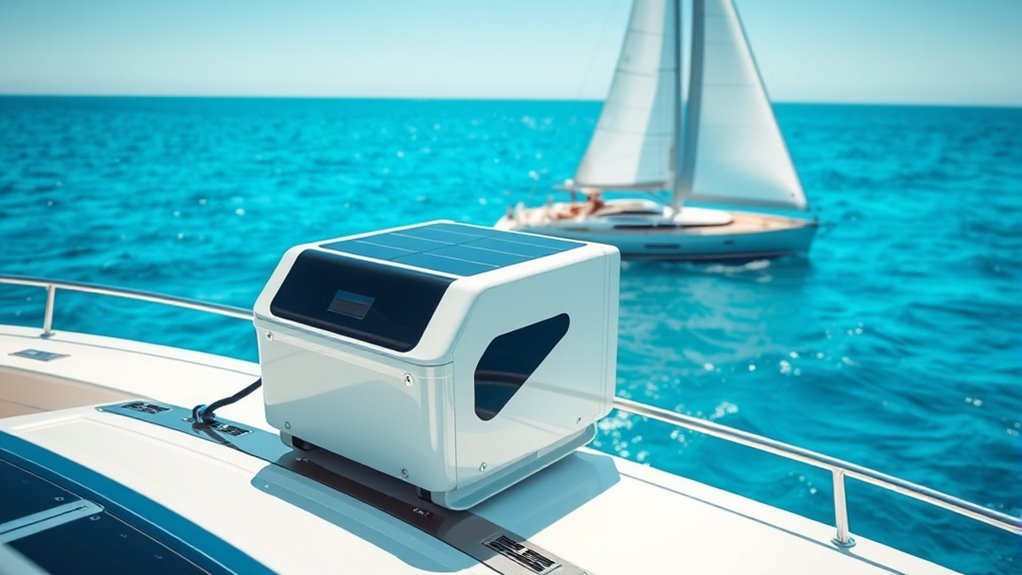
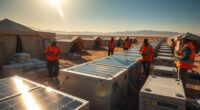
Solar generators for boating and marine use provide a clean, reliable power source that keeps your boat’s electronics, lights, and appliances running smoothly. They’re eco-friendly, reducing noise and pollution compared to fuel-based options, and are designed to withstand saltwater, humidity, and vibration. Portable solar panels and durable marine batteries ensure you get consistent energy even on cloudy days or at night. Want to discover how to optimize your marine solar setup? Keep exploring to find out more.
Key Takeaways
- Marine solar generators provide clean, reliable power for electronics, lights, and small appliances on boats.
- They utilize durable, saltwater-resistant batteries designed for deep cycling and extended use at sea.
- Flexible and rigid solar panels maximize sunlight absorption while being waterproof and UV-resistant.
- Proper installation involves positioning panels on high, unobstructed surfaces with charge controllers to prevent overcharging.
- These systems reduce noise, pollution, and refueling needs, offering eco-friendly, portable energy solutions for boating.

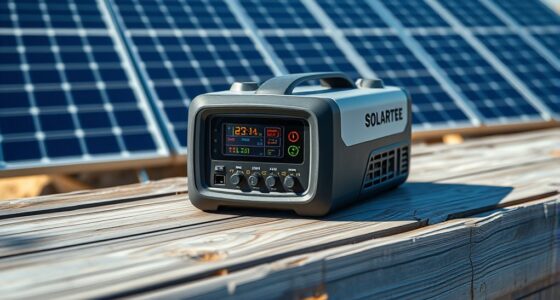
If you’re looking for a clean and reliable power source for your boat, solar generators offer an excellent solution. They provide a sustainable way to keep your marine electronics, lights, and small appliances running without relying on traditional fuel-based options. At the core of these systems is a marine battery, designed specifically to withstand the vibrations, humidity, and saltwater exposure common in marine environments. A high-quality marine battery ensures your solar generator delivers consistent power, holds a charge longer, and remains durable over time. When paired with a well-designed solar panel, it forms a reliable setup that can harness the sun’s energy efficiently.
Solar panels are the backbone of any marine solar generator system. They come in various sizes and efficiencies, but for boating, you want something lightweight, durable, and capable of withstanding harsh conditions. Flexible solar panels are popular because they can conform to the shape of your boat’s surfaces, while rigid panels tend to be more efficient at converting sunlight into electricity. Whichever type you choose, ensure it’s rated for marine use—waterproof, UV-resistant, and built to handle wind and wave exposure. The right solar panel will maximize sunlight absorption and generate enough power during daylight hours to recharge your marine battery and keep your devices running.
Choose lightweight, durable marine-rated solar panels—flexible or rigid—to maximize sunlight and withstand harsh conditions at sea.
Installing a solar generator on your boat is straightforward, but paying attention to placement matters. Position your solar panels where they’ll receive unobstructed sunlight, ideally on the boat’s highest, clearest surfaces. A portable solar generator system often includes a solar panel that you can position independently, which adds flexibility—especially when you want to optimize sun exposure or store the panel away when not in use. Connecting the solar panel to your marine battery involves a charge controller, which regulates the voltage and prevents overcharging, extending the lifespan of your battery. This setup ensures your power supply remains stable and safe.
One of the key advantages of using a solar generator on your boat is that it reduces dependency on noisy, polluting generators or the need for constant refueling. Since marine batteries are built to handle deep cycles, they can store enough energy during sunny periods to power your essential electronics at night or during cloudy weather. This not only saves money but also minimizes environmental impact. Plus, with portable options, you can take your solar generator system ashore or move it around your boat to optimize energy collection. Additionally, AI-driven data analytics can be employed to monitor and optimize your power usage in real-time, ensuring maximum efficiency. Overall, combining a sturdy marine battery with efficient solar panels creates a dependable, eco-friendly power solution tailored for marine adventures.
Frequently Asked Questions
How Long Do Marine Solar Generators Typically Last?
Marine solar generators usually last around 5 to 10 years, depending on your battery lifespan and maintenance. You’ll want to keep an eye on the battery’s health and perform regular maintenance to extend its life. Proper care, such as keeping the system clean and avoiding deep discharges, helps maximize longevity. With good maintenance, your marine solar generator can serve you reliably for many years on the water.
Are Marine Solar Generators Resistant to Saltwater Corrosion?
You’ll be pleased to know that many marine solar generators boast impressive saltwater durability, with some designed to withstand harsh marine environments for over 10 years. Their corrosion resistance is a key feature, protecting crucial components from saltwater damage. This resilience ensures your generator stays reliable, even in salty conditions. So, when you’re out on the water, you can trust your marine solar generator to perform without worry about saltwater corrosion.
Can Solar Generators Power Large Marine Appliances Simultaneously?
Yes, solar generators can power large marine appliances simultaneously if they have enough power capacity. You’ll want to check their wattage ratings to guarantee they meet your needs. Also, consider their charging options; many models support multiple inputs like solar panels and AC outlets. This flexibility helps you keep your appliances running smoothly even during extended trips. Just match your appliances’ energy demands with the generator’s capacity for peak performance.
What Safety Precautions Are Needed for Marine Solar Generator Use?
Think of your marine solar generator as a trusted crew member—treat it with care. To stay safe, regularly check battery maintenance, ensuring connections are tight and clean to prevent hazards. Always wear safety gear like gloves and goggles when handling batteries or wiring. Keep a fire extinguisher nearby, and avoid overloading the system. Following these precautions helps keep your voyage smooth and safe, like sailing on calm waters.
How Do Marine Solar Generators Perform in Cloudy or Stormy Weather?
In cloudy or stormy weather, your marine solar generator’s performance decreases because less sunlight reaches the panels. However, good-quality models offer storm resilience, meaning they can handle variable conditions better. You should expect reduced power output during cloudy weather, but many systems store energy for later use. To guarantee reliable power, consider models with larger capacity or backup options, and always monitor weather forecasts to optimize your generator’s efficiency.
Conclusion
With solar generators, you can enjoy extended boating trips without worrying about running out of power. They’re eco-friendly, quiet, and easy to use, making your marine adventures safer and more enjoyable. Some might think they’re not powerful enough, but modern solar generators can handle most essential devices. Embrace this clean energy solution and experience the freedom of reliable, silent power on the water—without the hassle of fuel or noise.