
Using a solar generator with a large battery helps you cut costs by reducing reliance on the grid during peak hours. It allows you to store excess solar energy, power multiple devices, and avoid high rates, giving you greater control over your energy bills. This approach also enhances your independence from fluctuating grid prices and outages. Keep exploring to discover how optimizing your system can maximize savings and environmental benefits.
Key Takeaways
- Solar generators store excess solar energy to reduce reliance on grid power during peak hours, lowering bills.
- They enable peak shaving by supplying power during high-cost periods, minimizing electricity charges.
- Larger battery capacity allows for powering multiple devices and essential appliances simultaneously during peak times.
- Integrating high-quality inverters and optimized energy management enhances efficiency and cost savings.
- Achieving grid independence with solar generators reduces exposure to fluctuating grid rates and peak demand charges.
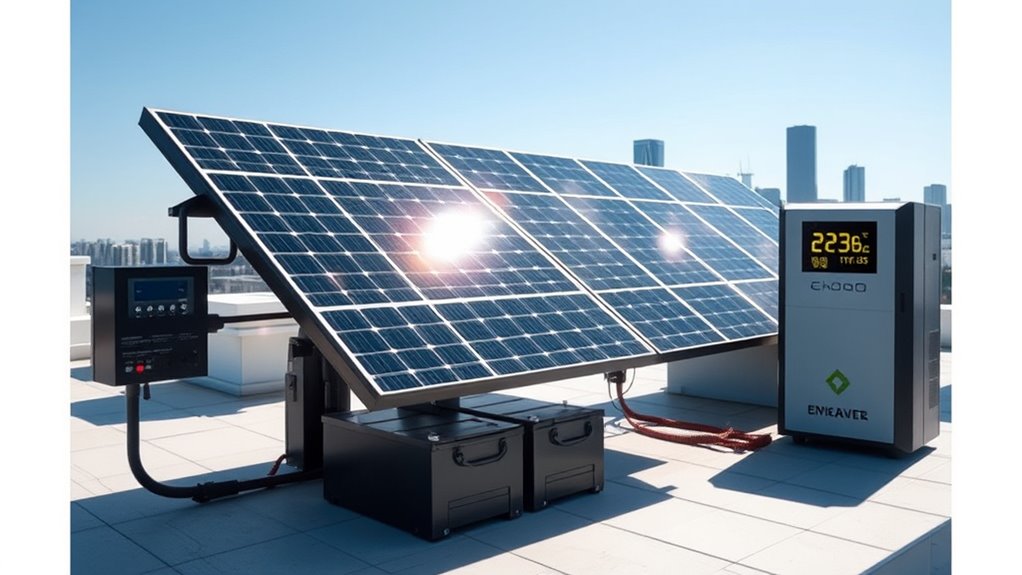
As energy demands spike during peak hours, solar generators offer an effective way to reduce your reliance on the grid. During these times, electricity prices often soar due to increased consumption, making it expensive to power your home or business. By leveraging a solar generator, you can store excess solar energy generated earlier in the day and use it when demand—and costs—are at their highest. This approach not only helps cut your electricity bills but also provides a reliable backup during outages.
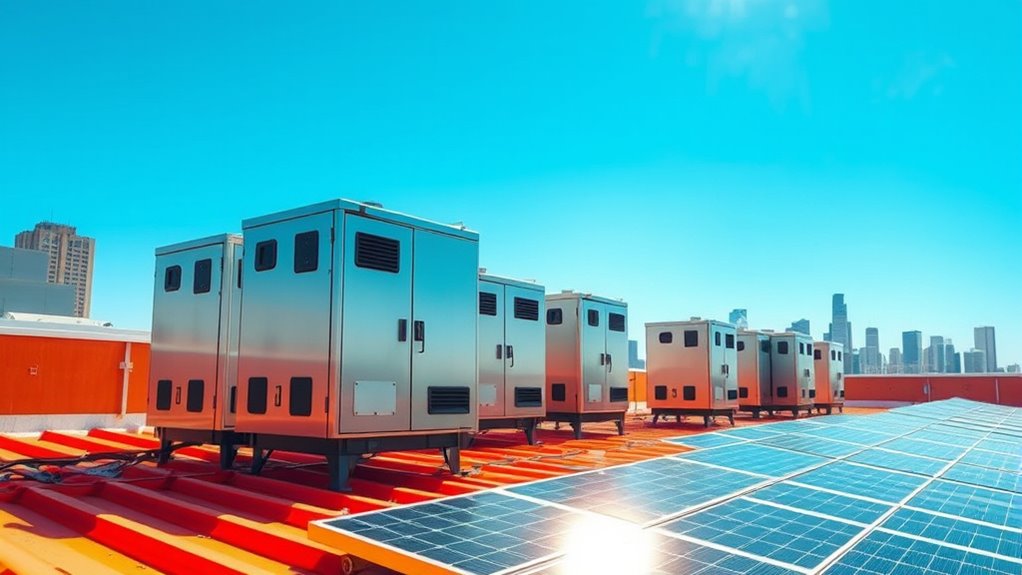
Using solar generators during peak hours reduces reliance on the grid and cuts energy costs.
One key factor to contemplate is battery capacity. A solar generator with a larger battery capacity allows you to store more energy, giving you greater flexibility to cover your needs during peak hours. If your battery capacity is limited, you might only be able to power essential appliances or a few circuits, which can still lead to savings but might not fully maximize your peak shaving potential. Conversely, a high-capacity battery ensures you have enough stored energy to operate multiple devices simultaneously, reducing your dependence on grid power when costs are highest. This increased battery capacity becomes especially valuable if you experience frequent peak demand periods or want to ensure backup power during emergencies.
Grid independence is another significant advantage of using solar generators for peak shaving. When you store solar energy in your batteries, you gain more control over your electricity consumption and costs. You won’t need to rely solely on the grid, which is often subject to fluctuating rates and outages. This independence means you can avoid the high charges during peak hours altogether and continue to power your home seamlessly. Over time, this can lead to substantial savings and a reduced carbon footprint, especially if your solar generator is paired with a robust solar panel system.
Furthermore, integrating solar generators into your energy setup encourages more sustainable behavior. You become less subject to the whims of utility companies and their variable rates, and you contribute to lowering overall demand on the grid. This is especially beneficial during times of stress on the electrical system, helping to improve grid stability. As you optimize your energy management—by scheduling the use of stored energy during peak times—you not only save money but also promote a cleaner, more resilient energy future. Additionally, understanding the importance of high-quality inverter technology can significantly impact your system’s efficiency and reliability.
Frequently Asked Questions
How Long Do Solar Generators Typically Last?
Your solar generator typically lasts between 8 to 15 years, depending on usage and quality. The battery lifespan is a key factor, often lasting around 5 to 10 years with proper care. Check the warranty coverage, which usually offers 2 to 5 years of protection. To maximize your investment, follow manufacturer guidelines for charging and storage, ensuring your solar generator provides reliable power for years to come.
Can Solar Generators Power an Entire Home?
You can power your entire home with a solar generator if its capacity matches your home energy requirements, but it’s a tall order. Solar generators typically have limited capacity, so they’re better suited for backup or essential loads. To truly go off-grid, you’ll need a large system or multiple units. Don’t put all your eggs in one basket—plan carefully to guarantee your solar generator can handle your energy needs.
Are Solar Generators Effective During Cloudy Days?
On cloudy days, solar generators are less effective because their performance drops due to reduced sunlight. You’ll notice decreased efficiency because they rely on direct sunlight to generate power. However, many models include batteries that store energy for use during such days, helping you maintain power. While they don’t perform as well in overcast conditions, they still provide some energy, making them a useful backup during less sunny weather.
What Is the Environmental Impact of Using Solar Generators?
Using solar generators has a positive environmental impact because they produce clean energy, reducing reliance on fossil fuels. However, you should consider recyclability concerns, as some components may be difficult to recycle, and the manufacturing environmental footprint can be significant. Still, overall, solar generators help lower greenhouse gas emissions, making them a greener choice, especially when properly disposed of or recycled at the end of their lifespan.
How Much Maintenance Do Solar Generators Require?
You’ll find solar generators require minimal maintenance, which is quite different from traditional systems with frequent upkeep. Typically, you should check the battery lifespan and clean the solar panels every few months to keep them efficient. Unlike complex machinery, solar generators don’t need much attention, making them a reliable, low-maintenance choice for your energy needs. Regular inspections ensure peak performance and extend the overall lifespan of your system.
Conclusion
By using solar generators for peak shaving, you can cut your electricity bills considerably. Did you know that households that implement peak shaving techniques save up to 30% on energy costs? With solar power, you not only reduce reliance on the grid during high-demand times but also contribute to a greener environment. Embracing this technology means you’re making a smart choice for your wallet and the planet—so why wait to start saving?