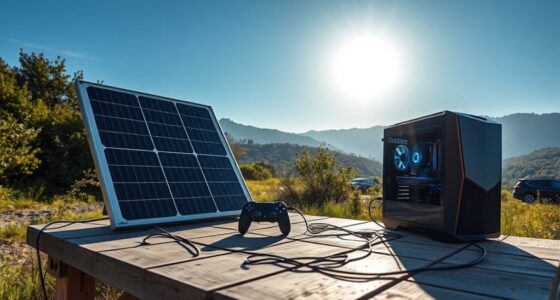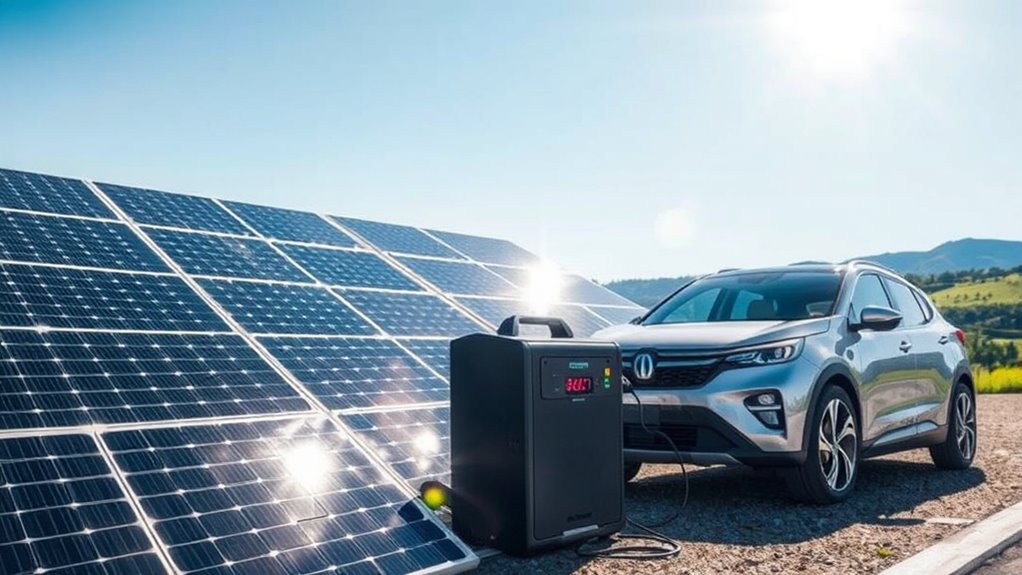

Solar generators can be a handy backup for EV charging, but their effectiveness depends on their battery capacity, solar input, and portability. Larger units can provide multiple charges but tend to be bulky and expensive, while smaller ones are portable but limited in power. Recharging speeds also matter—solar input needs to be strong enough for quick recharging, especially in less sunny seasons. To understand the best options for your needs, explore how these factors work together.
Key Takeaways
- Solar generators can provide emergency or supplementary EV charging, but their limited capacity restricts full, regular charges.
- Larger capacity units enable multiple charges but tend to be bulkier and more expensive, impacting portability.
- Solar input capacity affects recharge speed; higher input allows quicker recharging for consistent EV charging needs.
- They are best suited for short-term, emergency, or occasional charging rather than replacing grid power for regular use.
- Balancing size, weight, and battery capacity is essential to optimize solar generators for EV charging applications.
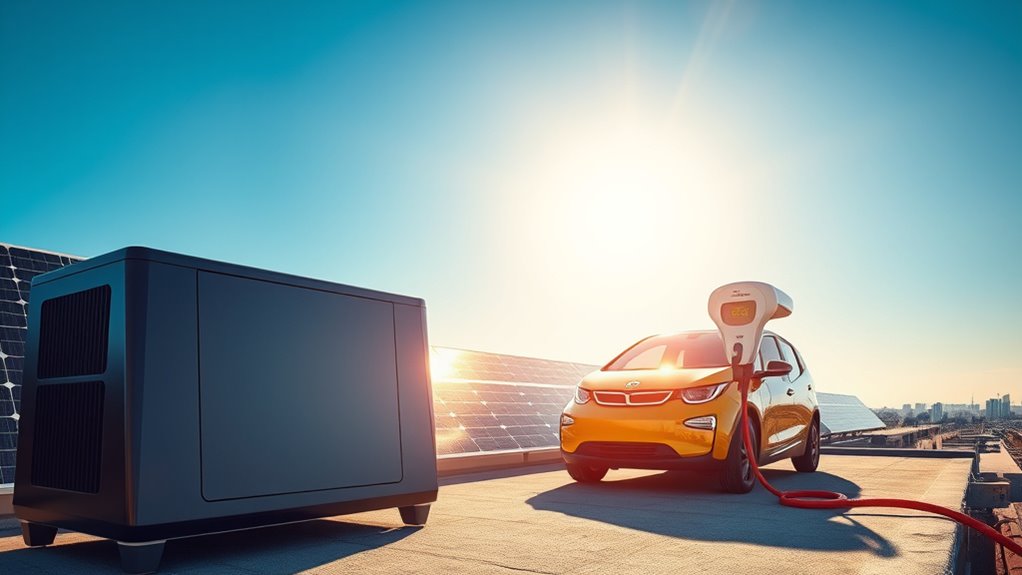
As electric vehicles become increasingly popular, finding reliable and sustainable ways to charge them is more important than ever. Solar generators present an appealing solution, especially for those seeking off-grid or emergency charging options. However, before you rely on them, it’s important to understand their capabilities and limitations. One key factor is battery capacity. Solar generators vary widely in their energy storage, with some offering enough power to charge an EV once or twice, while others may fall short. If you’re considering a solar generator for EV charging, you need to assess whether its battery capacity aligns with your typical driving range and charging needs. Larger capacity units can store more energy, enabling you to top off your EV multiple times, but they’re often bulkier and more expensive. Smaller units, on the other hand, are more portable but may only provide a partial charge, which might not be sufficient if you’re on a long trip or in an emergency situation.
Portability concerns are also vital when choosing a solar generator. Many models are designed to be lightweight and easy to transport, making them attractive for camping trips, outdoor adventures, or backup power during outages. But, as you seek portability, you often sacrifice battery capacity. Compact units tend to have limited storage, meaning they can’t deliver the sustained power necessary for full EV charging sessions. If you plan to use a solar generator regularly for charging your electric vehicle, you’ll need to strike a balance between size, weight, and capacity. Larger, more robust units may require a cart or vehicle to move, which could diminish the convenience factor. Conversely, smaller units might be easier to carry but won’t meet your needs for multiple or full charges.
Additionally, consider the solar input capacity of the generator—how quickly it can recharge itself using sunlight. Even the most sizable battery won’t be useful if it takes days to replenish, especially in less sunny seasons. For consistent EV charging, a generator with high solar input and fast recharge times is preferable. It’s also important to recognize that battery capacity directly impacts the number of charges available and the overall effectiveness of your setup. Keep in mind that solar generators are not a complete substitute for grid power, especially for regular or high-volume charging. They excel as supplementary or emergency solutions, providing peace of mind rather than a primary charging method.
Frequently Asked Questions
Can Solar Generators Fully Power an Entire Home During Outages?
You can’t rely solely on a typical solar generator to fully power your entire home during outages. Solar capacity varies, and most generators don’t provide enough power for all appliances. To guarantee continuous supply, you need substantial energy storage systems, like batteries, that can hold excess solar energy. Combining solar generators with energy storage can help, but for complete coverage, a dedicated solar power system designed for home use is often necessary.
What Is the Average Lifespan of a Solar Generator System?
You can expect a solar generator system to last around 10 to 15 years, depending on battery longevity and maintenance. Proper care, like regular inspections and keeping the system clean, helps prolong its lifespan. Over time, batteries may degrade, reducing capacity. Staying on top of maintenance requirements ensures you get the most out of your investment, making your solar generator a reliable power source during outages for years to come.
Are There Government Incentives for Installing Solar-Powered EV Chargers?
Imagine your driveway transformed into a futuristic charging hub—yes, government incentives make that happen! You can access generous government grants and hefty tax credits when installing solar-powered EV chargers. These incentives can drastically cut your costs, making eco-friendly charging more accessible than ever. Don’t miss out on these opportunities; they’re designed to help you switch to cleaner energy and save money in the long run.
How Quickly Can a Solar Generator Recharge With Optimal Sunlight?
With ideal sunlight, your solar generator can recharge in about 4 to 8 hours, depending on solar panel efficiency and battery capacity. Higher-efficiency panels capture more sunlight, speeding up recharging, while larger battery capacities take longer to fully recharge. To maximize speed, ensure your panels are unobstructed and positioned correctly. Keep in mind, weather conditions and seasonal sunlight variations can also influence recharge times.
Can Solar Generators Support Fast-Charging Stations for Electric Vehicles?
Yes, solar generators can support fast-charging stations for electric vehicles, but their effectiveness depends on solar capacity and the station’s charging speed. You’ll need a high-capacity solar system to deliver enough power quickly. While some generators can handle moderate charging speeds, supporting rapid EV charging requires substantial solar capacity and energy storage. You might find that large, specialized setups are necessary for ideal fast-charging performance.
Conclusion
While solar generators and EV charging hold promising potential, they’re like gentle whispers of a brighter future rather than the full symphony. With patience and innovation, you can harness these tools to reduce your carbon footprint and enjoy cleaner energy. Just remember, the journey toward sustainable power is a gradual unfolding, inviting you to embrace small steps today for a more luminous tomorrow. Keep hope alive, and your efforts will eventually bloom into lasting change.