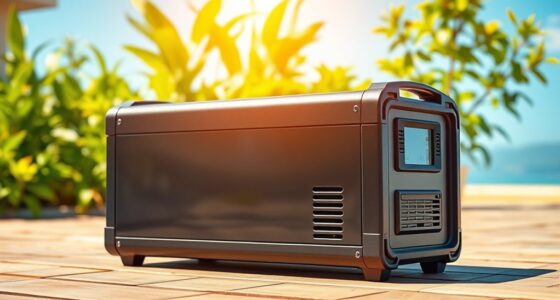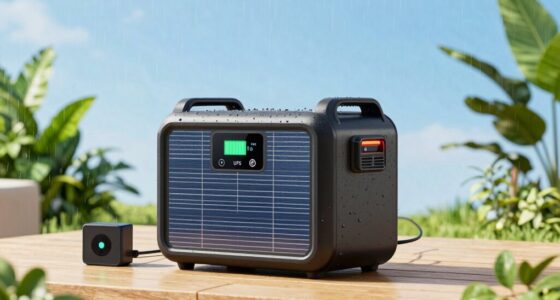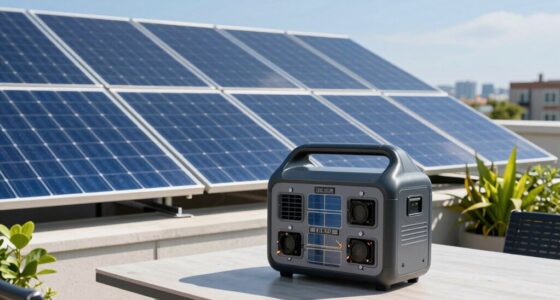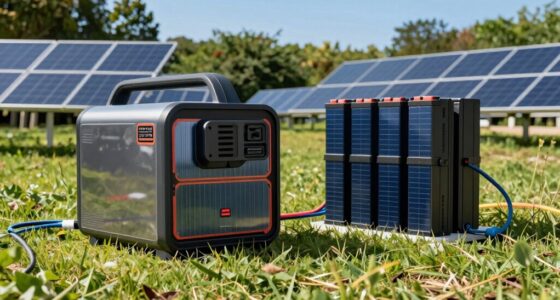
In winter, your solar generator’s efficiency drops because cold temperatures reduce battery capacity and slow chemical reactions, meaning it holds less charge and delivers less power. Shorter days, overcast skies, and snow cover further limit sunlight absorption, decreasing energy production. To keep performance steady, you should insulate your batteries and position panels for maximum sunlight. Want to know more tips to manage these winter challenges effectively? Keep looking to discover how to stay powered all season.
Key Takeaways
- Battery efficiency decreases due to cold temperatures, reducing capacity and power output.
- Shorter daylight hours and overcast skies limit solar energy collection.
- Snow cover and shading can block sunlight from reaching panels.
- Cold weather slows internal battery chemistry, extending recharge times.
- Proper insulation and positioning can help maintain performance during winter.
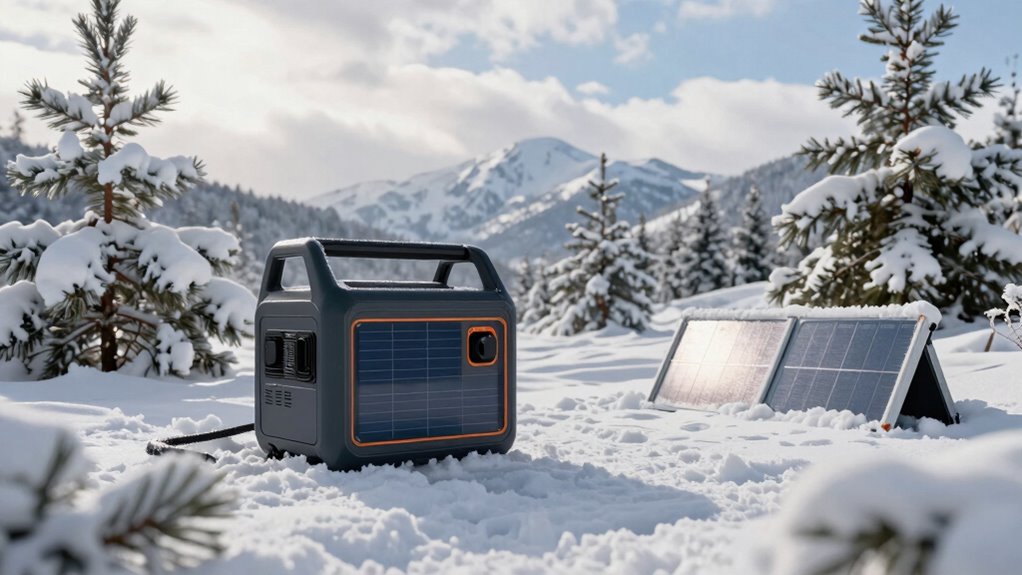
Have you ever wondered how well a solar generator performs during the winter months? Cold weather can significantly impact a solar generator’s efficiency, especially when it comes to its battery. In winter, lower temperatures tend to reduce battery efficiency, meaning your generator might not produce or store as much power as it does during warmer months. Lithium-ion batteries, which are common in many solar generators, are particularly sensitive to cold weather. When temperatures drop, these batteries experience decreased capacity, causing them to hold less charge and deliver less power. This doesn’t mean your solar generator won’t work; it just means you should expect some decline in performance. You might notice it takes longer to recharge or that your stored energy depletes faster when used.
Cold weather lowers battery efficiency, reducing power output and recharge speed in solar generators during winter.
The key to managing this is understanding how cold weather affects your device. As the temperature drops, the chemical reactions inside the battery slow down, leading to reduced efficiency. This results in less available energy, which can be frustrating if you’re relying on your solar generator for essential power during winter storms or outdoor activities. To mitigate this, you can keep the generator in a warmer environment when not in use or use insulation methods to help maintain a more stable temperature. While some newer models are designed to operate better in cold conditions, it’s still wise to check the specifications and recommendations from the manufacturer.
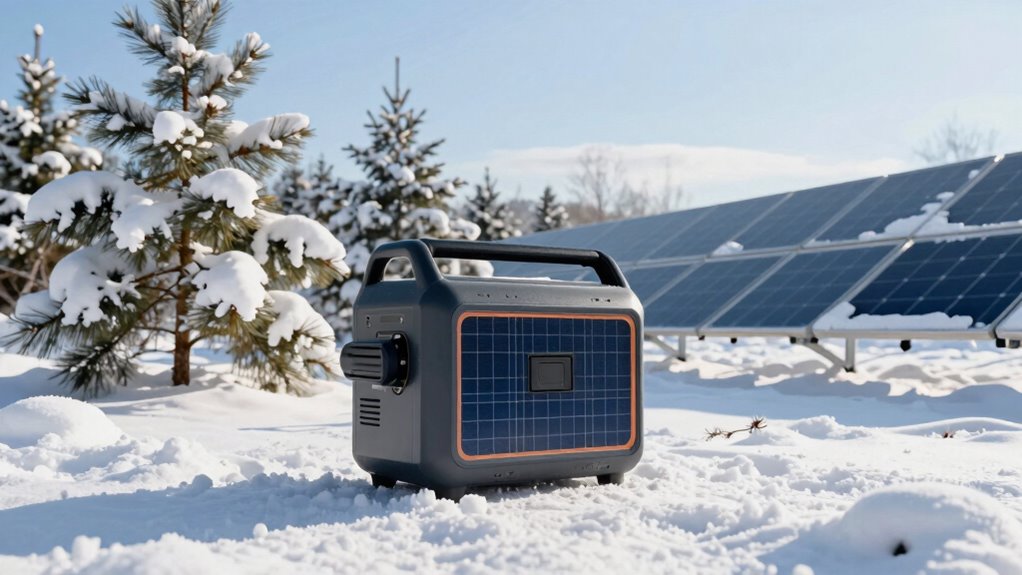
Furthermore, sunlight availability diminishes in winter, especially in higher latitudes, which can compound the issue. Shorter days, overcast skies, and snow cover can all decrease the amount of sunlight your solar panels receive. This means your panels might not generate as much energy during the day, and the overall power output can be significantly less than in summer months. When combined with reduced battery efficiency, you might find yourself needing to ration power more carefully or rely on backup sources.
However, with proper planning and understanding of these limitations, you can still get reliable performance from your solar generator in winter. Keep your batteries warm, position your panels for maximum sunlight exposure, and manage your energy consumption wisely. While cold weather presents challenges, it doesn’t mean your solar generator is useless—just that you need to adapt to its seasonal quirks. By doing so, you’ll ensure your device remains a dependable source of power, even when winter’s chill sets in.
solar generator winter insulation kit
As an affiliate, we earn on qualifying purchases.
As an affiliate, we earn on qualifying purchases.
Frequently Asked Questions
How Does Cold Weather Affect Solar Generator Battery Life?
Cold temperatures can reduce your solar generator’s battery efficiency, causing it to store and deliver less power. When the temperature drops, the chemical reactions inside the battery slow down, leading to decreased performance and potential capacity loss over time. To protect your battery, keep it in a warmer environment when not in use, and avoid exposing it to extreme cold for prolonged periods. This helps maintain your solar generator’s battery life during winter.
Can Solar Generators Operate Effectively During Snowstorms?
Can solar generators operate effectively during snowstorms? Yes, but their performance depends on factors like solar panel coating and energy storage strategies. Snow can temporarily block sunlight, diminishing output, but high-quality coatings help snow slide off, maintaining efficiency. Ensuring your system has robust energy storage strategies allows you to store power on sunnier days and rely on it during storms. With proper setup, your solar generator can weather winter’s challenges.
What Maintenance Is Needed for Winter Solar Generator Use?
To maintain your solar generator in winter, regularly check and insulate the battery to prevent cold damage. Clear snow accumulation from the panels carefully to maximize sunlight absorption, ensuring the best performance. Also, keep the generator in a sheltered location if possible, and avoid letting snow or ice build up around vents or connections. Proper maintenance helps your solar generator operate efficiently and extends its lifespan during harsh winter conditions.
Do Solar Panels Require Special Cleaning in Winter?
Like a snow globe, your solar panels can be covered with snow and ice buildup, reducing their efficiency. You don’t need special cleaning products, but you should gently remove snow and ice to maintain peak performance. Use a soft brush or squeegee to clear snow coverage, avoiding damage. Regularly checking and cleaning guarantees your solar generator gets the sunlight it needs, even on cold winter days.
How Much Power Loss Is Typical in Winter Conditions?
In winter, you can expect about 20-30% power loss due to temperature fluctuations and ice accumulation. Cold temperatures reduce the efficiency of solar panels, and ice buildup can block sunlight, further decreasing output. Regularly clearing snow and ice helps maintain performance. Keep in mind, the exact loss varies based on your location and panel maintenance, but planning for some reduction guarantees you’re prepared for winter’s impact on your solar generator.
portable solar panel for winter
As an affiliate, we earn on qualifying purchases.
As an affiliate, we earn on qualifying purchases.
Conclusion
As winter’s chill settles in, remember that your solar generator’s performance may dip, but with proper care and strategic planning, you can still harness the sun’s fleeting warmth. Think of it as a dance with nature—sometimes slow, sometimes swift—but always worth the effort. By understanding winter’s quirks, you’ll keep your power flowing smoothly, proving that even in the cold, your energy needs can be met with resilience and ingenuity. Stay prepared, stay powered.
solar generator battery warmer
As an affiliate, we earn on qualifying purchases.
As an affiliate, we earn on qualifying purchases.
solar panel positioning for winter
As an affiliate, we earn on qualifying purchases.
As an affiliate, we earn on qualifying purchases.