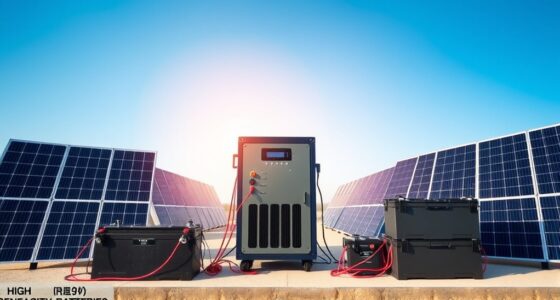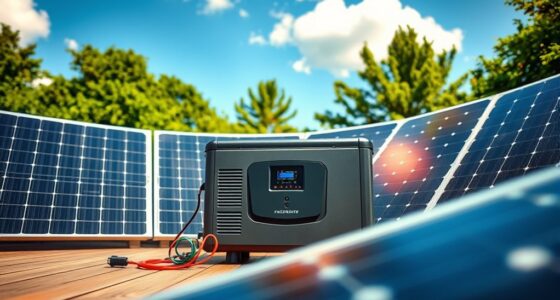
To maximize your solar generator’s efficiency, you should focus on reducing inverter losses and managing battery discharge depths. High-quality inverters with efficiency above 95% minimize energy waste during conversion, while smart battery management systems prevent overdischarging, which can harm battery life and capacity. By optimizing these factors, you guarantee more usable energy reaches your devices. Continue exploring how balancing these elements can boost your system’s performance and longevity.
Key Takeaways
- High-quality inverters with over 95% efficiency minimize energy loss during DC to AC conversion.
- Reducing inverter losses maximizes usable power and enhances overall solar system performance.
- Proper battery management prevents deep discharges, preserving battery capacity and prolonging lifespan.
- Balancing inverter efficiency with optimal depth of discharge ensures reliable energy supply and system longevity.
- Synergistic inverter and BMS optimization reduces energy waste and boosts system resilience during variable sunlight conditions.
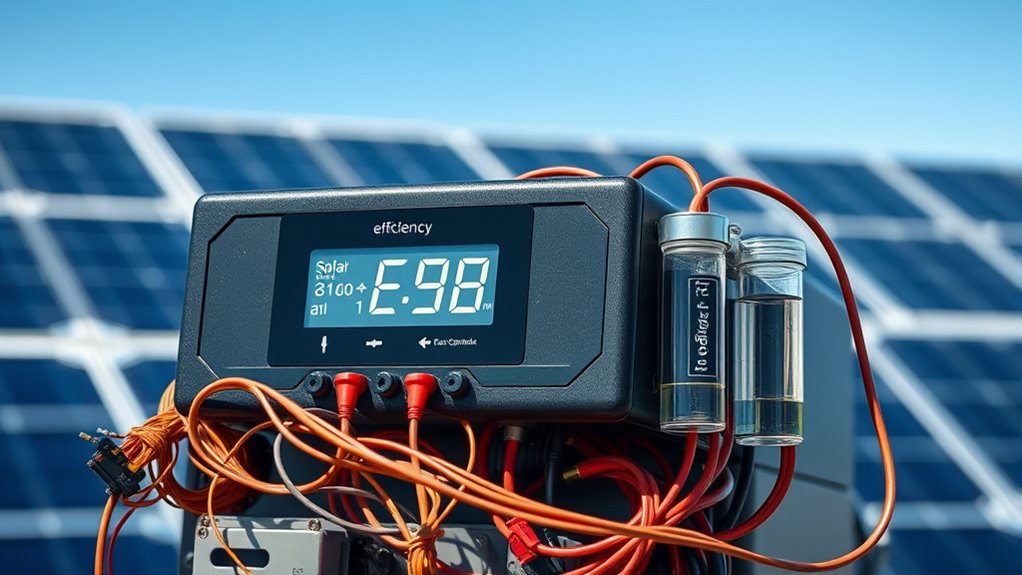
Have you ever wondered how efficiently a solar generator converts sunlight into usable energy? The answer depends largely on the effectiveness of two critical components: battery management and inverter technology. These elements determine how well your solar generator performs, how much energy you can store, and how much of that energy you can actually use. When sunlight hits the solar panels, it creates DC electricity, which then needs to be converted into AC power for your devices. This conversion process isn’t perfect; some energy is lost as heat during inverter operation. Modern inverter technology aims to minimize these losses, ensuring that more of the input energy from the solar panels is available for your needs. High-quality inverters use advanced circuitry and switching techniques that boost efficiency, sometimes reaching levels above 95%. This means less energy wasted during the conversion process, which directly translates to more power for your appliances and a more efficient overall system.
But efficiency isn’t just about the inverter. Battery management plays a crucial role in ensuring your solar generator operates at its peak. Proper battery management involves monitoring and controlling the charging and discharging cycles to prevent overuse or underuse of the stored energy. When you deeply discharge your batteries, it might seem like you’re squeezing every bit of power out of them, but in reality, it can shorten their lifespan and reduce overall system efficiency. Good battery management systems (BMS) help optimize depth of discharge, balancing the need for usable energy with maintaining battery health. They prevent overcharging and deep discharges, which can lead to capacity loss over time. When batteries are properly managed, they retain their capacity longer and perform better, ensuring that the energy you store is available when you need it most.
Combining efficient inverter technology with smart battery management creates a synergy that maximizes your solar generator’s overall efficiency. As sunlight fluctuates throughout the day, your system needs to adapt quickly, converting and storing energy with minimal losses. When the inverter is optimized, and the batteries are managed well, your solar generator can deliver consistent power, even during cloudy days or at night. This careful balance ensures you get the most out of your solar investment, reducing waste and extending the lifespan of your system. Ultimately, understanding how inverter technology and battery management influence efficiency helps you make smarter choices, ensuring your solar generator operates smoothly and reliably for years to come.
Frequently Asked Questions
How Does Battery Type Affect Depth of Discharge?
Your battery chemistry determines how deep you can discharge your battery without damaging it. For example, lithium-ion batteries allow for a higher depth of discharge, meaning you can use more of their capacity without harming cycle longevity. On the other hand, lead-acid batteries have a lower recommended depth of discharge to prolong their lifespan. Choosing the right battery chemistry helps you optimize both capacity and cycle longevity for your needs.
What’s the Best Inverter Size for Maximum Efficiency?
You should choose an inverter slightly larger than your peak load to maximize efficiency, typically 20-25% above your highest expected demand. Proper inverter sizing guarantees ideal load balancing, reducing energy losses and preventing overloads. A properly sized inverter minimizes inverter losses, keeps your system running smoothly, and extends its lifespan. Oversizing slightly provides room for future expansion without sacrificing efficiency, making your solar setup more reliable and cost-effective.
How Do Temperature Variations Impact Inverter Losses?
Temperature variations directly impact inverter losses by affecting thermal management and ambient conditions. When temperatures rise, inverters work harder to dissipate heat, increasing energy loss and reducing efficiency. Conversely, cooler ambient conditions help maintain best inverter performance, minimizing thermal stress. To keep losses low, guarantee proper cooling and ventilation, especially in hot climates. Maintaining ideal thermal management conditions allows your inverter to operate efficiently and extend its lifespan.
Can Solar Generator Efficiency Be Improved Over Time?
Yes, you can improve your solar generator’s efficiency over time by optimizing charging cycles and upgrading inverter technology. Regularly balancing and maintaining batteries guarantees fewer capacity losses, while investing in advanced inverters reduces inverter losses during operation. As inverter technology advances, newer models become more efficient, so upgrading can boost overall performance. Staying proactive with maintenance and technology upgrades helps you get the most out of your solar setup.
What Maintenance Reduces Inverter and Battery Losses?
Maintaining your solar generator is like tuning a fine instrument. Regularly verify inverter cooling by cleaning filters and vents to prevent overheating, which reduces losses. Additionally, perform battery balancing to keep cells evenly charged, extending lifespan and efficiency. These simple steps help minimize inverter and battery losses, keeping your system running smoothly. Proper upkeep ensures maximum energy output and prolongs your investment’s life.
Conclusion
By understanding inverter losses and depth of discharge, you can maximize your solar generator’s efficiency. For example, if you limit your DOD to 50%, your battery lasts longer and delivers more usable power. Imagine a homeowner who reduces DOD, avoiding frequent battery replacements and saving money over time. Paying attention to these factors helps you get the most out of your solar setup, ensuring reliable power and better value for your investment.