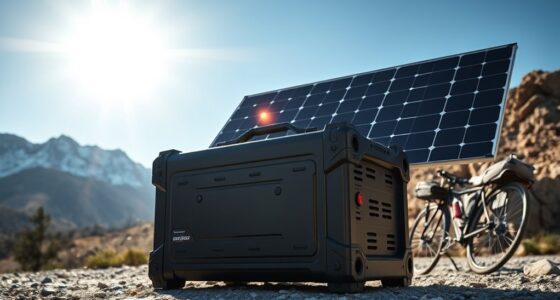
Long outages often expose the truth behind battery hype, showing that reliability depends on more than just chemistry or energy density. Many systems struggle during extended failures if not properly managed, with issues like temperature effects or degradation playing a big role. Advances in technology are improving resilience, but headlines tend to oversimplify. If you’re curious about what really makes batteries reliable during long outages, exploring the details can reveal a more accurate picture.

Get backup power and energy gear delivered free with Prime
- Fast, free delivery on millions of items
- Prime Video, Amazon Music and more included
- Member-only deals all year
Key Takeaways
- Battery outages are often amplified by media, but reliability depends on system design and management, not just chemistry.
- High energy density batteries improve backup duration but require proper thermal management for effective long-term performance.
- Degradation over time and temperature sensitivity affect battery performance during extended outages.
- Advances in chemistry and system integration are continuously enhancing battery resilience beyond headlines.
- Properly designed, managed battery systems are essential for reliable energy supply during prolonged power failures.
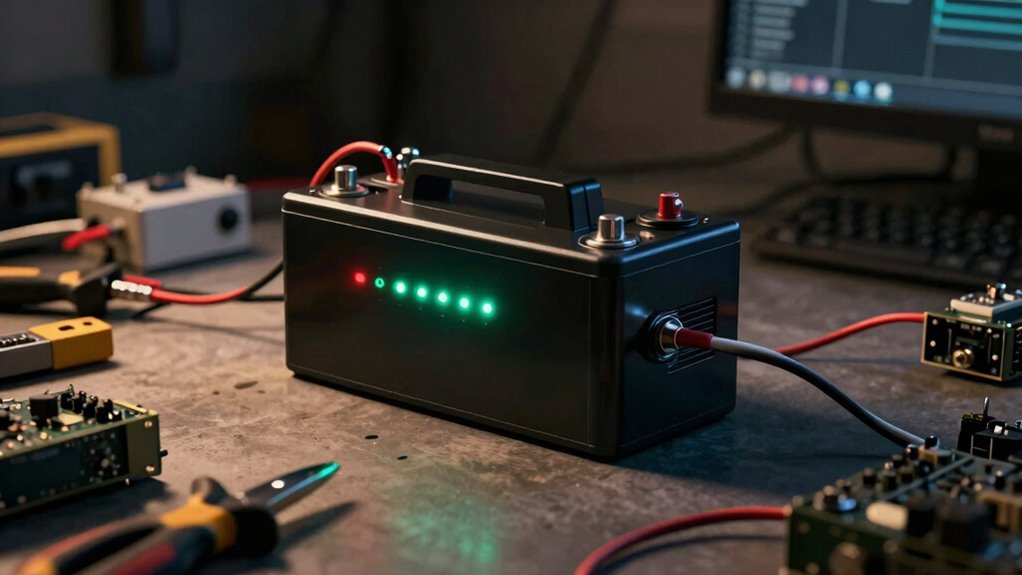
Battery outages often make headlines, but the reality is more nuanced than the hype suggests. When a large-scale power failure occurs, many jump straight to questioning the reliability of battery storage systems. The truth is, batteries are complex, and understanding their strengths and limitations requires a closer look at their inner workings—especially battery chemistry and energy density. These factors play an essential role in how long a battery can sustain power and how quickly it can recover from outages.
Battery chemistry determines the fundamental behavior of a battery, affecting everything from lifespan to safety. Different chemistries, like lithium-ion, nickel-metal hydride, or newer solid-state types, have unique characteristics. Lithium-ion batteries, for example, are known for their high energy density, which means they can store a significant amount of energy in a relatively small space. This high energy density makes them ideal for applications that demand compact, lightweight solutions, such as electric vehicles and portable electronics. However, this same chemistry can be sensitive to temperature fluctuations and aging, impacting their performance during prolonged outages.
Battery chemistry impacts lifespan, safety, and performance, with lithium-ion offering high energy density but sensitivity to temperature and aging.
Energy density is a key factor when evaluating how long a battery can provide backup power. Higher energy density allows a battery to deliver power over extended periods without requiring frequent recharging or replacement. But it’s important to recognize that energy density alone doesn’t guarantee long-lasting outages. Other elements, such as battery management systems, the design of the storage setup, and the type of load being supported, influence how effectively a system performs during extended outages. Additionally, the importance of thermal management becomes apparent as it helps preserve battery performance and safety over time.
Long outages don’t necessarily mean battery systems are unreliable, but they do highlight the importance of considering these technical details. For instance, batteries with high energy density can supply power for hours, but without proper thermal management and maintenance, their performance can degrade over time, reducing their effectiveness during critical moments. Additionally, the chemistry chosen impacts how quickly a battery can be recharged after a blackout, which is essential for maintaining resilience. Battery chemistry influences many aspects of performance and safety, making it a crucial factor in system design.
In the end, long outages reveal the importance of deploying well-designed, properly managed battery systems. While headlines often emphasize failures, the reality is that advancements in battery chemistry and energy density are continually improving storage capabilities. Instead of dismissing batteries based on isolated incidents, it’s more accurate to understand that their performance depends on the technology’s sophistication and how well it’s integrated into the broader power grid. When you grasp these nuances, it’s clear that batteries are a fundamental part of modern energy resilience, not just a fleeting hype.
long duration backup battery system
As an affiliate, we earn on qualifying purchases.
As an affiliate, we earn on qualifying purchases.
Frequently Asked Questions
How Do Battery Outages Compare to Other Power Failure Causes?
Battery outages are usually less frequent but can be longer when they occur, compared to other power failures caused by grid issues or weather. You can improve reliability by considering battery lifespan and implementing proper maintenance strategies, like regular inspections and timely replacements. Unlike sudden outages from external factors, batteries offer a controlled backup, but only if maintained well. So, understanding their limits helps you better prepare for power disruptions.
What Advancements Are Reducing Battery Outage Durations?
Advancements like improved battery lifespan and smarter charging protocols are reducing outage durations. These innovations guarantee batteries stay reliable longer and recharge faster during outages. You benefit from enhanced performance as battery management systems optimize charging, preventing damage and extending lifespan. Consequently, outages last shorter, providing more dependable backup power. These developments make batteries a more effective, resilient solution for maintaining power during extended outages, minimizing disruptions for you.
Are Certain Industries More Vulnerable to Battery Outages?
Yes, certain industries are more vulnerable to battery outages, especially those relying heavily on consistent power like healthcare, data centers, and manufacturing. You need to prioritize battery maintenance in these sectors to guarantee industry resilience. Regular inspections and timely replacements help prevent outages, reducing downtime and safeguarding operations. In high-stakes environments, investing in reliable batteries and maintenance routines is vital for maintaining continuous service and avoiding costly disruptions.
How Do Climate Conditions Affect Battery Reliability?
Climate impact and temperature effects play a huge role in battery reliability. When it’s scorching hot or freezing cold, your battery’s performance takes a nosedive—think reduced capacity, faster degradation, and unexpected failures. So, if you’re counting on batteries in extreme climates, be prepared for surprises. While they promise power, Mother Nature’s climate whims can turn that promise into a frustrating reality, draining your hopes faster than you can say “battery life.”
What Are the Best Practices for Preventing Battery Outages?
To prevent battery outages, you should prioritize regular battery maintenance, including checking for corrosion, guaranteeing proper connections, and monitoring voltage levels. Implement effective backup strategies, such as having redundant batteries and reliable charging systems, to assure continuous power. Keep batteries in ideal conditions by controlling temperature and avoiding deep discharges. Regular inspections and proactive maintenance help identify issues early, reducing the risk of outages and extending battery lifespan.
As an affiliate, we earn on qualifying purchases.
Conclusion
As you watch the storm clouds gathering, it’s easy to believe batteries will always keep your lights on. But just like the sudden downpour, long outages reveal the truth — batteries aren’t magic. They’re a promising part of the puzzle, yet reality often hits like a flash of lightning. So, stay prepared, knowing that beneath the hype, batteries are reliable, but not invincible — a timely reminder that even the brightest sparks need shelter.
high energy density lithium-ion battery
As an affiliate, we earn on qualifying purchases.
As an affiliate, we earn on qualifying purchases.
battery management system for outages
As an affiliate, we earn on qualifying purchases.
As an affiliate, we earn on qualifying purchases.
Halloween Picks
halloween
As an affiliate, we earn on qualifying purchases.