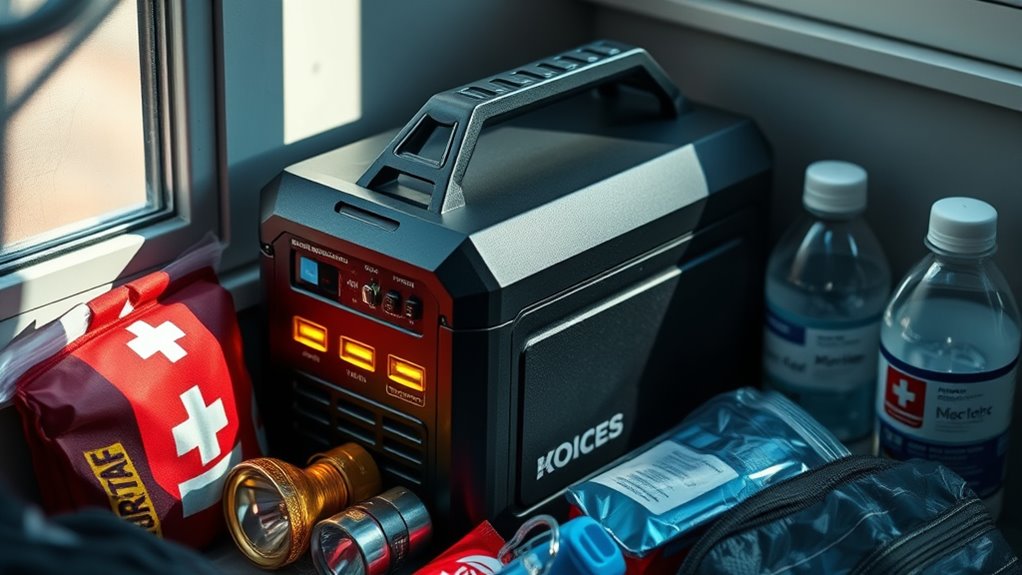

Including a portable power station in your emergency kit gives you a reliable way to keep critical devices running when the power goes out. They provide backup energy for phones, radios, lights, and small appliances, and many can recharge with solar panels for long-term use. Balancing capacity and portability guarantees you have enough power without extra bulk. Want to know how to choose the right one and make the most of it? Keep going to find out more.
Key Takeaways
- Portable power stations provide reliable, backup electricity for essential devices during power outages or emergencies.
- They can be recharged via solar panels, offering sustainable energy when grid power is unavailable.
- Adequate battery capacity ensures multiple device charges, maintaining communication and safety during crises.
- Proper power output compatibility prevents damage and supports a variety of critical gadgets like phones and radios.
- Including portable stations in emergency kits enhances preparedness with eco-friendly, cost-effective, and versatile power solutions.

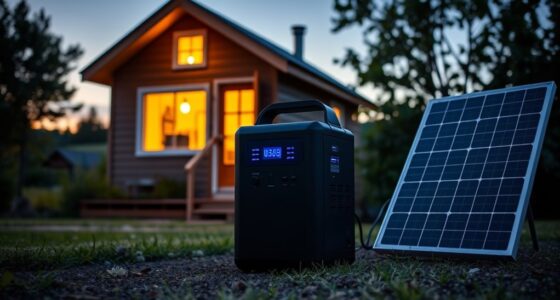
Have you ever been caught without power when you needed it most? It’s a frustrating experience, especially during emergencies when every minute counts. That’s where portable power stations come into play, offering a reliable energy source when traditional power grids fail. One of the key features to consider is the solar panel compatibility. A portable power station equipped with a solar panel can harness sunlight to recharge itself, making it a smart choice for long-term emergencies or outdoor adventures. This means you won’t be solely dependent on grid electricity or battery backups that might run out quickly. Instead, you can set up the solar panel during the day, and it will gradually replenish the station’s power, ensuring you have a backup supply whenever you need it.
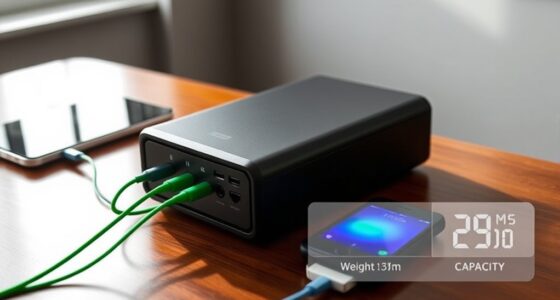
Another essential aspect to look at is battery capacity. The capacity determines how much energy the portable power station can store and for how long it can power your devices. If you’re preparing an emergency kit, you want a unit with enough battery capacity to charge essential devices—like your phone, flashlight, radio, or even a small refrigerator—multiple times. This way, you’re not left in the dark or cut off from communication just because the power goes out. Higher battery capacity often means a larger, more robust unit, but it also might be heavier or more expensive. Consequently, balancing capacity with portability is crucial, especially if you need to carry it around or store it in a compact space. Additionally, understanding the power output capabilities helps ensure your devices will operate safely and efficiently.
Having a portable power station with a good combination of solar panel compatibility and ample battery capacity means you’ll be better prepared for various scenarios. During a blackout, you can quickly recharge the station with sunlight during the day, ensuring continuous power for your critical devices. This setup also minimizes your reliance on traditional electricity sources, which might be unavailable or unstable during emergencies. Plus, the ability to recharge via solar panel makes it more environmentally friendly and cost-effective over time, especially if you frequently face power outages or spend time outdoors.

MARBERO 111Wh Solar Generator with Panels Included Solar Panel Kit 30W
- Solar Generator with Panel: Includes 111Wh power station and 30W solar panel
- Multiple Power Outputs: USB, AC, and DC ports for versatile charging
- High Capacity Battery: 111Wh (30,000mAh) lithium battery for reliable power
As an affiliate, we earn on qualifying purchases.
As an affiliate, we earn on qualifying purchases.
Frequently Asked Questions
How Long Do Portable Power Stations Typically Last on a Full Charge?
On a full charge, a portable power station typically lasts between 6 to 24 hours, depending on your device’s power consumption. Your battery life depends on the station’s capacity and how many charging cycles it can handle, usually around 500 to 1000 cycles before its performance declines. To maximize its lifespan, avoid deep discharges and keep it charged regularly, especially during emergencies.
Are Portable Power Stations Safe to Use Indoors During Emergencies?
You can safely use portable power stations indoors during emergencies because they’re designed with safety features to minimize fire hazards. Unlike generators, they don’t produce fumes or carbon monoxide, making indoor use much safer. Just make certain of proper ventilation and follow manufacturer instructions. This way, you maintain indoor safety while keeping essential devices powered, giving you peace of mind during stressful situations.
What Is the Weight Range of Most Portable Power Stations?
Most portable power stations weigh between 10 to 50 pounds, making them fairly easy to carry thanks to their portability features. Their battery capacity varies, with smaller models offering around 200Wh for light devices, while larger ones provide up to 2000Wh for more extensive power needs. When choosing, consider your portability needs and how much power capacity you require to guarantee it fits your emergency kit.
Can Portable Power Stations Be Recharged Using Solar Panels?
Many portable power stations can indeed be recharged using solar panels, making them a reliable energy source during emergencies. You’ll want to check their solar panel compatibility to guarantee efficient recharging, especially when sunlight is limited. Recharging efficiency varies based on panel quality and sunlight conditions, but with the right setup, you can harness solar energy effectively. This eco-friendly option keeps your power station ready when you need it most.
How Do I Maintain and Store My Portable Power Station Properly?
To maintain your portable power station, regularly check the battery and follow the manufacturer’s battery maintenance guidelines. Store it in a cool, dry storage environment away from direct sunlight and extreme temperatures to prolong battery life. Fully charge the station before long-term storage, and avoid leaving it discharged. Periodically recharge it if stored for extended periods, ensuring it’s ready when you need it most. Proper maintenance and storage keep your power station reliable.
MARBERO 111Wh Solar Generator with Panels Included Solar Panel Kit 30W
- Solar Generator with Panel: Includes 111Wh power station and 30W solar panel
- Multiple Power Outputs: USB, AC, and DC ports for versatile charging
- High Capacity Battery: 111Wh (30,000mAh) lithium battery for reliable power
As an affiliate, we earn on qualifying purchases.
As an affiliate, we earn on qualifying purchases.
Conclusion
So, next time you’re caught in an emergency, remember your trusty portable power station. Sure, it’s great for charging devices, but it’s ironic how something so compact can be your lifeline while the power grid might just be taking a break. It’s a small, powerful reminder that sometimes, the best backup plan is the one you can carry in your backpack. After all, in an emergency, it’s the little things that keep you going.

CyberPower ST425 Standby UPS Battery Backup and Surge Protector
- Power Capacity: 425VA/260W standby UPS
- Output Type: Simulated sine wave output
- Number of Outlets: 8 NEMA 5-15R outlets
As an affiliate, we earn on qualifying purchases.
As an affiliate, we earn on qualifying purchases.

EnginStar Portable Power Station 300W 296Wh Battery Bank with 110V Pure Sine Wave AC Outlet for Outdoors Camping Hunting and Emergency, 80000mAh Backup Battery Power Supply for CPAP
- Portable and Lightweight: Compact size, lightweight for portability
- High Capacity and Power: 296Wh capacity, 300W AC output
- Multiple Device Charging: 8 output ports for various devices
As an affiliate, we earn on qualifying purchases.
As an affiliate, we earn on qualifying purchases.