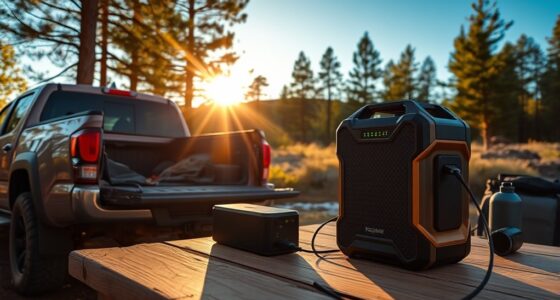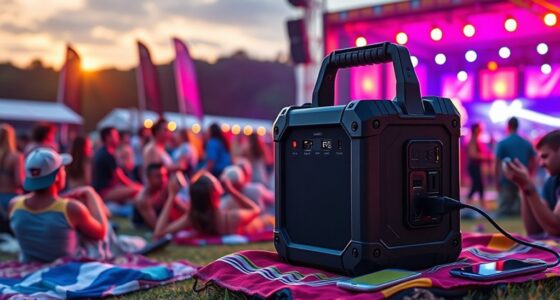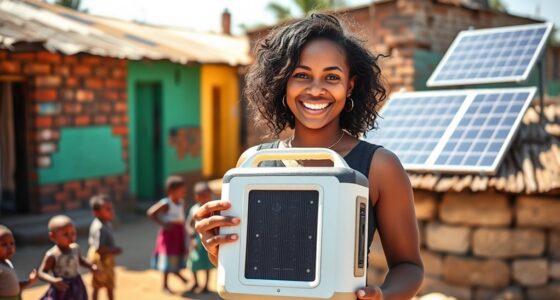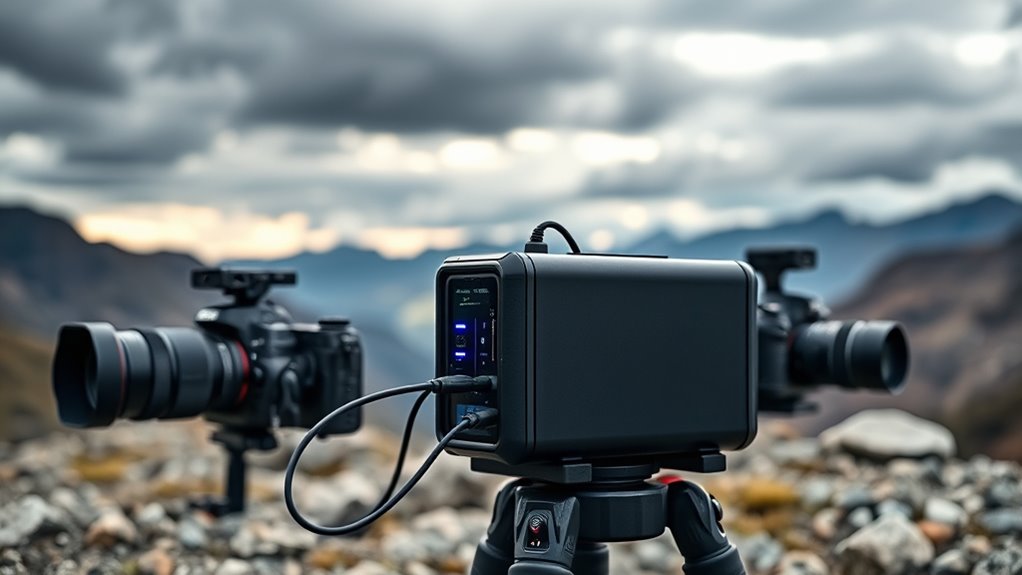

A portable power station is essential for photography and videography, ensuring your gear stays charged in remote or demanding environments. Look for one with multiple outlets—AC, USB, and DC—to power cameras, lights, and drones simultaneously. Prioritize units with safety features like overcharge protection and thermal regulation to protect your equipment. Solar compatibility allows off-grid recharging, while a user-friendly display helps monitor power levels. Keep going to discover how these features can elevate your shoots seamlessly.
Key Takeaways
- Provides reliable, uninterrupted power to cameras, lights, and accessories during remote shoots or on-location sessions.
- Features multiple ports (AC, USB, DC) for versatile device charging and simultaneous operation.
- Includes safety features like overcharge and short-circuit protection to safeguard equipment and users.
- Supports solar input for off-grid recharging, ideal for outdoor or remote photography and videography.
- Compact, lightweight design with user-friendly displays for easy monitoring and transport during shoots.
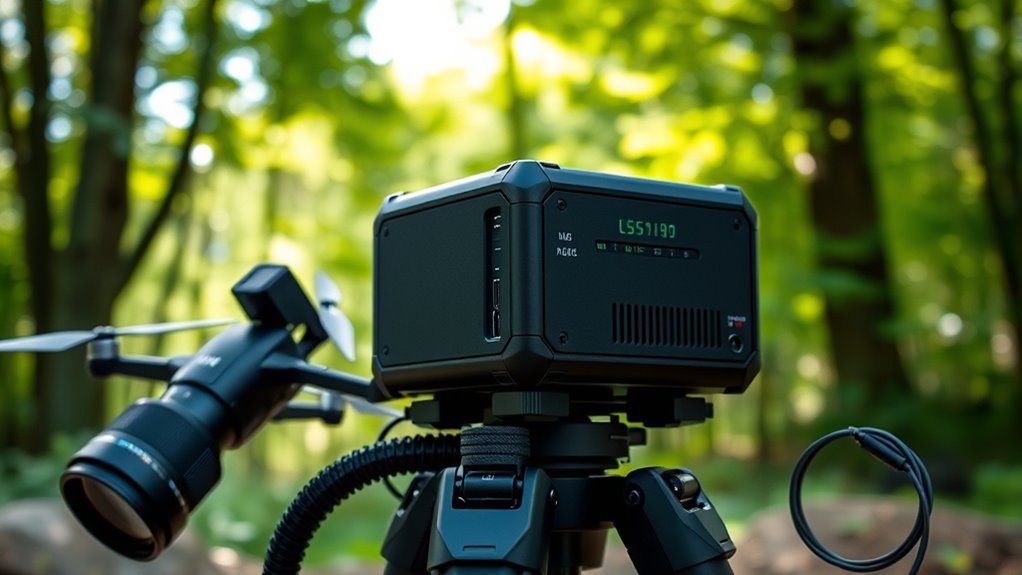
Whether you’re shooting in remote locations or on tight schedules, having reliable power is essential for photography and videography. Portable power stations provide a versatile solution, ensuring your gear stays charged without the hassle of tangled cords or limited outlets. When choosing one, it’s important to consider battery safety. Opt for units with built-in safeguards like overcharge protection, short-circuit prevention, and thermal regulation. These features help prevent accidents and extend the lifespan of your equipment, giving you peace of mind during demanding shoots. Additionally, look for models with robust build quality and reliable battery management systems, as these contribute to both safety and performance over time.
Reliable portable power stations with safety features ensure uninterrupted photography and videography sessions.
Another key factor is solar compatibility. Many portable power stations now feature USB-C or AC inputs that allow you to connect solar panels, transforming your setup into a sustainable, off-grid power source. This is especially useful when you’re working in remote locations where electricity isn’t available. Solar compatibility lets you recharge your station during the day, ensuring you don’t run out of power midway through a shoot. It also reduces dependence on traditional outlets, making your setup more flexible and eco-friendly. When selecting a power station, check how fast it can be recharged via solar panels and whether it supports different panel voltages and connectors. This flexibility ensures you can adapt to various environmental conditions and panel options.
Beyond safety and solar compatibility, consider the station’s capacity and port selection. You want enough power to run your camera, lights, drones, and other accessories without constantly swapping batteries or unplugging devices. Multiple outlets, including AC, USB, and DC ports, give you the flexibility to connect different gear simultaneously. Also, lightweight and compact designs make transport easier, especially if you’re hiking into remote areas or traveling frequently.
Finally, think about user interface and display features. A clear, easy-to-read screen showing remaining battery life, input/output status, and recharging options can save you time and prevent surprises on busy shooting days. Some units even offer app controls or Bluetooth connectivity for remote monitoring, which adds convenience during complex setups.
In essence, selecting a portable power station that emphasizes battery safety and solar compatibility ensures your photographic and videographic endeavors are uninterrupted. It provides a reliable, eco-friendly, and safe energy source, enabling you to focus on capturing stunning visuals without worrying about power failures. Additionally, choosing a unit with high power capacity allows you to run multiple devices for longer periods, making your shoots more efficient and productive.
Frequently Asked Questions
How Long Do Portable Power Stations Typically Last on a Single Charge?
You can expect a portable power station to last anywhere from 4 to 12 hours on a single charge, depending on its battery capacity and your power usage. Larger batteries with higher capacity provide longer runtimes, but keep in mind that charging cycles—how many times you recharge—also impact overall lifespan. Properly maintaining your station guarantees it stays reliable, so monitor usage and avoid deep discharges to maximize its performance.
Are Portable Power Stations Safe to Use With Sensitive Camera Equipment?
Think of a portable power station as a vigilant guardian for your sensitive camera gear. You can trust it’s safe when you choose one with solid battery safety features and reliable power regulation. These stations are designed to prevent surges and protect delicate electronics. As long as you follow manufacturer guidelines, your equipment stays secure, and you can focus on capturing stunning shots without worry.
Can Portable Power Stations Be Charged While in Use?
Yes, you can charge portable power stations while they’re in use, especially if they’re solar compatible. Using solar panels allows you to recharge the station without interrupting your work. Just keep in mind that frequent charging and discharging can affect the battery lifespan over time. To maximize your station’s durability, avoid overloading it and follow the manufacturer’s guidelines for continuous charging and usage.
What Maintenance Is Required for Portable Power Stations?
You should regularly perform battery calibration to guarantee accurate charge readings and extend your power station’s lifespan. Follow storage best practices by keeping it in a cool, dry place and avoiding extreme temperatures. Periodically charge the station even if unused, and keep the vents clean to prevent dust buildup. Proper maintenance like this helps optimize performance, prolongs battery life, and ensures reliable power whenever you need it.
How Do Weather Conditions Affect the Performance of Portable Power Stations?
Weather conditions can turn your portable power station into a fragile leaf in a storm. Extreme temperatures, whether scorching or freezing, hit its performance like a gust of wind, revealing its temperature sensitivity. Rain and humidity threaten to drown its circuits, causing potential damage. To keep it running smoothly, you must shield it from weather impact, store it in a dry, cool place, and avoid exposing it to drastic temperature swings.
Conclusion
So, next time you’re lugging around a mountain of batteries and tangled cords, remember that a portable power station might just be your new best friend. Sure, it’s a bit pricier, but hey, who doesn’t want to impress clients with endless juice and avoid the dreaded “battery died” panic? Embrace the future—because nothing says “professional” like having enough power to shoot all night without begging for a plug.