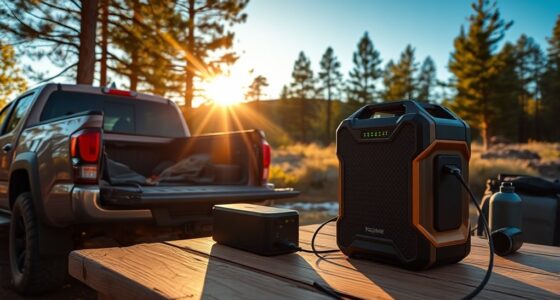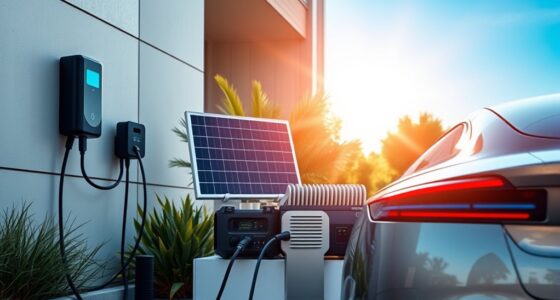
When choosing a portable power station for your EV road trip, focus on models compatible with your solar panels, ensuring efficient recharging on the go. Consider battery capacity based on your range needs, and look for options with appropriate power outputs, like AC or USB outlets, for quick and safe recharging. Balancing weight and performance is key, and understanding these factors will help you find the right solution to keep your trip smooth and eco-friendly. Find out more below.

Get backup power and energy gear delivered free with Prime
- Fast, free delivery on millions of items
- Prime Video, Amazon Music and more included
- Member-only deals all year
Key Takeaways
- Ensure the power station’s capacity supports your EV’s battery size and trip length.
- Check compatibility with your solar panels for efficient solar recharging on the go.
- Verify the power output options match your vehicle’s charging requirements, including AC, DC, or USB.
- Consider portability versus capacity to balance weight, ease of transport, and energy needs.
- Look for fast recharging features to minimize downtime during extended road trips.
Ever wondered how to keep your electric vehicle powered up during extended road trips? Portable power stations can be a game-changer, providing a reliable backup source of energy when you’re away from traditional charging stations. When selecting one, it’s essential to factor in solar panel compatibility. Many portable stations are designed to work seamlessly with solar panels, allowing you to harness the sun’s energy to recharge on the go. This setup is especially useful during long trips where access to power outlets is limited. Make sure the power station you choose supports the specific solar panel you have—some models are optimized for certain wattages or connector types, so compatibility can make a significant difference in efficiency and convenience.
Battery capacity considerations are equally important. Think about how much energy you’ll need for your trip—this depends on your vehicle’s battery size and your typical driving range. A larger battery capacity in a portable power station means you can recharge your EV multiple times or extend your range without relying solely on public charging stations. For instance, if your EV has a sizeable battery, you’ll want a portable station with a correspondingly high capacity to make a meaningful impact. Conversely, if your trips are shorter or your vehicle’s battery is smaller, a compact station with lower capacity might suffice. It’s all about balancing your energy needs with portability and weight—larger capacity units tend to be heavier and bulkier, which can impact your travel comfort.
Additionally, consider the power station’s output options. Ensure it can deliver the necessary voltage and current to charge your EV efficiently. Some models provide AC outlets, while others offer DC or USB outputs—double-check that these match your vehicle’s charging requirements. It’s also worth looking into the station’s recharging options, especially if you plan to rely heavily on solar power. Fast recharging capabilities can help you get back on the road quicker, while compatibility with multiple solar panel types can give you more flexibility in sourcing clean energy. Furthermore, understanding the contrast ratio of your power setup can help optimize your visual monitoring of system performance, ensuring your energy management remains efficient throughout your trip.
Ultimately, the right portable power station aligns with your vehicle’s specifications, trip duration, and energy consumption. By paying close attention to solar panel compatibility and battery capacity considerations, you guarantee your road trip remains smooth and worry-free. This foresight allows you to enjoy the journey, knowing you’ve got a dependable energy backup whenever you need it, saving you from range anxiety and helping you embrace eco-friendly travel.
Products Worth Considering

Philips Hue Play Floor Lamp, RGBWWIC LED, 53 Inch, Black

Shark PowerPro Reveal Plus Cordless Stick Vacuum, Charcoal (IZ376H)

Shark IY143H Cordless Pet Stick Vacuum
As an affiliate, we earn on qualifying purchases.
Frequently Asked Questions
How Long Can a Portable Power Station Power an EV Charger?
You can power an EV charger with a portable power station for several hours, depending on its battery capacity and the charger’s power draw. If your station has a large battery capacity, say 2,000Wh, it can charge a typical EV at 7kW for about 15 minutes, but charging speed varies. Keep in mind, higher charging speeds drain the station’s battery faster, so plan accordingly for longer trips.
Can Portable Power Stations Be Used for Other Electronic Devices?
Yes, portable power stations can power other electronic devices, making them a handy alternative energy source. You can use your portable device to charge smartphones, tablets, laptops, and small appliances. They’re designed to provide reliable power on the go, especially when access to traditional outlets is limited. Just guarantee the station’s capacity matches your device’s power needs, and you’ll have a versatile, eco-friendly way to stay connected wherever you are.
What Is the Maximum Charging Capacity of These Stations?
You’ll find that portable power stations boast impressive maximum charging capacities, often reaching up to 3000W or more, like a burst of energy surging through your devices. Their power output determines how quickly your gadgets recharge, with higher wattage providing faster charging speeds. Visualize a steady flow of power, like a river rushing to meet your needs, ensuring your electronics stay active and ready wherever your journey takes you.
Are Portable Power Stations Compatible With All EV Models?
You might wonder if portable power stations are compatible with all EV models. While many stations support standard EV charging compatibility, they do have limitations, such as power output capacity and connector types. Some EVs require specific charging levels or connectors, which not all portable power stations can accommodate. Always check your EV’s charging requirements against the station’s capabilities to ensure compatibility and avoid limitations during your road trip.
How Safe Are Portable Power Stations During Long Trips?
Portable power stations are generally safe during long trips when you follow proper usage guidelines. They feature built-in safety features like overcharge protection and temperature regulation, reducing battery safety risks. However, always monitor for potential fire hazards, avoid overloading, and keep units in well-ventilated areas. Regularly check for any signs of damage or overheating to guarantee a safe and reliable power source during your journey.
Conclusion
With a portable power station by your side, your EV road trip becomes as smooth as a well-orchestrated symphony. It guarantees you’re never left in the dark, providing reliable energy when you need it most. Think of it as your trusty roadside lighthouse, guiding you safely through every mile. Embrace this compact powerhouse and turn potential hurdles into mere ripples on your journey, making your adventure as seamless and exhilarating as a perfectly tuned engine.