Before using a portable power station for summer storms, check if it supports solar panels to maximize energy during outages. Make sure it has enough battery capacity to power your essential devices for as long as needed, and verify its charging options for reliable recharging, even in bad weather. Understanding these features helps you stay prepared and comfortable. Keep exploring to discover more tips for choosing the best station to protect your energy needs during storms.

Get backup power and energy gear delivered free with Prime
- Fast, free delivery on millions of items
- Prime Video, Amazon Music and more included
- Member-only deals all year
Key Takeaways
- Verify the power station’s solar compatibility to ensure effective recharging during storm-related outages.
- Choose a model with sufficient battery capacity to power essential devices for the expected duration.
- Confirm multiple charging options, including solar, for reliable recharging in unpredictable weather.
- Ensure the station supports your specific devices’ power needs to prevent early depletion.
- Understand the station’s portability and durability features to withstand storm conditions safely.
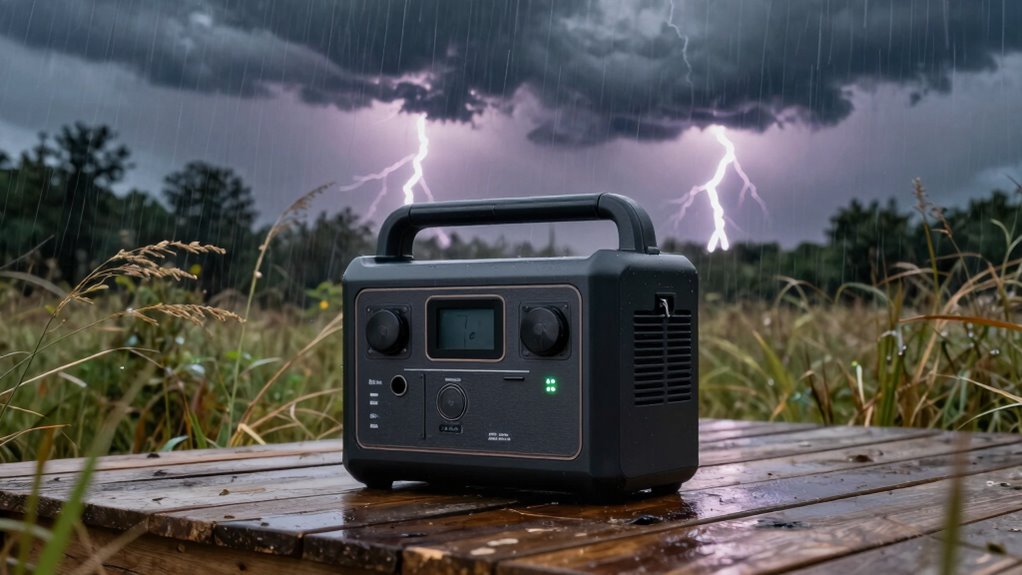
Are summer storms catching you off guard? When unpredictable thunderstorms roll through, having a portable power station can be a real lifesaver. But before you rely on one, it’s vital to understand a few key points to guarantee you’re prepared. First, consider the solar compatibility of the device. Many portable power stations come with the ability to connect solar panels, which can be a game-changer during extended outages. If you plan to use solar energy to recharge your station, make sure it’s compatible with the panels you have or intend to buy. Not all power stations support the same solar configurations, so checking the specifications is essential. Solar compatibility means you can harness the sun’s power even when the grid is down, providing a sustainable and silent energy source that keeps your devices running longer. Additionally, understanding solar panel compatibility is crucial for maximizing your station’s efficiency during power outages. Knowing the solar compatibility can help you select the right setup to optimize energy collection and storage.
Next, pay attention to the battery capacity. This is the measure of how much energy the station can store and directly impacts how long your devices stay powered during a storm. If you only need to run essential gadgets like a cellphone, small fan, or LED lights, a smaller capacity might suffice. However, for longer outages or powering multiple devices simultaneously, a higher battery capacity becomes necessary. Keep in mind that the capacity is usually measured in watt-hours (Wh) or amp-hours (Ah), so compare these ratings carefully to your energy needs. A station with insufficient capacity will drain quickly, leaving you without power when you need it most. Recognizing the battery capacity importance can help you choose a model that matches your specific needs and ensures reliable power when storms hit. Ensuring your power station also has multiple charging options**** can provide added convenience and reliability during unpredictable weather conditions.
Products Worth Considering

Dyson Airwrap i.d. 6-in-1 Multi-Styler and Dryer

TCL 75-Inch Class 4-Series 4K UHD HDR Smart Google TV (75S446, 2022)

Philips Hue Bridge Pro Starter Kit with 4 A19 E26 Color Smart Bulbs
As an affiliate, we earn on qualifying purchases.
Frequently Asked Questions
Can a Portable Power Station Charge Multiple Devices Simultaneously?
Yes, a portable power station can charge multiple devices simultaneously. Its battery capacity determines how many devices it can support at once, while charging speed affects how quickly each device gets power. You’ll want to monitor the overall output to avoid overloading. By managing device connections and understanding your power station’s capacity, you can keep several devices charged efficiently during summer storms, ensuring you stay connected when it matters most.
How Long Does a Fully Charged Power Station Last During a Storm?
Think of your power station as a reliable lighthouse during a storm; its endurance depends on battery capacity and your power conservation. Typically, a fully charged station lasts 8 to 24 hours, depending on device usage. To extend its life, minimize power consumption by turning off unused devices and using energy-efficient settings. Keep a close eye on battery levels, so you’re prepared when the storm rages on.
Is It Safe to Leave a Power Station Outdoors During a Storm?
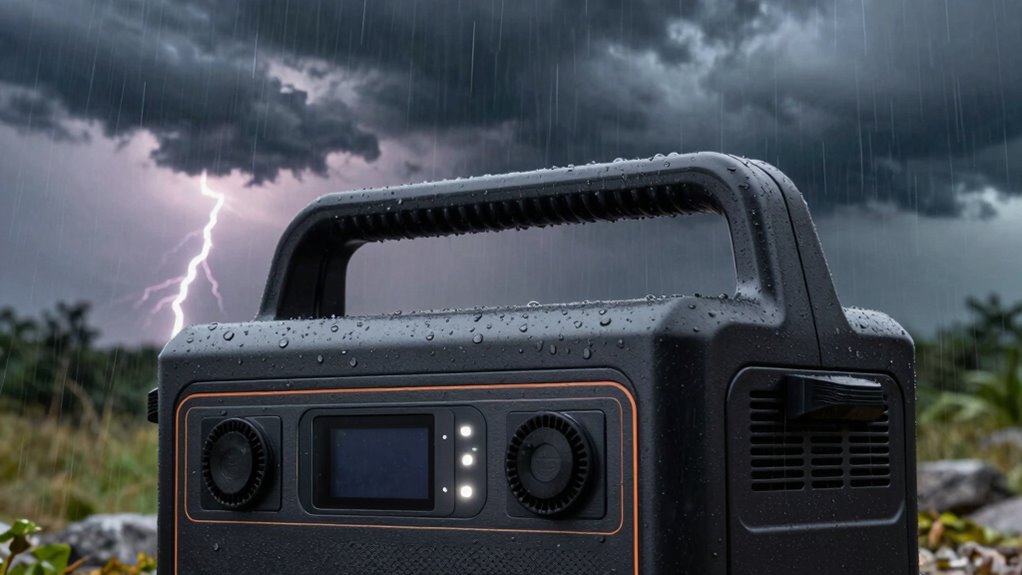
It’s not safe to leave a power station outdoors during a storm. You should weatherproof it by keeping it in a dry, sheltered spot, and avoid exposure to rain or moisture. Always follow storage precautions, such as disconnecting and storing it indoors, especially during severe weather. Doing so prevents damage, electrical hazards, and safety risks. Protect your device by ensuring it’s stored properly and not left vulnerable to the elements.
What Maintenance Is Required to Keep the Power Station Ready?
Did you know that regular maintenance can extend a power station’s lifespan by up to 30%? To keep yours ready, perform periodic battery calibration to guarantee accurate charge readings. Also, follow storage precautions, like keeping it in a cool, dry place and avoiding extreme temperatures. Regularly inspect and clean the vents, and charge the device every few months if not in use. This keeps your power station dependable when you need it most.
Can a Power Station Be Used to Power Essential Medical Devices?
Yes, a power station can power essential medical devices, but you need to take into account their power consumption. Check the devices’ wattage and guarantee the power station can handle that load continuously. For critical medical equipment, opt for models with pure sine wave output for stable power. Always test your setup beforehand, have backup options, and consult your device’s manual to prevent interruptions during emergencies.
Conclusion
When preparing for summer storms, a portable power station becomes your reliable companion. It provides power, peace of mind, and independence. It keeps your devices running, your family safe, and your spirits high. It’s your backup, your safeguard, your source of comfort. So, get ready, stay informed, and stay powered. Because in the face of summer storms, being prepared means being confident, being protected, and being in control.