To keep your portable power station safer indoors, look for models with advanced battery management and safety features like overcharge protection, thermal cutoffs, and multiple safeguards against short-circuits. Guarantee proper placement on flat, ventilated surfaces away from water, flammable materials, and direct sunlight. Good cooling systems and quiet fans help prevent overheating. Regular maintenance and understanding the device’s thermal needs extend its lifespan and confirm safe operation inside. Keep exploring to discover more tips for safe, efficient use.
Key Takeaways
- Advanced battery management systems prevent overcharging, overheating, and thermal runaway, ensuring safe operation indoors.
- Proper placement and ventilation reduce heat buildup and promote airflow, preventing heat-related failures.
- Built-in safety features like short-circuit protection and thermal cutoffs mitigate risks during use.
- Quiet cooling systems and well-designed fans maintain safe temperatures without disturbing indoor environments.
- Regular maintenance and correct charging cycles extend device lifespan and enhance overall indoor safety.
Using a portable power station indoors can be convenient, but it’s essential to prioritize safety to prevent accidents or damage. One of the key factors to consider is how the device’s design and features contribute to safer operation within enclosed spaces. A safer power station maintains ideal battery longevity, ensuring it doesn’t overheat or degrade quickly. When a power station has advanced battery management systems, it can regulate charging and discharging processes, which helps extend the battery’s lifespan. This not only reduces the risk of battery failures but also minimizes the chance of overheating that could cause fires or damage nearby electronics.
Prioritize advanced battery management for safety and longevity indoors, reducing overheating and preventing damage or fires.
Noise levels are another critical aspect that affects safety indoors. Many portable power stations operate quietly, which is vital in maintaining a peaceful environment and preventing disturbances. Excessive noise from a device can sometimes indicate underlying issues, such as a malfunctioning fan or internal component. Choosing a model with low noise levels means you’re less likely to be distracted or alarmed by unusual sounds, and it often correlates with a well-designed cooling system that prevents overheating. This quiet operation makes it safer to leave the device running for extended periods, such as during power outages or outdoor activities close to your home.
Beyond battery longevity and noise levels, safety also depends on proper handling and features built into the device. Look for units equipped with multiple safety mechanisms like short-circuit protection, overcharge prevention, and thermal cutoff switches. These features act as safeguards, automatically shutting down or limiting power if something goes wrong. When you select a power station with clear indicator lights and user-friendly controls, you can easily monitor its status and respond promptly if issues arise, further reducing risks indoors. Proper understanding of battery technology can help users better appreciate how these safety features work and improve their maintenance routines. Additionally, selecting a model with robust construction can provide extra durability and safety assurance during indoor use. Understanding thermal management systems can also enhance user awareness of how heat is controlled within these devices, contributing to better safety practices.
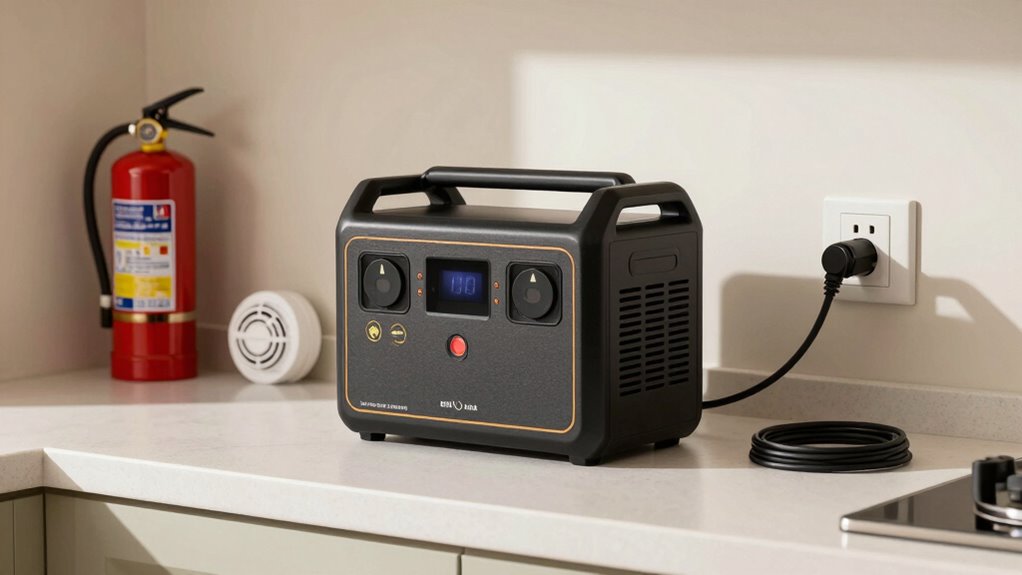
Placement also plays a role in safety. Keep your power station on a flat, stable surface away from water, flammable materials, or direct sunlight. Proper ventilation is essential to prevent heat build-up, especially during heavy usage. A well-designed power station should incorporate ventilation features to promote airflow and reduce the risk of overheating. When the device has built-in cooling fans that operate quietly, it helps maintain a safe operating temperature without adding noise pollution to your environment. Proper maintenance, such as regular charging cycles and avoiding prolonged full discharges, also preserves battery health, ensuring the device remains reliable and safe over time. Furthermore, understanding the challenges in nanotech fabrication can inform better design choices that enhance safety features in future models.
portable power station with overcharge protection
As an affiliate, we earn on qualifying purchases.
As an affiliate, we earn on qualifying purchases.
Frequently Asked Questions
Can Portable Power Stations Be Safely Used Around Children Indoors?
Yes, portable power stations can be safely used around children indoors if you take proper precautions. Always keep the device out of reach of kids, make sure it’s placed on stable, non-flammable surfaces, and avoid exposing it to water or excessive heat. Child safety is paramount, so supervise indoor usage closely and follow the manufacturer’s instructions. This way, you minimize risks and keep your family safe while enjoying the power station’s benefits.
Do Portable Power Stations Emit Harmful Fumes or Gases?
Portable power stations generally don’t emit harmful fumes or gases during normal use. They produce minimal chemical emissions, making them safe indoors. However, it’s essential to guarantee proper ventilation requirements, especially during extended use, to prevent any buildup of heat or fumes from batteries or electronic components. Always follow manufacturer guidelines, keep the area well-ventilated, and avoid using these devices in confined spaces to ensure safety.
How Should I Store a Portable Power Station Indoors Safely?
To store a portable power station safely indoors, guarantee proper ventilation to prevent heat buildup and avoid fumes. Keep the device in a cool, dry place away from direct sunlight. Regularly check and maintain the battery by following the manufacturer’s guidelines, which helps prevent leaks or malfunctions. Store it upright on a stable surface, and disconnect it if not in use for extended periods. Proper storage enhances safety and prolongs your power station’s lifespan.
Are There Specific Certifications to Look for in Indoor-Safe Power Stations?
You should look for power stations with UL 2743 or IEC 62133 certifications, which guarantee compliance with battery safety and certification standards. For example, a homeowner used a power station with UL certification during a blackout, trusting its safety features. These certifications verify that the device meets rigorous safety standards, reducing risks like overheating or fire, making it safer for indoor use. Always choose certified models for peace of mind.
What Are the Signs of a Portable Power Station Malfunction Indoors?
You’ll notice signs of a malfunction, like battery overheating or electrical short circuits. If the power station’s surface feels unusually hot or emits a burning smell, stop using it immediately. Sparks, strange noises, or flickering lights also indicate problems. These signs mean the device might be unsafe indoors, risking fire or damage. Always unplug it and consult the manufacturer if you suspect any malfunction to guarantee safety.
quiet cooling portable power station
As an affiliate, we earn on qualifying purchases.
As an affiliate, we earn on qualifying purchases.
Conclusion
In summary, ensuring safety when using a portable power station indoors is essential. Always follow manufacturer guidelines, keep the station in well-ventilated areas, and avoid overloading it. Did you know that improper use of portable power devices can increase fire risks by up to 40%? By taking these simple precautions, you can enjoy reliable power without compromising your safety. Stay informed, stay cautious, and power your indoor activities confidently.
portable power station with thermal cutoff
As an affiliate, we earn on qualifying purchases.
As an affiliate, we earn on qualifying purchases.
safety features portable power generator
As an affiliate, we earn on qualifying purchases.
As an affiliate, we earn on qualifying purchases.