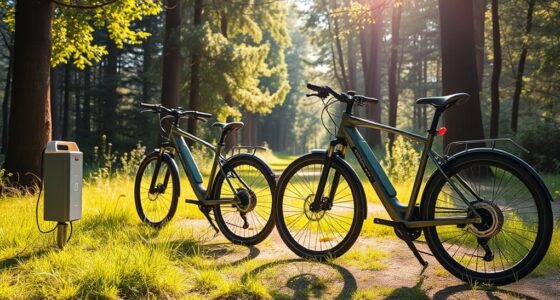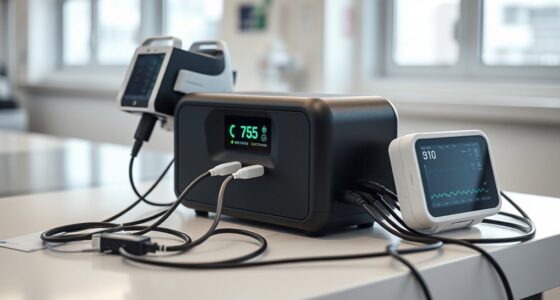
When choosing a portable power station, you need to balance weight and capacity based on your needs. A lighter unit is easier to carry but might not power all your devices for long periods. On the other hand, higher capacity stations tend to be heavier and less portable. Finding the right mix depends on whether you prioritize ease of transport or longer, more robust power supply. Keep exploring to discover tips for selecting the best fit for your adventures.
Key Takeaways
- Higher capacity units generally weigh more, reducing portability, so balance your power needs with weight considerations.
- Lightweight stations are easier to carry but often have limited capacity for multiple devices or extended use.
- Efficient energy management can help maximize capacity without significantly increasing weight.
- Solar-compatible, lightweight models enhance portability while maintaining renewable recharging options.
- For long trips or heavy device usage, a heavier, high-capacity power station may be more reliable despite reduced portability.
Have you ever been stranded without power during a camping trip or an emergency? If so, you know how essential a portable power station can be. When choosing one, you’re often torn between weight and capacity—finding the right balance is vital. The more capacity a unit has, the more devices you can run, but that usually means it’s heavier and less portable. Conversely, lightweight models are easier to carry around, but they might not supply enough power when you need it most. Understanding how to navigate this trade-off is key to making the best choice for your needs. To maximize your investment, consider models with efficient energy management, which can help extend battery life while maintaining portability.
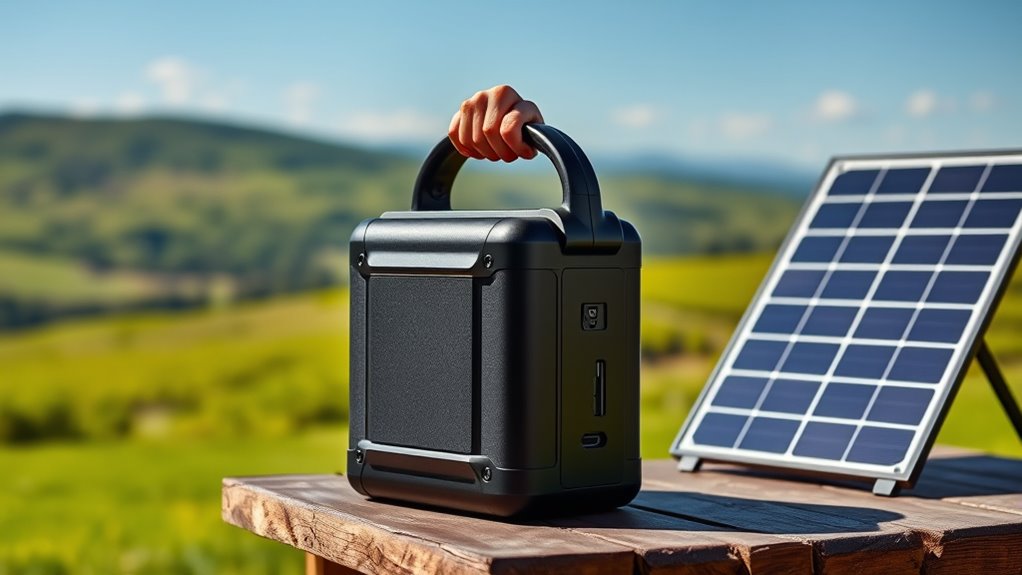
One of the biggest considerations is how well the power station integrates with solar compatibility. If you plan to rely on renewable energy sources, especially during extended trips or emergencies, you’ll want a unit that can easily connect to solar panels. Solar compatibility not only enhances your independence from traditional power sources but also influences the overall design and weight of the station. Many portable power stations are designed with foldable or lightweight solar panels, making them more manageable without sacrificing capacity. This way, you can recharge your power station in the field using sunlight, which is especially valuable if you’re off-grid for days.
Another critical factor to consider is battery lifespan, which directly affects the long-term value of your investment. A power station with a longer-lasting battery can undergo hundreds or even thousands of charge cycles before its capacity diminishes markedly. This longevity means you won’t need to replace or upgrade your device as often, saving you money and hassle. When weighing weight versus capacity, look for models that use high-quality batteries designed for durability. These often feature advanced chemistry that extends the battery lifespan without adding substantial weight. This way, you get a portable device that maintains its performance over years of use, even when subjected to frequent travel or rough handling.
Ultimately, balancing weight and capacity depends on your specific needs. If you’re a solo camper or emergency prepper looking for something lightweight to carry around, a smaller, higher-capacity unit with good solar compatibility might be perfect. If you’re planning longer trips or need to power larger devices regularly, a heavier, higher-capacity station with robust battery lifespan and excellent solar compatibility will serve you better in the long run. Remember, investing in a model that offers both solar compatibility and a durable battery lifespan ensures you’re prepared for any situation, without sacrificing portability. Making an informed choice means you’ll always have reliable power when you need it most—no matter where your adventures take you.
Frequently Asked Questions
How Does Battery Lifespan Affect Portability?
Battery lifespan directly impacts your portable power station’s portability because as the battery undergoes degradation, its capacity diminishes, requiring more frequent recharges or replacements. This reduces convenience, especially during long trips or remote use. To maximize lifespan longevity, you should follow proper charging practices. A longer-lasting battery means less weight from replacements and a more reliable power source, keeping your portable station easier to carry and use over time.
Can Weight Influence Charging Speed?
Ever wonder if weight influences charging speed? It can, because heavier power stations often have larger batteries that might take longer to charge, impacting charging efficiency. Additionally, proper weight distribution helps in maintaining device stability, ensuring safe and efficient charging. While lighter units are easier to carry, they might sacrifice capacity and speed. So, balancing weight and capacity is key to optimizing your portable power station’s performance.
Are Lighter Units Suitable for High-Capacity Needs?
Lighter units can be suitable for high-capacity needs if they feature advanced battery technology and ergonomic design. Modern batteries like lithium-ion and lithium-polymer pack more energy into less space, reducing weight. An ergonomic design also makes them easier to carry during high-capacity use. However, always check the specifications; some lightweight models might compromise on capacity, so guarantee the unit meets your power demands without sacrificing portability.
How Do Different Materials Impact Portability and Durability?
Different materials substantially impact your portable power station’s portability and durability. Lightweight materials like plastic reduce overall weight, making it easier for you to carry, but may be less durable under tough conditions. Heavier materials like aluminum or steel increase durability factors, ensuring your device withstands rough handling and environmental stress. Consider your priorities—if portability is key, opt for lighter materials; if durability matters, choose sturdier options.
Is There a Trade-Off Between Size and Safety Features?
Size compromises do exist when it comes to safety features, but safety prioritization remains essential. Larger models often include more safety mechanisms, yet they can be less portable. Conversely, compact power stations may sacrifice some safety features to maintain portability. You should balance your needs carefully, considering how much safety you require versus how portable you want the device to be, ensuring reliable protection without overly compromising size.
Conclusion
While balancing weight and capacity might seem tricky, remember that lighter stations often compromise on power, and larger ones can be cumbersome. But with advances in battery tech, you don’t have to forgo portability for capacity anymore. Choose a station that fits your needs without overburdening you—whether it’s for camping or emergencies. Ultimately, investing in the right balance ensures you stay powered without feeling weighed down, no matter where you go.